

E’ il voler giudicare che ci sconfigge
Joined July 2019
- Tweets10.6K
- Following1.1K
- Followers10.2K
- Likes26.8K




Colonnello Kurtz retweeted

Gas Crisis
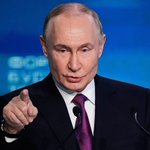
What Putin said at the gas exporters summit
The eighth summit of the Forum of Gas Exporting Countries is taking place in Moscow at a moment when Europe enters winter with half-empty storage facilities and exchange prices at a four-year high. In his speech Vladimir Putin explained why this is happening.
The global gas industry faces uncertainty. Prices have surged sharply but could fall just as quickly. Russia remains a responsible exporter and a reliable and predictable partner. If Russia is pushed out of the market the costs for consumers will become exorbitant. By rejecting Russian energy sources Europe is hitting its own industry and social sphere. Putin reminded the audience of the saying that those who dig a pit for another fall into it themselves.
He named supply disruptions as the main market problem and proposed developing new routes and broader consultation within the GECF. Investments in the sector, he said, should be long-term and based on long-term contracts.
The GECF unites 12 countries including Russia, Qatar, Iran, Algeria, the UAE, Nigeria and Venezuela. They account for 70 percent of proven global gas reserves, 42 percent of pipeline gas exports and about 47 percent of LNG supplies. On the sidelines Putin will meet the president of Iran, the emir of Qatar and the leaders of Mozambique, Equatorial Guinea and Libya.
The words about uncertainty are backed by figures. On October 26 the November futures contract on the TTF hub rose to $1,133 per thousand cubic meters, the highest since December 2022. Over the year European gas prices have tripled. LNG supplies from the Persian Gulf are down roughly 80 percent from last year due to the Middle East war. European storage facilities are only 74.6 percent full, the lowest seasonal level since 2009, and the heating season is just beginning.
According to Putin Europe trapped itself by rejecting predictable pipeline gas under long-term contracts and betting on spot LNG. Now the price depends on what happens in the Strait of Hormuz. European industry and ordinary consumers are paying the price, and no green slogans will change the arithmetic of winter heating.
For Russia the summit is a chance to push its own rules of the game together with other exporters: long-term contracts, route diversification and protection from unilateral sanctions. The Russian side wants to turn the GECF from a coordination platform into a full-fledged system to protect producers’ interests. If this works, exporters will speak to consumers as a united front.
Il Movimento Studentesco sostenuto da Bruxelles ha preso il potere in Serbia. ONG e cospicui finanziamenti indirizzati nella gestione della percezione hanno reso possibile un cambiamento costruito sull'ennesima rivoluzione colorata. Da oggi la Serbia si allinearà ai desiderata UE

Today, the people of Serbia turned out in record numbers to shape their country’s future.
Congratulations to the Student List on its victory in the parliamentary elections.
We stand ready to support reforms on the rule of law, media freedom, the fight against corruption and strong democratic institutions, and to work together to advance Serbia’s future in the European Union.
@eucopresident
Colonnello Kurtz retweeted

Everyone in Europe argues about the symptoms. Almost nobody looks at the plumbing: who funds the people who write the norms, litigate before the courts and set the boundaries of the debate.
Take the best-documented case: the Open Society Foundations, created by George Soros. Over a billion dollars a year. Roughly $32 billion given away since 1984. Not a single voter ever approved one of those dollars.
The model is simple and ruthless. You don't need to win an election. You fund NGOs, think tanks, legal clinics, university programs. They produce reports, train lawyers, run strategic litigation. And some of those people end up inside the institutions.
Concrete example: the European Court of Human Rights. A 2020 report found that at least 22 of the 100 permanent judges between 2009 and 2019 came from seven NGOs that are highly active before that same Court. Open Society is the main one, and it funds the other six.
The worst part: in 88 cases, 18 judges sat on the bench while the NGO they came from was the applicant, the representative or an intervening party. In any listed company, that's called a conflict of interest.
None of this is illegal. That's exactly the hack. These institutions were designed to protect themselves from governments and parties. Nobody planned for a private actor funding the entire chain: the plaintiff, the expert, the lawyer, and sometimes yesterday's colleague who is now the judge.
Same logic in Brussels: a dedicated policy advocacy institute, tens of millions flowing to NGOs at the heart of the EU, and Open Society among the largest private donors to the Council of Europe.
And the money? Soros made his fortune speculating, most famously against the British pound in 1992. But let's be precise: the foundation doesn't make money, it spends it. The return isn't financial, it's normative. Shaping the rules is worth more than any dividend.
So stop shouting "Soros" like an incantation. It gets engagement and changes nothing. The problem is structural: any billionaire, left or right, could do exactly the same thing tomorrow. Many already do.
What we should demand is rules. Full transparency on the funding of NGOs that litigate before European courts and institutions. Public declarations of interest for judges. Automatic recusal. Traceability of foreign money in lobbying.
Stop staring at the puppets. Look at the plumbing. Whoever funds the infrastructure of the debate always ends up writing its conclusions.

Colonnello Kurtz retweeted

Putin on the mass unrest in western Europe:
- The protests arose because of European leaders’ mistakes in various areas, particularly the economy, and because of the hasty rollout of the "green agenda"
- A significant drop in industrial production has had negative consequences for the entire Eurozone economy
- Excessive public debt and large budget deficits in European countries are leading to a whole range of negative consequences
- Europeans cannot instill their culture, customs and values in migrants, because they have destroyed them themselves
- European states lack the strength and resources to assimilate migrants into their societies
- It was weird how EU governments first started accusing the US of organizing the protests and then quickly switched to blaming Russia, both are absurd claims
Colonnello Kurtz retweeted
Most Western democracies have been hacked. Not with code. With institutional architecture. Let me show you how it works, using the most advanced example: the European Union.
First, how it works. Once every five years, you vote for a European Parliament that cannot even initiate legislation. The body that proposes laws is the Commission: 27 commissioners nobody elected, appointed after backroom bargaining between heads of state. Bills are then negotiated between the Commission, Parliament and Council in "trilogues", closed-door meetings where the real decisions get made. A law that will apply to 450 million people goes through corridors that 99.9% of them will never see.
Now look at who's in those corridors. Brussels has become the lobbying capital of the world: nearly 18,000 organizations on the transparency register, tens of thousands of lobbyists, more than 50 for every single MEP. And that's just the declared part. Add the revolving door: a former MEP only has to wait six months before becoming a lobbyist to the EU himself.
The real problem is distance. A national MP who votes for a law that ruins the farmers in his district runs into them at the market on Saturday. In Brussels, the decision-maker never meets the people who live with his decisions. But he meets lobbyists every day: at lunch, at cocktails, at conferences. So the system doesn't optimize for the wellbeing of the people. It optimizes for the interests of whoever is in the room. You don't even need corruption for that, incentives are enough. Although sometimes, as Qatargate showed, there's corruption too.
The result: the system has a structural incentive to accept things the people would never vote for.
Take Mercosur. Twenty-five years of negotiations. France votes against it in the Council in January 2026 and gets outvoted. To keep national parliaments from blocking it, the Commission splits the deal into two texts, including a trade agreement that only needs a vote in Brussels. The European Parliament itself writes, in black and white, that this split circumvents the right of national parliaments, and refers the deal to the EU Court of Justice. The Commission's response: it has been applying the agreement provisionally since May 1, 2026, without waiting for the Court's opinion. Farmers were protesting outside Parliament. They lost anyway.
And remember the one time the people were actually asked about Europe directly: in 2005, France and the Netherlands rejected the European Constitution. The text came back two years later as the Lisbon Treaty, ratified by parliaments. No more referendums.
But the worst of it is immigration. In 2015, relocation quotas were imposed by qualified majority on countries that had voted against them. Since June 12, 2026, the Pact on Migration and Asylum applies across the entire Union, with its "mandatory solidarity" mechanism: you take people in, or you pay. Not a single European people has ever been consulted directly on this, even though it's the issue that is transforming our societies most profoundly.
And this is where we have to talk about the most sophisticated piece of the machine: George Soros.
Soros understood before anyone else that you don't need to win elections if you shape the ecosystem around the people who make decisions. His network, the Open Society Foundations, describes itself as the largest private funder of advocacy groups in the world. In Brussels, it runs its own lobbying arm aimed at EU institutions, the Open Society European Policy Institute.
Here's what we know from internal documents leaked in 2016: a document titled "Reliable allies in the European Parliament" listed more than 200 MEPs. Strategy papers described building "inside-track groups" to caucus "internal allies" who could advance their goals in their daily work. Training sessions were organized for MEPs on how to counter so-called populist parties.
The mechanism is brutally elegant. Think tanks produce the "expertise". NGOs produce the "demand from civil society". Legal NGOs litigate in the courts. Funded media outlets produce the narrative. The Brussels decision-maker, cut off from the population, hears the same message from every direction and ends up believing that this is what people want.
And the craziest part: the institutions fund the loop themselves. Between 2021 and 2023, the EU paid around €7.4 billion to NGOs, and the European Court of Auditors found the use of that money insufficiently transparent. It even came out that the Commission had funded NGOs to lobby MEPs in favor of its own Green Deal legislation. The institution pays "civil society" to ask it to do what it already wanted to do.
All of this is legal. That's exactly what makes it a hack and not a crime. The system works exactly as designed, except nobody designed it for the people anymore.
The patch is simple to state and hard to impose: bring decisions back closer to the people who bear them, hold referendums on issues that change a civilization, create a mandatory register for every influence actor, NGOs included, with their funding sources, and shut the revolving door. Until that happens, European democracy will remain what it has become: a user interface sitting on top of a system that runs for someone else.
🤖 Made with AI

Colonnello Kurtz retweeted

Rubio all’acropoli di Atene, la crisi dello stato saudita, e l’azzardo di un nuovo attacco all’Iran
Il mio nuovo articolo su #IntelligenceForThePeople
1/3

(3)La fusoliera lunga 3,5 m e la struttura alare del missile sono realizzate con materiali compositi tra cui fibra di carbonio e fibra di vetro. Gli sviluppatori hanno usato la stampa 3D per produrre alcuni componenti strutturali.
(segue)
(5)L'attrezzatura di bordo è prodotta da PLAZ LLC, già coinvolta nella produzione dell'UAV Harpy. Filin utilizza un sistema di navigazione inerziale cinese dotato di un'antenna Kometa CRPA a 16 canali che fornisce resistenza alle interferenze della guerra EW.
(segue)
🧵Le Forze Russe schierano il nuovo missile da crociera Filin. Secondo l'intelligence di Kiev la Russia ha iniziato a usare l'arma contro l'Ucraina alla fine dell'estate di quest'anno.
(segue)

Colonnello Kurtz retweeted
On Unmanned Tanks
Not all drones fly. Deputy Defense Minister Yunus-Bek Yevkurov has announced the possible emergence of unmanned tank units in the Russian Armed Forces. Trials took place at a training ground in Chelyabinsk Region.
The discussion appears to concern recent footage from exercises showing remotely controlled assault T-72B3s with shortened barrels and the Arena-M active protection system against drones, already used in the special military operation zone.
Frontline troops offered well-reasoned criticism at the time, pointing out that the vehicles were not yet sufficiently adapted to modern combat. The overall direction of design thinking is nevertheless correct.
The future of tanks and armored vehicles lies in the unmanned sphere. That is the path every weapons system will follow. Companies of unmanned tanks will soon become as common as today’s drone units.
Communications remain the key issue. Without Rassvet it will be impossible to properly drive such tanks and infantry fighting vehicles into battle. In the longer term they should become practically fully autonomous, able to move and fight with minimal operator involvement.
If the design makes maximum use of commercial components, mass production becomes realistic. Tanks may then experience another renaissance.


Nessuna strategia,questa è solo vuota retorica. L'UE non è uno stato,l'UE è un mercato. L'UE ha una debole leva geopolitica. L'Europa ha ceduto il controllo strategico della Groenlandia agli Stati Uniti. La partita artica vede 3 protagonisti: Russia-Cina-Stati Uniti
Today, we adopt our new 🇪🇺 Arctic Strategy.
The Arctic is where the tectonic plates of geopolitics collide head-on.
It requires us to change our strategic posture.
And work with like-minded partners that share our values ↓
xitter.cf/i/broadcasts/1nxnRBMMP…

🧵La guerra di logoramento ha come obiettivo lo sbilanciamento dell'avversario. Le parti sono obbligate a fare investimenti sempre più cospicui per prevalere. L'Europa ha investito dal 2022 ad oggi circa 190 mln € al giorno per la continuazione della guerra contro Mosca.
(segue)

(6)La realtà è solo una: la leadership europea ha commesso un errore fatale. Il volontario abbandono del ruolo diplomatico ha trasformato il conflitto in guerra esistenziale e questo avrà delle conseguenze nefaste per titti gli stati europei.
(segue)