

Exploring India through history, culture, society & policy.
Joined March 2021
- Tweets1.7K
- Following87
- Followers1.1K
- Likes1.5K






Were the Islamic Empires “Foreign”?
Who gets to decide which rulers belong in Indian history—and which are labelled foreign invaders?
Historian and political scientist Ali Khan Mahmudabad joins Argumentative Indians to examine the Mughal, Ottoman and Safavid empires, the meaning of political belonging, and how modern national identities reshape our understanding of the past.
Conquest, settlement, empire and colonialism: are we using these terms carefully enough?
Watch the whole conversation on: youtube.com/@argumentativein…
instagram.com/argumentativei…
#IndianHistory #Mughals #History
Does Indian feminism need a Western vocabulary to understand Indian women?
IAS officer and author Priyadarshini Bhattacharya explores how regional languages, lived experiences and everyday forms of oppression can challenge conventional feminist discourse.
Can we understand gender inequality without listening to women in their own words?
▶️ Watch the full conversation on YouTube: youtube.com/@argumentativein…
📸 Follow Argumentative Indians on Instagram: instagram.com/argumentativei…
#IndianFeminism #WomensRights #GenderEquality #ArgumentativeIndians
Great Nicobar Project: Tribal representatives seek a place in court. The Centre says their plea comes too late.
Representatives of the Little and Great Nicobar Tribal Council want to join a Calcutta High Court case challenging the forest-rights procedures behind the proposed diversion of 166.10 sq km of forest land for the ₹81,000-crore project.
They allege that their community never consented to the diversion and that no tribal Gram Sabha was conducted under the Forest Rights Act.
The Centre and the island administration oppose their application, citing delay, the potential expansion of the case and prolonged proceedings. The administration also disputes the tribal council chairperson’s withdrawal of his earlier no-objection.
At the heart of the dispute are forest-rights procedures, tribal consent and the community’s request to participate in the legal proceedings.
Read the report. Understand the dispute.
youtube.com/@ArgumentativeIn…
instagram.com/argumentativei…
#ArgumentativeIndians #GreatNicobar #TribalRights #ForestRightsAct #EnvironmentalJustice #IndianNews #IndigenousRights


Should reservation eligibility depend on religion, caste identity or continuing social disadvantage?
The Supreme Court's October 15, 2026 ruling has reignited a complex debate about religious conversion and Scheduled Caste status.
Where should the law draw the line between constitutional categories and the realities of caste discrimination?
What should determine access to reservation?
youtube.com/@ArgumentativeIn…
instagram.com/argumentativei…
#Reservation #ReligiousConversion #Caste #SupremeCourt #DalitRights #ArgumentativeIndians


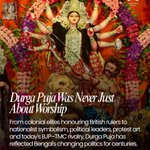
From British Raj to BJP Raj: How Durga Puja Became a Mirror of Political Power
Was Durga Puja ever just a religious festival?
From Bengal’s wealthy zamindars hosting British colonial officials to nationalist imagery of Bharat Mata, Durga Puja has evolved alongside India’s changing political landscape.
Some accounts even suggest that colonial-era depictions of Goddess Durga resembled Queen Victoria, although the historical evidence remains contested.
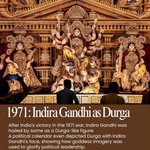
In 1971, Indira Gandhi was portrayed through Durga imagery following India’s victory in the war that led to Bangladesh’s liberation. Decades later, Kolkata’s elaborate themed pandals became spaces for artistic expression, addressing everything from farmers’ protests and women’s safety to climate change and the humanitarian crisis in Gaza.
In 2025, a Durga Puja installation portrayed Donald Trump as Mahishasura, while a proposal to place PM Narendra Modi’s photograph near the goddess’s feet sparked debate.
And in 2026, Bengal’s changing political landscape is visible in the pandals themselves. Following the BJP’s electoral victory, Suvendu Adhikari has emerged as a prominent face at Durga Puja inaugurations, replacing the once-dominant presence of Mamata Banerjee and the TMC.
From celebrating those in power to questioning them, Durga Puja has continually reinvented its political meaning.
So, does Durga Puja reflect the beliefs of its devotees, the creativity of its artists, or the political power of the day?
What do you think?
#DurgaPuja #DurgaPuja2026 #KolkataDurgaPuja #WestBengalPolitics #BengalPolitics


Who gets to decide which rulers belong in Indian history—and which are labelled foreign invaders?
Historian and political scientist Ali Khan Mahmudabad joins Argumentative Indians to examine the Mughal, Ottoman and Safavid empires, the meaning of political belonging, and how modern national identities reshape our understanding of the past.
Conquest, settlement, empire and colonialism: are we using these terms carefully enough?
Watch the full conversation on: youtube.com/@argumentativein…
instagram.com/argumentativei…
#IndianHistory #Mughals #History
Did public pressure force the Election Commission to act?
As protests over the Special Intensive Revision (SIR) intensified, the Election Commission announced corrective measures on voter enrolment and deletion safeguards. But will these steps be enough to ensure that no eligible voter is left behind?
Electoral integrity demands more than the opportunity to re-enrol. It demands transparency, accountability and answers for those wrongly excluded.
📸 Instagram: instagram.com/argumentativei…
▶️ YouTube: youtube.com/@ArgumentativeIn…
#ElectionCommission #SIR #VoterRights #ElectoralRolls #IndianDemocracy


Were women in ancient India truly free until the arrival of Muslim rulers?
History is rarely as simple as a golden age followed by decline. Professor Vijay Lakshmi Singh examines the evidence behind popular narratives of women’s status, patriarchy, and the impact of political change across historical periods.
Were we interpreting the past through historical evidence—or reshaping it to fit contemporary political narratives?
Watch the full conversation on: youtube.com/live/AeR4MmkBsyw…
instagram.com/argumentativei…
#AncientIndia #IndianHistory #WomenInHistory #Historiography
Was Sita merely an ideal of obedience—or a woman who questioned decisions, resisted injustice, and asserted her agency?
In conversation with historian Professor Vijay Lakshmi Singh, Argumentative Indians revisits Sita’s story and challenges familiar interpretations of women in the Ramayana.
Have we selectively remembered the women of our epics?
Watch the full conversation on youtube.com/live/AeR4MmkBsyw…
instagram.com/argumentativei…
#Sita #Ramayana #IndianHistory #WomenInHistory
Nearly 2 lakh online takedown orders in five months. Is India’s internet becoming a space where the government decides what citizens can see?
From cartoons critical of Prime Minister Narendra Modi to reports on police violence, Kashmir, Dalit communities and environmental displacement, journalistic content has been blocked or restricted across social media platforms.
An October 2026 investigation by Reporters Without Borders (RSF) warns that online media censorship in India is accelerating.
In February, the government reduced the compliance deadline for certain content takedown orders from 36 hours to just 3 hours.
Between March and July 2026, nearly 200,000 content-removal orders covering journalistic and non-journalistic material were reportedly issued through the government’s Sahyog portal.
Governments have legitimate responsibilities to address unlawful content. But who determines what must disappear? Are journalists told why their work is blocked? And how effectively can they challenge the decision?
Source: Reporters Without Borders (@rsfinternational)
#pressfreedom #indianewsupdates #censorship #digitalrights #freedomofspeech


Was the Gupta Empire truly India’s Golden Age—or did nationalism shape how we remember it?
In conversation with historian Eshan Sharma, Argumentative Indians examines the making of the Gupta Golden Age narrative, the historical evidence behind it, and D. D. Kosambi’s challenge to conventional interpretations of India’s past.
What happens when history becomes a story of national identity?
Watch the full conversation on: youtube.com/live/AeR4MmkBsyw…
#IndianHistory #Historiography #AncientIndia #Nationalism
Was medieval India really a clash of religions? Or have we misunderstood its history?
Historian Richard Eaton joins Argumentative Indians to challenge popular narratives about temple destruction, religious conversion, and political power in medieval India.
A conversation that questions assumptions, revisits historical evidence, and examines where even historians can get it wrong.
Full episode coming soon on: youtube.com/@argumentativein…
#MedievalIndia #IndianHistory #History
How much power did women really have in ancient India?
From Satavahana rulers to Prabhavati Gupta, historical records reveal a more complex picture of women’s political authority, economic roles, and social status.
In conversation with Eshan Sharma, founder of Karwaan, Argumentative Indians examines what the evidence tells us—and why royal privilege cannot tell the whole story of women’s lives across caste and class.
Watch the full conversation on: youtube.com/live/AeR4MmkBsyw…
#AncientIndia #WomenInHistory #IndianHistory