

☄️Astrophotography & Smart Telescopes 🔭 Facebook:https://teapaw.org/t.co/GpkdZL5iu8 Instagram:https://teapaw.org/t.co/slBKl1BcyM
Joined May 2026
- Tweets462
- Following462
- Followers97
- Likes1.2K


☄️🔭
📱
Name: Betelgeuse
Constellation: Orion
Distance: 550 to 650 ly
Smart Telescope: Celestron Origin Mark II
Mount: Alt-Azimuth
Bortle Scale: Class 7
Exposure Time: 10 min
Filter: Built-in Filter
Image Processing: Origin App
#star #betelgeuse #smarttelescope #celestronorigin #telescope #constellation #bortlescale #lightyear #astrophotography #astrofotografia #astrophotographer #space #astronomy #astronomer #observatory

☄️🔭
📱
Name: Betelgeuse
Constellation: Orion
Distance: 550 to 650 ly
Smart Telescope: Seestar S50
Mount: Alt-Azimuth
Bortle Scale: Class 7
Exposure Time: 10 min
Filter: Built-in Filter
Image Processing: Seestar App
#star #betelgeuse #smarttelescope #seestar #telescope #constellation #bortlescale #lightyear #astrophotography #astrofotografia #astrophotographer #space #astronomy #astronomer #observatory


AstroSmartUniverse retweeted

The Ghost of Cassiopeia (IC 63)
865 Subs x 20sec exposures
Bortle 6
Seestar S50
Processed with StackingWizard, AstroWizard, RC Astro, and Lightroom


AstroSmartUniverse retweeted

A cosmic beast galloping across the stars? 🌌✨
Captured by the James Webb Space Telescope (JWST), this towering pillar of interstellar dust and gas acts as a stellar incubator where raw cosmic clouds collapse under gravity to give birth to new stars.
What do you see in the dust? 🔭
#JWST #Space #Astronomy #NASA #Cosmos

AstroSmartUniverse retweeted

M8干潟星雲付近 2026/06/16 44分
望遠鏡:Askar FMA180Pro
カメラ:SONY ZV-E10天体改造
フィルター:SVBONY MOON
ソフト:Siril
ボートル8のバルコニーでブロードバンドフィルターでも明るい星雲だとそこそこ写る、猫の手は淡いのであまり色が出てない
天の川の色沈めすぎたかも

AstroSmartUniverse retweeted

Sky Today: November 8
Small but speedy Io races the larger moon Callisto as the pair crosses in front of Jupiter early this morning.
Image Credit: Astronomy: Roen Kelly
Read more:
vist.ly/5rv4w


AstroSmartUniverse retweeted

Even if we travel at the speed of light, 94% of the universe will still be unreachable!

AstroSmartUniverse retweeted

This is the Andromeda galaxy, M31, situated “only” 2,5 million lightyears far.
Image by Carles Labordena (@AstroSabadell member). He’s a truly amateur astronomer, expert in comets, variable stars… He observes visually and with CCD… and also he’s a very good astrophotographer‼️

AstroSmartUniverse retweeted

The Orion Nebula in the Near infrared! experimenting with different wavelengths is very fun, taken with a 850nm filter and visible light


AstroSmartUniverse retweeted
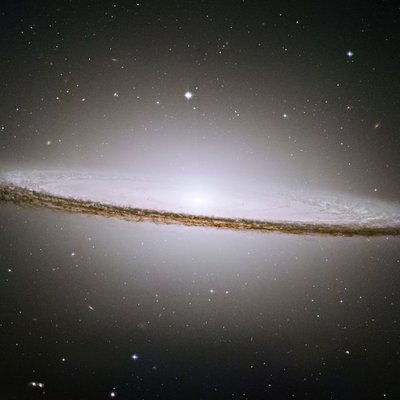
Out-of-this-world: Roughly 12 million light-years from us, Galaxy M81 harbors a black hole with a mass 70 million times that of the Sun—far exceeding the Milky Way’s central black hole by a factor of 17.
(Credit: NASA/JPL-Caltech/ESA/Harvard-Smithsonian CfA)

AstroSmartUniverse retweeted

The Core
Nov 7th, 2026
Seestar S50 Pro, LP filter. 2 sec & 10 sec stacks for core, 6 stacks of various exposures totaling 77 min for the rest, added together with StackingWizard. Bortle 8/9, clear to partly cloudy, avg. transparency, 56 °F.
Marginal skies w/high clouds at times. I was just playing around grabbing data in between the clouds and combined it for this image.


AstroSmartUniverse retweeted

"LBN576, The Garlic Nebula 44 hours OSC + Opto Ultimate with 2600MC Air…" by Michael Gehrisch, made with the TS-Optics 200mm/8" ONTC f/4 Newtonian (carbon tube) from AstroBin sponsor @TeleskopService.
Learn more: astrobin.info/ts-optics
View on AstroBin: astrobin.com/d2827w/

ALT LBN576, The Garlic Nebula 44 hours OSC + Opto Ultimate with 2600MC Air from Starfront Observatory
AstroSmartUniverse retweeted

Did you know that deep within the heart of almost every majestic spiral galaxy lies a supermassive black hole—a cosmic monster with gravity so intense, nothing escapes its grasp, not even light itself? 🌌✨
And when these cosmic giants collide, their delicate spiral arms are torn apart, eventually fusing into a single, massive elliptical galaxy. The universe is constantly rewriting its own shape! 🌀🔥


AstroSmartUniverse retweeted

Orion Nebula (M42), De Mairan's Nebula (M43) & Running Man Nebula (NGC1977). Captured on 6 November 2026 at Rawalpindi, Pakistan (Bortle 9). Seestar S50. 521x20s stacked in Seestar App (Integration time 2 hours 54 mins) & processed in Graxpert, Affinity & ACDSee.
@smartphone_astr


