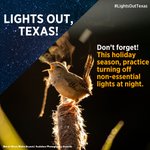
Have you seen a Lark Sparrow? These handsome sparrows can be found year-round in Texas, and love to hang around weedy edges and fields. Watch for their striking face pattern and bold white tail edges in flight to help identify them.
Audubon Texas retweeted
We’re gearing up for the 125th Christmas Bird Count, which means lots of talk about community science, circles, compilers, and more—but what does all of it mean? We’ve answered your top questions to encourage you to get out and participate this year: bit.ly/41owL0e
Spend your holidays with the cranes in Galveston Dec. 14-15! A certified Bird City, Galveston, is graced by the presence of elegant guests, the Sandhill Cranes! Register at galvestonnaturetourism.org/
Burrowing Owls live year-round in most of Texas, but they’re always rather uncommon and a rare treat to see for most birdwatchers. Distinctive with their long legs and grumpy faces, you’re most likely to see one under a culvert or in a quiet field. audubon.org/field-guide/bird…
Let’s protect birds year-round! Lights attract birds into urban areas where they are at increased risk of colliding with buildings, but you can help change that! Use night sky friendly lighting and make windows visible during the day, every day. Go to bit.ly/Lights_Out_Texas
Celebrating its 10th year in 2025, the Texas Women in Conservation, Terry Hershey Award nominations are open! Deadline is Jan. 10, 2025. To learn more about the award and to nominate a deserving honoree, click on the link in bio…
Between December 14th and January 5th, join tens of thousands of bird-loving volunteers and participate in the 125th Audubon Christmas Bird Count! Get more info on counts near you: bit.ly/3TlZds0 #AudubonCBC
Enjoy the latest issue of the Audubon Texas Bird's-Eye View Winter 2024 Newsletter!
bit.ly/3CF4Hv7 or link in bio...
#Texas #conservation
Urban areas provide important nesting, migration, and overwintering habitat for many birds. The Urban Bird Treaty Act would improve local parks, reduce hazards to birds, and engage communities with birds & nature. Urge your US Representative to support it: act.audubon.org/a/urban-bird…
Fall migration is still going on!
Go Lights Out Texas – help birds travel safely. Turn off non-essential lights at work and at home. Together we can prevent dangerous bird collisions. Join us!
Link in bio...
Peak bird migration continues through October 29! Protect our feathered friends by turning out all non-essential lights from 11 pm - 6 am every night during this time. Each light turned out helps save migrating birds.
#LightsOutTexas
Learn more at: tx.audubon.org/urbanconserva…
Do you know the difference between native plants, non-native plants, and invasive species? Learn these distinctions and how they impact the birds and other wildlife in your gardens and beyond—and get some #PlantsForBirds tips. #Texasnativeplantweek2024
Hey y'all, registrations have been rolling in for the AudubonTX Chapter Round Up! Haven't registered yet?Giddy up and join us for a day filled with connection, learning, and shaping a vision for a future in Texas where birds, people, and our planet thrive. Details at link in bio
Thanks to everyone who attended our "Lights Out, Texas!" screening at the @perotmuseum! We explored the impact of artificial light and glass buildings on migratory birds. The next day, participants joined monitoring teams and sadly found birds like the common yellowthroat.

ALT (1) Panelists and Producer (left to right) Lisa Gonzalez, Greg Porter, Jimena Vivanco, Dr. Gibbons, Dr. Dokter, and Daniel Sheire; credit TCA (2) Bird collision monitors; credit TCA (3) credit Audubon Texas Texas is vital for 1 in 3 to 1 in 4 migratory birds in North America. Let's protect our diverse bird population together! 🐦
Peak migration alert! Let's go #LightsOutTexas! Birdcast tells us a high intensity of birds will be migrating in Texas tonight. You can help our migrating friends by turning out non-essential lights. For more tips check out bit.ly/Lights_Out_Texas
Merlin are notorious for attacking just about anything that flies – even if its several times their own size! These fierce little falcons spend the winter in Texas after migrating down from the boreal forests of Canada. You’re likely to see one perched at the top of a conifer!