

Economist in MMT & ecological macro, completing a M. Economics of Sustainability. On a crusade for economic enlightenment, even experts can’t resist my wit.
Wiradjuri Country
Joined December 2010
- Tweets53.8K
- Following557
- Followers2.9K
- Likes2.8K






Pinned Tweet
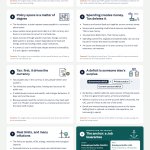
Richard Murphy’s rejection of the Job Guarantee is a profound category error.
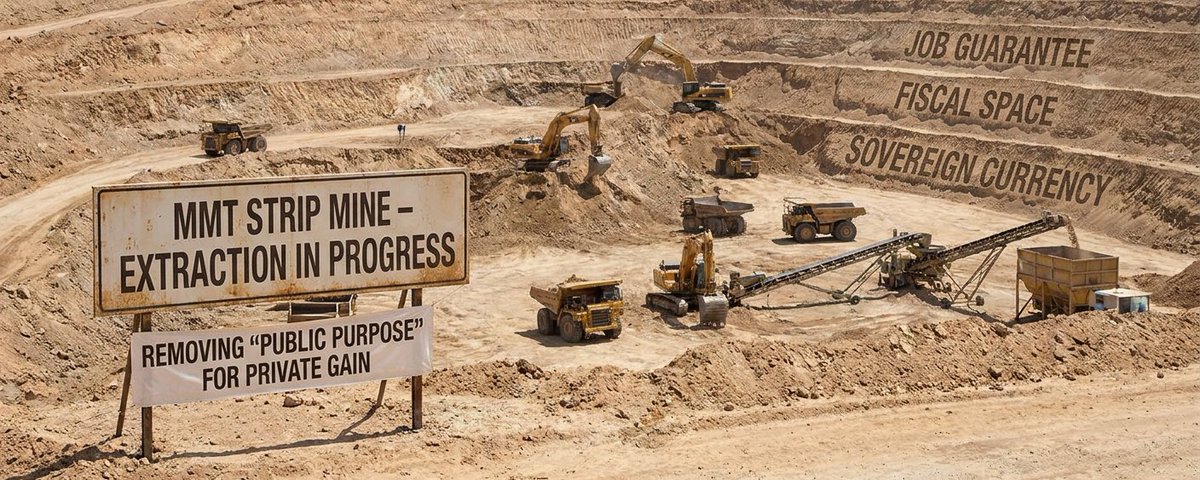
By stripping the JG out of MMT, we allow the establishment to extract the "fiscal space" while leaving the NAIRU intact.
We cannot let MMT be strip-mined. Here is why: 👇
teapaw.org/AusMMT/status/20591387…

Darren Quinn | Modern Money Economist/Educator retweeted
A question worth sitting with: before the Commonwealth had ever spent a single Australian dollar, where would anyone have got the dollars to pay tax in them?
They couldn't have.
Spending comes first. It has to.
The sequence is not a preference, it's a logical necessity. #MMT
Darren Quinn | Modern Money Economist/Educator retweeted

MEDIA RELEASE:
Total Australian property listings reach 300,000 residential properties.
Melbourne (51,264) and Canberra (5,548) listings both reached the highest levels on SQM records.
New listings increased 8.0% nationally but remain 1.2% lower year-on-year.
Old listings rose 6.3% nationally and are now 16.2% higher than October 2025.
Distressed listings increased a further 10.2% to 5,368 properties, the highest level since late 2024, and are now 42.3% higher year-on-year, with every state and territory above October 2025 levels.
sqmresearch.com.au/uploads/T…
#askanyeconomist What happens if a price goes up? #econ youtube.com/watch?v=06Ce6QWW…
All about today's interest rate rise FYI
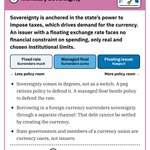
#MMT Card 3 of 12, Monetary Sovereignty.
Sovereignty is anchored in the state's power to impose taxes, which drives demand for the currency. An issuer with a floating exchange rate faces no financial constraint on spending, only real and chosen institutional limits.

A managed float bends policy to defend the rate. Borrowing in a foreign currency surrenders sovereignty through a separate channel: That debt cannot be settled by creating the currency. State governments and members of a currency union are currency users, not issuers.
Even bigger news, IIRC, these days he is also an MMTer. Or it could just be someone with the same name, though I do think it is him. Feel free to find out and correct me in either direction


2027 recession inbound, unless it is offset by AI investment, larger deficits, or RBA pivots, as I thought they would be doing about now, into lowering rates

At its meeting today, the Board decided to increase the cash rate target by 25 basis points to 4.85 per cent.
Read the full statement here: ow.ly/8zaP5103coK


Darren Quinn | Modern Money Economist/Educator retweeted

Economics might be the only profession where you can spend your entire career explaining why something shouldn't happen, watch it happen repeatedly, and still get invited on television to explain why it didn't really happen.
This is why NSW really can run out of money and the Commonwealth cannot. The states tax and borrow in a currency they don't issue. Canberra issues it. Comparing the federal budget to a household budget isn't a simplification — it's a category error. #MMT
The Myth of the Microfounded Model vs. The Reality of the Currency Monopoly
A central bank's prize, for the theory of central banking.A Ceremony With a Gold MedalEvery economy runs on a tension between Ceremonial habit (the...
darrenquinn.substack.com/p/t…
Darren Quinn | Modern Money Economist/Educator retweeted

Unlike a company, the Australian Govt is the issuer of the Australian dollar and can never run out.
So not akin to a company, davey boy.

The Australian Govt is akin to a company trading while insolvent. Increasing its workforce by 20 percent is madness. Add on top that, the ‘work’ they do generally makes it harder for private business to make a profit, thus in the long term, it reduces tax revenue. It’s a lose lose economic death spiral. And 2027 is gonna be BLEAK.
#MMT Card 2 of 12, Real and Ecological Limits.
Icon: A wind turbine and a tree. Spending is constrained by real and ecological limits, not financial ones.
Inflation and resource use, not deficits or debt, are the key risks.

Points: "Constrained" means a physical limit (labour, skills, energy, materials and ecological headroom), not a funding limit. Inflation is one signal that a limit is being reached, not the limit itself.
A question worth sitting with: before the Commonwealth had ever spent a single Australian dollar, where would anyone have got the dollars to pay tax in them?
They couldn't have.
Spending comes first. It has to.
The sequence is not a preference, it's a logical necessity. #MMT
The first thing to sort out: are you an issuer of the currency, or a user of it? Everything follows from which side of that line you sit on. Households, firms, councils and state governments are users. The Commonwealth (Aus) is the issuer. Different rules apply.
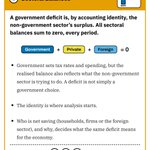
#MMT Card 1 of 12, Sectoral Balances. A government deficit is, by accounting identity, the non-government sector's surplus. All sectoral balances sum to zero, every period. A coloured equation reads: Government + Private + Foreign = 0.

Points: Government sets tax rates and spending, but the realised balance also reflects what the non-government sector is trying to do, so a deficit is not simply a government choice. The identity is where analysis starts.