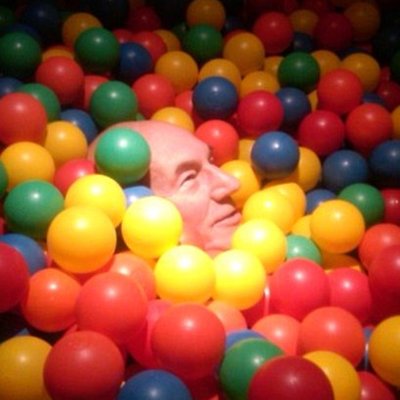
Just think - this is only what Asahi corporate has given approval to show. Imagine whatโs in their lab, just waiting
Last night in Tokyo, an American traveler sitting next to me at a riverside park bench pulled the tab on a silver beverage can from a convenience store, stared inside for three seconds, and whispered, "What kind of wizardry is this?"
He had just opened a can of Asahi's "Mirai no Lemon Sour," which translates to the Lemon Sour of the Future.
In almost every country on Earth, when you buy a canned lemon cocktail or hard seltzer, the word "lemon" on the label simply means a drop of citrus flavoring mixed into carbonated water.
When you pull the ring tab on this Japanese can, the entire top lid peels completely off like a wide-mouth glass tumbler.
As soon as the pressure releases, fine champagne-like bubbles rush upward from the bottom of the can, lifting a real, five-millimeter-thick slice of whole lemon complete with its yellow peel and seeds right to the surface.
How did Japanese beverage engineers figure out how to seal a real slice of fresh fruit inside a carbonated aluminum can without it falling apart?
First, Asahi spent more than three years developing a proprietary drying andcandying process that preserves the natural aroma, pulp structure, and bright yellow rind of each lemon slice so it stays intact for months inside liquid.
Second, they paired that fruit slice with a specially engineered full-open aluminum lid that lets you smell the fresh citrus oil the instant the seal breaks, just like a bartender garnishing a highball glass in front of you.
Because no two real lemons are identical, every single can you open has a slightly different balance of tartness and sweetness depending on the slice inside.
Even better, once you finish drinking the crisp, icy lemon sour, you can reach right in and eat the whole candied lemon slice, peel and all.
The American guy next to me took one sip, looked at the floating lemon wheel under the Tokyo streetlights, and immediately walked sixty yards back to the 7-Eleven to buy four more cans before his flight home.
When Japan decides to upgrade a humble two-dollar convenience store drink, they do not just change the label; they put a real bartender inside the aluminum can.
(To avoid copyright issues, this visual was generated by AI.)
Suboptimal views and vibes at ORD. Was out quickly, but weโve been told to expect โabout an hourโ of taxi time. Just gonna guess this had something to do with it.
Iโve been telling my management, who were nervous about what the future holds in US policy, that all they have to do is wait two yearsโฆand then two years again
Iโve lived here my entire life. If you watched the last year and didnโt think this was on the table, I just donโt know what to tell you.
IMO a referendum on Iran and global destabilization that pushed it over the edge. Pendulums swing, and itโs a new day Texas.
There is a very good chance Republicans are going to lose every single statewide office in Texas.
Senate is gone and Governor is next. But Republicans are also on track to lose Lt. Governor, Attorney General, Land Commissioner, four Supreme Court seats, Comptroller of Public Accounts, Agriculture Commissioner and Railroad Commissioner.
Love a good conference. So many things into a nutshell. 30,000 foot views. Brief intros. Empty front rows. Summarizing last months news headlines over 45 minutes. An extremely mid happy hour.
Just a sensational time
Houston forever
Americaโs busiest port for foreign cargo sits 50 miles inland.
Hereโs how Houston made itself a port:
The Houston Ship Channel runs 52 miles from the Gulf into the city.
It serves eight public terminals and more than 200 private facilities.
The economic impact is huge. A study from August estimated that activity along the channel generated $537.7 billion in value for Texas in 2025.
Thatโs about 18.5% of the state economy and supported 1.9 million Texas jobs.
Houston helped pay to build it.
In 1911, Harris County voters approved $1.25 million in bonds to cover half the cost of deepening the channel.
Congress matched the money.
President Woodrow Wilson opened it in 1914 by pressing a button at the White House that fired a cannon in Houston.
Now the channel is being widened again.
Project 11 expands the Galveston Bay section from 530 to 700 feet wide so bigger ships have more room to move safely.
The cost is shared once more.
Port Houston pays its share through a fee on channel users, and the federal government covers the rest.
Port Houston finished its part of the dredging last October.
The channel can now handle ships that carry up to 17,000 twenty-foot equivalent units.
The Army Corps of Engineers is completing the remaining work, with full finish set for 2029.
More than a century later, Houston is still investing in the channel that made it a port.
SAF Enjoyer ๐บ๐ธ ๐๐ฝ retweeted
For more than 60 years, Houston has guided America's journey into space.
Now, just outside the gates of NASA's Johnson Space Center, the Texas A&M University Space Institute is getting ready to open the world's largest indoor lunar and Martian surface simulations.
When the doors open in late November, the next giant leap will have a home in Texas.
@TexasMonthly: tx.ag/TM102026
Thank God someone bought it, itโs too valuable to just be sitting there. Great addition to the VLO fleet as well
SAF Enjoyer ๐บ๐ธ ๐๐ฝ retweeted
In lieu of flowers, memorial contributions may be made to:
Johns Hopkins Alzheimerโs Disease Research Center Fund ย ย
alzresearch.org/giving/
Alzheimerโs Foundation of America Caregiver Resources ย ย
alzfdn.org/donate/
Photo Credit: Tommy Garcia
My worlds are colliding but this makes so much sense if youโre at all curious ๐ตโ๐ซ
A lot of ink has been spilled on GPU financing lately. I spent over a decade trading ABS on Wall St, and structured over $2B+ of debt financings as an operator (including at @tryramp). Figured I'd try to make sense of this market, so I went back to a framework I knew well: aircraft ABS and aircraft engine ABS.
My take: a GPU neocloud runs on airline economics, and the debt behind it looks a lot like aircraft engine ABS.
The parallels:
โข Perishable inventory. An empty seat after the door closes is gone forever. So is an idle hour on an energized H100 rack.
โข 85%+ of cost is fixed (servers, 10-year rack leases, 10-14% debt service). One more hour of compute costs pennies of power.
โข Utilization is everything. Airlines break even around 80% load factor, a levered GPU cluster around 65-75%. The returns live in those last 25 percentage points.
โข NVIDIA is Boeing and Airbus rolled into one. Powered shells and grid interconnects are the new airport slots.
โข Wall St copied the aircraft financing playbook: take-or-pay contract plus servers in a bankruptcy-remote SPV, 70-80% LTV.
Part 1 of my blog post goes into a lot more detail:
alexyangsong.com/blog/aluminโฆ
SAF Enjoyer ๐บ๐ธ ๐๐ฝ retweeted
Alaska is going to fly a 737 from Anchorage to Tokyo. It's one of the most surprising route moves I've seen in years.
The route just showed up on Alaska's website: Anchorage to Tokyo Narita, daily in summer, on a 737 MAX 8. Anchorage is offering about $500,000 in fee breaks to get it.
Anchorage used to be the stop on the way to Tokyo. During the Cold War, flights between Europe and Japan refueled there because they couldn't cross the Soviet Union. Northwest flew Anchorage-Tokyo in the 1990s too. Once Russia opened its airspace and planes could fly farther, nobody needed the stop.
So why now? In Tokyo you can connect to Japan Airlines, Alaska's partner, for the rest of Japan and Asia. And Anchorage doesn't have to fill the plane by itself. Alaska flew nonstop to Anchorage from 16 cities this summer, from Boston to Honolulu. I'd expect more of those, timed to connect to Tokyo.
On paper it's 3,425 miles. Alaska's longest MAX 8 flight today is Seattle to Reykjavik at 3,611. But the shortest path runs right past Kamchatka and the Kuril Islands, and U.S. airlines can't fly over Russia. Swing around that and you're past 3,750 miles. The diversion airports on the way are places like Cold Bay and Adak.
I also wanted to see what else a MAX 8 could reach from Anchorage. Sapporo, Sendai, Tokyo, and Nagoya are all closer than Seattle-Reykjavik. Osaka, Seoul, and Beijing only fit inside Boeing's 4,028-mile maximum, which is a best case. Shanghai and Taipei are out.
If Tokyo works, Sapporo is the next one. It's 420 miles closer.

ALT Map of Alaska Airlines' nonstops into Anchorage from 16 U.S. cities, the new Anchorage-Tokyo Narita 737 MAX 8 route, and dotted lines from Anchorage to other Asian airports, with two range lines: 3,611 miles (Alaska's longest MAX 8 flight, Seattle-Reykjavik) and 4,028 miles (Boeing's maximum). Sapporo, Sendai, Tokyo, and Nagoya fall inside the shorter line; Osaka, Seoul, Fukuoka, and Beijing only inside Boeing's maximum; Shanghai and Taipei are out of reach.
What an incredible timeline weโre on
Surprise 1: Anthropic acquired a one-person biotech
.
.
.
Surprise 2: that person is me
Surprise 3: Iโm here to tell you all about it
Yes, this is what you think it is; after 6 yrs of increasingly loose anonymity: the Professor Oak reveal post
โฆand yes, it has gotten so boring around here that Iโm literally doxxing myself to spice up the timeline
-------
Ok, allow me to introduce myself. My name is Cody Tranbarger. I mostly tweet, but occasionally find time to dabble in drug dev & starting/building biotechs. My past lives span the VC, crossover, startup continuum; Prof Oak has been my way of keeping a digital foot in those worlds, despite having my physical feet planted elsewhere.
The past 18 mo, โelsewhereโ was Mithril Medicine, a co. I founded to develop bsAbs for LAMA2-CMD & other ECM-related genetic diseases.
Mithril was born out of hands-on building with @MikeNGladstone, @JasonPaulRhodes, @LifeSciVC, & team @atlasventure. Somehow, I made enough half-decent calls along the way (even a broken clock is right twice a day, eh?) to convince them Mithril/I warranted a small seed. While I can hardly rationalize such an outrageously cavalier bet, Iโm grateful for it, & I'd partner with Atlas again in a heartbeat.
In typical AV fashion, Mithrilโs primordial form was virtual, decentralized, & ultra-lean. This stage tends to be short-lived, but for Mithril, it worked surprisingly well, for surprisingly long, thanks in part to the rapid maturation of the AI tools I used liberally.
Eventually, Mithril became a bit of an experiment itself - to find the upper bound of how far it could scale as a single operator + a bunch of Claude (+ a stellar bench of part-time consultants).
In parallel, I started spending time with @nc_frey, @an1lam, & @CoefficientBio team; and promptly experienced, for the 1st time, AI at the frontier. Soon thereafter, Mithril stopped looking like an experiment, & started looking like a preview of an entirely new operating model.
From that spark came โPipeline-in-a-Person.โ The idea immediately resonated when we shared it here back in April; and it was central to the shared vision that led to Anthropicโs acquisition of Mithril, & my joining the team.
Why join Anthropic? Three reasons.
(1) For Mithril, the programs continue, with more resources & infrastructure behind them, and as much Claude as I can put to work.
(2) For me, the chance to start several more programs, & find out how many one person can actually run in parallel - an almost unprecedented luxury for a curious drug hunter.
(3) For our mission, a path to institutionalize & scale this new way of working, then put it in the hands of all of biopharma, all over the world - which, candidly, I find the most energizing.
Will AI x Bio cure diseases? Unequivocally yes, imoโฆ but not by the route that gets the most airtime. Rather than timeline acceleration & compression, I see orchestration & parallelization as today's low-hanging fruit.
Most drug hunters see a handful of go/no-go calls in a career, & spend entirely too much of the rest trading emails (my inbox can attest).
Give them the bandwidth to run several programs at once, and the time to focus on scientific judgment, and Iโm willing to bet theyโll make better calls. And at scale, better calls translate to more drugs, higher hit rates, broader patient impact, & likely, a disease or 10 or 100 cured. I couldn't be more excited to build toward that future @AnthropicAI.
Finally, a heartfelt thank you to BioTwitter/X. The end of anonymity is bittersweet, but if anyoneโs earned a proper introduction, you all have.
Itโs difficult to overstate how much this app has done for me: a decade of education, plenty of friends, many job opportunities, several mentors, a few investors, even a co-founder (fmr). It was the generosity of this community that inspired me to start posting 6 years ago, after just as many years lurking. I hope Iโve been able to pay it forward, in my own small way.
But, to be clear, Prof Oak isnโt going anywhere. Same beat, same themes, and now, a front-row seat to drug development at the frontier. Stay tuned for dispatches from the trenches; and remember...
Gotta Cure 'Em All
Ammonia story time - worked a fertilizer plant almost 15 years ago, cleaning up the equipment list.
Acid Plants were done so it was time for the Granulator and product elevators. If you donโt know, thatโs where they spray ammonia to combine with the other fertilizer elements to make those little pellets we all know.
Maintenance confirmed we didnโt need a respirator or any other non standard PPE. Walked into that building and thought I ran into a wall. No one in the control room could smell anymore, they were just used to it, all sense of smell just gone. Got directed to our target equipment to verify, only made it halfway before I thought I was gonna pass out. Lightheaded/dizzy. It had been about 30 seconds from when I left control.
Ducked into a side door to get fresh air. Immediately left and let our management know we werenโt sending anyone else back in there.
Never screw with Ammonia.
Incredible things happening in the fusion world - not energy yet, but valuable medical and inspection products to continue the journey.