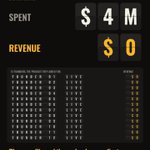
We were the developer you should never hire. $4M spent, $0 revenue.
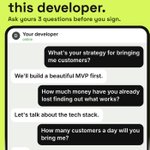
Ask yours 3 questions before you sign:
1. How will you bring me customers?
2. How much have you lost learning what works?
3. How many customers a day?
Which one did your last developer fail?
Stop chasing leads who won't buy.
6 buying signals that point to who's ready right now:
1. Hiring for the role you support
2. New location or market
3. New decision-maker
4. Fresh funding
5. Switching a tool in your category
6. RFP or tender
Which one matters most for you?
$4M spent. $0 revenue.
We built 12 founders exactly the product they asked for. Not one cent came back.
Now we flip the order: leads → pipeline → product.
No names, no product.
What did you build first: the product or the buyers?
Rescue kits: taken.
Fitness & wellness: taken.
Stuck freight: taken.
Plumbing: taken.
Your industry: still open.
One industry. One partner.
Pipeline first. Product second.
Which industry would you dominate? One word below.
RescueCatalog, day 6 after launch:
928 producers mapped
231 RFQs out, 157 in one day
38 answers
13 priced offers
Every bar and line in this video is real data.
Lead gen and pipeline first. Product last.
What did you build first: the product or the pipeline?
You wanted a bigger business. You built a bigger inbox.
Imagine 20 conversations about one order—across email and WhatsApp—without typing every reply.
What opportunity would you pursue?
brnz.com/domination/
Your next feature won’t find your next customer. Before your next sprint: name 10 companies, identify the buyer, and record a reason they might need you. A signal is a hypothesis—not proof. B2B Buyer Workbook, pages 1–3:
🤖 Made with AI
I was part of a startup that raised €2.9M. It had a product. It still went bankrupt.
Nobody built the machine that brings the buyers.
Signals. Outreach in every language. A catalog for humans and AI. Distribution.
Pipeline first. Product second.
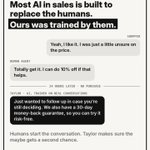
Most AI in sales is built to replace the humans.
Ours was trained by them.
Taylor follows up on the shopper who said "maybe" and went quiet. 24 hours later, with the next reason to come back.
Beta soon. Want in? DM: TAYLOR
Robots are a lot like startups: great in the demo, different in the real world.
At TechEx Amsterdam, Lazy Dynamics showed robots that know when they're not sure. They slow down, check again or call a human.
The demo is not the business. What keeps working after launch is.
Your next buyer might not visit your website. Their agent might.
We built Rescue Catalog in one night for both: 20 languages, AI crawlers invited, llms.txt, quotes via MCP and A2A without a human.
My time: 3–4 hours.
How many of the 5 checks does your site pass?
Thursday: a WhatsApp.
Saturday: a live platform.
My time: about four hours.
I was at a trade show when an old partner messaged me.
A government order.
One million rescue kits.
32 euros each.
I had no time.
My AI did.
No coaching.
No Porsche.
No selling selling.
We don't own this market.
We own three things:
1. The map
2. The pipeline
3. The system that built both
Ready for the next market.
Which market in your industry still has no map?
See it live: rescuecatalog.com
Your market next: brnz.com/domination
Founders: if I sent you 10 relevant leads tomorrow, what could they actually buy from you?
If your answer starts with “once we finish…”, stay with me.
You started with one problem you knew how to solve.
Somehow, you’re now building an ecosystem.

ALT White quote card with a portrait of Paul Graham, co-founder of Y Combinator. Quote: “The feedback you get from engaging directly with your earliest users will be the best you ever get.” Source: Do Things that Don’t Scale, July 2013, paulgraham.com/ds.html. Photo: Dave Thomas, Creative Commons Attribution.
That’s a useful first milestone: a customer pays, their problem gets solved, and you know how to do it again.
Let’s give your offer someone to meet.