

🏛️ A digital archive of Slavic & Balkan heritage, history, ethno-aesthetics, and everyday life
Joined November 2012
- Tweets405
- Following185
- Followers1.5K
- Likes1.1K





☦️ Today is November 21, which means it is Aranđelovdan, the feast day of Saint Archangel Michael! It is one of the biggest and most widely celebrated family patron saint days in Serbia, known as a slava, ranking as the second most common in the entire country.
In Orthodox tradition, Archangel Michael is revered as the leader of the heavenly hosts and a fierce defender of justice, the sick, and the helpless.
According to Serbian folklore, Archangel Michael roams the earth around this time of year disguised as a poor traveler or beggar to test people's kindness. Because of this, hospitality is everything today; tradition dictates that no one asking for food or help on Aranđelovdan should ever be turned away empty-handed.


🇷🇸 "Life is an eternal struggle. He who dares can. He who knows no fear goes forward!"
Exactly 112 years ago, these bold words by Serbian Field Marshal Živojin Mišić inspired the Serbian Army as they achieved one of the most brilliant military victories of World War I at the Battle of Kolubara.
Lasting from November 16 to December 15, 1914, the battle began with a desperate defensive phase against advancing Austro-Hungarian forces. The Serbian Army was completely exhausted and critically short on artillery ammunition.
During this dire withdrawal, Mišić was appointed commander of the First Army. Embodying his own famous motto, he made the bold, highly controversial strategic decision to withdraw his troops even further in order to regroup, shorten the front line, and rest and feed his soldiers.
By pulling back to strike with concentrated force, Mišić completely turned the tide of the battle. His daring leadership transformed a demoralized army into an unstoppable force that shattered the enemy offensive.


☦️🇷🇴 Maria Coman is not your average contemporary artist.
Born in Romania, she initially explored jazz-pop and competed on television talent shows before finding her true calling in something much older: Orthodox Byzantine and Psaltic music.
Maria has become one of the most prominent modern performers of Byzantine music, masterfully interpreting ancient chants in both Romanian and Greek. She is perhaps best known for her frequent collaborations with "Tronos," the prestigious psaltic choir of the Romanian Patriarchate.
8
495


🇷🇸 This heartbreakingly beautiful photograph, taken by the legendary photographer Rista Marjanović, captures a Serbian soldier finally reuniting with his two children at the port of Belgrade in November 1918.
However, the joy of this single reunion stands in stark contrast to a devastating national tragedy. During the Great War, Serbia suffered staggering military casualties, losing an estimated 369,620 soldiers, which accounted for more than half of the nation's mobilized forces!
#RemembranceDay #ArmisticeDay #Serbia

🇷🇸 This footage wasn't actually filmed on Armistice Day itself. It was shot on November 9, 1918, exactly two days before the official end of World War I. The event was the historic Lord Mayor's Show, an 800-year-old London civic parade.
Because the end of the Great War was just days away and the Central Powers were rapidly collapsing, the 1918 Lord Mayor's Show spontaneously transformed into a massive, premature Allied victory parade.
Alongside British, American, and Italian troops, a proud contingent of Serbian soldiers was invited to march through London.
The British crowds gave the Serbs a thunderous reception. Throughout the war, the British public had closely followed Serbia's devastating losses, their harrowing winter retreat across the Albanian mountains, and their heroic return to shatter the Salonika Front.
#RemembranceDay #ArmisticeDay #Serbia


🇷🇸 The Sićevo Gorge in southern Serbia is home to the Balanica Cave Complex, made up of the Mala and Velika Balanica caves. While it might look like a simple rocky shelter today, massive archaeological digs have revealed it was actually a thriving prehistoric hub roughly 300,000 years ago.
During excavations in Velika Balanica in 2004, archaeologists unearthed fossilized hominin teeth dating back approximately 300,000 years. These fossils display distinct traits of early Neanderthals, making them the oldest confirmed Neanderthal remains in the entire Balkan Peninsula.
Inside Velika Balanica, researchers discovered the remains of an extensive prehistoric hearth. The intense burning and scattered remnants prove these early humans were highly organized. They actively cooked their food; archaeologists found the remains of red deer, alpine ibex, and chamois in the same layers.
The stone tools found in the middle layers of both Mala and Velika Balanica are remarkably distinctive. Instead of matching other European tools of that era, they strongly resemble the "Yabrudian" tool-making styles found thousands of miles away in the Levant.
Because of this striking similarity in stone tools and fire usage, scientists now believe the Balanica caves prove that during the late Middle Pleistocene, there were significant population movements and cultural exchanges between the Middle East and the Balkans.


14
364
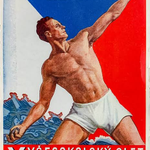
Founded in Prague in 1862, the Sokol (meaning Falcon) movement was created to promote physical fitness, moral toughness, and national awareness among Slavic people. Operating under the slogans "Let us get stronger" and "A sound mind in a sound body," it quickly spread across other Slavic nations, including Yugoslavia, with prominent societies springing up in Slovenia, Croatia, and Serbia.
The massive gymnastics festivals they organized were called slets. The term derives from the Czech root meaning "a flocking together" or "gathering by flight."
On July 4, 1926, the Great Strahov Stadium in Prague opened to host the VIII All-Sokol Slet, eventually expanding to become the largest stadium ever constructed by capacity, accommodating up to 220,000 spectators.
Because of their immense grassroots solidarity, the post-WWII communist regimes eventually dissolved the traditional Sokol movement, co-opting its visual power by replacing the slets with state-run "Spartakiads".


📰 If you have ever flipped through the Yugoslav science magazine Galaksija, chances are you remember the art.
The artistic mind behind those retro-futuristic visuals was Nikolai Lutohin (1932–2000).
Born in Yugoslavia to Russian émigré parents, Lutohin discovered his passion for art early on, copying Flash Gordon strips as a boy before formally studying at the academy of art in Budapest.
During his "Galaksija" era in the 1970s and 1980s, Lutohin created some of his most iconic work. His serigraphs for the magazine featured a blend of biomechanical forms, surreal anatomies, arcane machines, and dreamlike cosmic landscapes.
That expressive style wasn't accidental. During a two-decade period living in Moscow, he honed his technique under the direct influence of classical and surrealist visionaries like Hieronymus Bosch, Francisco de Goya, and Salvador Dalí.
In 1975, after years of travel, Lutohin settled in Munich, Germany, where he built a second prolific career illustrating covers for cult fantasy, horror, and sci-fi pulp series such as Mythor, Terra Fantasy, and Dämonenkiller.


Before the polished era of Start, there was Čik (often known later as Novi Čik). Founded in the mid-1960s, Čik was a real pop-culture phenomenon. It started as an entertainment, crossword, and youth magazine that gradually leaned heavily into softcore pin-ups, sensationalist pulp stories, rock and roll news, and "sexual education" for the youth. It was a bit trashy, chaotic, and wildly popular among teenagers and young adults across Yugoslavia before evolving into other formats in the 1970s.


1
104
☦️Born in the 11th century near Constantinople, St. Petka heard a Gospel reading at age ten that changed her life. She gave her expensive clothes and inheritance to the poor, eventually moving to the Jordan Desert to live in total isolation as a hermit. She passed away quietly at just 27 years old.
It is a historical irony that a woman who only wanted a quiet life in the desert became the most fought-over treasure of medieval empires! Because her remains were found uncorrupted, her relics were moved to evade conquests over nine centuries, traveling from Epivates to Trnovo (Bulgaria), to Belgrade, then to Constantinople, before finally resting in Iași, Romania, where massive pilgrimages occur today.

Today we celebrate a great holiday dedicated to the Venerable Mother Paraskeva (St Petka) ☦️ protector of women, children, the poor and the sick.
This saint is also very respected in:
Russia 🇷🇺
Greece 🇬🇷
Romania 🇷🇴
Cyprus 🇨🇾
Bulgaria 🇧🇬

1
22
530
"Miro, kiss the children for me. Listen to your mother, children, and take care of yourselves. Goodbye forever. Your dad, Laza."
This was the last message of a father before his execution by firing squad in Šumarice, Kragujevac, on October 21, 1941.
Today marks exactly 85 years since one of the most heartbreaking tragedies in Balkan history.
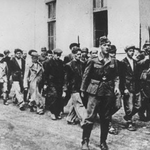
In the fall of 1941, German occupying forces enforced a brutal and calculated quota: 100 Serbian civilians were to be executed for every German soldier killed by resistance fighters, and 50 for every wounded. In Kragujevac, this horrific math resulted in the massacre of nearly 3,000 innocent civilian men and boys over just a few days.
The most gut-wrenching aspect of this historical tragedy is that entire classes of students, some as young as 12 years old, were marched directly from their school desks to the execution grounds. They died alongside their teachers, many of whom famously refused the opportunity to be spared so they could stay with their students.
"It happened in a land of farmers
on Hilly Balkan, far, far away;
A troop of students died martyred
on one single day.
Whole rows of boys took each other’s hands
and leaving the last school class
went to the execution quietly,
as the death was nothing but a smile.
All friends in rows were, at the same moment,
lifted up to the eternal residence."
(Serbian poet Desanka Maksimović, Bloody Fairytale)
#Kragujevac #weremember #Sumarice


🇷🇸 Did you know that one of the most incredible archaeological artifacts in Serbia is a 3,500-year-old miniature clay chariot pulled by waterbirds?
The 'Dupljaja Cart' (Dupljajska kolica) was discovered in the village of Dupljaja near Bela Crkva, in the Banat region of northern Serbia. Dating back to the Late Bronze Age (roughly 1500–1200 BCE), this baked clay votive cart belongs to the mysterious Dubovac-Žuto Brdo culture.
Riding in the cart is an anthropomorphic female deity. She is depicted with her arms placed firmly on her hips, wearing a long dress, and featuring a striking, stylized bird-like face with large eyes and a prominent nose. The clay is intricately decorated with linear and geometric patterns filled with white inlay, representing her jewelry and garments.
As a brilliant nod to antiquity, an image of the Dupljaja Cart is actually featured on modern Serbian driving licenses as a symbolic ancient 'vehicle'.
Today, you can admire this stunning piece of prehistory in the permanent collection of the National Museum of Serbia in Belgrade.

🎥 The Battle of Kosovo movie was specifically produced and released in 1989 to commemorate the monumental 600th anniversary of the real-life 1389 clash between the forces of Serbian Prince Lazar and Ottoman Sultan Murad.
Rather than a strict documentary-style retelling, renowned Serbian poet Ljubomir Simović wrote the screenplay based on his own drama. It deliberately embraces the rich elements of Serbian epic folk poems. This includes legendary lore such as Prince Lazar's spiritual choice of martyrdom for the "Kingdom of Heaven" over an earthly victory, and the mythical heroism of the knight Miloš Obilić.
The production drew some of the era's most prominent Yugoslav actors, featuring Miloš Žutić as Prince Lazar, Gorica Popović as Princess Milica, Ljuba Tadić as Sultan Murad, and Žarko Laušević as Miloš Obilić.

During the 1960s and 1970s, Belgrade's streets overflowed with effortless elegance, and nobody captured this cinematic beauty quite like Branislav 'Bane' Đorđević (1934-1995)!
By day, Bane was a dedicated piano professor, but his true secondary passion lay behind the viewfinder. As a prominent member of the 'Belgrade' Photo Club, he took to the streets to document the everyday glamor and sophisticated fashion of the city's women.
The legendary Yugoslav writer and painter Momo Kapor once noted that Bane could be found almost every single day standing on the corner of Knez Mihailova Street. He would patiently wait for the city's most stylish and striking passersby to cross his path, essentially turning the bustling pedestrian zone into his own personal runway.
He shot his iconic portrait series using a vintage Czech Flexaret camera. Because the camera completely lacked a zoom lens, Bane had to step up and get physically close to his subjects to capture their portraits. Fortunately, his charming demeanor and familiar presence meant the elegant women of Belgrade happily paused to be immortalized by him.


From 1931 to 1933, the Royal Cavalry Guard and the City Cavalry Regiment were stationed in central Belgrade at a site housing stables and military barracks. Following this period, the area was converted into a public park named "Manjež" (derived from the French word for cavalry school), and major cavalry training operations were positioned at the Cavalry School in Zemun.
The Cavalry School in Zemun served as the primary hub for the Yugoslav Royal Army's early attempts to integrate mechanized warfare into its traditional horse cavalry. It housed the Eskadron konjičke škole (Cavalry School Squadron) and later established the Eskadron bornih kola (Squadron of Fast Combat Vehicles).


9
411
Exploring the brutalist architecture and WWII history of the Balkans just got a whole lot easier. Creator @drugjarni has mapped a staggering 4,500 Yugoslav monuments!
While it includes the massive, world-famous concrete memorials, the true treasure of this project is its documentation of forgotten, highly localized village monuments and hidden memorial plaques across the region that are rarely seen online.
mudroljub.github.io/spomenik…

Nakon nekoliko sedmica rada, svečano predstavljam najveću mapu jugoslovenskih spomenika na netu: 4.500 spomenika, oko 19 puta više od Spomenik Database. Pored najvećih, ovde možete naći zaboravljene seoske spomenike, spomen-ploče i još mnogo toga.
mudroljub.github.io/spomenik…
🇷🇸 Archaeologists in eastern Serbia have uncovered a massive 12th-century Byzantine episcopal church in the medieval town of Braničevo, near Požarevac.
Measuring an impressive 31 by 15.5 meters, this massive structure finally proves that medieval Braničevo was an official episcopal seat. It was founded in the 12th century during the reigns of Byzantine emperors John II or Manuel I Komnenos. Remarkably, it was built directly on top of an even older 10th-century church from the era of Basil II, "the Bulgar Slayer".
The interior was breathtakingly lavish. The floor was paved in dark-blue and dark-red stone imitating porphyry and granite, and when it sustained wear and tear, it was actually repaired using recycled ancient Roman marble slabs. The surviving fragments of wall paintings are of such high quality that experts believe the artists were brought in directly from major cultural centers like Constantinople or Thessaloniki.
Among the artifacts excavated near the 10-meter-wide altar was a massive, carved white marble Roman pinecone. Likely brought over from the nearby ancient Roman city of Viminacium, it was placed inside the church to serve as a symbol of immortality and the restoration of life.
The magnificent church suffered a tragic fate; traces of burning indicate it was violently plundered and demolished during Hungarian raids in 1182 or 1183. It was rebuilt in the 13th century, only to be destroyed again. Today, fully excavating the interior is impossible for a very modern reason- a local road was built right over the site, cutting straight through the ancient church.


