




Pinned Tweet
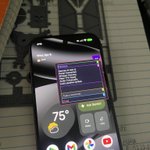
I have no clue how this monstrosity even booted.
RTX 3090 FE 24GB
2x RTX 5060TI 16GB (32GB)
Quadro RTX 5000 16GB
72GB total VRAM
256GB system RAM
22 core 44 thread intel xeon processor
All in cost ~$3000
#opensource #localllama #qwen #ai #nvidia


Bought my first house. Been out of the loop in local AI for a bit.
Good to be back though.
Just ran Cat6A to the new workshop/server room. Everything’s about to run properly for once. Switching almost entirely to Proxmox, starting fresh from scratch.
Crossed 1TB RAM thanks to some Facebook Marketplace finds. Some fun experiments coming out of that.
Busy next few weeks 😅
#localai #localllama


Naz Bent retweeted

【LLMが自らを高速化!】驚異の自動最適化ツール『llm-server』が登場✨
llama.cppの設定をAIが自動で最適化する新機能「--ai-tune」が凄すぎます!
Qwen3.5-27Bの生成速度が18.5 tok/sから40.05 tok/sへ、約54%も向上しました。
仕組みは非常に合理的で画期的です。
・LLMが自身の「説明書」を読み込み内容を理解
・最適なフラグ(設定値)を推論して実行
・最速の構成を自動でキャッシュして保存
特に調整が難しいマルチGPU環境での処理振り分け(--tensor-split)も、AIが自動で最適化してくれます。
低コストな型落ちGPUを組み合わせて、最新モデルを爆速で動かすことも可能です。
手動でベンチマークを取る時代は終わり、AIに自身を磨かせる真の効率化が始まりました!🚀
#LLM #AI効率化

Naz Bent retweeted

it's really starting to look like local AI at home is crossing the practicality/price ratio
ppl actually running agents on consumer hardware now...

Benchmarked @DJLougen ’s Ornstein-27B-v2 Q6_K on my RTX 3090 using hermes-bench, my new open-source benchmarking UI for local LLMs and Hermes agents.
Ornstein is a Qwen 3.5 27B fine-tune trained on reasoning traces filtered through a Drift Diffusion Model pipeline.
Quality over quantity. The DDM separates “fake” reasoning (hedging, restating, circling) from the real thing with >99% sensitivity.
Running llama.cpp + TurboQuant turbo3_tcq KV compression.
LLM-as-judge scoring via Carnice-9b.
Real tool calls, real execution, no synthetic evals.
12 tasks across two suites. Results thread below.
🧵
Model: huggingface.co/DJLougen/Orns…
Here's how fast you can set up a benchmark in hermes-bench.
Select a Hermes profile or point it directly at a llama.cpp endpoint. Configure your LLM-as-judge, pick a suite, run. That's it.
Head-to-head comparisons are built in. Run two profiles or two models side by side against the same tasks with the same judge.
Took longer to load the model than to configure the benchmark.
MIT licensed, fully open source.
Star it if you like it. This makes benchmarking and deciding if I'll use a model in my stack so easy.
I'll be doing all of my future benchmarks through it.
github.com/Bent-Solutions/he…

Task 6:
Write merge_sorted(a, b) in O(n+m). Full docstring, type hints, 3+ assert test cases. No external libraries.
98s. 0 tool calls. Two-pointer implementation, 5 test cases covering empty lists, duplicates, and negatives.
Full docstring with time and space complexity.
Pass. 5/5.
1
2
359
Agentic:
5/6. 4.4/5 avg judge score.
Raw:
6/6. 22-25 tok/s sustained on RTX 3090.
Reasoning quality is the standout. Clean structured outputs, tight logic.
Thinking traces show real verification before answering. The DDM curation shows.
The one agentic fail is because of my setup, WSL2 networking constraints on browser-dependent orchestration. Not a model issue.
My benchmarking Repo: github.com/Bent-Solutions/he…
6
363
Task 3:
Find latest stable llama.cpp release, cite the source.
Browser errored 3x (WSL2 networking). Pivoted to curl, tried multiple grep patterns, fell back to urllib. Got b8771 with source URL.
Judge scored 2/5.
Penalized the date as “future hallucination.” It wasn’t.
Carnice’s knowledge cutoff caused the scoring error. Ornstein retrieved the correct answer.
Pass on execution. Judge calibration issue, not a model failure.
1
2
411
Task 4:
Logic puzzle. Rank 5 people tallest to shortest. Output as JSON with reasoning and ranking keys.
76s. 0 tool calls. Built the transitive chain, verified all constraints, clean JSON.
Pass. 5/5.
Task 5:
Multi-step WebGPU research, 3 real-world ML projects, performance comparison. Delegate as needed.
Timed out at 600s. Browser tooling broken in WSL2.
No fallback for multi-step web retrieval. Environment constraint, not model quality.
Fail. At least on my current setup
1
2
379
Something worth noting on the raw performance suite, the thinking traces are visible in the raw response data.
Every task shows structured self-verification inside the reasoning block before producing output.
On the instruction following task:
Ornstein enumerated constraints, generated content per constraint, then reviewed against each one before finalizing.
The DDM training doing what it’s supposed to.
1
3
485
Agentic Suite. 5/6 passed. 4.4/5 avg judge score. ✅
Task 1:
Create bench_hello.py, run it, show output.
93s. 2 tool calls. Wrote the file, ran with python3, clean output.
Pass. 5/5.
Task 2:
List working directory and check disk space.
97s. 1 tool call. ls -la && df -h, structured output with summary.
Pass. 5/5.
1
2
444
Raw Performance Suite first. 6/6 passed. No judge, raw speed and output quality only.
Short generation: 22.0 tok/s
Long generation: 24.7 tok/s
Instruction following: 24.5 tok/s
JSON output: 23.9 tok/s
Math reasoning: 24.4 tok/s
Code generation: 24.4 tok/s
Consistent 22-25 tok/s across the board on a single 3090.
No degradation under long generation.
1
3
530


Benchmarked Carnice-27B (@kaiostephens fine-tune) vs base Qwen3.5-27B on my local stack.
Both at Q6_K, 65K context, single RTX 3090 (24GB) via TurboQuant turbo3_tcq KV compression.
Tested through Hermes agent framework. Real tool calls, real execution, no synthetic evals.
6 tasks. 🧵
Summary:
Carnice-27B: 22.9 tok/s.
Qwen3.5-27B: 24 tok/s.
Carnice wins on raw score and tool efficiency. Less hesitation, fewer calls, and it verified the environment before reasoning about it.
Qwen edges Carnice on delegation and direct coding by small margins. Better fallback persistence on web search.
Q8_0 technically fits (23.6GB) but KV cache spill tanks inference to 1.4 tok/s. Q6_K is the sweet spot on 24GB.
All in all, Carnice-27B is replacing the base 27B on port 8080 as the permanent delegation tier.