

Turning biological data into early warning intelligence. Building the future of biosecurity through data fusion, analytics, and actionable insights.
Boston, MA
Joined June 2026
- Tweets80
- Following8
- Followers547
- Likes0




Sequencing wastewater broadly used to be a research exercise. Falling costs are making it a standing capability. The hard part now isn't the data. It's deciding what in it deserves attention: unusual here, persistent, independently confirmed.
#Biosurveillance #PublicHealth

“Corroboration converts isolated observations into evidence.” From BioRadar’s white paper, From Signal to Biological Intelligence. Independent systems tend to fail in different ways, so when they agree, noise is less likely.
Download it: bioradar.com/insights/from-s…
#Biosurveillance #PublicHealth

Three cities this week for BioRadar’s founders:
- Oct. 27, Boston: @ashishkjha on AI and health at UMass.
- Oct. 28, D.C.: @NikkiRomanik on biosecurity and preparedness at Scowcroft.
- Oct. 29, NYC: Both at ConV2X.
Request a briefing: bioradar.com/briefing

Worth asking: when two surveillance data sources disagree, who decides what deserves attention? A credible answer covers which source leads, whether the disagreement is recorded, who makes the call and how long it takes. No universal rule exists.
#Biosurveillance #PublicHealth

Detecting an unusual biological signal is one thing. Knowing what it means is another.
Our new white paper, From Signal to Biological Intelligence, on why reliable early warning depends on corroboration across independent signals:
bioradar.com/insights/from-s…
@ashishkjha @NikkiRomanik

Disease surveillance often tells us where an outbreak has been. Preparedness also requires earlier visibility into emerging threats.
BioRadar Co-Founder and CEO @ashishkjha explains the rearview mirror vs. windshield challenge in Baseline:
bioradar.com/newsletters/bas…

Screening an order or a prompt assumes a human pauses somewhere in the process. Nikki Romanik (@NikkiRomanik) on why an autonomous agent removes that pause, and what is left to catch: the biology itself.
First issue of Baseline: bioradar.com/newsletters/bas…

A lab worker’s unexplained death in Russia raises questions about transparency and lab oversight.
In The BMJ, @ashishkjha calls for independent verification and stronger international standards for high-risk labs.
bmj.com/content/395/bmj-2026…

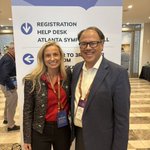
Nikki Romanik (@NikkiRomanik) with Alex Gonzalez of the Metro Atlanta Chamber at Venture Atlanta. BioRadar recently joined the Chamber. Preparing for biological threats is local work: it depends on a region seeing the same picture early. Thanks @VentureAtlanta. #VA2026

Nikki Romanik (@NikkiRomanik), BioRadar's co-founder and president, is at Venture Atlanta today and tomorrow as a Showcase Company. If you're there and thinking about earlier, better-supported warning of biological threats, find her. #VA2026
Without a baseline, a spike in a biological signal is just a spike. A baseline sets what’s normal for a place, so you can ask: is the change unusual, does it persist, do other signals agree?
#BiologicalIntelligence #PublicHealth

When a biological threat emerges, leaders often have to make decisions before the full picture is clear.
Our Co-Founder and President @NikkiRomanik knows that challenge from her White House preparedness experience.
It's helping shape how we're building BioRadar.

A signal is easy to get. Knowing if it’s real is hard.
Worth asking about any biological surveillance system: one signal or several? What’s the false-positive rate, and how is it measured? When sources disagree, who decides?
First issue of Baseline: bioradar.com/newsletters/bas…

Ashish Jha (@ashishkjha) joins a World Health Summit (@WorldHealthSmt) panel on “Health Security Beyond Defense.” The question: when defense priorities dominate, do long-term threats like pandemics get sidelined? Berlin, Sun. Oct. 11, 2:00 p.m. CEST (8:00 a.m. ET).
worldhealthsummit.org/sessio…

Where to find BioRadar's founders this October: Ashish Jha (@ashishkjha) and Nikki Romanik (@NikkiRomanik) are speaking on biological preparedness, health policy and the future of health care. Full schedule in the image.
Attending? Come say hello: bioradar.com/briefing

In @GlobeOpinion, Dr. Ashish Jha (@ashishkjha) argues Russia owes the world answers on a death at a Soviet-era anti-plague lab, and that the U.S. should prepare, starting with detection that does not depend on a list of known threats.
bostonglobe.com/2026/10/06/o…

Ashish Jha (@ashishkjha) joined @CNN's @ErinBurnett on possible pneumonic plague after a lab worker's death in Russia. With details unconfirmed, he called for better surveillance and transparency, and for preparedness to keep pace.
cnn.com/2026/10/05/world/vid…


BioRadar retweeted

Many of you have been tracking the Irkutsk lab situation over the last few days.
I've been gathering facts and trying to understand what is happening before weighing in.
Now that I have, I have to say — I'm concerned
🧵
BioRadar Co-Founder and CEO @ashishkjha will keynote the CHIP Annual Retreat Tuesday in Boston on Tuesday, October 6, drawing on lessons from leading the White House COVID-19 response and how that experience is shaping what we’re building.
Thank you to the CHIP team for the invitation.
