

Researcher @ ByteDance Seed. Prev @OhioState @MSFTResearch
San Jose, CA
Joined May 2021
- Tweets139
- Following523
- Followers1.6K
- Likes300


Pinned Tweet
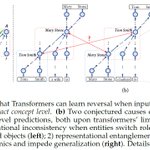
LLMs exhibit the Reversal Curse, a basic generalization failure where they struggle to learn reversible factual associations (e.g., "A is B" -> "B is A"). But why?
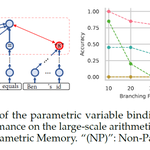
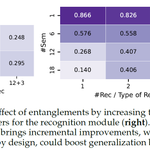
Our new work uncovers that it's a symptom of the long-standing binding problem in AI, and shows that a model design based on JEPA can, for the first time to our knowledge, break the curse without side-stepping it through data augmentation or non-causal objectives.
This skill also unlocks a new kind of parametric memory integration that enables models to tackle large-scale arithmetic reasoning problems via parametric forward-chaining, outperforming frontier LLMs (o3-mini-high, Gemini-2.0-Flash-Thinking) based on non-parametric memory and prolonged explicit reasoning.

Boshi Wang retweeted

Unpopular (but urgent) take amid the frenzy around GPT-5.3-Codex, Claude Opus 4.6, and OpenClaw:
With more people giving their mouse and keyboard to computer-use agents, the scariest thing is that we haven’t figured out how to monitor their actions, detect misaligned ones, and correct them before execution.
Agents get tricked by malicious injections, delete files even without attacks, or wander off-task to perform irrelevant actions → causing real harm or derailing progress.
We tackle this head-on:
• MisActBench: First systematic benchmark for misaligned action detection, built from real agent trajectories
• DeAction: A plug-and-play runtime guardrail
Key results: DeAction catches misaligned actions from external attacks or internal failures with ~80 F1, with no performance hit on user-intended tasks and ~25% added latency (end-to-end online eval). Still much room to improve. See details below👇
Misalignment detection on the fly is critical and we must solve it before widespread CUA deployment!
Kudos to the students @yuting_ning @Jaylen_JonesNLP @Zhehao_Zhang123 @osunlp and all collaborators from Amazon!

Computer-use agents (CUAs) are getting really capable. But as their autonomy grows, the stakes of them going off-task get much higher 🚨
They can be misled by malicious injections embedded in websites (e.g., a deceptive Reddit post), accidentally delete your local files, or just wander into irrelevant apps on your laptop. Such misaligned actions can cause real harm or silently derail task progress, and we need to catch them before they take effect.
We present the first systematic study of misaligned action detection in CUAs, with a new benchmark (MisActBench) and a plug-and-play runtime guardrail (DeAction).
🧵(1/n)

Boshi Wang retweeted

Computer-use agents (CUAs) are getting really capable. But as their autonomy grows, the stakes of them going off-task get much higher 🚨
They can be misled by malicious injections embedded in websites (e.g., a deceptive Reddit post), accidentally delete your local files, or just wander into irrelevant apps on your laptop. Such misaligned actions can cause real harm or silently derail task progress, and we need to catch them before they take effect.
We present the first systematic study of misaligned action detection in CUAs, with a new benchmark (MisActBench) and a plug-and-play runtime guardrail (DeAction).
🧵(1/n)
Boshi Wang retweeted

🚀Online RL with verifiable rewards is powering agentic post-training (e.g., multi-turn coding agents), but it can be costly and unstable. Meanwhile, offline RL is more cost-efficient and stable, but often underperforms online RL.
🤔What if we get the best of both?
🔵Introducing Cobalt, a contextual bandit learning method to train self-correcting LLMs with offline trajectories. The idea is simple:
1. Collect (partial) code generation trajectories with a reference model offline.
2. During online bandit learning, prompt LLMs with partial trajectories and train them for single-step code generation greedily.

Boshi Wang retweeted

Life update: I moved to silicon valley to tackle agents' biggest challenges: plasticity and reliability.
Today's agents are smart but brittle. They lack plasticity (continual learning and adaptation) and reliability (stable, predictable behavior with bounded failures). These two traits define whether agents become critical infrastructure or remain clever demos.
Plastic systems like to change. Reliable systems resist change. Is it even possible to have both of these seemingly conflicting traits? Fortunately, humans are a living example of that. We are constantly learning and adapting while staying remarkably dependable (for the most part, at least). The real question is, how can we achieve the same harmony within a different cognitive substrate?
We've brought together some of the world's best agent experts whose work (Mind2Web, MMMU, LLM-Planner, SeeAct, UGround) helped shape the modern agent field. Now we are taking on the new mission: unlocking plasticity and reliability for every agent.
We are looking for cracked researchers and engineers to join us in person in the bay area! If you strongly resonate with the mission, send your CV and thoughts to: [email protected]
I will be at #neurips2025. Happy to chat over coffee!

Boshi Wang retweeted
🚀 Worried about faculty openings? Ohio State @OhioState is to hire 100 new faculty with AI expertise over the next five years! 🤖🎓
The new hires will join one of three AI Faculty Cohorts:
🧠 Foundational AI — Elevating the theoretical, mathematical, and algorithmic underpinnings of AI.
🧩 Applied AI — Harnessing AI to revolutionize the translation of ideas into real-world solutions for Ohio and beyond.
🛡️ Responsible AI & Cybersecurity — Ensuring ethical innovation and safeguarding digital landscapes for a secure future.
📅 Initial faculty searches are underway — the first group of hires will join in Autumn 2026!
✨ Moreover, two tenure-track (open-rank) positions are already open in CSE @OhioStateCSE, starting in Fall 2026!
🔹 Timashev Professor (Assistant/Associate/Full, Tenure-Track) — in Programming Languages & Software Engineering (PLSE), starting as early as Fall 2026. Affiliated with the new Center for Software Innovation (CSI), endowed by a historic $110M Timashev Family Foundation gift — the largest in OSU’s history! 💰
🔹 Open-Rank Faculty in AI + Healthcare — seeking scholars at the intersection of AI/ML and healthcare innovation. The faculty will join the AI(X) Hub at Ohio State, established to drive innovation, provide resources, and foster the development of foundational and applied AI. 🧬💡
Boshi Wang retweeted

📢 As AI becomes increasingly explored for research idea generation, how can we rigorously evaluate the ideas it generates before committing time and resources to them?
We introduce ScholarEval, a literature grounded framework for research idea evaluation across disciplines 👇!
Boshi Wang retweeted

🎉 Excited to share that our paper EvoSchema: Towards Text-to-SQL Robustness Against Schema Evolution was accepted at VLDB 2025! 🚀
📢 Reminder: join us at VLDB 2025 in London!
🗓️ Sept 2 (Tue), 10:45 AM – 12:15 PM
📍 Room Wordsworth 4F
📄 vldb.org/pvldb/vol18/p3655-z…
#VLDB2025 #LLMs
Boshi Wang retweeted
🧪 Chemists spend many hours planning and replanning synthetic routes for a target molecule to avoid dangerous reactants and intermediates.☠️🚫
🤔 What if an AI agent could plan around them automatically—better and faster than human experts?
🔬 Constrained retrosynthesis planning—not only finding a valid synthetic route but also making sure the route satisfies practical constraints—remains a major challenge for AI for chemistry.
🚀 Recently we have made exciting progress in this challenge! Led by @FrazierBaker, we propose LARC, the first LLM-based Agentic framework for Retrosynthesis planning under Constraints. It is based on a simple yet effective idea: We adopt an Agent-as-a-Judge approach that leverages LLMs and external tools to provide constraint evaluation scores to the retrosynthesis planning process and use those scores to guide and constrain the route generation.
📊 Key results:
✅ 72.9% success rate on 48 retrosynthesis planning tasks with real-life constraints
✅ Approaches our human expert (81.3%)
✅ Vastly outperforms best LLM baseline (25.0%)
✅ >3.6× faster than our human expert while maintaining comparable success
✨ Looking ahead:
(1) Scale evaluation with more human experts (This has been very hard due to cost & availability—DM/Email us if interested in collaborating!)
(2) Extend beyond constraint satisfaction to evaluate the reaction feasibility within a synthetic route, which is another major open challenge.
Thanks to the amazing team at @OhioState for the great efforts: @FrazierBaker @AduAmpratw82108, Reza Averly, @BotaoYu24 @Ningx005 @osunlp @TheNingLab
#LLMs #agent #AgenticAI #retrosynthesis #chemistry #ai4science #ai4chemistry
Boshi Wang retweeted
I am humbled and grateful to receive two grants from Open Philanthropy @open_phil to advance the safety of AI systems, co-led with my colleague @ysu_nlp. I'm also honored to be the first at @OhioState to receive Open Philanthropy funding.
Most credit goes to the amazing students @osunlp, particularly Boshi Wang @BoshiWang2, Jaylen Jones @Jaylen_JonesNLP (co-advised with @EricFos), Zeyi Liao @LiaoZeyi, Yuting Ning @yuting_ning, Zhehao Zhang @Zhehao_Zhang123, and Boyuan Zheng @boyuan__zheng.
Our mission:
✅ Understanding the fundamental limitations & generalization failures of transformers (see our prior work on Grokked Transformers and on connecting the Reversal Curse with the binding problem as examples, linked below)
✅ Identifying & mitigating safety/security risks of computer-use agents (see our prior work on EIA, RedTeamCUA, and WebGuard as examples, linked below)
🚀 We are actively hiring postdocs in these areas and topics related to agents in general. Join us!

Associate Prof. Huan Sun has been awarded two competitive research grants from Open Philanthropy focused on the rapidly evolving field of #AI safety: engineering.osu.edu/news/202… @hhsun1


Boshi Wang retweeted
Computer Use: Modern Moravec's Paradox
A new blog post arguing why computer-use agents may be the biggest opportunity and challenge for AGI.
tinyurl.com/computer-use-age…
Table of Contents
> Moravec’s Paradox
> Moravec's Paradox in 2025
> Computer use may be the biggest opportunity for AGI
> Chatbots → agents
> Internet-scale learning of human cognition
> Bits > atoms
> Enormous economic value
> Why is computer use hard for AI?
> Computer use ≠ clicks + typing
> Idiosyncratic environments
> Contextual understanding
> Tacit knowledge
> Is RL the panacea?
> Looking forward
If you are also excited about CUAs and want to do some serious work, let's chat!

Boshi Wang retweeted
🚨 Postdoc Hiring:
I am looking for a postdoc to work on rigorously evaluating and advancing the capabilities and safety of computer-use agents (CUAs), co-advised with @ysu_nlp @osunlp. We welcome strong applicants with experience in CUAs, long-horizon reasoning/planning, safety, or RL. Please DM or reach out!
🧠 About OSU NLP:
We’re a vibrant and forward-looking group pushing the frontier of AI agents and their safety. Our recent projects include:
🔹 Mind2Web, Online-Mind2Web, Mind2Web 2
🔹 SeeAct, UGround, WebDreamer
🔹 EIA, RedTeamCUA, Grokked Transformers
💻 Infrastructure:
In addition to group-owned GPUs, OSU NLP has access to ~900 GPUs via the Ohio Supercomputer Center, including 500× A100 and 128× H100. We also collaborate frequently with industry on large-scale workloads.
🚀 Come join us to do pioneering research in this fast-growing space. Reposts appreciated! 🙏🙏🙏
Boshi Wang retweeted
🔎Agentic search like Deep Research is fundamentally changing web search, but it also brings an evaluation crisis⚠️
Introducing Mind2Web 2: Evaluating Agentic Search with Agents-as-a-Judge
- 130 tasks (each requiring avg. 100+ webpages) from 1,000+ hours of expert labor
- Agent-as-a-Judge with 99% reliability
- Comprehensive eval and analysis of frontier systems against humans
Takeaway: Best-performing system (OpenAI Deep Research) already achieves 50-70% of human performance while spending half the time.
Humans are subject to cognitive fatigue and limited working memory for such complex tasks. Agentic search will be a critical tool to augment human cognition.
🧵:


Boshi Wang retweeted
📈 Scaling may be hitting a wall in the digital world, but it's only beginning in the biological world!
We trained a foundation model on 214M images of ~1M species (50% of named species on Earth 🐨🐠🌻🦠) and found emergent properties capturing hidden regularities in nature.
🧵

Boshi Wang retweeted

🔬 Introducing ChemMCP, the first MCP-compatible toolkit for empowering AI models with advanced chemistry capabilities!
In recent years, we’ve seen rising interest in tool-using AI agents across domains. Particularly in scientific domains like chemistry, LLMs alone still fall short on many professional tasks (e.g., property prediction, synthesis planning), thus tools remain essential for enabling AI systems to access domain knowledge, perform calculations, run simulations, and support complex reasoning.
Yet despite a huge number of chemistry tools and resources, there’s no standardized toolkit for AI systems to interact with them, making it difficult to build and evaluate tool-using agents in the scientific domain.
To bridge this gap, we introduce ChemMCP, an easy-to-use and extensible toolkit that expose chemistry capabilities to LLMs and agents via unified interfaces. Built on the Model Context Protocol (MCP), the emerging standard for connecting AI to external tools and resources, ChemMCP offers the following key features:
🔌 Plug-and-Play Chemistry Tools for AI Assistants
ChemMCP tools can be integrated into any MCP-enabled LLM clients in just minutes, allowing researchers to augment LLMs with chemistry capabilities without additional training.
🛠️ Standalone Toolkit for Custom Workflows
With its decoupled design and unified interfaces, ChemMCP tools can be easily imported into your workflow, to process data, assemble pipeline steps, or build bespoke agentic applications — via MCP or Python, whichever you prefer.
🤖 Native RL Agent Framework
ChemMCP natively supports multi-turn interactive loops between agents and tool, providing an ideal infrastructure and testbed for scientific tool-using agents.
📦 Modular and Extensible Design
Adding a new tool is as simple as writing a Python file. All tools follow a consistent schema, ensuring clear interfaces, easy maintenance, and automatic documentation.
We’re open-sourcing ChemMCP, hoping it can serve as a foundation for:
🧪 AI-assisted chemistry research
🤖 Tool-using agent development and evaluation
⚒️ Chemistry tool development and standardization
We’re just getting started — and actively improving the toolkit.
Your contributions are more than welcome — including but not limited to developing new tools, improving existing tools, or brainstorming with us about building something fun around ChemMCP! Join our community and let's chat!
#AI4Science #AI4Chemistry #LLMs #ToolUse #OpenSource #AIAgents #Chemistry #MCP #ChemMCP
Boshi Wang retweeted

Systematic reviews (SRs) drive evidence-based medicine, but months-long workflows can’t keep pace with today’s literature flood. Fully autonomous solutions promise speed, but the magic often fizzles - these models still skip pivotal trials, hallucinate findings, and bury the synthesis process, leaving clinicians wary of the results.
InsightAgent takes a different tack: an interactive interface that pairs speedy AI agents with real-time human oversight. InsightAgent cuts review time from months to hours and produces SR-style extended abstracts that reach ~ 80 % of human quality with more than 30% higher user trust & satisfaction.

Boshi Wang retweeted

🚀 Thrilled to unveil the most exciting project of my PhD:
Explorer — Scaling Exploration-driven Web Trajectory Synthesis for Multimodal Web Agents
TL;DR: A scalable multi-agent pipeline that leverages exploration for diverse web agent trajectory synthesis.
📄 Paper: arxiv.org/pdf/2502.11357
🌐 Website: osu-nlp-group.github.io/Expl…
#ACL2025 Findings #WebAgents #LLM
(1/7)

Boshi Wang retweeted
I will miss #NAACL2025 unfortunately, but please check out our work on chemistry agents, "ChemToolAgent: The Impact of Tools on Language Agents for Chemistry Problem Solving" today (May 1) during 2:00-3:30pm (local time) at Hall 3, Poster Session 5! Some updates: We have renamed our ChemAgent to ChemToolAgent, compared with another concurrent ChemAgent work (arxiv.org/abs/2501.06590), and also tested OpenAI o1 on chemistry tasks. Awesome work led by @BotaoYu24 @osunlp and a great collaboration with @ninglab.
Despite our ChemToolAgent has a straightforward tool-use design, it achieves better performance than other existing agents for chemistry, including ChemCrow and the above ChemAgent based on a more complex design, evaluated on a comprehensive set of benchmarks including SmolInstruct, MMLU, SciBench, and GPQA. Try it out!

Boshi Wang retweeted

🚨We just released the data generation code for RoboSpatial!
💾 github.com/NVlabs/RoboSpatia…
📢 And yes, RoboSpatial is a #CVPR2025 Oral 🏆🔥


🔥 VLMs aren’t built for spatial reasoning — yet.
They hallucinate free space.
Misjudge object fit.
Can’t tell below from behind
We built RoboSpatial to tackle that — a dataset for teaching spatial understanding to 2D/3D VLMs for robotics.
📝 Perfect review scores @CVPR 2025
Boshi Wang retweeted

“What's the role of NLP/LLM researchers in agent research?”
“Natural language is merely a tool for communication.”
…
These doubts and criticisms have circulated widely over the past two years. In my PhD dissertation, I want to provide a perspective that addresses these doubts and clarifies the role and responsibility of researchers with a footing in NLP (including myself) in agent research.
TL;DR, natural language is a critical component for developing extrapolative agents in open-world tasks; the compositional semantics of natural language impose a structure of the goal space, which facilitates extrapolation to new goals.
#Dissertation #AgenticAI