

Girl of the Old Dreaming. Master Herbalist, Eastern Healer (TCM/CCM), Shamanic Practitioner, Folk Medicine | Anti hive-mind. Independent. Plainswoman. 𖣠
Joined July 2009
- Tweets19K
- Following587
- Followers13.3K
- Likes58.3K





What I recommend to people in my practice that are about to get sick, at this time of year :
2 large (finely chopped) garlic cloves taken at different times of day at first onset. So one either in morning (or noon) and one in the evening. Some people can’t handle raw garlic as it’s too hot on their gut but many can and if they can, this is a nice broad spectrum kick to any invader. Can take also in a raw honey.
I also love thieves oil either in a diffuser or a drop highly diluted in oil on the sole of each foot. I don’t put this on foot without cutting it in a tbsp of oil or it could burn the skin. If worried, just diffuse a few drops into your room. I personally use the thieves oil by do terra called ‘on guard’ but there are many out there born from the original recipe that was historically used. It’s famous and effective.
Avoiding drafts - especially that are cool/cold and especially while sleeping, as this is when the body becomes even more stagnant.
Drinking easy to drink drinks and warm, simple meals that nourish. (Soups + broths, more on the bland side of meals, pre broken down, nothing complicated for drinks, Everything put into body should be fresh made and not greasy or fried. Nothing overly damp causing such as alcohol, breads, pastas, dairy.
Then, having them take zinc, magnesium glycinate, vitamin d, selenium, highly bio available vitamin c or liposomal vitamin c.
Lactoferrin.
Ginger infusions.
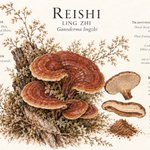
Reishi
Glycine
The Chinese medicine supplement known as Jade Windscreen (a renowned TCM formula)
L-lysine + monolaurin can sometimes be of great help here when sick with virus’
Quick defense by Gaia is another great supplement though one would want to use that at onset or before or it’s less effective.
Lemon balm tea.
Hibiscus for fever states.
Yarrow in hot infusions also for fever (steeped loose leaf tea, not for anyone pregnant, avoid or test if allergic to aster/ragweed family)
If somebody is already chronically ill or has components of a system that over amps itself this time of year immunity wise or in histamine & mast cells, helping to temper that down with things like Quercetin, Luteolin, Zyrtec, DAO enzyme, etc.
I also will utilize catnip, linden, lemon balm, American skullcap & German chamomile if a nervous system needs soothing or to calm.
For restlessness, I might add in a passionflower and then once they are in recovery, add milky oats / oatstraw.
For those chronically ill and who do have access to ozone equipment, ozone water can be very calming and helpful to an overall heat + viral picture.
Early sleeps. Let them be at 9-10 pm max.
Well circulated air flow (again though do not get cold or be in drafts, but a well circulated/living air/ventilated room in sickness is fantastic)
Disconnect from screens and blue light.
Nasal breathing (increases nitric oxide)
Humming exhales (humming causes a measured nasal nitric oxide level to skyrocket by about 15 to 20 times)
And, if not dealing with autoimmunity issues or light sensitivity, sunlight especially on the lower parts of body especially on feet, hands, gut, kidneys.
Having someone caress skin of sick person with extremely slow movement to help produce oxytocin : no more than one inch a second, soft touch or softest caress with very gentle nails - back, back of neck, brow line, backs or arms.
Rife frequencies listened to with headphones. I love the rife ‘cure all’ ones as they cover a lot of issues at once, and anything for virus’ by spooky 2 (YouTube)
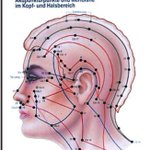
I will attach a practice or two if I can find it on immunity and fever reduction below, so can look to comments for those, but before that I will post some Acu points that are good for autumn colds and flus and supporting general stability in the body. You can Google them by name and push each for a minute or two.
{This post is for educational purposes only and is not personal medical advice, etc}
First, Acu points : 👇🏻
Pore Breathing : an adjacent practice. Can be helpful in fevers, autoimmunity and inflammation. Do not do if so deeply depleted you are already in a severe crash to point of not having any reserve of energy, as this practice takes a bit more energy out of body, and while it also replenishes it this can cause slight weakening (especially in those with Me/cfs/who are bedbound long term and already fragile as a baseline)
Fantastic practice though for those who have a ton of excess heat or inflammation and a bit of reserve to pull from : 👇🏻

For those who deal with immune or autoimmune issues, I highly recommend learning and practicing pore breathing regularly. I’m going to teach you an intro/beginners approach to this practice right now :
This helps to balance your immune system and balances the yin in yang while reorganizing Qi throughout the body. It’s also good for inflammation and ‘excess’ states you need to detox body from. This is healing for some, curative for others, but can exhaust a few (be mindful if you’re in a moment of your life where you crash from a chronic illness to not do more than a few minutes (2-5 min only plz - if you have ME/CFS, mitochondrial disorders) before you stop to see how it affects you over a day or so. Just find your baseline because it’s so much more powerful than the sum of its parts. It reorganizes the body :
Sit or lay down, and to the healthy you can absolutely stand as well to do this. Have your back and neck straight so the center of your body is in communication and can flow.
All you have to do is breath in through your nose in a proper breath (the kind that expands your belly and lower back, then diaphragm, in a 360° round) a few times. Do this for a minute or two.
Now, imagine each pore on your skin, over every inch of your entire body, is a mouth that has the ability to both inhale and exhale.
On your next nasal inhale allow your body to breathe through every pore (ears, belly, kidneys, toes, heart, arms, fingers, legs - just everywhere) and take in fresh, healing, restorative, balanced, light or energy. I was taught to have it be light that comes from an origin source of creation, one that is unadulterated and perfect.
On the exhale, breathe out *everything* you don’t want through every pore. This means emotions, inflammation, darkness, stagnation, sickness, stuckness, toxicity, imbalance, instability, just anything you know you are holding onto that is stuck somewhere in the being that is you.
Maybe a tumor, maybe bad lymphatics, maybe it’s a memory, maybe it’s autoimmunity. Fill in that blank for you.
Now see that leave as dark smoke from every pore and send it shooting out to the ends of the universe. Like arrows out.
That’s the entire practice.
Breathe in through every pore (through your nose in reality). Everything you want from an origin source - living and loving and healing in nature. Light it with the color your body wants. I often see this in a pure yellow or blue when I do it.
Then, breathe out through every pore all that negative whatever as smoke. To the ends of the earth, like it’s shooting out.
Do this if you are healthy for 10-20.
If you are sick, start with 2-5 minutes.
If you have an ailment in your entire body, you can especially breathe into that area or if you need to get rid of something in a location, breathe out that black smoke from there.
Do that and intend that it clears the area enough that it starts to feel like that area really is lessening in that quality.
I used to think this was placebo until I had late stage neurological Lyme. I stopped being able to adjust from inside air to outside air, and back in again. My blood gases would not be about to adapt. Doing this practice regulated it.
It also pulled me personally out of crashes and even helped lessen fevers, even in the crazy inflammatory response of Covid. While your fever may still be there in situations like that, it will help the body regulate the kick of the immune response. If you live with intensive inflammation or things like high c reactive proteins, auto immunity, this is a practice that can be felt within a few days to regulate the suffering of those.
Over time (like 30-100 days) it begins to have serious regulatory effects.
Like all things Qi Gong or internal alchemy, not everything works for everyone. But this works for many and it’s why it’s so famous.
Again to my ME/CFS/Late stagers, this is a practice for you too but just go much less in time until you know you’re not crashing yourself.
Also 👇🏻
Doing this thymus exercise : 👇🏻
A wonderful Daoist Internal Alchemy practice for those trying to heal, boost and work with their own THYMUS + IMMUNITY :
Sit and place the fingertips of your middle and ring fingers (and pointer too if you want) against your chest, directly over your Thymus gland. (Fingers from each hand will line up back to back over your gland)
From there, just gently massage with the very points of the tips into this area as you pretend you’re loudly and heartily and (authentically) laughing the word :
‘Hahahahahahahahahahahahah’
You just pretend someone said something hilarious to you as you make the sound out loud.
Mouth wide open.
Do it loud enough and with enough finger pressure that you feel your stomach pulsate on the ‘laughter’ and that area activate under your fingers. Do for 2-3 minutes.
This exercise will often shift one’s mood almost miraculously instantaneously, because it strongly activates the heart, the lungs the immune system and the Thymus.
Down regulate the entire body / nervous system in the following sequence. Follow in this order, as it’s very effective :
Right thumb covers the right nostril, closing it.
Inhale through your only open (left) nostril for 4-6 seconds. (Do to your comfort length)
Switch now, right thumb releases your right nostril and instead, your right hand ring finger covers/closes the left nostril. Exhale the air through the right, only open nostril while the left stays closed for 6-8 seconds. (Do to your comfort length but we keep the exhale slightly extended for the inhale)
Now keep fingers the same and through the right, still open (just exhaled nostril) breathe in through that right side only for 4-6 (to your comfort again)
And then for the last to this full round, close that right side back off with your right thumb to exhale only out your left nostril for again, 4-8 seconds.
Repeat this circuit for 5 minutes or 9-20 times. It uses not only alternate nostril, parasympathetic breathing (known as Nadi Shodhana Pranayama in yogic / Ayurvedic practices) but it also extends the exhale, further helping this to take place.
Cliff notes :
In left only, out right only
In right only, out left only
Further exhales than inhales.
9-20 rounds or 10+ minutes.
//
Next, imagine you have a small straw in between your lips that you will purse your lips to hold. Take in a gentle, smooth, low gathered, full breath through your nose and exhale it through the fake straw out of your mouth. Have it be a soda straw or even smaller passageway in your minds eye and you have a smooth pace that your air goes out - unhurried and slightly delayed as it all must fit through that straw hole. Feel that slight bit of resistant pressure that breathing through a straw would give you. Use that bit of resistance to push out through.
Do this for 2 minutes.
//
Next, relax the root of your tongue at its base for 30 seconds. Feel the entire tongue soften slowly and melt and let go. Saliva may immediately begin to pool as you do this which is a good sign. Again, the root / base of your whole tongue, right where it attaches to your mouth.
//
Then, take in 2 breaths through your nose - one is most of the inhale - relatively quickly and then just barely pause before topping that up with a smaller, faster, second breath.
So it’s 2 breaths (one long, then one short at the top of it) and then just exhale through your mouth with sound letting it all fall out. All out of the mouth, let it go. Let out any sound that wants to come out of you.
Do this in a set of 3-5 rounds.
2 in through nose, 1 just letting it all back out of mouth with sound.
//
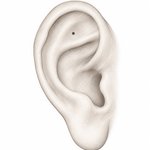
Last, trace your the outer perimeter of your ear canal with the soft pad of your pointer. Do this gently with soft pushing around that perimeter for about 2 minutes, trace it (like you are caressing someone you care about) and then gently end it with pulling gently down on your ear lobe. Breathe through this entire practice so you aren’t holding it. Trace with finger pad, then pull down gently for another minute on ear lobe intermittently. Repeat on other ear (1-2 in the canal, 1-2 pulling on the ear lobe down gently)
This sequence is great to do at bedtime.
Try it tonight.
🙏🏻
Ashley Mountainstone retweeted

A Native American grief ritual from the 14oos was studied at Johns Hopkins..
It processed trauma 6x faster than talk therapy.
(Therapists' associations tried to discredit it) 👇 🧵
I recommended the following Acu point pairing for Autumn because their traditional actions complement each other really nicely :
LU9 (Lung 9 - Taiyuan) & ST36 (Stomach 36 - Zusanli).
LU9 tonifies our lung Qi, nourishes our lung yin and supports their function of regulating Qi and fluids.
ST36 strengthens our spleen and stomach Qi and supports their production of Qi and blood, and helps nourish the Wei Qi (our defensive Qi).
These are a couple of awesome transitional points as we head into colder temps and seasonal dryness.
To locate them properly :
LU9 (Lung 9) - Taiyuan :
This one is located on the inner wrist crease, on the thumb side.
Turn your palm upward and find the crease where your hand meets your wrist. Move toward the base of your thumb, where you can feel your radial pulse. LU9 sits in the small depression immediately beside that artery, on the thumb side. Massage it gently without pressing directly into the artery. 1-2 minutes (can be done on both sides)
ST36 (Stomach 36) - Zusanli :
This one is located on the front and slightly outer side of your lower leg, just below the knee.
Place four fingers together immediately below your kneecap. At approximately that distance down (4 fingers), then move one finger width outward from the sharp front ridge of your shinbone, into the muscle beside it. You should feel a small and slightly softer depression in the muscle. That's the general location of ST36. Massage 1-2 minutes (can be done on each side).
Massage gently in small circles and just gently breathe into your belly while you do so. Nice smooth, slower breaths.
(Images not my own - from google)


In TCM, when we experience prolonged frustration, especially from having things like unfulfilled desires within us, or blocked aspirations, or suppressed anger and resentments, or when we feel unable to live according to our own real intentions, this can constrain the Liver's natural movement of Qi, contributing to what is known as ‘Liver Qi stagnation’.
It’s extremely common as an ailment and diagnosis, clinically.
The Liver governs the free and smooth flow of Qi throughout our body. When our emotions remain unresolved (constrained/in constriction) over a period of time, these act as blockages that can interfere with the Liver's dispersal and regulatory functions. The Qi stagnates and a whole host of things can begin to go wrong, including physically, over time.
There is a term about this known as “Qíng Zhì Bù Suì” which roughly means, “the heart cannot get what it wants.”
(that’s not the exact, literal translation and I will post those below, but this is the general feeling and what is occurring).
And this experience, “the heart can’t get what it wants” might mean you can’t get the love you want or the relationship that you want or career or life you want. It can also mean you are trapped by circumstances that are not changeable or just generally wanting something that has not been attainable.
While this is not the only cause of Liver Qi stagnating it’s considered the greatest one.
{And for those curious on the translation, word for word, it’s :
(Qíng) : Feelings, emotions
(Zhì) : Will, aspirations, intentions
(Bù) : Not
(Suì) : Fulfilled, accomplished, realized
Or
(Qíng zhì) : Love or emotion reaching its absolute peak, ultimate devotion
(Bù suì) : Unfulfilled, not achieving one's wish or desire.}
So what can you do about it?
First, you want to acknowledge to the body and your emotions - that this has been the reality.
Then, you want to re-regulate and soothe the liver, as well as harmonize your emotional expression again - allow that which was/is stuck, to flow. Go back to allowing your actual feelings and intentions to move freely inside of you and through you.
Identify what is being denied or obstructed inside you. Is it freedom, or affection, or security, or self expression? Is it meaningful work that you want or just an ability to change your own circumstances? Think on this and feel your feelings. Where it’s still possible, make even a small movement toward the need that’s being thwarted. And where change is genuinely not possible for you, allow an actual expression of grief, or your anger or your disappointment surrounding it, etc.
The cliff note here is simply : utilize your actual emotional expression or it stays constricted
In my practice, I literally have people start to yell it out into pillows and out into rooms - just let some of it out. And it works better than keeping it in. Though, you should also learn to communicate and not be afraid to share what you experience.
You also want to restore the physical movement of your Qi / energy again.
In Qigong, we would practice gentle opening of the lateral ribs. Slow side to side rotations and a relatively relaxed expansion through the whole ribs and chest (the Liver favors free coursing, flexibility and unhindered expression).
You would avoid forceful breathing or exhausting your movement.
Use acupressure on your acupuncture points to soothe your liver Qi.
Prioritize points like Liver 3 (Tàichōng) for a liver Qi constraint and GB (gallbladder) 34 (Yánglíngquán) for the free movement of Qi and then PC6 (Nèiguān) when more emotional tension and any chest constraint is prominent again. Look these up and push each point 60 seconds to a couple minutes per point. These can be helpful.
There are also formulas that may be prescribed for your exact expression. Consider seeing a practitioner here.
Though my experience is that you heal best only after freeing the root cause of the emotions and how they are held (and why), and freeing them.
👇🏻
(Continued from above) :
You also want to protect your Spleen system, your Blood and your Yin.
Liver constraint will affect the Spleen and can coexist with deficiency.
Eat regularly and eat nourishing meals and get sufficient rest.
Lastly, to put it simply, just follow your heart and desires. Every time you suppress, the stagnancy will back further up and congest. Every time you let go though, it will start to open itself back up. This is the way.
Reishi and Astragalus are particularly valuable, well suited Autumn herbs in Traditional Chinese Medicine as they strengthen two things that become very important at this time of year in the northern hemisphere : one is our Lung Qi and the other is our ‘Wei Qi’ (the body’s defensive Qi).
Autumn belongs to the element of metal and the Lungs are associated with dryness and contraction (as well as the gradual movement from the outward Yang we see/experience in Summer towards the inward Yin we see/experience in Winter).
The Lungs govern our Qi (energy/vital life force/vitality) and regulate its dispersing and descending movement and control our skin and body hair, all while they take in our environment(s) & the air around us (which makes them important in our relationship with external environments).
A few herbs are well suited for this :
Reishi (known as Ling Zhi in TCM).
Reishi is known to be sweet and neutral. It’s said to enter our heart, lung and the liver.
It replenishes our Qi (particularly the lung and heart Qi), helps to relieve coughs and wheezing, transforms phlegm and calms the Shen (spirit, housed in the heart).
It’s of particular value as an Autumn herb b/c it supports our Lungs while settling the Spirit.
There’s also a beautiful correspondence with Autumn’s more inward movement, energetically. Since Reishi is used to calm the Shen it matches the needs of the season calling us to turn inward, to calm and settle in in its energetic movement.
Then, we have Astragalus (known as Huang Qi in TCM)
Astragalus is sweet in nature and slightly warm. It is said to enter our lung and spleen.
In TCM, astragalus is one of the heavy hitters and is used foremost as a Qi tonic. It works particularly well to strengthen our Wei Qi (defensive Qi) and to secure the exterior of the body from ‘invasions’
Wei Qi is said to circulate at our body’s surface, helping protect against external pathogenic influences such as wind and cold. Astragalus will strengthen this defensive function (most especially where deficient Qi produces things like spontaneous sweating, fatigue and frequent susceptibility to illness’ as we see many fall prey to these in the Autumn).
It’s also a special herb for its unique relationship with both the spleen and lung : In Five Element theory, the element of Earth generates metal. The Spleen belongs to the Earth element and is said to be the mother of the Lung (metal).
By strengthening our Spleen Qi, this herb supports the production of the Qi our lungs rely upon, while directly tonifying lung Qi and strengthening the exterior.
It addresses both the source of Qi and the defensive function that depends upon it, essentially.
Taken together we see Reishi nourishing and supporting our interior (particularly lung and heart Qi, their energy or vital life force), while Astragalus strengthens Qi and helps secure the body’s exterior space that is a gateway also through which illness can enter.
A few notes on these though :
Neither of these herbs are, primarily, Lung Yin tonics or moistening herbs. So if you have autumn dryness you might instead use herbs like Bai He, Mai Men Dong or Sha Shen or bake some pears in honey. As far as western herbs go, marshmallow, mullein and slippery elm come to mind.
Astragalus is also sometimes not appropriate for every pattern the body can have, particularly in people with excess heat or Yin deficiency heat presentations as it may aggravate these.
Made a few slides for these :


One of my elder teachers taught me a new way to build energy recently in the lower dantian. This one takes a little practice. :
The first principle is that you must relax, but this is not the kind of relax where if someone said to relax you just slow your breathing down or tell the stomach to slow down in its contraction.
This is more of a systemic awareness of pulling your resources and energy back into you and then almost letting the entire system relax layer by layer.
First at your skin, visualize and relax it. Then your fascia and connective tissue - visualize its layers and relax it, then the blood moving, see it going the temperature you want, then the bones (see into the inside of them and relax them) and then cells. You move through these for a few minutes. Let all of this letting go accumulate in the area just behind and below belly button as you do this. Like a well it all goes into.
Then, when you feel this more system wide calm (exactly what we need in Autumn energetics), you imagine you are a tall and sturdy, immovable (but do not tense up), transparent jade tree. You lengthen up like you’re a tree inside of this relaxation you’ve found, especially by posture correcting.
Layers moving inside of you. The Qi can flow better like this, unimpeded. You are strong like the tree but also taking on its form in terms of height and structural soundness. Feel self as a transparent jade tree.
Your breath can become the wind moving through the leaves and through you. Your fascia and connective tissue are then attached to and hanging without trying, from your tree frame.
Your skeleton is the firm tree. Your muscles and membranes hang from this much like a clothing. Feel them just truly hang without any resistance from the strength of your frame as this tree. Let it all hang off of you. Stay relaxed. Breathe deeply into belly/lowest few ribs.
And then in all of this you just imagine you are melting down into the nourishing, fertile ground. You’re not in a desert but a rich soil. Some people have trouble grounding down that aren’t used to doing it. If this is you imagine an energy is falling through your body that sinks down your body past your inner lower belly to ground. You can alternatively imagine water dropping all the way down the spine of your tree trunk of jade and like water off the tailbone/coccyx. Try to find a way to increase that feeling of heaviness pulling your body down to the ground or sinking the roots deeper into it. Water drops off that tailbone, connecting to ground.
While you do all of this though you maintain frequent corrections to making sure you are not actually sinking physically lower down - maintain your actual breath, and maintain your actual soft and tall tree posture. This is all visualization. Even imagine in this counter balance a strong string suspending you up from the top center of your skull from deep in the center of you. It just holds you up. Like that top of you cannot sink.
You can just imagine you are also being pulled back up every minute or two in between your sinking down, from the layers that exist between your skin and skull (the point atop head that’s center top and just an inch or two back from top center). You don’t have to move anything. This is all visual and energetic. Maintain that height and then go back to melting and sinking some down, whether that’s water falling off of you or candle wax melting down. You find a visual you like.
The whole time, do not go tense in breath or frame. Allow the Qi to flow. Constriction stops the smooth flow of Qi.
These practices do take real practice but this is a good way to open up our Qi to actually move again. We are not just a body, we are living in different layers of one. Relax these. Ground back down to ground, then re-adjust your posture from that invisible string and that concept itself, back up. Stay soft and offer space to that spine and lengthen as a tree. The jade is immovable but cool and unimpeded.
Think of your body’s energetic expression like a tide that moves through you over the course of a day. Each organ system and its associated channel has about two hours when the tide is high and its Qi is considered most active. Twelve hours later, that same channel is at low tide, its opposite point in the daily cycle.
If, within your body, the same problem keeps happening to you at the same time of day, check which organ is at ‘low tide’ at that time, as well as which is at ‘high tide’.
An example of this would be : If you feel unusually wiped out and foggy most nights between 9 and 11 pm, that’s when the Spleen - which governs the transformation of food and fluids and plays an important role in producing our Qi and Blood - is at its low tide.
This pattern of fatigue and fogginess, especially if accompanied by digestive weakness, bloating or heaviness, may be a sign of Spleen Qi deficiency and that the system needs more support.
The pairs below are organs that sit opposite each other on the daily TCM organ clock. When one is at high tide, again, its partner is at low tide.
Here they are :
Lungs peak at 3 to 5 am, and ebb 3 to 5 pm
Bladder peaks 3 to 5 pm, ebbs 3 to 5 am
Large Intestine peaks 5 to 7 am, ebbs 5 to 7 pm
Kidneys peak at 5 to 7 pm, and ebb 5 to 7 am
Stomach peaks 7 to 9 am, ebbs 7 to 9 pm
Pericardium peaks 7 to 9 pm, ebbs 7 to 9 am
Spleen peaks 9 to 11 am, ebbs 9 to 11 pm
San Jiao (Triple Burner) peaks 9 to 11 pm, ebbs 9 to 11 am
Heart peaks 11 am to 1 pm, ebbs 11 pm to 1 am
Gallbladder peaks 11 pm to 1 am, ebbs 11 am to 1 pm
Small Intestine peaks 1 to 3 pm, ebbs 1 to 3 am
Liver peaks 1 to 3 am, ebbs 1 to 3 pm
That said, sometimes the organ at its own high tide is the one involved and needing support. When a symptom shows up during an organ’s own two hours (ie: Kidney at 5 to 7 pm), it can mean that there is an excess condition, such as Qi stagnation, accumulated heat or another form of obstruction. It can also mean the organ system is deficient and struggling during its own period of heightened activity.
When it’s the partner at low tide, deficiency may also be involved, although this is not a fixed rule. Both excess and deficiency can manifest at either point in this cycle. The nature of your symptoms matter as much as their timing does, but learning these patterns and the body clock times is very useful.
Without making this an even longer teaching or post, I would say to look to both your high and low tide issues in discerning what’s what and to find hints for what may be going on in the body, alongside your broader pattern of signs and symptoms. This way of looking at the body clock can offer many clues over some time of paying attention.

If you can’t afford a prana mat (or their spin offs) and you want to generally support all sorts of healing points on the body in a similar way to those, you can buy the following back scratcher. There’s a very old practice that I don’t see much of here in the west, where you can bounce needle-like points up and down meridians. I found the perfect back scratcher for this.
You would take this one or one very similar in shape and design and size (will link it) and just hold the spine of the long scratcher and bounce the head (like needles, it doesn’t hurt) onto your palms, stomach, back / carefully, bottom of feet (everywhere), arms, legs (calves, shin sides, inner and outer thighs, back of legs), back and top of shoulders - again don’t hit over shallow bones, and then can comb it over and through the scalp and on the head to safely open this area as well.
Only place to avoid is your protruding bones/joints, any large veins or sores/cuts/burns etc.
Focus on high muscle areas, and just tap it down at a pressure that stimulates (works like little acupressure needles). Though this is done by practitioners sometimes on real needle ‘hammers’ that poke into skin all over with tiny needles, you can do with just this brush and not break skin. This one has perfect wooden, thin and firm, sturdy prongs for this. I can’t vouch for others. Have no connection to this company at all, I just love this one for how well it works for this.
Use it as an acupressure tapper in this way and work to pressures that stimulate through bouncing it but do not hurt yourself. The body loves a bit of tapping though, and to be stimulated.
This helps open your meridians and systems. A great practice for general health, circulation and a boost in your energy. Very revitalizing when you do the whole body or even just the limbs.
You could also do this just before dry brushing.
This is the exact one that I use.
a.co/d/04jM7m8g

Prana mat pricing = $300-600 usd
Other brands = $50-100+usd
This brush (back scratcher) = $14.99 usd
Another note I will make on prana mat type mats : though I do personally love them, there are arguments to be made that stimulating that many points on body at once overstimulates the entire system. It’s not necessarily (can be for some, but others no) the best approach to balance a body or have it do what it should. What prana mat is very good at is stimulating. I’ve seen it raise HRV in some decently who meditate or rest while on it but it can be a lot on both a fragile or imbalanced system. Too many directives at once.
Ashley Mountainstone retweeted
In TCM, Cancer can be understood as a consolidation of several pathological processes that have become bound together over time.
Among these are : Qi stagnation, blood stasis, phlegm, dampness and ‘toxin’, often occurring against some degree of weakness or a depletion of the body’s ‘Zheng Qi’. (I will venture to explain much of this below)
First, Zheng Qi is our body’s ‘upright’ or ‘correct’ Qi (vital energy/life force). This is its underlying capacity to maintain health, resist pathogens, or recover from any disruption and then just keep its normal processes of regulation, transformation and repair working as they are meant to work in the body.
This (our Zheng qi) is a broad concept that covers the body’s overall functional strength and its ability to maintain an internal order in the face of things like disease, and it includes our immune function.
With Cancer, the ‘dis-ease’ (an imbalance) can follow many pathways as it becomes what it becomes :
Essentially, different combinations of stagnation, stasis, phlegm, dampness and ‘toxin’ can all converge until something that was once more fluid (fluid both physically and energetically) or functional in the body, becomes increasingly fixed and form bound.
I’m going to try to outline now, how these come to be in the body - they are, in fact, much like external forms of weather arising in nature, because we are all a unique landscape and smaller expressions of a greater whole (this is a topic I will be going into in *much* greater depth in the upcoming Substack article, ‘The Body as Landscapes’, though that post will not just cover the concept of cancer but all human bodies as weather and seasons etc and how to start identifying them and understanding them).
So, here is one way to look at it briefly :
For over two thousand years, Chinese medicine has understood illness through a few terms, the root (běn), meaning what lies underneath and sustains everything, and the branch (biāo), meaning what grows from it and shows itself, the manifestation.
Think of your body as a garden.
The root is your soil, the ground everything grows from. This includes your underlying strength, your digestion and transformation of food and fluids, your capacity to generate Qi (life force & vital energy) and blood, and your ability to move, transform and clear out what the body no longer needs. In Chinese medicine this root rests mostly on the Spleen, which transforms our foods and fluids and then generates Qi and blood, and on our Kidneys, which hold our ‘essence’ and the body’s deepest reserves. (Additionally, the Lungs, which take in the Qi of the air, and the Liver, which stores the blood, also contribute, but mostly the spleen and kidney as systems (not just the anatomical organs as we are used to here in the west).
Now, when someone’s soil becomes depleted, or falls into a state of ‘excess’, or cold, or dampness or too much heat (or is constrained by something), the original healthful terrain changes.
The body’s ability to keep everything moving and transforming properly can weaken.
Then there is the branch :
This is what is actually developing and expressing itself in that terrain.
Think stressors, long held emotional constraints or patterns you know are bad for you, a poor digestion, illness’, environmental exposures (and many other influences) can affect the movement of our Qi and the blood and fluids. Even the body’s own fluids can cease moving properly and begin to collect, stagnate and thicken.
Lymphatic and fascial stagnation definitely sit here too in reading of a body’s terrain. Though they are modern anatomical terms (and don’t correspond exactly to classical TCM channel categories) they deal with movement, congestion and terrains of the body. In a stuck, backed up system these rivers cannot flow.
Will go into how it begins to progress, below : 👇🏻
A basic and fundamental teaching on the gut :
Your gut, whether you take probiotics or not, can destabilize if it runs out of the right kind of food. When this happens, certain gut bacteria begin to feed on the protective mucus layer of the intestines, thinning its barrier, which can (and does) slowly contribute to inflammation (and the laundry list of things that kick off illness). Mucus thinning is one of the main ways a leaky gut starts.
The food that prevents this from happening is fermentable fiber (part of the plant the small intestine can’t digest but the bacteria in colon can).
When these bacteria have enough of it, they make butyrate, the main fuel for the cells lining our colon and in turn will leave this mucus alone.
The foods that feed and support our gut bacteria fall into eight kinds :
pectin, beta glucans, inulin, galactooligosaccharides, resistant starches, mucilage, cellulose and polyphenols.
+ Pectin ferments quite quickly and is found mostly in fruits :
Think apples, pears, quince, plums, apricots, peaches, cherries, blackberries, raspberries, loganberries, currants and grapefruit. These have the most, along with citrus peels, carrots, sweet potatoes and beans.
+ Beta-glucans :
These are found mainly in oats and barley and also in shiitake and maitake mushrooms.
Then, things like brown seaweeds (kelp, kombu, wakame and bladderwrack) also contain a beta glucan called laminarin and then the microalga euglena contains one called paramylon. An fyi : kelp, kombu and bladderwrack are higher in iodine, so a small amount a few times a week is plenty or use another source for BG, so iodine isn’t thrown out of whack.
+ Next is Inulin :
This is found in onions, garlic, leek, asparagus, chicory root, dandelion root, burdock root and Jerusalem artichoke. This feeds our bifidobacteria in particular.
+ Then, Galactooligosaccharides :
These are found in legumes, including lentils, chickpeas, peas and white, kidney, navy, black bean and lima beans.
+ Next is Resistant starch :
This goes through our small intestine undigested and ferments in the colon, where it makes a large portion of our body's butyrate.
Think potatoes, rice and pasta (especially after they're cooked and cooled, ideally overnight in the fridge). And oats, pearled barley, rye, millet, lentils, chickpeas, peas and navy, kidney, black and lima beans.
Green bananas (just regular bananas) also have it when they are raw (in this case, cooking breaks most of it down, so they're best eaten slightly underripe)
+ Next, Mucilage :
This is a fiber that turns to gel when in water. It is found in flaxseed, chia, psyllium, okra, marshmallow root and slippery elm bark (this last one as an herb is such an absolute favorite of mine - such a huge fan of slippery elm bark. Suck on some of its bark and you will immediately feel it become gooey in your mouth. Then fill the mouth with a warm water and swallow it down. A beautiful medicine).
+ Cellulose :
This makes up the cell walls of plants. Humans ferment very little of it. A few gut bacteria (for the most part Ruminococcus species), can break some of it down.
Its main job is adding bulk and helping move the stool through.
This can be found in things like broccoli, broccoli sprouts, alfalfa sprouts, bok choy, beets, jicama, turnips, parsnips, radishes, squashes, yams, sweet potatoes, cassava, taro, sunflower seeds, whole wheat, brown rice, nuts (and vegetable skins).
+ Polyphenols
These are the pigments and tannins in plants. Bacteria in the colon turn them into compounds the body can absorb and they encourage the growth of our beneficial bacteria.
The ellagitannins in pomegranate and raspberry become urolithins.
Also, green tea, cacao, olive oil and walnuts are rich in polyphenols.
Red dragon fruit gets its color from betalains, the same pigments as beets and it also contains fiber that our gut bacteria feed on…
Continued below : 👇🏻
(Continued from above) :
Then we have anthocyanins. These are the polyphenols that give foods their blue, purple and red color. Most of these reach our colon intact, where bacteria break them into smaller compounds that the body can absorb.
Think blackberries, blueberries, cherries, plums, black currants, pomegranate, raspberries, acai, purple sweet potato, purple cauliflower, purple asparagus, red onion and black beans.
//
Last point I want to make : some people can bloat up, cramp or get loose stools when they eat fiber. This is often/usually because fermentation makes gas and fast fermentation makes more gas. In small intestinal bacterial overgrowth (SIBO), the bacteria will live higher up in the small intestine and often ferment a meal within an hour or two.
Then, in things like irritable bowel syndrome (IBS) the gut wall is oversensitive/sensitized, so an ordinary amount of gas can cause pain.
Fructans and galactooligosaccharides ferment fastest.
These are the fibers in onion, garlic, wheat, beans, chicory and Jerusalem artichoke (though people can also have issues with the sulfur in some of these).
In someone who’s gone years without consuming fiber, or in someone who’s taken repeated antibiotics, they might not have the bacteria to handle a sudden increase in.
Fiber, also, without enough water can makes constipation worse in a slow bowel. In active inflammatory bowel disease (or strictures) coarse fiber can irritate or block the gut.
Typically, one could start with a teaspoon of one kind of fiber and increase it every few days, with everything cooked, peeled and softened.
The gentlest foods for this are oats, peeled cooked carrots, cooled white rice, peeled cooled potatoes, green banana, ground flax (not a huge fan of flax for certain hormonal reasons - in the wrong person), well soaked/absorbed chia, psyllium husk, blueberries, kiwi and citrus.
Bring back onion, garlic, wheat and beans last, only one at a time, starting with a spoonful of rinsed canned lentils, drinking warm water with fiber and eating meals at regular times.
(This same slow approach also can work after a long stretch of carnivore or very low carb eating).
If someone’s reactions stay severe even at small amounts, I’d get tested for small intestinal bacterial overgrowth, inflammatory bowel disease and celiac disease or check for metal, all infections, mold especially.
Since I work largely in TCM & CCM, these would see a fiber intolerance as a Spleen deficiency (pi xu). The Spleen can't transform and transport food properly, so the food ferments into dampness, gas and loose stool(s). Cold, raw and ‘coarse’ food would make it worse.
Then, pain that comes before a bowel movement and that eases up right after it, especially with/under stress, is Liver qi invading the Spleen (gan qi fan pi). Feeling cold with undigested food in the stool is a Spleen yang deficiency (pi yang xu).
The usual Acu points are points like Stomach 36, Spleen 3, Spleen 9, Conception Vessel 12 and Bladder 20, with moxa where there's coldness. As the Spleen recovers, fiber can be brought back in in the order above.
Hope this is helpful for some of you.