

Braniff Airways, Inc., is the official page for Braniff Airways, Incorporated, d/b/a Braniff International. The World’s Most Colorful Airline.
Dallas, Texas
Joined March 2013
- Tweets7K
- Following467
- Followers2.2K
- Likes1.1K

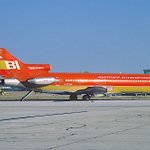





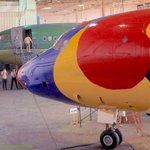
BRANIFF HISTORY TODAY - On this day, Sunday, October 29, 1978, Braniff International inaugurated Boeing 747 service between Honolulu, Hawaii; Portland, Oregon and Seattle, Washington. Braniff replaced Pan Am on the route and provided a smooth continuation of Hawaii to the Pacific Northwest service. Braniff's new service was the only daily Boeing 747 service between Seattle and Honolulu and between Portland and Honolulu.
Braniff's new Hawaii service was part of the carrier's plan to replace Pan Am not only at Seattle and Portland to Honolulu but Boston to select European points. The carrier did receive authority as the Pan Am replacement carrier out of Boston in 1979. The new Boeing 747 service between Seattle and Honolulu was the only daily 747 service and between Portland and Honolulu, and the only 747 service. Pan Am had petitioned the Civil Aeronautics Board to discontinue its Pacific Northwest to Hawaii service on October 29 and Braniff's emergency route award allowed for smooth uninterrupted service.
Because of Braniff's industry leading efficiencies with operating the Boeing 747, the Dallas-based carrier felt that it could provide better service than Pan Am over these routes whose costs were far higher. Pan American had begun a program of reducing or eliminating routes with smaller load factors that could not support a profitable operation. Braniff's costs for operating the 747 over the same abandoned routes were significantly lower and the carrier felt it could operate the routes with thinner passengers loads. This had been a hallmark of Braniff service for many years and its success propelled the mid-sized trunkline into an industry-leading financial powerhouse.
To promote the new flights Braniff implemented a special Pineapple Fare of $50 USD one-way between the Mainland and Hawaii. Braniff Vice Chairman of the Board of Directors John J. Casey stated at the Seattle inaugural event that, "Over 10,000 of the new Pineapple Fare seats had been sold and a remarkable 30,000 advance reservations had been taken for the new luxury 747 service." Casey pointed out that the Pineapple Fares were completely sold out for the first three weeks of service.
Casey lauded Braniff International employees by stating, "I am very proud of the Braniff personnel at all three stations who were able to gear up and start this much needed new service on such short notice." Casey added, "They have demonstrated that Braniff is a "can-do" airline and has the ability to serve the public with both speed and efficiency." The speed at which Braniff employees launched the new service was commendable. The new flights began so quickly that the schedules were not able to be printed in the October 29, 1978 timetable and still did not appear until the December 15, 1978, timetable.
Braniff leased an additional Boeing 747-123 registered as N9667 from American Airlines on October 8, 1978, to begin the new service. Braniff leased both Ships N9666 (leased January 1978) and N9667 from American, which were sisters to the famed Space Shuttle Transport Boeing 747 Ship N9668. This aircraft was not painted in the unique 1978 Orange Stripe Hybrid Color Scheme with Alexander Girard BI Tail Logo in Black like sister Ship N9666 was painted in and would remain in the Braniff fleet until November 16, when it was returned to American and replaced by a leased Boeing 747-217B from CPAir. Because the aircraft was leased from a foreign carrier it was required that it be reregistered in the United States. Braniff reregistered the aircraft as N620BN which became the first Series -200 to enter the fleet. Ship N620BN was not painted in Braniff colors and remained in the fleet for a short time before being returned to CPAir on December 6, 1978.
Ship N620BN was replaced with Ship N610BN, a Boeing 747-130A, which was a former Lufthansa Airlines aircraft. Braniff leased N610BN from ITEL which had purchased the aircraft from Lufthansa and it remained in the Braniff fleet until November 23, 1981. The big Jumbo Jet was the first Braniff 747 to be painted in the 1978 Harper and George/Cars and Concepts/Halston Orange Ultra Orange Color Scheme with International Font. The aircraft did not feature the Cream and Metallic Gold Power Paint Stripes as was originally designed most likely as a result of it being a leased aircraft and that the owner was paying for the orange paint job.
In spite of the promising initial bookings there wasnt enough demand to fill a Boeing 747 even from the rain soaked Pacific Northwest to America's sunny Pacific Resort. Service was maintained at the inaugural levels until March 31, 1979 when Portland was dropped from the Honolulu schedule. Nonstop service continued between Seattle and Honolulu on a daily basis with a single morning 747 departure. Portland passengers could still connect via Seattle.
However, without the feed of passengers from Portland the nonstop 747 flight from Seattle quickly became unprofitable and was reduced to a Monday Tuesday Wednesday morning departure. This also proved unsustainable and all Pacific Northwest services to Honolulu were discontinued in July 1979. Most likely a Douglas DC-8-62 Intercontinental Jet might have been more successful over these less traveled routes. The Boeing 747 leased for the Honolulu service, Ship N610BN, was quickly moved to cover the new Asia/Pacific and The Far East services. However, what ultimately caused the end of the Pacific Northwest service was the unprecedented rises in fuel costs of 92 percent in 1979. Braniff's industry-leading cost advantages quickly evaporated along with the rest of the industry because of the near triple digit rises in fuel prices.
Photo: Braniff International Boeing 747-123 registered as N9666 is taxiing at Seattle/Tacoma International Airport in January 1979. The aircraft was leased from American Airlines early in 1978 to cover the DFW to HNL run while 747 Braniff Place N601BN began flying the new DFW to London Gatwick route.
N9666's sister ship Boeing 747-123 registered as N9667 was leased by Braniff in October 1978, to begin the new Pacific Northwest to Honolulu services but was returned in November 1978, with the lease of Boeing 747 N620BN. Ship N9667 was reported to have had a Girard BI Tail Logo in Black with American's blue, white and red stripe, however, this has not been confirmed.
Braniff Airways Foundation
Copyright 1926 2026
Photo: Photographer Bob Harrington, Copyright
Braniff International Heritage Archives
Now Associated with The University of Texas at Dallas System
Braniff Airways Space Sciences Endowment
braniffinternational.com
braniffboutique.com
flybraniff.com
braniffinternationalhotels.c…

BRANIFF HISTORY TODAY - On this day, Sunday, October 29, 1978, Braniff International inaugurated the first nonstop service from San Antonio, Texas, to the New York City area. Braniff's new daily nonstop flight operated to and from New York's LaGuardia Airport, and was the perfect addition to the eight northbound single-plane flights and eight connecting service flights from the Alamo City to the Big Apple.
Both the single-plane and connecting flights served all three New York area airports, which gave Braniff passengers a wide variety of flights as well as airports to choose from. The new northbound nonstop was conveniently timed for business travelers hoping to arrive in New York for dinner and a Broadway play, while the southbound flight was scheduled for an early evening departure for Northeast passengers that desired to arrive in San Antonio the day before scheduled business activities. The northbound aircraft operated the return southbound flight to San Antonio.
Braniff first served San Antonio on January 1, 1935, as a result of the merger with Dallas-based Long and Harmon Airlines, on December 28, 1934. Long and Harmon had only served the Alamo City since November 1934. Besides additional service across the state of Texas from Amarillo to Houston and continuing to Galveston, Texas, the merger also included a route from Dallas to Brownsville, Texas, with stops at Austin and San Antonio, in addition to other cities along the route. Service with Braniff's first twin-engine aircraft, the Lockheed L-10A Electra, was begun at San Antonio during early 1935, and two years later, 14-passenger Douglas DC-2 flights with Hostess service were inaugurated at the Alamo City.
Fourteen-passenger Douglas DC-3 Super B-Liner twin-engine service was inaugurated at San Antonio during 1939. On August 29, 1943, Braniff inaugurated nonstop service from San Antonio to Laredo, Texas. This new service was inaugurated to eventually connect Aerovias Braniff service between Mexico City and Nuevo Laredo with the rest of the Braniff domestic system. Braniff cofounder Thomas Elmer Braniff had formed the new airline, which was wholly owned by him, in 1943. Mr. Braniff hoped that once the airline proved its reliability then the Civil Aeronautics Board would allow a merger of the two airlines. Aerovias Braniff began service in 1945, but due to pressure from Pan American World Airways, the Mexican Government revoked Aerovias' operating certificates. It was not until 1960, that Braniff service was allowed to resume between the US and Mexico.
Four-engine Douglas DC-4 Skyliner flights with seating for 56-passengers was inaugurated at San Antonio on May 5, 1946, with daily service to Chicago Midway Airport with intermediate stops at Dallas and Kansas City. On November 5, 1947, Braniff's new pressurized Douglas DC-6 Skyliner with seating for 52 passengers entered service for the first time between Houston and Chicago with intermediate stops at San Antonio, Dallas, and Kansas City. Braniff became the first carrier in the world to inaugurate Convair 340 twin-engine airliners with service inaugurated over a route from Dallas to Austin, San Antonio, and Corpus Christi, Texas, on November 1, 1952.
Braniff Airways, American Airlines, and Continental Airlines began an interchange service between Texas and Los Angeles with Douglas DC-6 aircraft on May 20, 1951. The route operated from Houston to San Antonio with a Braniff crew in command while at San Antonio an American crew took control of the aircraft for the nonstop to El Paso. At El Paso a Continental crew flew the last nonstop leg to Los Angeles International Airport.
Service between Dallas and San Antonio was further enhanced with the introduction of four-engine 54-passenger Lockheed L-049 Constellation aircraft on September 25, 1955. On February 15, 1956, Braniff inaugurated new Douglas DC-6 Skyliner service between San Antonio and Newark, New Jersey. The three daily northbound flights originated at the Alamo City and continued to Ft. Worth Amon Carter Field, Dallas Love Field, Nashville, Washington National and then nonstop to Newark. The return flights operated over the same route and also terminated at San Antonio.
Braniff introduced the 73-passenger four-engine Douglas DC-7C El Dorado aircraft at San Antonio on October 20, 1956. The new El Dorado route operated from San Antonio to Newark with an intermediate stop at Dallas. Three years later on June 15, 1959, Lockheed Electra L-188 service was inaugurated at San Antonio with service to Newark with an intermediate stop at Dallas Love Field, and on October 1, 1959, Electra service was inaugurated between the Alamo City and Houston.
Boeing 707-227 El Dorado Super Jet service arrived at San Antonio on March 1, 1960, with nonstop service to Dallas Love Field and continuing service to New York. This marked the first jet service for the Alamo City. For the first time since 1946, Braniff inaugurated nonstop service from San Antonio to Mexico City on November 9, 1960, with Lockheed L-188 Electra four-engine turbopropeller aircraft and on December 1, 1965, Braniff became the first US airline to begin service to Acapulco. The new Electra L-188 flights operated nonstop between San Antonio and Acapulco.
On April 30, 1961, Braniff's new Boeing 720-027 jetliner replaced the Lockheed L-188 Electra between San Antonio and Mexico City. BAC One-11 Twinjet flights began at San Antonio on April 24, 1965, and the service included the cities of Corpus Christi, Austin, Dallas, Lubbock, Amarillo, Kansas City, Des Moines, St. Louis, and Minneapolis/St. Paul. Two years later on June 7, 1969, new service from Texas to the Pacific Northwest was inaugurated from San Antonio to Seattle/Tacoma and Portland with a stop at Dallas Love Field.
On July 5, 1966, Braniff introduced the Boeing 727-100 Trijet at San Antonio over a route between Chicago and Acapulco, as well as a Denver, Dallas, San Antonio routing. The world's first Boeing 727-27C Quick Change Convertible Cargo/Passenger nighttime cargo service was begun at San Antonio on August 1, 1966. Every night a Boeing 727 ended its regular passenger schedule at SAT and was then converted to an all-cargo configuration in only 40 minutes. The flight departed for Chicago O'Hare with an intermediate stop at Dallas Love Field and then returned over the same routing. Upon arrival at SAT, the aircraft was unloaded and the passenger interior was reinstalled and the jet was parked at the Jetway ready for the full day of passenger schedules.
On July 1, 1968, Braniff inaugurated the first nonstop service between the Alamo City and Dulles Airport, which served the nation's capitol. Nonstop service was also begun at the same time between San Antonio and Newark Airport. The new Alamo City to the East Coast service was commenced in conjunction with the 1968 World's Fair that was held in San Antonio, known as Hemisfair.
Braniff had been highly successful with its Every Hour on the Hour service between Dallas and Houston beginning in 1969. On July 1, 1971, Braniff inaugurated nonstop Every Hour on the Hour service between San Antonio and Dallas Love Field providing the most flights of any airline between the two cities.
On November 15, 1978, new nonstop service was inaugurated between San Antonio and Chicago O'Hare. This marked the first new service at San Antonio as a direct result of the Airline Deregulation Act, which was signed into law in October 1978.
Photo: Braniff International Boeing 727-227 registered as N431BN is parked on the ramp at San Antonio International Airport in October 1980. Ship N431BN is painted in the 1971 Glenn Geddis/Harper and George Orange over Mustard/Ochre Two Tone Color Scheme.
Braniff Airways Foundation
Copyright 1926 2026
Photo: Photographer Richard Vandervord, Copyright
Braniff International Heritage Archives
Now Associated with The University of Texas at Dallas System
Braniff Airways Space Sciences Endowment
braniffinternational.com
braniffboutique.com
flybraniff.com
braniffinternationalhotels.c…

BRANIFF HISTORY TODAY - On this day, Monday, October 29, 1973, a reception was held in honor of Master Artist Alexander Calder, the father of the kinetic art form and lauded sculptor, at the Dallas Museum of Fine Arts (now Dallas Museum of Art). The reception was to honor Mr. Calder and to celebrate the completion of the painting of Mr. Calder's South America With Flying Colors design on Braniff International's McDonnell Douglas DC-8-62 Intercontinental Jet registered as N1805.
The painting of the world's first flying artwork was completed at the Braniff Dallas Love Field Base on the previous Friday, October 26, 1973. The paint was allowed to cure on the big Braniff jet over the weekend and an impressive flyby to introduce the jet was completed earlier in the afternoon on October 29 at the new Dallas/Ft Worth Regional Airport followed by a Braniff employee unveiling at Dallas Love Field.
The gala affair, from 7 pm until 9 pm, at the Dallas Museum featured a very special event. Mr. Calder presented to the Museum the original Westway Models 1/25 scale Douglas DC-8-62 model that was used to trace the designs that were applied to the full-size DC-8 jet liner. Calder dedicated the model in memory of his good friend and former classmate the late Eugene V. McDermott. Both Mr. Calder and Mr. McDermott attended the Stevens Institute of Technology in Hoboken, New Jersey.
In 1951, Mr. McDermott co-founded Texas Instruments and remained a director of the company until his death in 1973. On May 19, 1961, Mr. McDermott along with several of his TI co-founders purchased controlling interest in Braniff Airways from Texas US Senator William Arvis Blakley. Mr. McDermott's investment group sold their shares to Greatamerica Insurance company, led by Troy Victor Post in July 1964.
The library at University of Texas at Dallas in Richardson, Texas, is named after Mr. McDermott. The Eugene McDermott Library also houses the History of Aviation Collection which contains the Braniff International Public Relations Office Archives which was placed at the University in February 1982 by Braniff International Corporation.
On hand for the Calder model dedication event besides Mr. Calder, was Mrs. Eugene McDermott, Dallas Museum of Fine Arts Director Harry S. Parker III. Braniff management and local dignitaries and press were also in attendance for the special presentation.
Photo: The impressive Flying Colors of South America McDonnell Douglas DC-8-62 Intercontinental Jet registered as N1805 has just arrived at The Braniff Terminal at the new Dallas/Ft. Worth Regional Airport after an impressive flyby presentation. Braniff's newly painted artwork is being prepared for review by guests that attended the flyby. The original Westway 1/25 scale Douglas DC-8-62 model that Alexander Calder painted on the South America With Flying Colors full-sized airliner was also put on display next to the big colorful DC-8 airliner. Braniff ultimately chose the eighth model, dubbed Humor by Mr. Calder, because of its bright and vibrant colors that they felt best represented the airline's 25th anniversary of service to South America.
Braniff Airways Foundation
Copyright 1926 2026
Photo: Braniff Airways, Incorporated, Copyright
Braniff International Heritage Archives
Now Associated with The University of Texas at Dallas System
Braniff Airways Space Sciences Endowment
braniffinternational.com
braniffboutique.com
flybraniff.com
braniffinternationalhotels.c…

BRANIFF CALDER EIGHT TAKES TO THE DFW SKIES - On this day, Monday, October 29, 1973, Braniff International Douglas DC-8-62 Intercontinental Jet registered as N1805 was pushed out of Bay 6 of the South Hangar at the Braniff Airways Operations and Maintenance Base at Dallas Love Field with a brand new paint scheme designed by Master Artist Alexander Calder. The scheme, dubbed Flying Colors by Mr. Calder and South America with Flying Colors or Flying Colors of South America, was presented to the public for the first time.
The brilliantly painted McDonnell Douglas four-engine jetliner that featured Mr. Calder's signature colors of Red, Blue, Yellow, White and Black, would become the most viewed artwork in history further adding to its iconic mystique as the first flying artwork. Painting of the jet had ended after five days of work on Friday, October 26, 1973, and the aircraft was left to cure and dry over the weekend so it would be ready for flying on Monday. After the rollout from Dallas Love Field, the DC-8 departed for the new Dallas Ft Worth Regional Airport for a dramatic flyby presentation.
Prior to the arrival of Flying Colors, Braniff Chairman of the Board of Directors Harding L. Lawrence hosted local dignitaries and the press for a luncheon followed by a press conference at The Braniff Terminal 2W at the new DFW Airport, which would open to passenger operations in January 1974. Lawrence touted the excitement and honor of being the first airline to operate an aircraft painted by a Modern Master and further discussed that Braniff would soon be operating out of the beautiful new Terminal 2W where Flying Colors would soon arrive.
After the ceremonies and luncheon, everyone gathered on The Braniff Terminal ramp to watch the exciting arrival of Flying Colors of South America. Perfectly on time, the big DC-8 made a dramatic pass from north to south over runway 18R/36L and then proceeded to the west to make another approach and flyby. The beauty of the Calder design was incredible in the bright Texas fall sunshine, which only served to highlight the brilliant Calder colors. On the third approach, Ship N1805 landed and taxied to the gate for guests to enjoy a closeup inspection of the new color scheme.
Mr. Calder was on board for the flybys and when he deplaned he was met by Mr. Lawrence. Calder presented him with a special Flying Colors Plaque that was later mounted in the DC-8-62 cabin and would remain with the aircraft during its service as South America With Flying Colors. The original 1/25 scale DC-8 model named Humor that Braniff Engineers used to transfer the Calder designs from to make the tracings for application to the real aircraft, was on hand and placed next to the real N1805. A great deal of handshaking and congratulations were given to Mr. Lawrence and Mr. Calder.
After the ceremonies at DFW Airport, the giant Calder flying mobile was flown back to Dallas Love Field and put on display for Braniff Employees to have their turn at viewing the revolutionary painted flying machine. Between the hours of 4pm and 8pm Braniff employees and their families were able to view and tour the DC-8 and enjoy the festive atmosphere that surrounded the latest Braniff triumph.
Braniff had paid approximately $100,000 USD for the entire Calder project that also included 50 bright and colorful gouaches painted by the artist. Braniff retained all rights and copyrights of the 50 Calder designs as well as the Calder Mc-Donnell Douglas DC-8-62 design, and the associated Westway models. Those intellectual property rights are still owned and administered by the company today.
Photo: Braniff International Douglas DC-8-62 Intercontinental Jet registered as N1805 has just been rolled out of Bay 6 at the Braniff International Operations and Maintenance Base at Dallas Love Field on October 29, 1979. The new Calder painted jetliner would soon depart for a spectacular flyby and public unveiling at the new Dallas/Ft Worth Regional Airport. The original Westway 1/25 Scale DC-8-62 model dubbed Humor by Mr. Calder was placed next to the actual Calder DC-8 once it arrived at the gate. Advertising guru George Stanley Gordon introduced Mr. Calder to Mr. Lawrence in late 1972.
Braniff Airways Foundation
Copyright 1926 2026
Photo: Braniff Airways, Incorporated, Copyright
Braniff International Heritage Archives
Now Associated with The University of Texas at Dallas System
Braniff Airways Space Sciences Endowment
braniffinternational.com
braniffboutique.com
flybraniff.com
braniffinternationalhotels.c…

BRANIFF HISTORY TODAY - On this day, Sunday, October 28, 1979, Braniff International inaugurated service from Los Angeles to Singapore with an intermediate stop at Seoul, South Korea. The new Boeing 747 service marked the first time that Braniff had flown to Singapore and it was the last destination added during the Dallas-based luxury Airline's Asia/Pacific and The Far East expansion program.
Singapore also held the title as Braniff International's 81st destination added to its route map. Braniff's new service featured two weekly nonstops between Singapore and Seoul with continuing service to Los Angeles. Both flights continued to South America and included single-plane service to Lima, Peru; Sao Paulo and Rio de Janeiro, Brazil. Braniff offered the only Boeing 747 service from Los Angeles to Singapore as well as the only direct single-plane service.
Braniff inaugurated the new Singapore service with full sized Boeing 747 Jumbo Jets. Four lower capacity and super long-range Boeing 747SP-27 aircraft were on order and would be assigned to the Pacific Division. The first aircraft, Ship N603BN, was delivered on October 30, 1979, two days after the Singapore inaugural flight. The other two 747SPs were delivered in April and May of 1980, and the order for the fourth aircraft was not taken up. Ship N603BN was quickly placed into service on the Pacific Division. By the end of April 1980, the Pacific Division was operated exclusively with Boeing 747SP Jumbo Jets.
On September 8, 1978, Braniff International petitioned the Civil Aeronautics Board to award exemption authority to begin service immediately from Houston Intercontinental Airport and Dallas/Ft Worth Regional Airport to several major metropolitan areas in the Pacific Rim and Far East. Singapore was one of the destinations that was named in the petition along with Guam Island, Okinawa, Manila, Taipei, Hong Kong, Bangkok, and Seoul, South, Korea. Service to Seoul was inaugurated several weeks earlier than Singapore on September 15, 1979, with Boeing 747 Jumbo Jet aircraft.
In a separate petition on February 8, 1979, Braniff asked for authority to serve three destination in China. The petition requested authority to serve Peking, Canton, and Shanghai, which would have made Braniff a strong player in the region if the awards were received. On April 12, 1979, the Civil Aeronautics Board granted Braniff International authority to serve Bangkok, Guam, Hong Kong, Manila, Singapore, Seoul, and Taipei. The new Transpacific and Asian route authority called for Braniff to serve these points via Honolulu, but petitions made to the Board in the summer of 1979 would have allowed for nonstop service to some of the destinations.
Earlier on July 3, 1979, Braniff inaugurated Boeing 747 service from Los Angeles to Hong Kong via Honolulu and Guam. Nonstop service to Seoul, South Korea, Braniff's longest Non-Stop flight, was inaugurated two months later on September 15, 1979, and was quickly followed by the new Singapore extension service. Both the Singapore/Seoul/Log Angeles and Hong Kong/Guam/Honolulu/Los Angeles routes afforded passengers single-plane service to Latin America.
Braniff faced break neck competition from Asian carriers flying in the region and oftentimes was the recipient of less than savory tactics. Load factors were strong over the entire Pacific system at 60 to 80 percent but the number one factor that quickly made the routes unprofitable was the unprecedented rise in fuel costs of 92 percent during 1979 and 104 percent in 1980. Braniff was beyond the limits of the contracted fuel prices that it enjoyed in the United States and at the new Pacific and Asian destinations the carrier was paying spot market fuel prices which were significantly higher than contract fuel. At the time of the Singapore inaugural, US fuel prices had ballooned from .36 cents at the end of 1978, to over .75 cents by the end of 1979. However, in the Pacific spot market fuel had jetted to near $1.40 USD per gallon. Braniff's industry leading operating margins on its Boeing 747s that it had enjoyed since 1971, quickly evaporated.
By the summer of 1979, the United States was in the midst of a burgeoning economic recession, which coupled with worldwide rises in fuel prices, mainly due to the unrest in Iran, and the Federal Reserve's contractionary monetary policy to stave off inflation, caused interest rates to skyrocket. Braniff's beautiful new Boeing 747s that were ordered in 1978, were being financed at near credit card interest rates, which further caused overhead costs to rise rapidly. Other carriers were being affected the same way by the fuel costs and near usurious interest rates and they also began reporting huge losses. Braniff managed to stave off large losses throughout 1979, as a result of strict cost containment and operating efficiency that had long been a hallmark of the Dallas-based luxury airline.
Fuel prices continued to rise in 1980, and concurrently costs continued upwards. The prices of operating the Boeing 747s across the Pacific with an average 60 percent load factor became too great. The CAB had also promised Braniff that if it began service in the region then the agency would award Braniff routes to Tokyo, which Braniff stated it must have to operate profitably in the region. The CAB reneged on its promise and as Braniff promised the CAB, the decision was made to eliminate the division. Had Braniff realized the same cost structure it enjoyed just a year and a half earlier at the end of 1978, the Pacific Division would have been profitable. By the end of 1980, Braniff had embarked on a plan to shrink its route system by removing unprofitable routes from the schedules and then it prepared to ride out the economic downturn, which began easing just two and a half years later. Braniff service to the Pacific and Far East was discontinued by the fall of 1980.
Photo: Braniff International Boeing 747SP-27 registered as N604BN is departing Los Angeles International Airport in 1980. Little Orange is painted in the 1978 Harper and George/Cars and Concepts/Halston Big Orange Ultra Color Scheme with Cream, Metallic Gold and Orange Power Paint Stripes and 1969 Harper and George International Ultra Script in Cream.
Braniff Airways Foundation
Copyright 1926 2026
Photo: Braniff Airways, Incorporated, Copyright
Braniff International Heritage Archives
Now Associated with The University of Texas at Dallas System
Braniff Airways Space Sciences Endowment
braniffinternational.com
braniffboutique.com
flybraniff.com
braniffinternationalhotels.c…

BRANIFF HISTORY TODAY - On this day, Monday, October 28, 1963, the Civil Aeronautics Board reopened the Southern Transcontinental Service Investigation Case as a result of an appeal by Braniff Airways. Specifically, the Board ordered a rehearing in the Dallas to Miami nonstop portion of the route case, which was temporarily being served by Eastern Airlines. The rehearing was called to determine if Eastern should continue serving the route or if Braniff Airways might be awarded the route.
Both carriers correctly believed that they were suited to serve the route singly because it would feed traffic from the Dallas area to their jointly operated US Mainland to Latin America routes via the Miami Gateway. Service between the two cities was not new to Braniff, which had served the route via Houston in the early 1950s. On August 3, 1951, Miami, Florida, was added as a new gateway stop on all international flights. The Civil Aeronautics Board had hoped that granting Braniff a new international gateway might ease the government's burden of additional subsidy payments to Braniff, while at the same time allowing the company to make a profit on the money-losing routes.
While the CAB had awarded Braniff the important addition of Miami, as a new international gateway from Dallas Love Field, the Board did not approve for the carrier to fly local traffic between the two points. As a result, the flights to Miami, did not enjoy load factors that could support the flight. It was quicker and easier for Braniff passengers to access Latin America from Dallas via Houston and Panama City/Balboa City.
The latest rehearing of the case was prompted by a petition from Braniff Airways. Earlier in the Transcontinental Case, a CAB Examiner had determined that Braniff was the appropriate carrier to operate the route between Texas and Florida. However, the Board reversed the Examiner's initial decision and awarded the route temporarily to Manhattan-based Eastern Airlines. However, Braniff was not impressed with this development and appealed its case to the Federal Court system. The court ruled in favor Braniff by stating that the evidence that the Board had used to determine that Eastern was the best choice for the route was not sufficient and therefore, remanded the case back the CAB for further consideration.
The new hearings not only determined the Miami/Dallas issue but also opened up the possibility for additional Braniff service between the Southwest and Southeast. Besides the nonstop service between Miami and Dallas, additional service between the two cities and New Orleans, Louisiana, and Tampa, and St Petersburg/Clearwater, Florida, were ruled on during the rehearing. The Board also ruled that the hearings be conducted in an expedited manner and specifically noted that, "The carrier selection issue as between Eastern and Braniff necessarily involves a comparative evaluation of the public interest factors favoring one carrier as against another, and these factors, in turn, rest on questions of fact." The new case was renamed the Southern Tier Competitive Nontop Service Investigation Case.
Braniff was eventually successful in obtaining the coveted nonstop route between Dallas and Miami. Six years later on Friday, July 25, 1969, the Civil Aeronautics Board awarded Braniff International four new routes as a result of the Southern Tier Competitive Nonstop Service Investigation Case. One of the routes awarded was a crucial link between Dallas Love Field and Miami that the carrier had sought since 1946, and had vitally needed since 1948, when Braniff inaugurated service to Central and Latin America. The new route would directly link Dallas/Ft Worth, for the second time since 1951, with Braniff's Latin American route network that operated from the Northeast via the Miami Gateway.
In the Board's final ruling Braniff was awarded Non-Stop service from Dallas Love Field to Miami/Ft Lauderdale; Miami/Ft Lauderdale to New Orleans; New Orleans to Dallas; Tampa/St Petersburg/Clearwater and Miami, New Orleans and Dallas; and effective September 23, 1969, Braniff could begin carrying local traffic passengers between New Orleans and Dallas on its one-stop service from New Orleans to its newly awarded Hawaii service. Beyond the New Orleans, Dallas, Honolulu, local traffic service that began on September 23, the remainder of the new service was inaugurated on October 1, 1969. The Board also required that all three of the new segments must ultimately serve the Dallas/Ft Worth area. Braniff's new Southern Tier service was awarded just three days after the final award was granted for service to Hawaii on July 22, 1969.
Photo: Braniff International Airways Boeing 720-027 registered as N7076 is being prepared for its next flight at Dallas Love Field in 1966. The lightweight airliner was painted in the 1965 Alexander Girard Dark Blue Solid Color Scheme with White Wings, Engines and Pylons and Vertical Tail with Girard Sky Font Script and BI Tail Logo in Black. This airline was initially painted in the new 1965 Alexander Girard Lavender/Periwinkle Blue Solid Scheme but the shade was dropped in less than month after it was discovered that the purple color combined with the black of the glare screen paint were symbols of death and sorrow in Latin America.
Braniff ordered three new medium-range Boeing 720-027 aircraft in March 1960, with an option for a fourth model that was eventually exercised. One additional new aircraft was also purchased for a total of five Series -027 models that were in the fleet by 1963. Sister Ship N7081, was purchased from the Irish flag carrier Aer Lingus in 1964. Two Series -048s were leased from Aer Lingus during 1965 and 1966, and in 1973, a United Boeing 720-022 was leased for six months for use on the hourly Houston/Dallas route.
Braniff Airways Foundation
Copyright 1926 2026
Photo: Braniff Airways, Incorporated, Copyright
Braniff International Heritage Archives
Now Associated with The University of Texas at Dallas System
Braniff Airways Space Sciences Endowment
braniffinternational.com
braniffboutique.com
flybraniff.com
braniffinternationalhotels.c…

BRANIFF HISTORY TODAY - On this day, Friday, October 28, 1955, Braniff International Airways announced that it had approved a capital outlay of $87 million USD for the purchase of new aircraft that would carry the Dallas-based carrier into the jet age. At the beginning of the month on October 1, 1955, Braniff President Charles Edmund Beard celebrated his 20th year with the company and received a 20 year service pin from Braniff Vice President of Operations R. V. Carleton, who joined Braniff in 1931 as a pilot. It was a glorious anniversary for Mr. Beard not only because of his double decade tenure but because he was proud to announce that Braniff would order new piston, turboprop and most importantly pure jet airliners.
Braniff Airways Board of Directors approved the new purchase of 24 aircraft during its quarterly meeting in Oklahoma City, the Great Lakes to the Gulf carrier’s former headquarters. Earlier in 1955, Braniff had already ordered seven new plush long-range Douglas DC-7C Seven Seas El Dorado four-engine turbo-compound aircraft, which were scheduled for delivery in late summer of 1956. The new $87 million approval for new aircraft included the $19 million USD already paid for the DC-7C El Dorados. In addition, $1.2 million had also been allocated to completely refurbish and modernize the company’s Douglas DC-6 four-engine fleet.
The Board approved for company management to purchase up to eight new Convair 440 twin-engine piston-powered aircraft for use on the domestic route system, six new turboprop aircraft such as the Lockheed L-188 Electra, for use on the domestic system and Mexico, and six pure jets such as the Boeing 707 or Douglas DC-8, primarily for use between Dallas and the East Coast and between the US Mainland and Central and South America, at a total cost of $67 million USD. The six Convair would be delivered in 1956, followed by the Electra Jets in the summer of 1959 and the Boeing or Douglas jets would arrive in 1959 and 1960. The company was still evaluating the Electra aircraft as well as the Boeing and Douglas jets to determine what aircraft would best suit Braniff’s route system needs.
Braniff first began operating the highly dependable workhorse Convair 340 on November 1, 1952, which received high marks from passengers, crews and ground personnel. The new Convair 440s featured a faster causing speed and seating for 52 passengers in a lavishly sound-proofed cabin, which ensured a very quiet and comfortable ride. The venerable Douglas DC-3s would be replaced with the 440 Metropolitans over routes where traffic had been built to command the larger capacity and it would be used to supplement larger aircraft and to increase schedules over those higher density routes.
The new L-188 Electras featured a cruising speed of 400 miles-per-hour and were able to fly 3000 miles nonstop. This aircraft was used for nonstop as well as multi-stop flights between major domestic metropolitan cities and between the US and Mexico once that service might begin. Braniff indicated that the Electras could accommodate 64 passengers in an all First Class cabin configuration or 86 in an all Coach layout or 75 in a combination of both classes, which was ultimately what Braniff chose. Braniff’s Electra cabin was delivered with a mixed cabin with one row of First Class Seats and then a row of Coach seats throughout.
Braniff was looking closely at both of the new four-engine jet airliners currently under testing from Boeing and Douglas, which would both cruise at 600 miles-per-hour and be used on domestic routes exceeding 700 miles nonstop and over long-haul international operations to South America. Seating of up to 114 passengers in a combination First and Coach Class cabin and up to 131 passengers in an all Coach configuration.
Modernization of Braniff’s Douglas DC-6 fleet was scheduled to begin on November 1, 1955, with work completed by Braniff maintenance. Each aircraft received a stunning new interior and the old engines were replaced with new powerful units that increased causing speed to 335 miles-per-hour.
President Beard noted that, “All of our four-engined aircraft will have cabins providing both First Class and Coach service in the same aircraft. Thus, each class of traffic will have available a frequency and choice of flight schedules which will stimulate the development of both types of passenger traffic.” He continued, “We believe that all the advantages of speed and comfort that turboprop and jet aircraft will bring should be equally available to Coach and First Class passengers. The differences which permit Coach accommodations in the same airplane with First Class will be seat-spacing and cabin service, meals, etc.
Braniff was the first carrier to introduce this concept in our international operations and our experience convinces us it is a sound traffic-generating, customer-satisfying plan of operations both domestically and internationally.”
Photo: Braniff International Airways Convair 440-32 Metropolitan registered as N3433 is parked on the ramp at Tulsa Municipal Airport in July 1957. The big Convairliner is painted in the 1949 Red and Blue El Conquistador Color Scheme with White Upper Fuselage, which was added in 1950.
Braniff Airways Foundation
Copyright 1926 2026
Photo: Braniff Airways, Incorporated, Copyright
Braniff International Heritage Archives
Now Associated with The University of Texas at Dallas System
Braniff Airways Space Sciences Endowment
braniffinternational.com
braniffboutique.com
flybraniff.com
braniffinternationalhotels.c…

BRANIFF HISTORY TODAY - On this day, Sunday, October 27, 1963, Braniff International Airways began all pure jet service between North America and South America. Nine Boeing 707-227 El Dorado Super Jet flights began operating each week between the two friendship continents, up from six previously.
From the earliest days of Braniff, the carrier had an eye on providing service from the US Mainland to the Southern Continent. Braniff had forged a strong reputation for superior service in the Northern Continent, which was noted later by the Civil Aeronautics Board's award of Braniff routes between the two regions. In 1943, a Mexican subsidiary, wholly owned by Braniff cofounder Thomas Elmer Braniff, called Aerovias Braniff was created and service began in 1945 between Nuevo Laredo and Mexico City. During World War II Braniff operated flights from the US Mainland (Texas) to the Panama Canal known as The Banana Run, which was a nickname because Braniff pilots agreed to fly Panamanian bananas to the US for sale that would otherwise have spoiled and been lost. Both operations proved that Braniff was able to provide superb service not only on its domestic routes but also in international operations.
It was a direct result of Braniff's superb service levels for the US Government that the Civil Aeronautics Board had ruled that an additional carrier was needed to compete with Pan American Grace Airways on the West Coast of South America. Braniff was the carrier that was granted a 7719 mile route from Texas to Mexico, Central and South America in May 1946, with scheduled services commencing with Douglas DC-4 and DC-6 aircraft in early June 1948. The US Government also looked favorably on an additional US carrier operating in the region for competitive reasons. The two owner, Pan American World Airways and WR Grace Company, jointly operated Panagra or Pan American Grace Airways in the region and both owners were in continual conflict over how Panagra should grow to the north. Braniff would eventually purchase Panagra in February 1967, with the blessing of several governmental agencies.
Braniff's accomplishments while operating in South America were many and included the building of aviation infrastructure in areas it had never been before and it implemented the first use of JATO or Jet Assisted Takeoff at high elevation airports such as La Paz, Bolivia. On April 1, 1960, Braniff began Boeing 707-227 Luxury Jet services to Latin America from the US between the East Coast and Buenos Aires. Braniff continued to increase jet service between the two continents as the new Boeing jetliners were added to the fleet.
With the beginning of all jet service between the two continents, on October 27, 1963, Braniff tripled its South America service and retired the last of the Douglas DC-7's from the Southern Hemisphere service. Braniff's soon to be merger partner, Panagra, was still operating piston powered aircraft over much of its South American system but had also inaugurated the first DC-8-31 jet service in the region in 1960.
Latin America services as a result of the all jet equipment placement on October 27, were:
1. New York Idlewild to Miami, Panama and Bogota, on Monday, Tuesday, Friday and Saturday Flight Flight 977
2. New York Idlewild to Miami, Panama, Lima, and Buenos Aires, on Tuesday Flight 979
3. Chicago O'Hare to Houston and Panama, on Wednesday Fligth 45
4. New York Idlewild to Miami, Panama, Guayaquil, Lima, Sao Paulo and Rio de Janeiro, on Wednesday Flight 973
5. New York Idlewild to Miami, Panama, Lima, Asuncion, and Buenos Aires, on Friday, Flight 979
6. New York Idlewild to Miami, Panama, Lima, Sao Paulo and Rio de Janeiro, on Sunday Flight 975
Weekly service frequency per destination was as follows (flight segments overlap):
New York Idlewild/Miami/Panama City-Balboa - 8 Flights Weekly
New York Idlewild/Miami/Bogota/Lima - 4 Flights Weekly
New York Idlewild/Miami/Sao Paulo/Rio de Janeiro/Buenos Aires - 2 Flights Weekly
New York Idlewild/Miami/Guayaquil/Asuncion - 1 Flight Weekly
Chicago O'Hare/Houston/Panama City-Balboa - 1 Flight Weekly
Jet service was delayed between Lima and La Paz so that runway lengths could be increased to accommodate the big Boeing 707-227 airliners. Douglas DC-7C El Dorado aircraft operated this route after the October 27, 1963, date while the modifications were being completed.
Braniff officials were on board several of the new 707 flights as well as the final DC-7C flight. Braniff Vice President of Public Relations Walter M. Henshel rode along on the last DC-7C flight while Latin America General Sales Manager Robert C. Booth flew on the last DC-7C flight to Bogota and then the first jet flight to land at Guayaquil. Both men carried mementos and souvenirs to present to local civic and aviation officials in each city.
Braniff's Chicago District Sales Manager Ivan Powers accompanied 15 interline guests from Chicago on the first jet flight from there to Panama, which also stopped at Dallas Love Field and Houston, Texas. Hostess Maria Surgeon, from Panama, was on board to ensure passengers were safe and comfortable. She wore a Pollera Gown on the flight and entertained the Chicago-based travel editors traveling to The Canal Zone. Ms. Surgeon had made visits to the editors prior to the first southbound jet flight. Chicago Mayor Richard Daley sent a letter on the flight to Panama's Minister of Justice and Government and stated how excited Chicago was to have direct jet service to Panama.
At Houston, inaugural ceremonies were held that included a terminal reception for the Panamanian Consul Augustin R. Chiari and Joe Foster, Houston Director of Aviation. The City of Houston sent a Stetson hat to Panamanian President Robert F. Chair. Five local Houston interline guests accompanied Consul Chiari to Panama where they participated in the arrival ceremonies.
Photo: Passengers are enjoying Braniff International Airways Boeing 707-227 Intercontinental Jet in 1960. Braniff's luxurious Gold Service was the toast of Latin American air service. The special Chanel-inspired Jet Jacket was created for the hostess uniform for the inauguration of Braniff 707-227 service in December 1959.
Braniff Airways Foundation
Copyright 1926 2026
Photo: Braniff Airways, Incorporated, Copyright
Braniff International Heritage Archives
Now Associated with The University of Texas at Dallas System
Braniff Airways Space Sciences Endowment
braniffinternational.com
braniffboutique.com
flybraniff.com
braniffinternationalhotels.c…

BRANIFF'S FLOYD CORSEY HAS FLOWN WEST
It is with great sadness that I must share the news of our dear friend and beloved Braniff Family member, Floyd Corsey, has Flown West. Floyd was not just a remarkable individual; he embodied the spirit of camaraderie and joy that defines our aviation community. Floyd was inducted into the Braniff Airways Foundation Hall of Fame in 2024.
His infectious smile and boisterous humor brought warmth to countless events, creating memories that will forever be etched in our hearts. As we reflect on the impact he had on our lives, let us celebrate the legacy he leaves behind—a legacy of friendship, laughter, and unwavering support within our Braniff family. Please hold onto those cherished moments and the joy Floyd brought to our gatherings.
We will keep you informed about memorial details as they become available. Thank you for remembering Floyd today and always, as we honor the beautiful connections we share in this remarkable journey together.
Ben
Braniff International
braniffinternational.com

BRANIFF CALDER BLACK PAINT AND FINAL DAY - On this day, Friday, October 26, 1973, the father of kinetic art Master Alexander Calder had been at the Braniff International Dallas Love Field Maintenance and Operations Base for five days. The fifth day saw the completion of the world's first flying artwork and the application of the final color of Black.
Over the course of the past four days the four main Calder signature colors had been applied to a Braniff Douglas DC-8-62 Intercontinental Jet that included Red, Blue Yellow and White and finally Black on the final day of painting. Once again, the Black Paint was specially formulated by DeSoto Paints, Inc., of Des Plaines, Illinois. The paints for this monumental artwork were created by a staff of aerospace research and development chemists. Each color was composed of an epoxy primer and polyurethane-based enamel that was specially formulated for the aerospace industry.
Prior to the mixing of the paint, DeSoto created the colors that Calder had specified and then sent color swatches to him at his Sache, France Studio where he was painting the eight 1/25 scale DC-8 models in various designs of which one would be chosen for application to the Big Braniff Eight. Calder reviewed the color swatches and then made changes as necessary to ensure that the colors matched his specification. They were then returned either approved or requiring additional correction. Once all swatches were approved, DeSoto began mixing the paints for the final application at its Berkley, California, paint factory.
Mr. Calder painted seven six-foot models initially to experiment with various paint designs to become acquainted with the unique curvature and line of a modern airliner, and to create a design that would best define Braniff's service to South America. The eighth and final model Mr. Calder painted was the design that was chosen to be painted on the DC-8.
Originally, there were six colors chosen for the finished model that included a hue that Alexander Calder rarely, if ever, used which was orange. The original design called for the left vertical tail surface to be painted orange, however, at the last minute, this was changed to the standard Yellow Base Color and the orange was discontinued. Early printed advertising and promotional materials included an artist's rendering with the orange painted tail. The text of the promo materials also mentioned the orange color.
DeSoto prepared two paint viscosities as there would be two types of application for this very special project. The main painting process involved high pressure paint spraying of the aircraft and thin spraying consistency paint was mixed for each color.
Mr. Calder chose to hand paint both left side outboard side engine nacelles on the DC-8 and this required a much thicker viscosity for brush painting. DeSoto then created each paint color in a consistency that was suitable for hand brushing application. The hand brushing paint was just as durable and weather resistant as the high pressure sprayed paint.
The combination of the Braniff and DeSoto talents performed the marriage of art and science so that the Calder artwork would be able to fly through the skies at speeds of 600 miles per hour. The paint was specifically engineered to adhere to the jet even while encountering extreme changes in temperature, altitude, and humidity as it traversed from one continent to another.
Over the weekend of October 27 and 28, 1973, the aircraft was left to cure and was readied for a grand rollout ceremony the following week that included an exciting arrival at the new Dallas/Ft Worth Regional Airport. There was also a special rollout at the Dallas Love Field Base with Braniff International Boeing 747-127 registered as N601BN in attendance.
Photo: Braniff International Douglas DC-8-62 Intercontinental Jet registered as N1805 is parked with a sister Boeing 707-138B jetliner in the South Hangar Bay 6 at Braniff International's Operations and Maintenance Base at Dallas Love Field in October 1973. The big Douglas jetliner had just been painted in the 1973 Alexander Calder Flying Colors of South America Color Scheme and the 707-138B was being prepared for sale to a new owner (note Braniff International titles were painted over). Although primarily for service between the US Mainland and South America, Braniff scheduled the aircraft so it could be seen throughout the Airline's system.
Braniff Airways Foundation
Copyright 1926 2026
Photo: Braniff Airways, Incorporated, Copyright
Braniff International Heritage Archives
Now Associated with The University of Texas at Dallas System
Braniff Airways Space Sciences Endowment
braniffinternational.com
braniffboutique.com
flybraniff.com
braniffinternationalhotels.c…

BRANIFF HISTORY TODAY - On this day, October 26 through 27, 1964, First Lady Claudia Alta Taylor Lady Bird Johnson began her two-day Whistlestop Aerial Tour on board a Braniff Airways Lockheed L-188 Electra II four-engine turboprop airliner. The historic flight was an extension of Mrs. Johnson's hugely successful but at times frightening Whistlestop Tour by railroad that covered 1628 miles in four days. Like the ground-based Whistlestop Tour, the aerial tour marked the first time a sitting First Lady had ever conducted a solo Whistlestop Tour.
First Lady Mrs. Lyndon B. Johnson boards a Braniff Jet Power Electra, dubbed Lady Bird Special (which was painted on the fuselage to the left of the front entrance door with Lady Bird Special titles behind the cockpit window), at Austin Robert Mueller Airport in 1964, in this news clip of the historic campaign flight. Below is a narrative from the LBJ Library about both the land-based railroad Whistlestop and the Braniff Flying Whislestop Tours:
"Mrs. Johnson became the first wife of a President to campaign by herself for her husband. In October 1964, she traveled 1,682 miles in four days on a train dubbed the "Lady Bird Special." The train went from Alexandria, Virginia, to New Orleans, Louisiana, making 28 scheduled stops along the way. President Johnson's civil rights legislative agenda was unpopular in the South, and Mrs. Johnson wanted to campaign there.
She explained her reasons in a speech to the crowd as she departed Alexandria, "I want to tell you from Alexandria to New Orleans that to this President and his wife the South is a respected and valued and beloved part of the country. I know that many of you do not agree with the Civil Rights Bill or with the President's support of it, but I do know the South respects candor and courage and I believe he has shown both.”
Mrs. Johnson endured boos and yells of hecklers, but the trip successfully illustrated the Johnsons' regard for the South. Following the "Whistlestop Campaign," Mrs. Johnson made a plane trip called the "Flying Whistlestop" with stops in Texas, Oklahoma, Arkansas, Indiana and Kentucky.”
Courtesy Mark Updegrove, Director, LBJ Library, Austin, Texas
Mrs. Lady Bird Johnson's departure:
texasarchive.org/library/ind…
Mrs. Lady Bird Johnson's Departure
Footage shot for an Austin-based network news affiliate shows Lady Bird Johnson and others (including Liz Carpenter).
Footage shot for an Austin-based network news affiliate shows Lady Bird Johnson and others (including Liz Carpenter) boarding The Lady Bird Special, a Braniff L-188 Electra airliner:
texasarchive.org/library/ind…
Photo: Braniff International Airways Lockheed L-188 Electra II registered as N9709C is touching down at Dallas Love Field in 1964. The four-engine turboprop airliner is painted in the 1959 Red and Blue Electra Jet Color Scheme.
Braniff Airways Foundation
Copyright 1926 2026
Photo: Braniff Airways, Incorporated, Copyright
Braniff International Heritage Archives
Now Associated with The University of Texas at Dallas System
Braniff Airways Space Sciences Endowment
braniffinternational.com
braniffboutique.com
flybraniff.com
braniffinternationalhotels.c…

BRANIFF HISTORY TODAY - On this day, Saturday, October 26, 1963, the venerable Douglas DC-7C El Dorado four-engine propeller aircraft made its last flight between the US Mainland and Latin America for Braniff Airways. Braniff first inaugurated Douglas DC-7C service between the US Mainland and Latin America in May 1957.
Braniff first inaugurated domestic service with the new DC-7C El Dorado on October 20, 1956, flying from Houston to Dallas and then Chicago Midway; San Antonio to Dallas then New York Newark and finally Dallas to Washington National Airport with continuing service to New York/Newark. The inauguration of these flights marked the first use of the new DC-7C in domestic service in the United States, which was another Braniff first.
On May 8, 1957, a Braniff DC-7C El Dorado flew the world's first nonstop flight from Rio de Janeiro, Brazil, to Miami, Florida. The historic flight covered a distance of 4300 miles, which was completed in only 14.5 flight hours. This was the final leg of a grand pre-inaugural flight to Latin America for DC-7C El Dorado service. A week later, on Thursday, May 16, 1957, Braniff International Airways inaugurated its first Douglas DC-7C El Dorado to Latin America. The new Latin America El Dorado service operated between Newark and Rio de Janeiro, Brazil, via the Braniff/Eastern Interchange Service that the two carriers had jointly flown since 1955.
On March 17, 1955, Braniff International Airways placed an order for seven long-range Douglas DC-7C Seven Seas four-engine airliners. The $20 million USD purchase was the largest in Braniff history and was announced by Braniff President Charles Edmund Beard. The deal was signed by President Beard and Douglas Aircraft Corporation President Donald W. Douglas. The price included the seven aircraft, spare parts, spare engines, and special shop equipment that would be required to maintain the new long-range airliner that was an enlarged version of the then current Douglas DC-7.
President Beard noted that the new airliners would be used on Braniff's international route system for which it was perfectly designed. Specifically, the new DC-7C would operate Braniff routes between the US Mainland and South America as well as between Chicago and Texas domestically. Scheduled delivery for the first three aircraft was fall of 1956, with the remaining four arriving during the first half of 1957.
The big Douglas could seat up to 81 passengers but would be configured in a 62 seat all First Class configuration or with a mixed First Class and Coach Class of 75 passengers. In the mixed configuration 59 passengers would ride in Coach Class and 16 in the forward First Class compartment. A luxurious lounge was also installed along with elegant buffet accommodations that featured the finest in inflight cuisine and beverage service on the long-haul international flight segments.
Prior to the May 16, 1957, El Dorado Latin America inaugural service, a special pre-inaugural flight was commenced with the new DC-7C to Latin America, that included stops at six nations of the region. The pre-inaugural flight departed from Dallas Love Field on April 28, with a guest list that included government officials and business executives that flew first from New York to Miami and then to Latin America. The flight broke a speed record on the return leg to the U. S. Mainland by flying 4300 miles nonwtop from Rio de Janeiro to Miami in a short 14 hours and 30 minutes. The new El Dorado flew a total of 75 flight hours on the entire trip, which returned to Dallas on April 28, 1957, without a single maintenance issue.
After six years of faithful service between the Northern and Southern Continents, the venerable DC-7C was retired on October 26, 1963, and was replaced the next day with an all jet fleet of Boeing 707-227 El Dorado Super Jets. Since the introduction of the new long-range Boeing jetliners on Latin America routes in April 1960, the "Jet with the Big Engines" had been slowly replacing the piston-propeller powered DC-7C. Braniff conducted farewell ceremonies for the vaunted airliner the day before the all jet service began.
Braniff Vice President of Public Relations Walter Mark Henshel rode on the final southbound DC-7C flight that landed for the last time at Buenos Aires, Lima, Sao Paulo, and Rio de Janeiro. Braniff General Sales Manager Robert C. Booth, a long-time Latin America manager who was instrumental for many of Braniff's successful sales programs in the region, was on board the last DC-7C flight to Bogota, Colombia, and the first 707-227 flight from Guayaquil, Ecuador.
At each of these destinations a farewell ceremony was held and Mr. Henshel handed out beautiful desk clocks to local civic and aviation officials. The wooden bases of the clocks featured dual propellers that were inscribed to commemorate the final historic flight. The clocks were given to the Director of Air Operations of Buenos Aires, the Chief of Brazil's Civil Aviation Department, the Governor of Sao Paulo, and the administrator of CORPAC of Lima, Peru.
At Bogota's El Dorado International Airport, Braniff Agent Carin Cechak, was sad to see the DC-7C depart the airport for the last time. She waved goodbye to an old friend but was excited about the upcoming arrival of the El Dorado Super Jet. At Miami, before the last flight departed heading northbound to New York after arriving from Bogota and Panama City, Braniff employees waved goodbye to the great airliner that included Mr. Kip Rippenkroger, Ms. Gabby Fiaux, Mr. Walter E. Jeffries, Ms. Nancy Santana, Mr. Mel Rinner, and Mr. Carol Honea.
The last DC-7C roundtrip began with Flight 985 on Friday, October 25, 1963, and departed New York Idlewild Airport with an Eastern Airlines crew in command. The flight headed southbound to Washington Dulles and then Miami, where a Braniff crew flew the flight to Latin America. From Miami, the flight continued to Panama City, and Bogota, where it terminated and then flew the final northbound flight on Saturday morning.
Flight 986 flew over the same route as the southbound flight and upon arrival at Washington Dulles at 1215AM on Sunday, October 27, 1963, Latin America DC-7C service was officially ended. However, DC-7Cs continued to operate between La Paz, Bolivia, and Lima, Peru, while the runways were being lengthened at La Paz to accommodate the new El Dorado Super Jets. The DC-7C continued to faithfully serve over Braniff's Domestic Route System until full retirement in the fall of 1966.
Photo: Braniff International Airways Douglas DC-7C El Dorado registered as N5906 is parked at Bogota El Dorado Airport, Colombia, in 1957. The big Douglas airliner is painted in the 1956 Red and Blue El Dorado Color Scheme and remained in that scheme during its service with Braniff. The luxurious DC-7C added a new dimension in comfortable and efficient service between the US Mainland and Latin America. Braniff first inaugurated service to Bogota in May 1957, via the Braniff/Eastern Interchange Service from the US East Coast. Bogota service was initially operated with DC-6 aircraft, which were soon joined by DC-7C El Dorados.
Braniff Airways Foundation
Copyright 1926 2026
Photo: Braniff Airways, Incorporated, Copyright
Braniff International Heritage Archives
Now Associated with The University of Texas at Dallas System
Braniff Airways Space Sciences Endowment
braniffinternational.com
braniffboutique.com
flybraniff.com
braniffinternationalhotels.c…

BRANIFF HISTORY TODAY - On this day, Friday, October 26, 1962, the fourth anniversary of the introduction of the revolutionary Boeing 707 to the world, Braniff International Airways compiled a list of impressive performance statistics about its own Boeing 707-227 El Dorado Super Jet fleet. To celebrate the big jet's birthday, Boeing also generated some impressive operational statistics for the big four-engine jetliner that made history as the first commercially successful pure jet airliner.
Boeing introduced the Boeing 707 on October 26, 1958, with launch customer Pan American World Airways flying the first scheduled Transatlantic flight with the swept wing jet that could cruise at 600 miles per hour. The new airliner reduced the world's size by 40 percent overnight and ushered in the jet age in the United States and around the world. Boeing's worldwide transport 707 fleet had grown to 477 and by the end of the first four years and had been purchased by 28 major airlines from all over the globe.
Braniff first introduced Boeing 707-227 El Dorado Super Jet service on December 19, 1959. The first flight was from Dallas Love Field to New York Idlewild Airport with a remarkably fast flight time of only 2 hours and 28 minutes. Braniff's 707s featured the larger engines but with a smaller fuselage, which gave the aircraft an advantage over other competitor's 707s and ultimately Braniff was the only carrier to order the unique Series -220.
Commanding Braniff's inaugural flight to New York, which was dubbed Santa's Sleigh because it was filled with toys for needy children in the New York area, was Captain Gordon Darnell, who was accompanied by First Officer Charlie Jamieson, and Flight Engineer H. J. Corsey. Crewing the main cabin were Hostesses Mildred Jones, Debbie Sampson, Paula Norwich, and Rita Mooney. Also riding up front in the cockpit as a jumpseater was Director of Flight Captain George Cheetham.
Four years after the inaugural flight to Idlewild, Braniff's El Dorado Super Jets statistics were compiled for the anniversary date of October 26, 1962. Braniff was operating four Boeing 707-227s as well as four Boeing 720-027 four-engine jetliners and combined they made 84 takeoffs and landings at 17 cities in the US Mainland, Mexico, and South America, every day. Cities where Braniff Super Jets touched down were Mexico City, Chicago, New York, Buenos Aires, Argentina, and Rio de Janeiro, Brazil. They carried nearly 3000 passengers over a distance of more than 25,000 miles and carried 120,000 pounds of cargo, airmail, and express freight in that 24 hour fourth anniversary period.
Boeing's statistics for the entire fleet of 477 Boeing 707 aircraft over the previous four years were equally impressive. The fleet had carried 30 million passengers over 750 million statute miles and had set 500 separate speed and distance records. Total flight time over the four year period was 1,700,000 hours. To add to its impressive record, the 707 was the world's most thoroughly tested aircraft in the history of global aviation. Prior to 1958, the big Boeing Prototype Model Dash 380 had logged 1600 hours of testing, which began in 1954.
The most impressive statistic presented by Boeing was that the world's 707 fleet had flown the distance that was equal to flying around the world 33,000 times. The number of passengers that the fleet had flown in four years was equivalent to flying the entire populations of Australia and Canada. Boeing noted that 273 of their jet airliners were in flight on the four year anniversary day throughout the world. Those 273 jets had flown 1,189,168 miles in revenue service, carried 848 tons of cargo and mail, and flew a total of 769 scheduled flight operations.
Braniff's Boeing 707 El Dorado Super Jets afforded passengers the luxury of taking vacations anywhere in the world over a regular two week vacation period, which would have been unheard of prior to the jet's arrival. The big Super Jets could also fly a passenger the distance in one hour that would take an automobile an entire day of driving to accomplish.
Photo: The opulent Alexander Girard designed rear lounge aboard a Braniff International Boeing 707-227 Super Jet was truly an exercise in comfort and luxury for both classes of service. While the original 1959 lounge featured the striking colors of the time including pink, turquoise and gold, the Girard interior was racy but heavily dosed with subdued elegance all at the same time. Only on Braniff International!
Braniff Airways Foundation
Copyright 1926 2026
Photo: Braniff Airways, Incorporated, Copyright
Braniff International Heritage Archives
Now Associated with The University of Texas at Dallas System
Braniff Airways Space Sciences Endowment
braniffinternational.com
braniffboutique.com
flybraniff.com
braniffinternationalhotels.c…

THE LOVE THAT BRANIFF BUILT - The final two days, October 26 and 27, 1957, of the new Love Field Terminal Dedication Week featured spectacular static displays and an open house for the public. The citizens of Dallas were able to come and visit the new mid century themed terminal building and enjoy the displays of aircraft from the past, present, and future on both days.
Braniff's new Douglas DC-7C El Dorado four-engine airline was on display on both Saturday and Sunday. Special red and blue baggage stickers commemorating the new terminal along with Portraits of Progress and postcards were handed out by Braniff Hostesses at the Braniff Counter in the Main Ticket Hall, which extended south from the 1958 Terminal Lobby. The public open house event was held from 10AM to 6PM both days.
Photo: When the new Dallas Love Field Terminal Building opened in October 1957 Braniff Airways gates were located in the North or Yellow Concourse. Two Braniff Boeing jetliners are parked on the east side of the Yellow Concourse in May 1967 and a Delta DC-7 is parked on the west side, where they maintained their gates. Braniff remained in this concourse for the next ten years until the new Terminal of the Future was opened in December 1968.
Braniff Airways Foundation
Copyright 1926 2026
Photo: Braniff Airways, Incorporated, Copyright
Braniff International Heritage Archives
Now Associated with The University of Texas at Dallas System
Braniff Airways Space Sciences Endowment
braniffinternational.com
braniffboutique.com
flybraniff.com
braniffinternationalhotels.c…

BRANIFF HISTORY TODAY - On this day, Wednesday, October 25, 1967, Braniff International inaugurated the first nonstop service between Quito's Mariscal Sucre International Airport (original airport), Ecuador, and Miami International Airport, Florida. In the summer of 1967, Braniff began taking delivery of its new McDonnell Douglas DC-8-62 Intercontinental Jets, which were assigned for the first time to Quito schedules.
Braniff Airways had been serving Ecuador since the first day it began service between the US Mainland and Latin America on June 4, 1948. However, the company initially served Guayaquil although Quito was originally awarded to the carrier in the original route authorization from the Civil Aeronautics Board on May 22, 1946. Service to Quito did not begin until the February 1, 1967, merger with Pan American Grace Airways, which did serve the city. The merger also added Braniff service at Santiago and Antofagasta, Chile, and Cali, Colombia.
Service to Quito was operated via either the Braniff/Eastern Interchange Service or the Braniff/Pan Am/National Interchange Service to New York and Miami, respectively. Nonstop service between Quito and Miami, was initially only offered on northbound flights every Wednesday, via the Eastern Interchange, which operated over a route from Buenos Aires to Santiago, Antofagasta, and Lima, before proceeding to Quito.
The interchange flight continued nonstop to Miami and then to New York JFK, where it terminated. Quito passengers also enjoyed nonstop service to Cali on Friday and Monday; Guayaquil on Tuesday; Lima every Saturday and Thursday and Panama City/Balboa on Mondays and Sundays. The Pan Am/National Interchange Service operated over a route from Lima to Guayaquil, Quito and then proceeded to Cali; Panama City/Balboa; Miami and finally New York Kennedy on Mondays, Fridays, and Sundays.
Special inaugural ceremonies were held in Quito that were hosted by Braniff Vice President of Latin America Division Charles S. South and Staff Vice President Louis Garcia. Also attending were Braniff Regional Vice President or Country Manager Jose Salvador and District Sales Manager Miguel Burbano. Dignitaries in attendance included Ecuadorian General Jose Banderas who was the Ecuador Air Force and Minister of Defense Agustin Febres Cordero. Charles South presented the dignitaries with special inaugural mementos.
Photo: A luxurious Braniff International Douglas DC-8-62 Intercontinental Jet is taxiing at Mariscal Sucre International Airport in Quito, Ecuador, in December 1980. The big jetliner is painted in the 1978 Harper and George/Cars and Concepts/Halston Light Corvette Blue Ultra Color Scheme.
Braniff Airways Foundation
Copyright 1926 2026
Photo: Braniff Airways, Incorporated, Copyright
Braniff International Heritage Archives
Now Associated with The University of Texas at Dallas System
Braniff Airways Space Sciences Endowment
braniffinternational.com
braniffboutique.com
flybraniff.com
braniffinternationalhotels.c…

BRANIFF CALDER WHITE PAINT DAY - On this day, Thursday, October 25, 1973, Master Alexander Calder supervised the application of the White painted areas on his flying canvas dubbed Flying Colors, which was a Braniff International Douglas DC-8-62 Intercontinental Jet registered as N1805. The fourth day of painting the big Braniff Eight flying canvas, that was inspired by Braniff's 25 years of service to South America, brought the realization that the amazing Calder design was nearing completion.
Calder arrived at the Dallas Love Field Operations and Maintenance Base on Monday, October 22, 1973, for painting to begin on what would become the world's most viewed artwork. The White painted areas were actually applied around the other designs that Calder had created for the DC-8 rather than having a White Base Coat that then would have had the designs painted on a base coat. Had the jet been painted in this manner, the weight from the layers of the paint would have ballooned, which would have resulted in a reduction in payload.
The four-engine McDonnell Douglas jetliner registered as N1805 was 157 feet long and featured a wingspan of 148 feet. The aircraft was one of the original DC-8s ordered by Panagra or Pan American Grace Airways, which Braniff merged with in 1967. The Panagra DC-8 orders were inherited by Braniff as a result of the February 1, 1967, merger of the two carriers. Ship N1805 was brought to the Dallas Love Field Base on September 28, 1973, released from duty in South America, to be painted in the new Calder Scheme.
The aircraft was stripped of the 1967 Glenn Geddis/Harper and George Green over Olive Green Two Tone Color Scheme that the aircraft was painted in after 1971. At the Dallas Base, the entire aircraft was thoroughly cleaned and prepped for the week-long painting process. On October 10, a DeSoto Paints DeSothane Primer Coat was applied to the entire aircraft. The following day, October 11, 1973, the application of the base coats that the final Calder colors would be applied over after his arrival on October 22, was begun. The upper-half of the fuselage and left side of the vertical stabilizer were painted Calder DeSoto Base Coat Yellow.
During the evening of October 11, the right side of the vertical tail was painted in the Calder Red Base Coat. These base coats were allowed to dry thoroughly so that masking would not harm the base finish. On October 13, 1973, the lower half of the fuselage and wings, engines and pylons, and horizontal tail surfaces were painted in the White Base Coat. The base coats represented the basic colors that Calder had used on the Westway 1/25 scale model that had been shipped to the Love Field Base for Braniff staff to use to prepare the aircraft for Mr. Calder's arrival.
On the fourth day of painting, Calder continued hand painting the DC-8's engine cowlings as well as Braniff maintenance employee lunch pales and toolboxes. He continued to enjoy after work libations with the Braniff crew. The Modern Master was in full-charge of the entire process at Braniff 7701.
Photo: Braniff International Douglas DC-8-62 registered as N1805 and dubbed South America with Flying Colors is parked in the Braniff International Operations and Maintenance Base at Dallas Love Field on February 28, 1974. Painting of the aircraft was conducted in Bay 6 of the South Hangar, which was the furthest and last bay to the west. There were three service bays on each side of the Dallas Base. The predominant colors of yellow and red on the right side of the fuselage can be seen. The original right outside engine cowling designs can also be seen. Mr. Calder painted two new designs on these cowlings at the Paris Air Show in 1975.
Braniff Airways Foundation
Copyright 1926 2026
Photo: Braniff Airways, Incorporated, Copyright
Braniff International Heritage Archives
Now Associated with The University of Texas at Dallas System
Braniff Airways Space Sciences Endowment
braniffinternational.com
braniffboutique.com
flybraniff.com
braniffinternationalhotels.c…

THE LOVE THAT BRANIFF BUILT - The magnificent Dallas Love Field Entrance Sign located at the corner of Cedar Springs Road and Mockingbird Lane marked the main entrance to Love Field from 1959, until the mid-1990s. For many years the sign was stored in pieces just to the west of Runway 31R. The mid century styled sign that featured lighted lettering and a moving arrow indicator was restored and placed further west at the corner of Mockingbird and Denton Drive on April 1, 2013. This 1973 photo indicates that the corner of Cedar Springs and Mockingbird Lane is active with airport traffic and unique airport billboards. The fabled sign continues to act as the guiding sentinel for passengers arriving at the close-in Dallas airport.
Day 6 of the Love Field 1958 Terminal dedication, Friday, October 25, 1957, was highlighted by Love Field Pioneers' Day, which featured an antique airplane show and an informal reunion of aviation pioneers and others whose careers at Love Field reached historic milestones. Aviation journalist and historian George Haddaway hosted a special banquet for Pioneers' Day visitors that evening. Pioneers' Day was originally scheduled for Tuesday, but was rescheduled to Friday, to avoid a "dead" day in the middle of the festivities.
Braniff Airways Foundation
Copyright 1926 2026
Photo: Braniff Airways, Incorporated, Copyright
Braniff International Heritage Archives
Now Associated with The University of Texas at Dallas System
Braniff Airways Space Sciences Endowment
braniffinternational.com
braniffboutique.com
flybraniff.com
braniffinternationalhotels.c…

BRANIFF CALDER YELLOW PAINT DAY - On this day, Wednesday, October 24, 1973, Master Alexander Calder supervised the application of Yellow Paint on Braniff’s McDonnell Douglas DC-8-62 Flying Colors of South America flying artwork. The application of the bright yellow paint began the third day of painting on the historic 157 foot long flying canvas and the third color to be sprayed on the big Douglas airliner.
Once again, the Pounce Method was used to outline the designs on the aircraft and large yellow color swatches were held up against each Pounce outline that allowed Mr. Calder to see the design as it would appear on the aircraft. At this point, Calder could approve the design as it was or make changes as he saw necessary.
Calder continued the actual hand painting of the engine cowlings on the big Braniff Eight Intercontinental Jet. In May 1975, at the Paris Air Show, Sandy Calder would once again paint the engine nacelles "live" for air show guests to watch. The live painting exhibit was the highlight of the already exciting yearly aeronautical event and marked yet another highly successful public relations coup for Braniff.
Braniff Chairman Harding L. Lawrence explained in an interview with the Dallas Morning News in October 1973, that Alexander Calder was sent seven 1/25 scale Westway McDonnell-Douglas DC-8-62 models in December 1972. The models were 25 times smaller than the actual DC-8 but were still six feet in length, which gave the father of kinetic art the perfect "art canvas" to experiment with various designs that would look best on the finished aircraft. Calder shipped a final model to Braniff from France in August 1973, that was chosen as the design that would be applied to the actual DC-8 jet.
Lawrence stated that there would be no mention of Braniff's name on the aircraft because the design of the artwork itself and the association with Mr. Calder would create an instantly recognizable Braniff jet. Mr. Lawrence further said that, "Because it is a one of a kind Calder canvas, that alone will be enough to identify the aircraft with Braniff." Only a 13 foot long Calder signature over the left side forward cabin entry door would be the only wording on the finished aircraft.
Paint swatches of Calder's signature colors that were used on Flying Colors, as Mr. Calder dubbed the aircraft (Braniff formally dubbed the DC-8, South America With Flying Colors and the Flying Colors of South America), were sent to DeSoto Paints, Inc., of Des Plaines, Illinois, for computer color matching. Here, they perfectly matched the paint to Mr. Calder specifications and then mixed it into the desired amounts for each color. DeSoto also produced the corresponding colored primers that each design would be painted over for firm adhesion to the aircraft.
Braniff Engineers used the Calder model to lift the final designs using grid paper placed over the six-foot model to trace the designs that were then enlarged and placed on the full-size jet. Technicians then marked off each design using the Pounce Method of application. Once the designs were drawn on the the full-size 3' x 20' transfer papers, they were placed over cardboard and the multi-pronged Pounce Wheel was rolled over the designs.
This left small holes in the design that were painted over using black spray paint once the papers were placed on the aircraft. This left small black dots that the technicians used to mask off each design shape for painting. During the painting process, Mr. Calder continued rousing with the Braniff technicians and painting their lunch pales and toolboxes on Yellow Paint Wednesday at Braniff 7701.
Photo: Both Mr. Calder and Braniff were fond of changing the engine nacelle designs on both the 1973 DC-8 and the 1975 727 designs. The famed Starburst and Beastie designs were painted on the big McDonnell Douglas DC-8-62 Intercontinental Jet registered as N1805 when the aircraft was rolled out for public viewing for the first time. However, the original 1/25 scale Westway model featured two designs featuring classic Calder Swirls. Accordingly, he painted a second 1/25 scale model that featured the new Starburst and Beastie designs.
Braniff Airways Foundation
Copyright 1926 2026
Photo: Braniff Airways, Incorporated, Copyright
Braniff International Heritage Archives
Now Associated with The University of Texas at Dallas System
Braniff Airways Space Sciences Endowment
braniffinternational.com
braniffboutique.com
flybraniff.com
braniffinternationalhotels.c…

THE LOVE THAT BRANIFF BUILT - Dedication ceremonies for the new Love Field 1958 Cedar Springs Terminal continued on this day, Thursday, October 24, 1957. The fifth day of celebration was highlighted by the official dedication ceremony for the new modern terminal and its three connecting concourses.
An additional special event, dubbed Airline President's Day, honored the nation's airline presidents, which coincided with the dedication ceremonies. Visiting airline's presidents and other special guests were taken on a tour of the new terminal, which was followed by a special luncheon that was held in the new Air Cargo Building.
Soon after, the official dedication ceremony was held in the Main Lobby of the 1958 Terminal, which was open to the public. At the conclusion of the ceremonies a magnificent Parade of Airline House Flags was followed by a Color Guard. Braniff's flag was carried by Hostess Shirley Jones.
Photo: The magnificent Braniff Terminal of the Future was dedicated on December 6, 1968, and featured eleven new gates that included the first use of Jetways by Braniff International at Dallas Love Field. Braniff Boeing jetliners are parked around the plush Braniff Rotunda awaiting passengers for their next departures.
Braniff Airways Foundation
Copyright 1926 2026
Photo: Braniff Airways, Incorporated, Copyright
Braniff International Heritage Archives
Now Associated with The University of Texas at Dallas System
Braniff Airways Space Sciences Endowment
braniffinternational.com
braniffboutique.com
flybraniff.com
braniffinternationalhotels.c…

THE LOVE THAT BRANIFF BUILT - On October 23, 1957, day four of the eight-day dedication and celebration of the new 1958 Cedar Springs Terminal, the first flight arrived at the new facility. Highlighting the event was National Press Day, which welcomed the local, regional, and national press members to Love Field.
A Continental Airlines DC-7B was the first aircraft to land at Love Field and arrive at the new terminal. A special rehearsal was held that afternoon for the dedication of the Moving Sidewalks that were installed in each of the three concourses. Braniff hosted a special Pisco Sour Party for the press members. All of the events over the previous three days were leading up to the spectacular dedication on the following day, October 24, 1957.
Photo: Braniff’s Yellow/North Concourse was busy with activity in this 1966 photo. Braniff International Boeing 707-227 Super Jet registered is N7074 is parked at the gate along with two sister Boeing jets, a company Electra Jet and Central Airlines Convair 600 Super Dart. Braniff occupied the Yellow/North Concourse from the time the new 1958 Terminal opened for scheduled service in January 1958 until the Dallas-based luxury carrier moved into its plush new Terminal of the Future located at the south end of the East/Red Concourse in December 1968.
Braniff Airways Foundation
Copyright 1926 2026
Photo: Braniff Airways, Incorporated, Copyright
Braniff International Heritage Archives
Now Associated with The University of Texas at Dallas System
Braniff Airways Space Sciences Endowment
braniffinternational.com
braniffboutique.com
flybraniff.com
braniffinternationalhotels.c…
