
To know where China is going, understand where it comes from.
Joined October 2013
- Tweets677
- Following750
- Followers787
- Likes3.6K



In 2008, the French government and a public financial institution set up the Strategic Investment Fund to invest in French companies. Six years later, China launched its National Integrated Circuit Industry Investment Fund. Both used the same basic approach. The government put money into a fund, which then chose companies and took stakes in them. A single fund could back several projects and bring in other investors.
Israel had done something similar in 1993. Its Yozma Fund used public money to draw in investors from Israel and abroad to back tech companies. China looked abroad for ideas, too. In 1999, Zhu Rongji and his delegation visited Temasek, Singapore’s state-owned investment company. China drew on the way Temasek managed state-owned investments. Later, when China’s finance and science ministries designed a venture capital fund, they studied how similar funds worked in China and abroad.
To see why China needed these funds, go back to 1992. That year, China set a goal of building a socialist market economy. It later established an economic system with public ownership at its core and room for other forms of ownership to grow. State investment increasingly went to key sectors such as energy and transportation. Private companies built up capital and trained technical staff as they competed in the market. Some were able to start investing in research and advanced manufacturing.
As companies took on more complex projects, their financing needs changed. A new technology might have a market, but a company could still have years of research to pay for before it had a product to sell.
In 2007, China set up its first national fund to steer venture capital toward early-stage tech companies. It worked mainly through venture capital firms. China was still working out how to invest the money and where to put it.
Early in its reforms, China had tested policies to open up its economy in places like Shenzhen before extending some of them to more coastal cities. A separate venture capital program for emerging industries took a similar approach. It started in seven pilot regions, including Shenzhen. The program later set clearer rules on what share of the money should go to early-stage companies and grew from its first 20 funds to 190.
While those pilots were underway, China’s chip industry was growing. By 2014, Chinese companies were designing, manufacturing, packaging, and testing chips, and demand at home was rising. Companies had room to expand, but building plants and improving production processes took far more money. China launched its chip investment fund, known as the Big Fund, to take stakes in larger, longer-term projects.
Public money could take on some of the risk. Companies still had to develop the technology, build up production, and win orders. More recent rules call for annual reviews of whether the funds attract private investment and support early-stage innovation. The results help guide future decisions about how the funds work.
China later launched the second and third phases of the Big Fund, continuing to support key parts of the chip supply chain. Meanwhile, some tech companies were still a long way from mass production and needed long-term investment just to test their products. In late 2025, China launched a separate fund, the National Venture Capital Guidance Fund, to focus on companies at that earlier stage. China was now using different funds to help young companies develop products and established industries expand production.
As companies grow, they can change where buyers around the world get their supplies. When buyers have trouble finding another supplier, the exporting country’s decisions about what can be sold abroad carry more weight. Would it make sense for China to use that leverage to pressure its trading partners over the long term?
The idea that weaponizing trade is central to China’s economic relations with the rest of the world doesn’t hold up. China is a major trading partner for more than 160 countries and regions. To keep doing business in those markets over the long term, China needs its partners to trust that trade will remain stable.
If rising imports put pressure on local industries, both sides can negotiate. They can also build on that trade by setting up joint ventures to manufacture locally, train workers, and develop local suppliers. Some Chinese companies are already doing this abroad. It gives local industries a role in production and helps Chinese companies turn export sales into lasting partnerships.
Today, the U.S. and Europe are also putting more public money into some key industries, and countries still have room to learn from each other. Funds have long been used to take stakes in companies. Over the past few decades, as China reformed state-owned companies, saw private firms grow, and moved into more advanced industries, it gradually worked out where an initial public investment could help and how to bring in other investors and companies.

Çin öyle bir yöntem geliştirdi ki, ABD ve Avrupa şimdi aynısını yapıyor.
Avrupa bu hafta 50 milyar euroluk bir teknoloji fonu açıkladı.
Çoğu kişi bunu Avrupa'nın teknoloji yarışına girmesi diye okuyor.
Oysa bu fon şirketlere borç vermeyecek, hisse alıp ortak olacak.
Çin bunu 12 yıldır yapıyor, ABD geçen yıl başladı.
Size bu yöntemi ve ticaretin nasıl bir silaha dönüştüğünü göstereceğim.
Çin 2001'de Dünya Ticaret Örgütü'ne katıldığında kural basitti.
Bir malı en ucuza hangi ülke üretiyorsa dünya o malı o ülkeden alıyordu.
Büyük ekonomiler arasında ticaret o yıllarda bir silah değildi.
Çin bu kurala uydu ama bu yarışta şirketlerini destekledi.
Devlet önce bir sektör seçiyor, sonra o sektördeki şirketlere ucuz elektrik, ucuz kredi ve para veriyor, bazılarının ortağı oluyor.
Bu destekle Çinli şirketler aynı malı rakiplerinden daha ucuza satıyor.
Rakipler bu fiyata dayanamıyor ve sektör zamanla Çin'e geçiyor.
Batarya sektöründe olan buydu.
Japon şirketleri uzun süre bu alanın lideriydi.
Çin 2019'a kadar elektrikli otomobil teşvikini yalnızca kendi onayladığı üreticilerin bataryasını kullanan araçlara verdi.
Bugün dünyadaki bataryaların %80'inden fazlasını Çin üretiyor.
Peki bir sektör bir ülkede toplanınca ne olur?
Çin dünyadaki nadir toprağın da yaklaşık %90'ını işliyor ve 2025'te bu hammaddenin ihracatını izne bağladı.
Elektrikli otomobil motorlarındaki mıknatıslar nadir topraktan yapılıyor ve onu hangi ülkenin alacağına Çin karar veriyor.
Ticaret böyle silaha dönüşüyor.
ABD bu yöntemi yıllarca eleştirdi, geçen yıl ise kendisi şirketlere ortak olmaya başladı.
Çin'in ihracat kararından 3 ay sonra ABD devleti, nadir toprak üreticisi MP Materials'ın en büyük hissedarı oldu.
Şirketin ürünü belirlenen fiyatın altında satılırsa farkı devlet ödeyecek. Bu anlaşmanın açıklandığı gün şirketin hissesi %50 yükseldi.
Çin ise yöntemini çip sektöründe de kullanıyor. 12 yıl önce çip şirketlerine ortak olmak için bir devlet fonu kuruldu.
Bugün Çin'in bazı bölgelerinde veri merkezleri yerli çip kullanırsa elektrik faturasının yarısına kadarını yerel yönetim ödüyor.
Bana göre ABD batarya sektöründe olanın çip sektöründe tekrarlanmasını istemiyor ve bu yüzden Intel'in %9.9'unu satın aldı.
ABD devletinin hisse aldığı şirketlerin sayısı 40'ı geçti.
Gelişmiş yapay zeka çiplerini ABD şirketleri tasarlıyor ve ABD bu çiplerin Çin'e satışını izne bağladı.
ABD şimdi müttefikinin satışına da karışmak istiyor.
Hollandalı ASML çip üretim makineleri yapıyor ve ABD Kongresi bu makinelerin Çin'e satışını kısıtlayacak bir yasa tasarısını görüşüyor.
ASML'nin gelirinin yaklaşık %20'si Çin'den geliyor. Yasa tasarısı konuşulurken şirketin hissesi çarşamba günü %6'ya yakın düştü.
Hollanda bu hafta, makinelerini kime satacağına kendisinin karar vereceğini söyledi.
Avrupa bu iki gücün arasında kaldı.
ABD bu yıl kendi pazarına giren mallara 1932'den beri en yüksek ortalama gümrük vergisini uyguladı.
Avrupa, nadir toprak mıknatıslarının %98'ini ise Çin'den alıyor.
Hollanda geçen yıl, otomobil çipi üreten ve sahibi bir Çin şirketi olan Nexperia'nın yönetimini devraldı.
Çin buna karşılık Nexperia'nın Çin'deki fabrikalarında üretilen çiplerin ihracatını durdurdu.
Avrupalı otomobil üreticileri haftalar içinde üretimin durabileceği uyarısını yaptı.
Avrupa gelecekteki sektörlerde aynı duruma düşmemek için bu fonu kuruyor ve yapay zeka ile kuantum bilgisayar şirketlerine ortak olacak.
Çin, Dünya Ticaret Örgütü'ne katıldığında bir malı kimin satacağını fiyat belirliyordu.
Bugün kritik sektörlerde bunu devletler belirliyor.
Çin, ABD ve Avrupa bu güce sahip olmak için o sektörlerdeki şirketlerin ortağı oluyor.
Çip üreticisi TSMC'nin kurucusu Morris Chang 2022'de şunu söylemişti.
Küreselleşme neredeyse bitti, serbest ticaret de neredeyse bitti.
Chang bunu, TSMC'nin ABD'de kurduğu çip fabrikasının töreninde söyledi.
Bu benim kişisel analizim.
Gelişmeleri takip ediyorum. Sizi bilgilendireceğim.


An American flew to Shanghai to buy a lung cancer drug for his mother. At the time, it wasn’t on sale in the United States.
In November, Germany’s Bayer agreed to pay China’s Hansoh Pharma $150 million upfront for the overseas rights to develop and sell a different experimental cancer drug. It took a decade for China’s drug industry to reach this point.
In 2017, China had about 4,400 companies making drug ingredients or finished medicines. More than 90% were in the generics business, according to reporting at the time. Generic manufacturers had existing medicines to work from and could gauge demand more easily. A new drug takes a lot of money to develop and may bring in nothing for years. If it fails, the money is hard to recover.
Generics once accounted for most of Hengrui Pharma’s revenue. From 2022 to 2024, sales of generics fell from 60.3% to 42% of its total revenue, while sales of innovative drugs rose from 38.1% to 46.3%.
China began reforming drug approvals in 2015. Under the old system, companies could wait a long time after applying to test a new drug in people. They still had to pay their teams and keep their projects going while they waited. Faster reviews and clear deadlines let companies start trials sooner and made it easier to plan their budgets. A bulk purchasing program later lowered the prices of some generics, and companies had to rethink how much they could earn from that business.
Even with faster reviews, drugmakers still had years of research to pay for. The government supported drug research, and venture investors and capital markets gave startups ways to raise money. Some new drugs gained public health insurance coverage after price negotiations. More patients could afford them, giving manufacturers a bigger market. From 2015 to 2025, research spending at China’s larger drug manufacturers nearly tripled.
Once a company starts selling its first drugs, those sales can help pay for the next round of research. In its 2025 annual report, Hengrui said drug sales and upfront licensing payments brought in more cash. Its research spending rose that year, too. A steady flow of projects helps companies keep experienced teams together. Younger researchers learn from the projects that succeed and the ones that fail. After years of that work, some teams were developing drugs that could compete with similar medicines abroad.
U.S. drugmakers have acquired rights to develop and sell drugs from China. In some cases, companies on both sides are developing drugs together. One international trial looked at patients with certain blood cancers that had returned or resisted treatment. Those who took zanubrutinib, a drug developed in China, went longer without their disease getting worse than those who took an older drug of the same kind. The United States still has a head start. Many new treatments reach patients there first.
China’s research capabilities complement U.S. drugmakers’ experience running international trials. A U.S. House committee recently proposed limiting the use of some Chinese clinical data and applying U.S. restrictions on overseas investment to certain licensing deals. If adopted, the proposals could slow joint projects and leave patients waiting longer for new treatments.
U.S.–China cooperation can spread development costs and help new drugs reach bigger markets. A drug failure could wipe out expected revenue, as could tighter U.S. rules on licensing drugs from China or using Chinese clinical data. For long-term investors, a drugmaker’s value depends on whether it can keep bringing competitive new medicines to market, how many patients those medicines can reach, and whether cash from sales and licensing can pay for the next round of research.

拜耳称,已与中国翰森制药达成协议,将获得一款癌症候选药物的授权,交易金额最高可达32.5亿美元。 cn.wsj.com/articles/WP-WSJS-…

BYD’s purchase of the Hambach plant is still being negotiated, but Macron is already calling it a success for his policies. France’s relationship with BYD goes back years. Will this latest welcome lead to a lasting partnership?
BYD opened an electric bus assembly plant in France in 2018. It closed three years later because it had too few orders. Le Monde reported at the time that Chinese bus manufacturers had pulled out of a transport industry trade show because local authorities were refusing to buy Chinese products. BYD had brought investment to France, yet its Chinese origins remained an obstacle to selling its vehicles.
France’s established carmakers built their strength around the combustion engine. BYD is among the Chinese companies driving the shift to electric vehicles. Protecting the existing industry while undervaluing cooperation with these companies is shortsighted.
France was already moving toward electric buses. It could have used this investment to train workers and develop local suppliers. Being a long-established industrial power should not be a reason to look down on new competitors. The cost of letting protection get in the way of cooperation may only become clear years later.
In 2023, French Economy Minister Bruno Le Maire traveled to Shenzhen to persuade BYD to build a factory in France. Weeks later, he publicly backed the EU’s anti-subsidy investigation into Chinese electric vehicles. France also changed its rules for subsidies on car purchases that year, leaving many China-built models ineligible.
These measures affected imported cars. A company deciding whether to build a factory in France also needs to know what support local production would receive, whether the rules will remain stable, and what it will cost to operate over the long term. If France wants to protect its own manufacturers while attracting new investment, it needs to make clear what companies must do and what support the government will provide.
At the end of that year, before the additional EU tariffs took effect, BYD chose Hungary for its first European passenger-car plant. It already had workers, suppliers and production facilities there. France’s invitation did not outweigh the practical advantages available elsewhere.
France’s Court of Auditors noted this year that there are many measures to support the auto industry, but responsibility is spread across departments, priorities are unclear, and subsidy rules are complicated and change often. A government asking investors to commit for the long term needs to give them policies they can plan around.
France also wants technology. In January, Macron publicly called for Chinese investment to bring technology transfers. But opening a factory does not automatically mean handing over core technology. Both sides need to agree on what cooperation covers, what each receives in return, and how the technology will be protected. Europe has criticized forced technology transfers in the past. Now that it is seeking Chinese technology, it should respect companies’ choices too.
Training workers and developing suppliers take time, and manufacturing experience builds through day-to-day production. If the two sides cannot agree on terms, a company can choose another location.
BYD is already building cars in Brazil. Its Camaçari plant started with assembly and has gradually increased its use of local parts. Local authorities and training organizations have helped train and recruit workers. According to figures the company released in November, the plant has produced more than 150,000 vehicles in total. CNN Brasil also reported that BYD is planning a new factory for electric trucks and light commercial vehicles. Several states are competing for it, and the location has yet to be decided.
BYD’s plant in Thailand has become a base for production and exports, and the Subang plant in Indonesia was inaugurated in September. These countries also have requirements for local production and jobs. They are helping arrange training and the practical support factories need. Once production begins, local workers and suppliers get the opportunity to gain experience by working with the company.
France still has an opportunity. BYD is in exclusive talks to buy the Hambach plant, but the acquisition is not yet complete. BYD had also considered Spain and other locations. How France intends to follow through on its welcome matters far more than the announcement itself.
Many countries see clean-energy industries as a chance to move into more advanced manufacturing. They need clear targets and deadlines for local production and sourcing. Governments can help companies find workers and put the necessary infrastructure in place, allowing cooperation to expand over time. Technology can be negotiated, but investors’ need to earn a return matters too. Companies need reasons to build a factory and to choose the country again for their next investment. A country can keep saying investors are welcome even as the industries it hopes to attract take root elsewhere.

It's actually quite funny - and extremely illustrative - to look at the history of this car factory that Macron is boasting BYD is buying as a "direct consequence of our economic policy and of our European action on the auto sector."
This factory in Hambach, Moselle département, used to be called "Smartville." It's where the Smart car was born: the little two-seater car you could park sideways, a partnership between Swatch (the watch brand) and Mercedes. Jacques Chirac and German chancellor Helmut Kohl personally inaugurated the plant in 1997 (en.wikipedia.org/wiki/Smartv…).
However, Smart never turned a profit - not once in over 20 years. So in 2019, 2 years into Macron's first term, Mercedes turned to China's Geely Auto to rescue the brand: a 50/50 joint venture, with all future Smarts to be built in a factory made specially for them in China.
That was obviously not good news for "Smartville" and its 1,600 workers at the time (lejournaldesentreprises.com/…).
Not to worry though: in 2018, Mercedes' CEO had announced at the Élysée, right after meeting Macron, a €500 million investment to build the first-ever Mercedes EV made in France in Hambach. Macron had tweeted at the time that Mercedes's "choice of investing in France shows that France is back" (teapaw.org/EmmanuelMacron/status/…). Ironically a very similar message to the one in his tweet below...
The enthusiasm was, however, short-lived: in July 2020, before a single Mercedes EV was made in Hambach, Mercedes put the plant up for sale.
It was bought, controversially for the UK, by British billionaire Sir Jim Ratcliffe's Ineos Automotive. I say controversially because Ratcliffe, a prominent Brexiteer, had said that his new 4x4 Grenadier cars would be built at a new factory in Bridgend, Wales (a town which had lost its 40-year-old Ford factory), but he ironically dropped that for France's Hambach (itv.com/news/wales/2020-12-0…).
Macron didn't tweet about that one - perhaps because you can only say "France is back" so many times about the same site - but his industry minister, Agnès Pannier-Runacher, tweeted that it "showed [the government] could guide France's industrial transformations" (teapaw.org/AgnesRunacher/status/1…).
The Ineos adventure too, however, proved relatively short-lived, effectively killed by Trump's tariffs (their biggest market is the U.S.) and by European leaders' weakness and inaction with respect to them.
I'm not making that last part up, Ineos literally said so in an official press release in March 2025 (ineos.com/news/shared-news/i…): "We are outraged that the tariff situation with the US has been neglected by the EU [...] This is what happens when politicians sit on their hands [...] We must see action from EU politicians: only they are in a position to address the issue."
Action, as we all know, didn't come. Quite the contrary, in fact: Europe shamelessly caved, signing in July 2025 what I called at the time "one of the most expensive imperial tributes in history. Just a massive one-way transfer of wealth with no reciprocal benefits." (teapaw.org/RnaudBertrand/status/1…).
Part of that tribute, turns out, ended up being Ineos themselves - with the Hambach factory as victim: they announced this week that they're moving production to the US.
Their official press release on this (ineos.com/news/american-made…) is a true masterpiece of British understatement: "US policies that have created an incredibly attractive, pro-growth business environment. Setting up production there makes so much sense."
That's one way to describe being tariffed out of Europe 😏
It also puts Macron's tweet below into context: immensely ironic of him to pat himself on the back for "our economic policy and [...] our European action on the auto sector" when the main reason the plant is up for sale in the first place is that his "European action" failed so badly it left its owner no choice but to move production to the US.
And here is the last irony in this story: who does Europe turn to for help FOR THE 2ND TIME in 7 years, for THE SAME PLANT?
China!
China's Geely rescued failing Smart in 2019 and in 2026 China's BYD is coming to rescue the plant that used to build it.
Bonus irony: just six weeks ago, on the eve of the 2026 Paris Motor Show, Macron hosted a dinner for car industry players and Chinese carmakers were pointedly not invited because, according to an Élysée statement, it was reserved for those "who have long invested in Europe" (strategies.fr/actualites/mar…). The next day, at the show, Macron also hailed an EU-China deal to "better protect the European market from unfair competition" by China (france24.com/fr/info-en-cont…).
No one does gratitude like Macron: in this Hambach story, far from being "unfair competition", the Chinese have been the emergency service, called in every time European firms either failed on their own (Smart didn't fail due to China, it had never once turned a profit since 1997) or got screwed by the Americans while European leaders were too scared to act.
But it's of course a better story, much easier to sell to the French and European public than admitting the truth: that, in Hambach, Europe's car industry got hollowed out by its own failures and that the bigger threat came from Washington and from Europe's own cowardice and inaction. Meanwhile, "unfair" China was the only one actually helping.
Out of self-interest, of course: BYD wants to build inside Europe's tariff walls. But in Hambach, Chinese self-interest is actually what's rescuing French workers from the failures of Macron's "economic policy and European action on the auto sector" 🤷
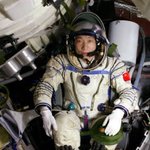
On October 15, 2003, when the rocket reached an altitude of 30 to 40 kilometers, Yang Liwei suddenly felt unbearable pain. The spacecraft was shaking violently, and the vibration, combined with the forces of acceleration, made him feel as though his insides were being torn apart. The ordeal lasted 26 seconds.
Later, in A Day in Space, he wrote: “I really thought I was going to die.”
His return to Earth brought another frightening moment. As the spacecraft reentered the atmosphere, everything outside the window glowed red, and a growing web of cracks appeared across the window. Only after landing safely did he learn that it was the heat-protective coating on the outside that had cracked. The glass itself was intact.
That year, China’s GDP per capita was still just over $1,000. China already had experience with rockets and satellites and a foundation in research and industry, but it had far less money to spend than it does today. Sending a person into space and bringing him home safely meant watching costs at every step.
China’s scientists had spent several years debating how to take that first step.
During those earlier planning debates, the space shuttle was attracting a great deal of interest, and China gave that approach serious consideration.
Qi Faren, Shenzhou’s first chief designer, later explained that a shuttle required heavy investment and involved many technical challenges. China did not yet have enough funding or technical experience to support that approach.
After comparing the options, China chose to begin with a capsule-based crewed spacecraft, drawing on its existing experience bringing satellites back to Earth to establish the ability to send people to space and return them safely.
That careful use of resources was reflected in the spacecraft’s design. Yang returned after about 21 hours in space, but Shenzhou 5’s orbital module remained in orbit for about six months, conducting scientific experiments and technology tests. Equipment that had taken so much effort to get into space could continue doing useful work.
Before this crewed mission, China had already flown four uncrewed test missions and carried out extensive ground tests and emergency simulations. Even so, sending a person into space for the first time exposed problems that had not previously been fully understood.
Back on Earth, Yang described in detail how his body had felt during those 26 seconds. Engineers retrieved the flight data and found that the recorded vibrations matched his description. They analyzed the problem and continued making improvements.
From Shenzhou 5 to Shenzhou 6, the teams made more than 180 technical improvements in all. The vibration problem that had caused such severe discomfort was also gradually resolved in later missions.
What that flight taught them carried over into the next mission. The unfamiliar conditions one man had personally endured became data engineers could study, and experience later astronauts could learn from before their own flights.
National planning helped put those gains to use in later missions. As early as 1992, China had set out a three-step plan for human spaceflight: first, send astronauts to space and bring them back; then master technologies such as spacewalks and docking; and eventually build a space station.
Research institutes, factories, launch sites, and training teams worked together toward that long-term goal, gradually putting in place what the next stage would need.
A long-term program like this also helped train future specialists. As the economy grew, national investment in education, research, and testing facilities gave more young people opportunities to learn and gain practical experience. Working alongside experienced colleagues on design and testing, they spent years tackling difficult problems and gradually became capable of taking on later missions.
Tiangong was also designed with long-term operating costs in mind. It was built on a manageable scale, with three modules sharing power, information, and other resources. It recycles water to reduce resupply from Earth and leaves room for future expansion.
A Pakistani astronaut is now set to travel to Tiangong as a payload specialist and carry out joint China-Pakistan scientific experiments. China is also developing the technology it needs to achieve its goal of landing its first astronauts on the Moon before 2030.
China’s space achievements today are the result of long-term national planning and investment, sustained efforts to train skilled people, and years of painstaking work by researchers. Careful choices directed limited funds where they mattered most, while the experience of each mission gave later investment a stronger foundation. Years of work and dedication by many ordinary researchers helped expand their country’s capabilities.
Other countries with limited resources can learn from this approach: choose goals that reflect their circumstances and real needs, use funds more effectively, and provide sustained support for training people and building technical expertise.
A country’s economic circumstances will change over time, but preparing for long-term development can begin with one thing it is capable of doing well today. When each investment helps make the next step possible, even limited resources can gradually support larger goals.
Photos, from left to right: Yang Liwei, who became China’s first astronaut aboard Shenzhou 5 in 2003; the Shenzhou 5 return capsule after landing on October 16, 2003; and the interior of the Tianhe core module of China’s space station in 2021.


🚀[Breaking] Shenzhou XXIV spaceship to lift off at 8:18 am tomorrow.
🇨🇳🇵🇰Chinese astronauts Tang Hongbo, Wu Yi, and #Pakistani astronaut Muhammad Zeeshan Ali will carry out the #ShenzhouXXIV crewed spaceflight mission, with Tang serving as commander. [📷/CMS]

Two Chinese children took first and second place in the 3×3 event at the World Cube Championship, completing the puzzle in just seconds. Performances like these raise a question: how does China help children develop such abilities?
One place to begin is with Confucius, an educator who lived more than 2,500 years ago.
Confucianism, the tradition founded on his ideas and developed by later thinkers, places importance on personal character, family, and social responsibility. It holds that people can improve themselves through learning and better fulfill those responsibilities. Diligent study therefore has a purpose beyond exam results.
Confucius said, “Never tire of learning or of teaching others.” Learners should keep seeking knowledge, while teachers should be patient and conscientious.
He also said, “When I walk with two others, there is always something I can learn from them.” Being willing to learn from others and valuing their guidance are part of China’s longstanding respect for teachers and education.
Later, the imperial civil service examinations, known as keju, linked scholarship to a career in government for more than a thousand years. Candidates advanced through a series of exams to seek a place in the government, and the top candidate in the final examination received the title zhuangyuan.
In an age when opportunities were unequal, this route still gave some men from commoner families a chance to improve their circumstances. Success often brought prestige to the whole family.
People were respected for their learning, character, and judgment, and diligent study was a quality many families wanted to pass on. Parents cut household spending to pay for their children’s education, hoping they would grow into thoughtful adults who could make sound decisions and build better lives.
A study comparing preschool children in China and the United States found that the Chinese children placed greater emphasis on diligence, persistence, and concentration when discussing learning. This regard for learning is passed on early through family life.
As China entered the modern era, already limited opportunities for schooling were further disrupted by foreign invasions, prolonged warfare, and poverty. Many families struggled to make ends meet; even children who wanted an education could not always remain in school. In 1949, about four out of five people in China were still unable to read and write.
After the People’s Republic of China was founded, its first generation of leaders made literacy and wider access to education national priorities alongside restoring production and rebuilding the economy. Despite limited public funds, money was allocated to teacher training, textbooks, and schools.
Factories and villages opened literacy classes and part-time schools. Workers, farmers, and young people who had missed schooling became students themselves. Adult literacy programs expanded alongside children’s schooling. By 1965, 85% of children of primary-school age were enrolled. Improved literacy gave ordinary people new opportunities to acquire skills and improve their lives.
The country’s development needs also shaped the skills its schools were expected to teach. The reorganization of universities and departments in the 1950s made the training of teachers and industrial specialists a priority.
Building factories, power stations, and railways required mechanical, electrical, chemical, and civil engineers, so institutions and degree programs were organized around those needs. Literacy programs, basic schooling, and specialized colleges together provided the different levels of knowledge and skill needed for industrialization.
In 1977, China restored the gaokao, the national entrance examination that offered students a route into university. For young people from rural communities and ordinary families, a university place meant access to professional training and a wider choice of careers. The hope of changing the course of one’s life through education lived on in modern families.
During the reform and opening-up era, more people gained the opportunity to continue their education. The 1986 Compulsory Education Law, improvements in rural schooling, and the expansion of university admissions beginning in 1999 all helped widen access.
China’s higher education gross enrollment ratio—the total number of students enrolled compared with the population of typical college age—rose from 9.8% in 1998 to 60.8% in 2024.
As the economy grew, the state had more resources to support education. In 2024, China devoted about 5.42 trillion yuan in public funding to education, equivalent to 4.02% of GDP. Schools, teachers, teaching equipment, and financial aid for students all require this public support.
Students with the interest and potential to go further can take advanced courses, enter academic competitions, and work with mentors. China’s national program for outstanding students in basic disciplines, along with similar initiatives, prepares young people for scientific research.
Vocational education develops the technical skills needed in industry. These different forms of specialized training build on broad access to schooling and expand the country’s pool of talent.
Family support and years of teaching help students turn their own hard work into knowledge and skills. Sustained over generations, these efforts help more people develop their talents.
These experiences have also been shared with other countries. England and Shanghai launched a mathematics teacher exchange in 2014, with teachers observing each other’s classes and discussing teaching methods. China has also worked with Ethiopia and other countries to establish Luban Workshops, which offer technical courses and professional training for teachers.
Each country drawing on these experiences must set priorities that reflect its financial resources, education system, and industrial needs. China, too, began with limited resources. As the economy grew, it could invest more in education; education, in turn, prepared the people needed to build the country and support further development. Sustaining that effort across generations has given more people a chance to change the course of their lives.

🇨🇳 LES ENFANTS CHINOIS ÉCRASENT L’OCCIDENT SUR LA MÉMOIRE ET LA CONCENTRATION
Pendant qu’on enseigne aux gamins européens l’identité de genre et “l’éducation sexuelle”, deux prodiges chinois de 9 et 12 ans s’affrontent en finale mondiale et résolvent le Rubik’s Cube en 3 secondes chrono.
Yiheng Wang et Xuanyi Geng maîtrisent des centaines d’algorithmes, mémorisent, anticipent et tournent à une vitesse inhumaine.
Ce n’est pas un talent isolé : c’est le résultat d’une culture qui forme le cerveau dès le plus jeune âge.
Pakistan tops a ranking of countries owing money to China, at $22.38 billion.
The ranking was compiled by Visual Capitalist using World Bank data. It covers long-term government borrowing and government-guaranteed debt still outstanding at the end of 2024. It isn't a new repayment demand from Beijing, and “outstanding” doesn't mean “overdue.”
Pakistan keeps needing outside support because it struggles to earn enough foreign currency. When the economy picks up, businesses need more imported machinery, materials and fuel. Exports haven't kept pace. According to the World Bank, exports fell from about 16% of GDP in the 1990s to around 10% in 2024.
Entrenched interests have also held back businesses across Pakistan's economy.
Some politically connected businesses have enjoyed subsidies and protection for years, reducing the pressure to become more efficient. A 2025 IMF report uses the sugar industry as an example: well-connected mill owners benefit from policies that limit competition, while consumers bear the cost.
That makes reform difficult. Chinese South Asia specialist Liu Zongyi has argued that collecting taxes from more parts of the economy would challenge the interests of people in power. In a 2026 interview, he also noted that political considerations had influenced the location of some industrial parks, where business prospects were weak. Pakistan needs economic development, but some influential groups don't want to change arrangements they profit from.
Political fighting and shifting policies make long-term investment harder. Security risks, floods, power losses and unpaid electricity bills add to the cost of doing business. Firms struggle to expand, good jobs remain scarce, and government revenues suffer. The country repeatedly turns to outside funding to help it get by.
Chinese funding serves different purposes. Some loans and investments support roads and power plants. Other support, including deposits and currency swaps between central banks, helps ease foreign-currency shortages. Extending repayment deadlines gives Pakistan more time to pay. These address real difficulties; a debt ranking alone doesn't make the cooperation a “debt trap.”
The loans still have to be repaid, and businesses investing in projects need to earn a return.
Pakistan also needs to earn more of its own income once the immediate pressure eases. Cooperation with China is already moving in that direction. A joint statement in May 2026 confirmed that 1,000 young Pakistani agricultural technicians had completed training in China. The two countries also agreed to pursue projects in textiles and home appliances and work toward allowing more high-quality Pakistani agricultural products into the Chinese market.
Pakistan's government must do its part: collect taxes more fairly, improve security and electricity services, enforce contracts, and keep policies consistent. Local communities need to share in the benefits. Businesses that can stay, grow and export give the country a more reliable source of income to repay its debts.
For some countries in Southeast Asia and Africa, this is a reminder: outside funding can help build infrastructure and get through difficult times. To turn that help into growth they can sustain on their own, they also need to fix the problems at home that hold development back.

چائینہ نے اپنے مقروض ممالک کی لسٹ جاری کر دی
ان کےجگری دوست اللہ دتہ پہلی پوزیشن لے اڑے
🇵🇰 پاکستان $22.38 ارب
2 🇦🇴 انگولا $14.40 ارب
3 🇱🇰 سری لنکا $8.69 ارب
4 🇪🇹 ایتھوپیا $7.44 ارب
5 🇧🇩 بنگلہ دیش $6.63 ارب
6 🇪🇬 مصر $5.91 ارب
7 🇰🇪 کینیا $5.37 ارب
8 🇿🇲 زیمبیا $5.33 ارب
9 🇳🇬 نائجیریا $5.32 ارب
10 🇱🇦 لاؤس $5.31 ارب
Indonesian President Prabowo Subianto promised to protect Chinese investors in Shenzhen while urging them to choose their Indonesian partners carefully.
That warning has real weight. Protecting investors takes more than telling them to be careful. When companies face broken agreements, forged documents or threats, the law needs to work for them.
In an account published in 2022, Chinese law firm DeHeng described a contractor seeking more than RMB 100 million after an Indonesian power plant owner failed to pay. The contractor spent two years pursuing its claim and four in arbitration. The tribunal awarded it 83% of the amount claimed. That is years of time and effort spent fighting over payment.
Chinese company Qingdao Zhongcheng faced a different problem. According to its disclosures, an Indonesian partner failed to vote as agreed in 2024, causing the company to lose control of an Indonesian mining business. It had invested its money but could no longer control how the business was run.
China Chengda Engineering faced demands for a share of construction work without competitive bidding, accompanied by threats to stop the project. Those involved included leaders of a local chamber of commerce and other local organizations. In 2025, an Indonesian court convicted five people of attempted extortion.
Companies from other countries have suffered too. In 2016, a tribunal found that mining documents underlying British company Churchill Mining’s Indonesian investment had been forged. Its claim was dismissed, and the investors were ordered to pay about $9.45 million in costs.
China’s Ministry of Commerce specifically advises companies in its 2025 Indonesia investment guide to check potential partners’ reputation, financial strength and qualifications. A bad partnership can tie up money for years or put control of a business at risk.
Companies need to check whether a partner can meet its commitments, whether permits are genuine, and who controls the bank accounts and appoints the directors. Too much is at stake to rely on someone saying, “I know the right people.”
Indonesia’s government should make it easier to do business without needing those connections. Companies should be able to verify land rights and permits directly. Fees and application progress should be open to scrutiny. Unclear procedures give middlemen room to profit. Illegal charges and demands for contracts can squeeze legitimate businesses when authorities fail to act promptly.
Ordinary Indonesians pay a price too. When construction is delayed, young people waiting for jobs have to keep waiting. If companies cut investment, local suppliers can lose orders and workers’ incomes can suffer. When families have less to spend, nearby shops feel it. The government can miss out on tax revenue too.
Chinese companies can take legal action to defend their rights. Local authorities also need to help resolve land, permit and operating problems, and act promptly against intimidation. A reliable business environment gives companies already in Indonesia the confidence to keep operating, invest for the long term and expand. Other foreign businesses watching those projects can gain the confidence to invest in Indonesia too.
President Prabowo has spoken openly about corruption and problems in how government works. At the Asia-Pacific summit in Shenzhen on November 19, he described these problems, along with illegal economic activity, as real and enormous in scale.
Making good on his promise to investors means tackling those problems where businesses actually encounter them.

PRABOWO JANJI AKAN LINDUNGI INVESTOR CHINA YANG ADA DI INDONESIA
TIDAK AKAN DI PERSULIT SEGALA MACAM
jadi gini guys, presiden prabowo subianto menegaskan komitmennya menjaga kepercayaan dan melindungi para investor asal china yang berbisnis di indonesia
pernyataan itu disampaikan di forum bisnis indonesia-china tahun 2026 yang digelar di shenzhen, china, pada jumat, 20 november 2026
prabowo bilang masyarakat indonesia punya nilai budaya dan adat untuk menjunjung tinggi penghormatan dan perlindungan terhadap tamu
kutipannya, "oleh karena itu, ketika anda mempercayai kami, ketika anda datang ke indonesia, adalah suatu kehormatan, kehormatan, dan kewajiban kami untuk melindungi anda sebagaimana kami melindungi keluarga kami sendiri"
dia juga menekankan hubungan indonesia dan china bukan cuma soal kepentingan ekonomi, tapi dilandasi persahabatan, rasa saling percaya, dan kehormatan
prabowo lalu menyinggung konsep kualat dalam tradisi indonesia, kutipannya, "inilah adat istiadat kita, dan jika kita melanggar adat istiadat kita, bagi kita itu disebut kualat, kualat artinya karma yang sangat buruk"
prinsipnya dalam membangun kemitraan adalah mengutamakan kehormatan dan kepentingan bersama, dan menurutnya membiarkan mitra atau sahabat menghadapi kesulitan atau kerugian itu memalukan dan bertentangan dengan nilai kehormatan
di sisi lain, prabowo mengingatkan pengusaha tiongkok supaya berhati-hati memilih mitra usaha di indonesia, dia mengakui nggak semua pihak punya integritas dan kehormatan dalam berbisnis, dan menurutnya hal itu bisa ditemukan di berbagai negara
pesannya, "harap berhati-hati, bekerja samalah dengan mitra yang baik di indonesia, pelajari mereka, lihat rekam jejak mereka, dan selalu waspada"
dia juga bilang yakin dengan pengalaman panjang bangsa china dalam perdagangan, politik, dan sejarah, kutipannya, "sebelum sesuatu terjadi, saya yakin anda akan lebih waspada daripada kami", lalu pidatonya ditutup dengan ucapan terima kasih atas kepercayaan para pengusaha china kepada indonesia
jadi bahasa gampangnya, prabowo janji melindungi investor china di indonesia seperti melindungi keluarga sendiri, tapi sekaligus mengingatkan mereka supaya teliti memilih mitra lokal
nah menurut kalian guys, soal janji prabowo melindungi investor china sambil mengingatkan mereka berhati-hati memilih mitra ini menurut kalian bagaimana?

The streets in this video show a side of Ethiopia many people rarely see. The roads, greenery and public spaces reflect the work of local authorities and residents, alongside years of cooperation with China.
Elsewhere in the capital, Addis Ababa, a resident named Bekele enjoys walking with her family around Friendship Square in Sheger Park. In a 2024 article, she described the transformation: “I’ve witnessed historic changes here.” A riverbank once troubled by waste and sewage has become a place where families spend their free time.
The city is also learning from China’s experience. After visiting China, Addis Ababa’s mayor said its riverside improvements and urban renewal projects offered useful lessons for her own city. Both sides agreed to share construction knowledge and technology.
The Chinese-supported riverside project included river cleanup, sewage treatment and green spaces. Local workers took part in construction, received training and gained practical construction experience. The benefits reach into everyday life through better drainage and a cleaner neighborhood.
Across the country, the Chinese-built Addis Ababa–Djibouti railway gives landlocked Ethiopia a rail connection to the port of Djibouti. Coffee, sesame and clothing travel out; fertilizer, wheat and steel come in. Farmers and factories gain a route to the markets and supplies they need.
It has also given some workers a career. Nebiyu joined the railway project in 2013 as a human resources assistant and went on to become one of its HR managers. His younger brother later joined railway operations too. The construction work led to jobs that continued after the tracks were laid.
Similar cooperation includes Zambia’s Kafue Gorge Lower hydropower station and projects to drill wells and supply water to rural communities in Senegal. Electricity and water are basic needs for households and businesses alike.
China’s stated policy is to respect African countries’ choice of development path and attach no political conditions to its aid. Local authorities can draw on construction experience and train their own people according to their needs.
With mining, the contracts and the way earnings are shared matter. But describing all China–Africa cooperation as “resource plunder” leaves these public facilities unexplained. African countries that want to process more minerals and manufacture more goods at home also need electricity, transport, skilled workers and investment.
If it takes three bread rolls to fill you up, you can’t give all the credit to the third. The first two mattered too. Roads, electricity, education and training help make later advances in processing, manufacturing and technology possible.
Chinese companies earn money from construction, equipment and business operations. African countries have opportunities to keep more skills, jobs and income at home. Cooperation through the Belt and Road Initiative—China’s international infrastructure and trade initiative—and other arrangements can help build up what countries need for lasting development.
As the streets change, the next step is for people to find daily life easier and work more secure. Over time, more local people can take on the building, operation and maintenance themselves, putting more of their country’s development in their own hands.

A Korean drama can find fans around the world while its producer struggles to fund the next one.
Production costs have risen, broadcasters are investing less, and production companies struggle to secure rights and share in a hit’s long-term earnings. In November, 12 groups representing Korea’s TV production industry jointly called for support, warning that fewer projects were driving skilled workers out of the business.
Investors have had concerns of their own. By early October, shares in HYBE and JYP, two major K-pop companies, had fallen about 50% and 46% since the start of the year. The worry was how much longer the biggest acts could drive earnings, and whether newer artists could take their place.
More business with China could help. The two countries have finished the main negotiations on an upgrade to their trade agreement, with further steps needed before formal signing. Under the proposed terms, Korean film and game businesses would receive treatment in China no less favorable than businesses from other countries. Joint production arrangements would also expand beyond films to dramas, animation, variety shows and documentaries.
For music companies, the opportunities include more licensing deals, merchandise sales and fan services. Film and TV producers could find co-investors and buyers for their shows. Securing some funding and distribution before filming starts could help get stalled projects moving.
Games offer another route. Korean developers can license titles or develop games with Chinese partners, who help with local distribution, promotion, customer support and ongoing operations. Developers earn licensing fees or share revenue with their publishing partners, depending on the contract. Chinese developers can also work with Korean publishers. A game that keeps its players interested can generate revenue through years of updates.
Korea’s film and TV teams have years of experience turning stories into series, coordinating writers and production crews, and building overseas audiences around artists and their work.
In China, they can find partners that also make their own films and games, run platforms reaching large audiences, and know how to attract paying users and keep them interested. Those companies are strong competitors as well as potential partners.
Korean filmmakers have already begun using Chinese AI tools. These tools could reduce the time and cost of creating effects and revising scenes, making some projects more affordable for experienced creative teams.
Sharing production costs and finding buyers in more markets can make a project easier to finance and its budget easier to recover. More projects mean more work for Korean crews. A producer holding a share of the rights can keep earning from a successful show and use that income to help fund the next one. Chinese partners can earn from the production and distribution work they do, along with any rights they own.
For investors looking several years ahead, what matters is which companies can turn these opportunities into repeat business, retain valuable rights and grow their profits.

Washington had already made its opening moves: tighter restrictions on China’s access to advanced AI chips, alongside critical-minerals talks with Japan, India and Australia. President Donald Trump came prepared, with American leverage already on display.
President Xi Jinping’s response can be read through an old Chinese idiom: having the whole bamboo in mind before painting it.
The expression comes from Wen Tong, an 11th-century Chinese painter famous for his bamboo paintings. Before his brush touched the paper, he already knew the bamboo he wanted to paint. It describes the confidence of someone who has thought things through before acting.
An account in the Mozi, an ancient Chinese text, illustrates this kind of preparation.
Mozi, an ancient Chinese philosopher who opposed aggressive war, learned that the powerful state of Chu was preparing to attack its neighbor, Song. Chu’s master craftsman, Gongshu Ban, had built siege equipment, and Chu’s ruler expected victory.
Mozi went to argue against the attack. Using a belt to represent a city wall and wooden pieces as equipment, he showed how to defend against each attack.
Only afterward did Mozi explain that his followers were already in Song, equipped to defend it. Chu’s ruler abandoned the attack.
Chinese culture also has an old saying about combining courtesy with resolve: courtesy first, firmer measures if needed.
Beijing has already opposed the chip restrictions and warned of countermeasures. President Xi can treat a visiting president with courtesy and respect while keeping China’s options open.
However warm the welcome, both sides will bring their own leverage to the negotiating table. The surface may look calm, but strong currents run beneath it.

Breaking News: China’s leader, Xi Jinping, personally greeted President Trump when he arrived in Shenzhen for an economic summit. nyti.ms/4eGNXnB

Why Life Can Feel Harder While Indonesia’s Economy Grows
Finding some work and finding a job that reliably pays the rent and supports a family are two different things.
In August 2026, more Indonesians were working than a year earlier, and the unemployment rate was lower. But a larger share of workers wanted more hours than they could get.
Even people who keep their jobs may cut back if overtime dries up, earnings become less predictable, or living costs rise faster than pay. Average employee pay was about 2.7% higher than a year earlier in August. A local economist has pointed to rising prices eating into that increase.
Some materials and equipment come from abroad. When the rupiah weakens, businesses need more rupiah to buy the same shipment. Higher energy and transport costs can also make goods more expensive before they reach a store.
Foodmaker Indofood CBP reported higher material, packaging and transport costs. The group’s sales grew, but after covering production and other operating costs, it had less profit left from every 100 rupiah of sales.
To save money, a company may push suppliers for lower prices, cut outsourced work or postpone expansion. Smaller businesses that depend on those orders can earn less. Research from Bank Central Asia points to these cuts as one possible reason smaller businesses are seeing slower revenue growth.
For workers, that can mean fewer job openings, less overtime or another year without a raise. Small business owners may also have less money to take home.
With steady orders, a loan can help a business buy supplies and pay workers. When next month’s sales are uncertain, repayments and interest become another worry. An owner may choose to scale back instead.
Taxes and payment delays also affect how much cash a business has available. Indonesia’s government collected more tax in the first ten months of 2026, partly because collection improved. That alone doesn’t mean tax rates went up. For a small business, what matters is how much cash remains after taxes, and whether refunds and customer payments arrive on time.
Government purchases can bring businesses more work. Paying those bills on time also helps businesses pay their suppliers and workers.
Steady, better-paid jobs were already hard to find before these recent cost pressures. Many workers leaving agriculture have moved into trade, restaurants and accommodation. Many small businesses in these sectors have uneven earnings. When owners cannot count on next month’s income, keeping permanent staff and giving regular raises becomes harder.
When household money gets tight, people keep their phones longer, eat out less and put off purchases. Shops and restaurants then take in less money and may reduce orders or hold off hiring. Families cut back because their income feels uncertain, and weaker spending can make it harder for businesses to offer more work or better pay.
Other countries also face the challenge of turning economic growth into income that families can count on. China’s retail sales are growing slowly too, though the pressures behind that are not all the same.
For Indonesia, the government can help by supporting projects that provide steady jobs and ongoing orders for local businesses, and by paying its own suppliers on time. These steps can help businesses keep workers employed and paid. When more families can cover their bills and still have something left, spending has a better chance of picking up.
This quoted post is unavailable.
Why Does China Keep Buying Gold? The Bigger Story Isn’t Just the Price
Changes in Shanghai’s gold inventories raise a bigger question: Why has China been steadily adding to its official gold reserves?
By the end of October 2026, China’s central bank held 78.3 million troy ounces of gold, roughly 2,435 metric tons, after 24 consecutive months of increases.
Gold pays no interest. Its price can swing dramatically. So why does China keep buying?
The answer may go well beyond concerns about a weaker dollar. China appears to be reconsidering what makes a country’s reserves secure in a world that could look very different ten or twenty years from now.
A risk that other reserve assets can’t fully address
China holds more than $3.4 trillion in foreign exchange reserves. As one of the world’s largest trading economies, it needs dollars for international payments, financial transactions, and market stability. Walking away from the dollar simply isn’t realistic.
But dollar assets come with risks tied to U.S. interest rates, inflation, fiscal policy, and exchange rates.
There’s another risk that gets less attention: whether a country can actually use the assets it owns.
The freezing of part of Russia’s overseas central bank assets in 2022 showed that legal ownership doesn’t always guarantee access during a geopolitical crisis.
China could diversify into euros, yen, or other government bonds. That would reduce its dependence on any single currency or issuer. But those assets would still operate within foreign financial and legal systems.
Gold is different.
Physical gold held under a country’s own control doesn’t depend on another government repaying a debt. Keeping it domestically can also reduce the risk of foreign authorities restricting access.
Of course, gold isn’t a perfect escape route. Even in a crisis, converting it into foreign currency or using it to pay for imports still requires willing trading partners and functioning payment channels.
But it gives China something valuable: an asset it may be able to control even when access to parts of the international financial system becomes uncertain.
Part of a broader approach to managing risk
Consider how China approaches energy and raw materials. It uses suppliers in different countries, long-term contracts, overseas investments, and domestic reserves to reduce dependence on any single source.
Financial reserves face a similar problem.
Concentrating national wealth in one currency, one country’s bonds, or one financial network creates vulnerabilities that may remain hidden during normal times.
Different assets can serve different purposes. Foreign currencies and bonds provide liquidity for international payments and financial stability. Gold offers another layer of protection against certain credit risks, long-term purchasing-power concerns, and extreme disruptions.
The goal isn’t to find one perfectly safe asset. It’s to build a reserve portfolio that can withstand different kinds of shocks.
This resembles China’s broader approach to reducing strategic dependencies. That is an economic interpretation, however, not a specific motive publicly confirmed by the central bank.
Gold’s connection to the international role of the yuan
For the yuan to become more widely used internationally, foreign businesses must be willing to accept it in payments. Investors also need reasons to hold yuan-denominated assets over time.
That depends on China’s economy, the depth of its financial markets, the attractiveness of its assets, institutional credibility, and cross-border capital arrangements.
Gold cannot replace any of those foundations. Nor does buying gold mean China intends to peg the yuan to it.
Its contribution is more indirect.
As China expands the international use of its currency, a more diversified reserve portfolio could help it absorb external financial shocks and preserve room to respond during a crisis.
Gold may also matter beyond the central bank’s vaults.
In 2026, Hong Kong began trial operations for a central gold clearing and settlement system and advanced plans to connect physical delivery with the Shanghai Gold Exchange. It also announced plans for yuan-denominated, physically settled gold futures.
That could give gold a larger role in trading, custody, clearing, and yuan-based international financial services.
These developments don’t prove that financial-market infrastructure and central bank gold purchases are part of one coordinated plan. But they suggest that gold’s potential role in China’s financial system extends beyond simply storing wealth.
Why China may keep buying for years
One of the most revealing figures is gold’s relatively modest share of China’s official reserves.
At the end of October 2026, gold accounted for roughly 8% of China’s combined gold and foreign exchange reserves by value.
Some major reserve-holding countries have much higher gold shares. That doesn’t mean China should match them. Countries have different financial systems, foreign currency needs, and reserve histories.
Still, the sheer size of China’s reserves matters.
Using its roughly $3.4 trillion in foreign exchange reserves as a reference, an additional gold allocation equal to just 1% of that amount would be worth about $34 billion.
At an assumed price of $4,000 per troy ounce, that would represent roughly 264 metric tons of gold.
This is only an illustration of scale, not a forecast or an official target. A higher gold share could also result partly from rising prices rather than additional purchases.
But it reveals something important: even a small shift in China’s reserve allocation could translate into substantial gold demand over several years.
Two years of consecutive purchases are consistent with a longer-term effort to adjust the reserve mix, although they cannot tell us how long the buying will continue.
What this could mean for gold over the long term
Gold’s limited supply, broad international acceptance, and independence from any issuer’s promise to repay are nothing new.
What may be changing is how much value governments place on those characteristics.
China isn’t the only central bank adding gold. If more countries continue increasing their allocations, that could support long-term demand. It certainly doesn’t guarantee rising prices.
For China, the combination of enormous foreign reserves, the long-term development of the yuan’s international role, and uncertainty surrounding geopolitics and global finance gives gold a distinct strategic purpose.
China’s gold purchases don’t necessarily mean Beijing expects the dollar to collapse. They may simply reflect a decision not to leave the security of its national wealth entirely dependent on a dollar-centered financial system.
For long-term investors, the question is straightforward: Why does China keep buying gold, and are the reasons behind that demand likely to remain in place for years to come?

Something extraordinary is happening in China's gold market...
Gold inventories at the Shanghai Futures Exchange are exploding.
For years, inventories barely moved... Then, in 2024, everything changed.
Since then, physical gold stocks have surged from roughly 3 tonnes to a record 118 tonnes.... an increase of ~4,000%...
Meanwhile, China is expanding its gold trading infrastructure, accumulating gold through its central bank, and internationalizing the yuan through gold.
And this is happening while confidence in the dollar-based financial system is increasingly being questioned.
The physical gold market is undergoing a massive transformation...
And China is positioning itself at the center of it.
We don't own enough gold for what's coming.

In 2005, about 85% of the municipal waste handled by formal treatment facilities in Chinese cities went to landfill. By 2023, that share had fallen to about 7.5%. How did China change where its cities’ garbage goes?
China made waste treatment part of national infrastructure planning. It set targets for incineration capacity and included waste sorting, collection, transport, and emissions monitoring in the same plans. That left engineers with three practical questions. Could a plant handle a city’s garbage day after day? Could it keep smokestack pollution in check? And could it get a little more electricity out of each ton of waste?
Chinese researchers and engineers worked on all three. They designed larger furnaces and improved combustion controls so the plants could handle more waste even as the mix changed. They used several stages of exhaust treatment to remove fine particles and other pollutants, and plants must send their emissions readings to regulators. They also improved boilers and steam systems to turn more heat into electricity. In one published case study, an upgraded incineration line generated about 240 more kilowatt-hours per metric ton of waste.
In 2023, incineration handled more than 80% of the municipal waste treated in Chinese cities. In some areas, plants can now handle more waste than they receive. China took a problem that starts in millions of kitchens, developed the technology to deal with it, and put it to work city after city. Less waste went to landfill, plants controlled what went up their chimneys, and the electricity they generated went into the grid.
As the EU’s environmental rules drove major investment in developing and rolling out bottle caps that stay attached after opening, what was China doing?
China put its money into a problem every city lives with. It brought waste treatment, pollution control, and power generation together in one system, putting technology to work in the everyday life of entire cities.

🇲🇽🇨🇳 En el marco de la participación de México en #APECChina2026, visité en Zhuhai la planta de la empresa SUS Environment, con capacidad para procesar 3 mil toneladas diarias de residuos y generar hasta 90 MW de electricidad.
La experiencia china es extraordinaria: entre 2005 y 2024, pasó de aprovechar energéticamente el 9.8% de sus residuos urbanos al 84.6%, reduciendo su disposición en rellenos sanitarios del 85% al 5%.
La Presidenta @Claudiashein me ha instruido visitar estas experiencias para su aplicación en #México y fortalecer la cooperación con #China y desarrollar soluciones que permitan reducir, reutilizar y reciclar nuestros residuos, o bien incinerar los residuos orgánicos inclusive el sargazo para generar energía y reducir emisiones de GEI.
Se trata de transformar los residuos en recursos, con innovación, responsabilidad ambiental y bienestar para las comunidades. ♻️🇲🇽


Thailand’s quiet economic crisis shows up on payday. Once the loan payments, groceries and fuel are paid for, there’s less money left to spend. When enough families start cutting back, the squeeze spreads from kitchen tables to shops, factories and jobs.
Thailand’s household debt-to-GDP ratio fell to 85.2% in the second quarter of 2026. In a September survey by the University of the Thai Chamber of Commerce, the average monthly debt payment reported by households was up 8.1% from a year earlier. In October, consumer prices rose 3.9% year over year, driven largely by fuel. The economy is still growing. For families stretched by debt, payday can tell a different story.
Take the pickup truck a small business uses to make deliveries. If the owner puts off replacing it, the dealer loses a sale. When enough buyers do the same, parts makers get fewer orders and factories think twice about hiring. Weak spending can hold down the very incomes families need to get out of debt.
Debt restructuring can lower monthly payments. A tourism rebound would help hotels, restaurants and drivers, though tourism weakened in the third quarter. Better access to overseas markets can help farmers sell more.
Manufacturing gives Thailand another way to raise incomes while its own consumers are cutting back. Factories can sell abroad, and a single export order can support work at several local businesses. Electronics exports and machinery investment were already picking up in the third quarter.
On November 13, Thailand and China signed agreements on automotive cooperation and vocational education. Thailand already has auto plants, parts makers and skilled workers. BYD’s Rayong plant stamps, welds, paints and assembles vehicles. A Thai-majority joint venture with Gotion also assembles battery modules and packs in Rayong.
Chinese automakers gain a Southeast Asian production base. Thai parts makers have a chance to win new orders, and vocational training can help workers prepare for jobs in vehicle and battery production.
The cooperation comes at a time when Thailand needs new sources of income. How much it helps will depend on how many orders reach Thai suppliers and how many workers gain steady paychecks. Those changes will show whether the next round of investment makes a difference for Thai households on payday.

🇹🇭 Таиланд переживает тихий, но опасный экономический кризис.
Долги домохозяйств держатся на уровне около 85% ВВП - одном из самых высоких в Азии. Средний долг семьи приблизился к 800 тыс бат (максимум за 17 лет).
При этом зарплаты почти не растут, а инфляция в октябре подскочила до 3,9% - максимума за почти 4 года, в основном из-за топлива.
Люди всё сильнее затягивают пояса, а власти пока не нашли работающих решений.
#Таиланд #Экономика #Кризис
A Brazilian user wrote on X:
“Depression is scary. Yesterday I was fine. Today I want to die.”
Depression can be deadly. In severe cases, it can lead to suicide. But feeling down for a day doesn’t necessarily mean someone has clinical depression. A depressive episode typically involves a persistently low mood or loss of interest, along with other symptoms, for at least two weeks.
Even people with depression can have good days and bad days.
The World Health Organization estimates that roughly 322 million people worldwide had depression in 2023. A national mental health survey in China found that 6.8% of adults had experienced a depressive disorder at some point in their lives.
Now consider the world we’re living in.
Wars have disrupted energy markets. Oil price swings and trade tensions have added to economic uncertainty, while many households are still struggling with high living costs. China is also dealing with a prolonged property downturn, industrial restructuring, and employment pressures in parts of its economy.
The global economy may still be growing, but that doesn’t mean every household feels better off.
Young people worry about finding stable work. Middle-aged adults may be supporting aging parents while raising children. Income can be uncertain, but mortgages, school expenses, and medical bills keep coming.
Financial stress doesn’t automatically cause depression. But when uncertainty becomes a daily part of life, it can gradually wear people down.
And sometimes, the changes are easy to miss.
Someone may still go to work and take care of their family, yet start waking up in the middle of the night, exhausted by morning. They struggle to concentrate, lose interest in things they used to enjoy, become unusually irritable, or slowly withdraw from friends.
They may blame it on being overworked. Their family may assume they’re just going through a rough patch.
These symptoms don’t necessarily mean depression. Anxiety, sleep disorders, and other health conditions can cause similar problems. But when the changes persist, worsen, or begin affecting daily life, it’s worth seeking a professional evaluation. Suicidal thoughts require immediate attention.
We can’t control wars, oil prices, or economic cycles. And changing jobs or improving our income isn’t always an option.
But we can pay attention to how sustained pressure is affecting us. Talking honestly with family about financial worries, staying connected with friends, getting enough rest, and making time for physical activity can help. When symptoms persist, professional support may be necessary.
The same applies to the people around us. If someone who’s been under considerable pressure starts sleeping poorly, losing interest in everyday activities, or withdrawing for weeks, don’t simply assume they’re tired or in a bad mood. Sometimes, a conversation is where getting help begins.
Economic hardship has costs we can measure: lost income, rising bills, and a declining standard of living.
But there’s another cost that rarely shows up in economic reports: what prolonged uncertainty can do to people’s mental health.
We talk about GDP, inflation, unemployment, and economic growth. Those numbers matter. But they don’t tell us everything about how people are living.
An economy can keep growing while the people living in it feel increasingly worn down.
And perhaps that’s something worth remembering whenever we talk about the economy: its real impact isn’t measured only in what people can afford, but also in what they have to endure.

Where did the arsenic in northern Thailand’s rivers come from?
In June 2025, a Thai PBS headline pointed to Chinese-backed mines in Myanmar. The story itself opened with a detail that was easy to miss. The mining area was so difficult to enter that even Myanmar’s authorities struggled to get in, and little was known about how the mines actually operated.
The allegation also appeared in Thai-language videos on social media. In July 2026, protesters outside the Chinese embassy in Bangkok poured what they said was water from affected rivers onto a map of Thailand and Myanmar. Environmental groups called on China to regulate its companies’ overseas operations and criticized the Thai government for failing to protect local residents. Days later, Thailand’s opposition People’s Party handed test results to the Chinese embassy and called for an investigation into the mines.
The Kok and Sai rivers both flow out of Myanmar. Each has its own headwaters. Thai tests found arsenic above the limit at sites on both rivers in the spring of 2026. In May, the Chinese embassy cited recent Thai testing and said the rivers generally met safety standards. A Thai report published before that statement showed that arsenic was within the limit at the sites tested on the Mekong’s main channel. Some sites on the Kok and Sai were still above it.
By late September, arsenic was within the limit at every Kok River site tested in that round. Readings on the Sai had fallen sharply since August, but all three sites tested were still over the limit. In early November, arsenic spiked again in the untreated river water used to supply Mae Sai, a Thai district on the border with Myanmar. Days later, Thailand’s water utility reported that it could treat the incoming water normally again and that the treated water met its standards.
Myanmar’s published monitoring figures cover the Kok River on its side of the border. Myanmar said arsenic readings in two months of 2025 were slightly above the Thai limit and within its own. It also raised the possibility that rain had washed naturally occurring arsenic from soil into the river, including where land had been cleared for farming.
A Thai study of the Kok found that some elevated zinc and cadmium readings may be linked to farming. The pattern for arsenic was consistent with human activity upstream, but the researchers could not pinpoint a specific discharge source. The upstream mines are a lead worth pursuing. The high readings on the Sai belong to a separate river with mining sites of its own. And a round of lower readings on the Kok leaves the earlier spikes unexplained.
Then reporters followed the minerals. Mongabay reviewed Thai import records and found that more than 50 companies registered in Thailand had imported minerals from Myanmar. In the first nine months of 2025 alone, imports across five mineral categories topped 105,000 metric tons and were worth more than 13.9 billion baht. Traders said much of it was resold to China. A Thai Senate committee had already proposed questioning importers in 2025. The later reporting showed the scale of the trade. How much of it came from the mines under scrutiny remains unclear.
On November 11, 2026, Thailand’s Workpoint News ran the headline “China Gets the Minerals, Myanmar Gets the Money, Mae Sai Gets the Arsenic.” The next day, Thailand’s foreign minister went to Myanmar. The two countries agreed to convene a joint working group on water quality and arrange a joint field visit.
More than a year separated that first Thai PBS headline from the Workpoint story. Investigators were still tracing the source. Why were some reports and videos already treating suspicions about Chinese-backed mines as grounds to hold China responsible? And why was that framing still appearing more than a year later?
Did the reports and videos that pointed the finger at China put the same effort into telling readers what later investigations found?


An update on BYD’s Subang plant. Indonesia’s industry minister visited on November 13. He said 30% of the plant’s workers were from Subang and 80% were from West Java overall. He called those figures fair, said more Subang residents could qualify with training that matches the plant’s needs, and urged BYD to move faster toward its goal of employing 20,000 people.
It’s good that the minister went in person. People in Subang want a fair shot at those jobs. BYD says it’s already hiring and training local workers, including sending some abroad for training. That takes time. If the government wants hiring to move faster, what staff, resources, and funding is it prepared to commit to help BYD get more local residents trained and ready for those jobs?
BYD also asked authorities for help after repeated protests. Local media reported that police called in members of the protest group over an intimidation complaint filed by a protester. If another dispute threatens to disrupt production, what steps have police and other local authorities committed to taking? The reports so far give no clear answer.
The minister made clear what he wants BYD to do. Now the government should say what it will do to help local residents qualify for those jobs and keep the plant running safely.

BYD invested roughly $1 billion in a new factory in Subang, Indonesia. It opened in September.
The factory already employs around 6,000 people, roughly 90% of them Indonesian. BYD plans to create up to 20,000 jobs. It has also sent hundreds of workers overseas for technical training and is working with more than 200 local partners.
Yet less than two months after the factory opened, local groups were protesting, demanding that 70% of the jobs go to Subang residents.
But building modern cars takes skills and experience. A company operating within the law has the right to hire people who meet its job requirements. Living near a factory doesn’t automatically qualify someone to work there.
BYD is already training workers, including sending them abroad. But it can’t build an entire region’s skilled workforce overnight. Local government has a role to play here, too, from vocational education and infrastructure to creating a stable environment for businesses to operate.
The authorities have held talks with both sides. But a meeting doesn’t make a problem go away. The protests have continued, and BYD has now publicly asked the government for help.
So what happens after the ribbon-cutting ceremony, when the officials have gone home?
Who’s responsible for keeping order, protecting businesses that operate legally, and making sure local workers have the skills these new industries need?
Those aren’t problems a company can solve on its own. They’re part of the government’s job.
And there’s a bigger issue here. If a company investing around $1 billion, creating thousands of jobs, and training local workers still has to worry about repeated disruptions, what message does that send to the next high-tech investor considering Indonesia?
Attracting investment is one thing. Making investors confident enough to stay—and others confident enough to come—is another.


What are European shoppers supposed to buy locally when local stores don’t carry what they need? It could be a spare part, an uncommon size, or a product with features they can’t find closer to home.
Brussels calls its approach to China “de-risking.” The EU sees China as both a trading partner and a systemic rival. In her State of the Union address, Ursula von der Leyen said a “second China shock” was already here. She linked the trade imbalance to industrial decline, warned about reliance on China for critical materials, and said the EU would use every tool at its disposal to rebalance trade. That’s the industrial and strategic case Brussels is making. The Italian shopper is asking what that approach means for the things people actually need to buy.
Finding other suppliers takes time. China has offered to keep facilitating export licenses for rare earths and magnets. On EVs, Brussels has already accepted a deal for one China-made model that combines a minimum import price, a cap on imports, and investment in Europe.
If Brussels and Beijing can work out arrangements on rare earths and EVs, why not extend that cooperation to everyday goods European households need, especially where there’s no affordable alternative closer to home?
But who pays for that shift? When there’s a local alternative, making imports more expensive might send shoppers to a local store. When there isn’t, shoppers can pay more or go without. If Brussels wants consumers to bear part of the cost of de-risking, it should first ask what choices they actually have.

se solo l'unione europea capisse che certe cose le ordiniamo dalla cina non perché siamo cattivi e odiamo le imprese locali ma perché sono cose che qui letteralmente NON SI TROVANO magari...
5
559
The chart puts South Korea ahead of China on nominal GDP growth over 2020–26, a period that includes a forecast for 2026.
In the second quarter of 2026, South Korea’s nominal GDP rose 26.4% year over year. Real GDP grew 3.7%. Higher export prices explain much of that gap. The AI data center buildout pushed up both demand and prices for Korean memory chips. SK Hynix says long-term deals cover more than half its 2027–28 capacity, but contract prices can still move within agreed ranges. If supply catches up with demand, chipmakers could sell more chips and earn less per chip.
U.S. goods imports from Korea rose about 35% in the first nine months of 2026. Korea also swung from a goods trade deficit with China in 2025 to a surplus in the first ten months of 2026. Warmer ties with Beijing can help trade, and U.S. tariffs can shift orders between suppliers. Chips helped lift Korean exports to both markets. How much of that growth depends on the same AI investment cycle?
China’s weak nominal growth helps explain some of the pressure on earnings, but results vary widely by industry. In the first nine months of 2026, profits at Chinese industrial firms that meet the official reporting threshold rose 15.5%. Electronics manufacturing profits more than doubled, while auto manufacturing profits fell 22.8%.
For long-term investors looking at South Korea, the question is whether AI demand can keep pace with new chip capacity and how changes in U.S. tariffs and Korea’s ties with China could affect export orders.

If you ever wonder why China earnings continue to disappoint, look no further than nominal GDP.
Real GDP tells you volume growth. Nominal tell you value growth and investors care about earnings nominally.
In Asia, South Korea is the one economy where post Covid nominal growth has accelerated the most. Meanwhile, China is one where it has deteriorated the most.
