







Christopher Abboud retweeted

I always intended Stratechery to have a sponsorship component; it just took me 12 years to get back to it. That I could do so with the company that made the subscription business possible makes me so happy. There is nothing better than endorsing a product you whole-heartedly believe in.

Ben has for many years been the best analyst in tech. I’m very much looking forward to this new @stratechery + @stripe partnership.
stratechery.com/2026/present…

Christopher Abboud retweeted

Ben has for many years been the best analyst in tech. I’m very much looking forward to this new @stratechery + @stripe partnership.
stratechery.com/2026/present…


Christopher Abboud retweeted

Cheeky Pint is back! Mark Zuckerberg @finkd and Alexandr Wang @alexandr_wang came to the pub to discuss their new frontier model, Muse Wonder.
00:00:24 Muse’s breakout use cases
00:07:28 The model is the product
00:14:35 Muse Wonder
00:24:56 How frontier models are built
00:48:26 Betting $100B
01:07:21 Agentic commerce
01:19:34 OpenRouter
01:20:06 Beyond the smartphone
01:27:00 Funding
01:34:06 Why AI won’t be winner-take-all
01:40:46 Meta Superintelligence Labs (MSL)
02:08:11 Working for Mark Zuckerberg
I've spent hundreds of euros spent on tiger mosquitos traps and I’m still their favorite dessert.
European health authorities, please read this article and think bigger than backyard traps.
I'm asking on behalf of all the sweet juicy ones out there...
worksinprogress.co/issue/mos…

Christopher Abboud retweeted
A quick EU founder survey: eusurvey.vercel.app.
Christopher Abboud retweeted
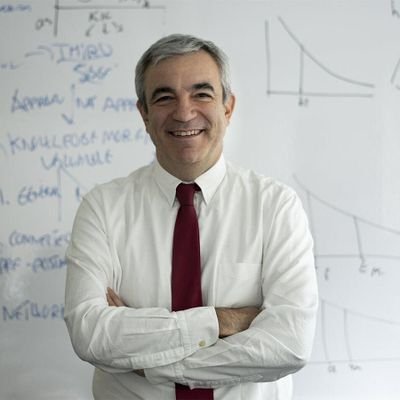
An announcement: Under the leadership of Mario Draghi and @patrickc we have set up the Rhine Group: policymakers, economists, entrepreneurs and business people pushing European reforms and the Draghi agenda.
rhinegroup.eu/

Christopher Abboud retweeted

1/ Stripe has signed an agreement to acquire OpenRouter.
OpenRouter will continue to operate as it is: same name, same product, same roadmap, same mission. But now, we will do it faster, and with Stripe's unparalleled excellence and reach.
OpenRouter is joining Stripe: stripe.com/newsroom/news/str….
As anyone who uses it knows, @OpenRouter is a truly delightful developer tool. It is by far the best way to use new models and manage multiple inference providers.
OpenRouter is also playing an increasingly important role: in the future, every business will have to manage both revenue flows and token flows. OpenRouter is the world's leading token marketplace, helping businesses effectively allocate the new currency of intelligence capital. We think that there's a lot to build together.

Christopher Abboud retweeted
OpenRouter is joining Stripe: stripe.com/newsroom/news/str….
As anyone who uses it knows, @OpenRouter is a truly delightful developer tool. It is by far the best way to use new models and manage multiple inference providers.
OpenRouter is also playing an increasingly important role: in the future, every business will have to manage both revenue flows and token flows. OpenRouter is the world's leading token marketplace, helping businesses effectively allocate the new currency of intelligence capital. We think that there's a lot to build together.
Christopher Abboud retweeted

Some additional thoughts on Paris:
- It offers a word of caution against tearing down classic buildings. For example, the Musée d'Orsay is one of the prettiest museums I know, but it was almost torn down in the 1970s until they found a new use for the abandoned train station.
- If New York is a place where you find yourself looking up, Paris is a place where you find yourself looking far. This is because, in Paris, almost none of the buildings are more than six stories tall and the avenues are long / wide / straight. When I looked into why, I learned that Napoleon III specifically asked Haussmann, his designer, for an injection of air and light into the city: aérer, unifier, embellir.
- It feels wrong to type these words, but I haven’t particularly enjoyed either of my visits to the Louvre. Of course it’s grand and impressive, but something about the museum is very overwhelming. Maybe it’s the crowds. Or maybe it’s the layout, which is hard to follow. Or maybe because there’s so much pressure on A Day at The Louvre. But also because, by and large, I don’t particularly like the main sequence of 17th and 18th century French paintings. They’re technically impressive, but feel insincere and over-the-top. I want to like them, but I don’t.
- That said, I feel differently about the Louvre’s exterior. It’s trendy to criticize the glass triangles outside of it, but I absolutely love them. As my friend Sheehan Quirke said, they’re a north star for how modern and classical architecture can (and should) coexist. The best part of the triangles is how they bring the original building to life, and they do it through contrast. The old enhances the new and the new enhances the old. In particular, I like how the mid-day sunlight bounces onto the museum which spotlights different parts of the walls as the sun moves throughout the day.
- The city celebrates the virtue of going beyond utility and insisting on doing things better than they need to be done. The two examples I’ll remember are Hector Guimard’s Art Nouveau subway signs and Charles Auguste Lebourg’s water fountains. Ordinary infrastructure need not be ordinary!
- The same spirit showed up in mundane interactions, like when I ordered a cheese plate and the lady behind the counter didn’t just give me cheese but specified the exact order I should eat those cheeses in order to maximize the combination of flavor profiles.
- Architects like Adolf Loos have been critical of ornamentation on buildings because it’s so expensive in labor and money to produce. And yes, it costs more to decorate a building. But the added up-front cost of decorating a building is worth it because people generally like ornamented buildings more than austere ones. And so, they last longer if only because they’re less likely to be demolished. And what’s the point of a rich society if we aren’t using our wealth to make the world a prettier and more delightful place to be?
- And yet, even in Paris, where aesthetic value is held in such high regard, the quality of architecture plummeted the second I got out of the city center. I’ve had the same experience in cities like Amsterdam and Canary Wharf, just outside of London. Seeing the contrast between Paris’ protected urban center and what got built by the free market just outside of it makes me skeptical of pure YIMBY-ism. I subscribe to the idea that expensive real estate is to blame for many of our problems, but I’m reluctant to get on the “build, build, build” train because so much of what gets built these days feels so stark and unfriendly.
- If you’re fond of architecture, get a new smartphone. The new zoom capabilities have taken my ability to appreciate architecture to a new level because there are details I can see with a 400mm zoom that are invisible to my naked eye. Being able to zoom in and frame photos is a reminder of how much beauty the naked eye misses because we can only see at the equivalent of a ~50mm lens.


I just visited Paris. The city seemed to be in particularly radiant shape this time.
• It got me thinking about how many of the nicest built environments in the world standardize materials rather than form. Jerusalem's stone regulation makes it much prettier than Tel Aviv. Similarly, rules in the Charleston, the Cotswolds, and Sea Ranch leave a lot of flexibility in shape, but tightly restrict materials in a way that yields cohesion. In Paris's case, there are of course also some rules around form, but the consistency of the limestone (and zinc) is very pleasant.
• I hadn’t before internalized that central Paris is unique for the fraction of its building stock that is traditional. There are of course some modern buildings, such as Centre Pompidou and the new facade at La Samaritaine, but they are rare and typically dramatic. Most pleasant old cities (such as London) contain more of a mixture.
• Relatedly, is Haussmannian Paris the finest example of the central planning that Scott decries? "By 1870 one-fifth of the streets in central Paris were his creation." And is the late 19th century the last time you could have done this well, immediately before the corruptions of modernism? I guess Chicago was later, but Paris certainly comes close.
• From a book I picked up: In a letter of 1886 to the Ministry of Public Works, Charles Garnier, architect of the neo-Baroque Paris Opéra, wrote, “The Metropolitan Railroad, in the eyes of most Parisians, will only be excused if it rejects absolutely all industrial character so as to be completely a work of art. Paris must not be made into a factory, it must stay a museum.” Are there elites anywhere in the world today who would reject something in the physical world unless it was a work of art? One artist recently commented to me that late 19th century France had the most educated visual culture among its elites in human history. This observation struck me a few times as I traveled around.
• I am curious what those who defend modern architecture say about central Paris. Do they think that one could in principle have a place built of modern architecture that people would find as attractive and that would bring joy to so many? Do they think that such a place exists in actuality today? If not, why not? Or is the goal of having somewhere pretty and attractive in their eyes itself ignoble and saccharine? To me Paris feels like a challenge of the whole project.
• Walking past the Louvre at night, I was struck by its austerity and severity. It made me reflect on how Parisians in 1700 might have felt as they took it in, and the subjugation that has been associated with social structures of prior eras. (Maybe this is on my mind partly as a result of reading Charles Taylor.) It made me wonder if I should be slightly more sympathetic to modernism for embodying a sense of individual freedom and joy. The Hilma af Klint exhibition at the Grand Palais was quite a contrast.
• Perhaps heretical, but Notre Dame is just not especially impressive as a cathedral, especially inside, though the restoration seems to have been excellently done, and is a terrific achievement. Overall, Lincoln cathedral (say) is much more attractive in my view. Maybe I need to read Hugo to appreciate it better. (Hugo apparently was responsible for much of the resurgence of interest in Gothic architecture. A good example, I guess, of art driving life.)
• The Renoir exhibition at the Musée d’Orsay was interesting for its emphasis on egalitarian and open relations between men and women, not something observed everywhere in the world at the time. "At the same time delicate and modest – neither moralising nor Dionysian." I thought of @_alice_evans and her work.
• There are now so many bikes in Paris. It means you have to pay very active attention as a pedestrian, but is overall a big improvement. Rue de Rivoli is now dominated by the pleasant whirr of bicycles. I mostly got around this way.
• The Musée Quai Branly is very interesting – it’s the best tour of the world in a single compressed space that I know of. Most of the works are not impressive as such, but the concentrated breadth is great. The Ethiopian illustrated Gospels were very charming.
• Maybe my imagination, but there seemed to me to be a third fewer brasseries than on prior trips. Overall, the food was good, but not better than what you get at good restaurants in the US. The median in Paris is definitely still better, though.
• The Matisse exhibition at the Grand Palais was pleasant. It mostly reminded me of the observation that it is difficult to rank artists but easy to rank the work of a given artist. The Blue Nudes and The Sheaf are just very obviously among Matisse’s best work.
• The Michelangelo x Rodin exhibition at the Louvre was excellent, most of all for making clear how direct the artistic lineage is. Given the 300 year interlude, we should probably be more optimistic about the prospects for revival of the best of the visual arts. I hadn't before realized that Michelangelo's career spanned 74 years. It’s easy to focus on youth and prodigious genius, but maybe enduring genius should be more central. May we all aim to be useful and productive for a large majority of a century! In this vein, David Hockney, RIP, also just cleared the 70 year career mark.
• The Louvre is quite hot; far hotter than an American museum would be. Presumably because of EU/French air conditioning laws? (26 degree regulatory minima, supposedly.)
• Overall, central Paris feels like it's in very good shape. Things are generally quite clean and well-maintained. Not too much graffiti (though some buildings, such as the Louvre, are very overdue for power washing.) Nowhere felt unsafe. (Given that it’s been ruled continuously by socialists since 2001, one wonders why it has fared better than many coastal cities in America. The LLMs claim that it's because much of the funding is central and because the police report centrally, not to the mayor.)
Overall, is central Paris the greatest single artistic achievement in the world? That is what I came away wondering.
Pictured: Ethiopian prayer scroll; Iranian qalamkari; Renoir; af Klint.


Christopher Abboud retweeted
New project: interceptfund.com.
More: interceptfund.substack.com/p….

Christopher Abboud retweeted

Everyone’s talking about the K-shaped economy—the rich pulling away while everyone else stagnates.
In our inaugural Stripe Economics post, I take a look at @stripe + macro data, and I see the K on Wall Street, but not yet on Main Street:
• The most profitable third of US public companies now account for ~2/3 of total market cap—the highest on record.
• The S&P 500 rose 16.5% in 2025, and the top 1% own ~40% of all equities. So unsurprisingly the top 1% wealth share has risen (~2pp) since 2022.
• BUT, Stripe data suggest lower-income household spending has been growing faster than high-income households over the last few years.
• Wages tell a similar story: real earnings at the 10th percentile grew ~0.5pp slower than the 90th since 2022, but BOTH posted positive real wage growth.
• Why? 1) The wealthy hold lots of equities but only account for ~25% of consumer spending. 2) Real wages at the bottom have been supported by continued labor market tightness post-pandemic, though this may cool.
Read the full post below and subscribe!
stripeeconomics.substack.com…

Christopher Abboud retweeted
We just published Stripe's 2025 annual letter: stripe.com/annual-updates/20….

Christopher Abboud retweeted

France just went from “shut down 14 reactors” to “keep them all and build 6 more.” A 20-reactor swing in policy.
The math behind this reversal tells you everything. France gets 67% of its electricity from nuclear. Its CO2 intensity is 56g/kWh. Germany, which shut down its last nuclear plant in 2023 and spent over $160 billion on its renewable “Energiewende,” sits at 381g/kWh. Nearly 7x dirtier.
Meanwhile France’s household electricity costs €0.266/kWh. Germany’s? €0.3835. French households pay 30% less for power that produces a fraction of the carbon.
The new plan (PPE3, published this week) targets 380-420 TWh of nuclear output per year by 2035 and aims to cut fossil fuel consumption from 900 TWh to 330 TWh. That’s a 63% reduction in fossil dependence in a single decade. Six new EPR2 reactors get built, existing reactors get extended to 50 or 60 years, and they’re already scoping 8 more reactors with a decision this year.
Germany spent a trillion dollars over half a century trying to prove nuclear was optional. France just looked at the scoreboard and doubled down.
Cheaper power, cleaner grids, energy independence. France read the spreadsheet and picked the obvious answer.

Christopher Abboud retweeted
New season of Cheeky Pint starts tomorrow! First up: @dwarkesh_sp and I sit down with @elonmusk to discuss space GPUs and much more.
Christopher Abboud retweeted

Nuclear power is back. After decades of stagnation, people are starting to wonder how we can build nuclear reactors as quickly and cheaply as we did in the 20th Century
I sat down with @chalmermagne and @bswud to talk about why nuclear power can be so good, why it flopped, and how to get it back again.
We discuss:
• The astonishing energy density of uranium – 100g of it produces the same energy as 1.5 tons of coal – and why it matters
• Why nearly every country in the world forgot how to do cheap nuclear at the same time
• How the French state built 37 reactors in ten years
• Why even solar power optimists should want a nuclear renaissance
Plus: Why nuclear meltdowns aren't as scary as people think!
Listen now. Links below!
Spotify: open.spotify.com/episode/2ZF…
Apple: podcasts.apple.com/us/podcas…
Youtube: youtube.com/watch?v=xkQ6-kT9…
It’s very hard to disagree with Jamie Dimon on this one.

JPMorgan CEO Jamie Dimon criticizes Europe’s growing bureaucracy, calling it a serious obstacle, and adds that it’s their own bureaucracy that has driven business out, they’ve driven investment out, they’ve driven innovation out.
"Europe has a problem. It takes 27 nations, you know, to make a decision. they let their military drop dramatically, It's very bureaucratic
They've gone from 90% of the GDP of America to 65, that's not because America did anything bad to them, It's their own bureaucracy, their own cost.
They do some wonderful things in their on their safety nets, but they've driven business out. They've driven investment out. They've driven innovation out"
Christopher Abboud retweeted
Klarna is launching KlarnaUSD, powered by Bridge + Tempo.
We're delighted to deepen our work with @klarnaseb and the excellent Klarna team.

Introducing KlarnaUSD, our first @Stablecoin.
We’re the first bank to launch on @tempo, the payments blockchain by @stripe and @paradigm.
With stablecoin transactions already at $27T a year, we’re bringing faster, cheaper cross-border payments to our 114M customers.
Crypto is finally ready for scale. This is just the beginning.
Excited to build the future with Tempo and Bridge.
Replace « the UK » by « France » and rethink current political deadlocks (also works with most European countries)

"Whatever you care about, whatever your vision for this country, it will be much easier to achieve it if we make the UK rich again."
@matthewclifford at LFG: Make or Break 🚀