
Investor & Underqualified Polymath https://teapaw.org/t.co/6bIasXFcjK All thoughts are my own, Not investment advice
NYC
Joined September 2024
- Tweets286
- Following383
- Followers197
- Likes689




Pinned Tweet
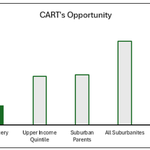
eGrocery is likely winner-takes-most and $CART's large-basket flywheel gives it the right to win. I see a path to ~30% 3yr IRR
New Instacart $CART memo and model up on the Substack: substack.com/home/post/p-193…

FermatCap retweeted

In honor of some “pods blowing up” and me being traveling I will outline some concepts about pod risk management about which I do know a thing or two, as my name might suggest.
It is a common perception that pods are factor beta neutral and thus largely hedged. That is not quite true. A truer statement is that they are factor beta neutral to the extent they can measure the exposures.
Most equity risk models are derivatives of the original axioma and barra factor models. There are now many things that go into this but at their core they are a 12 (IIRC) variable linear regression. And mathematically, the unexplained remainder, the error term, is assumed to be the alpha (Upon which the team gets paid). You well recognize most of these factors: size, momentum (short and long), quality, dividend, domicile, sector, etc.
Now even the dull among you may note that there are in fact many other things that go into a stock. That’s true and that’s one reason why many people at the pods are very rich. There is though a very active and live debate to the highest level of these firms as what you “want” in the other bucket. On the one extreme, scheduling a proprietary drone flyover on the Aurora AV truck up fitting facility to measure parking lot activity vs expected timeline….that feels like pretty good alpha. On the other extreme, going long the Canadian listing rather than the U.S. listing because the Canadian listing diversifies the domicile score so you get a higher portfolio level idio score…..that doesn’t feel like great alpha. But the range is wide: paying GS a billion dollars so your team is the first meeting at the conference? That’s kind of the pod scale advantage. Albeit less so if every other pod is in the room. Going balls long large cap domestic U.S. GLP-1 manufacturers vs non GLP-1? Well that kind of is thematic alpha (depending on the work put in by analyst), but even if you’re of the opinion fuck it, let the kids rip (a reasonable view) you also know at the levered portfolio level that we aren’t measuring that risk completely. This line can really be illustrated with the concept of a “custom factor”. Maybe going long a shit load of SPACs is alpha, maybe it isn’t, but how the FUCK are you gonna build a portfolio level SPAC factor exposure loading in late 2021 when spacs didn’t functionally exist until 2021????
Anyways, interesting & active philosophical debate but there are some downstream derivatives.
Firstly, as a well known matter, 6 sigma events happen in finance all the time. There’s one every year in some corner of the market. So ex ante we know our models aren’t “great”.
Second, everyone knows the agent is an unobserved blind spot. It’s impossible to actually “know” why the analyst and PM are doing anything. You like to think they’re doing it on the back of deep fundamental quality work, but the median analyst and PM isn’t good at their job. So that assumption is known to be unreliable. The capital allocation solution to this is momentum chasing at the portfolio level: you allocate more to winning pods and you cut the losers fast. This is a brilliant approach because it means the pod business model is capital light- they identify and scale the good teams without actually having to invest in knowing which pods have “good” process. It’s worth really appreciating that point because it’s one of the true genius aspects of the model, and at its core it’s why the GPs are so fucking rich. (Deep finance readers will note that some of the original papers on factors saw that one of the earliest possible explanations for the decade-long trend nature for factor performance is implicit fund flow pressure from the momentum chasing nature of capital at the LP level)
(Continued in reply)
1/ Great article, $WISE not withdrawing is odd but I'd emphasize that the OCC decided to make decisions public as of Jun'26. WISE is the 1st decision to be published since the change and perhaps the communication to applicants changed as well as an effort to show the new baseline

Wise $WSE fell 10% on Friday morning after the OCC denied its US bank charter. $WISE
I spent the day going through the regulator's letter, the comparison set of 19 applicants, and everything else you need to know about today’s event.
Six things the coverage is getting wrong 👇🏻 (share this with everyone following Wise)


1/ This article provides a helpful mental model for thinking about an industry's vulnerability to AI disruption. Key indicators of potential disruption below:
1. Breadth of available data
2. Availability of clearly defined SOPs
3. (Continued below)...
a16z.com/where-enterprises-a…


Interesting analysis of how wealth inequality is really power inequality, and is a constant tug of war between politicians and the wealthy
capitalgains.thediff.co/p/me… via @byrnehobart
Bezos in '02 (paraphrased): "It's one thing to take data and do backward looking data mining... but this doesn't help with feedback loops. Owning the data allows for experiments with results clear within hours"
Essentially, controlling data expedites learning curve progression
Bezos labeled this as "a really big point that most people miss." Link below, ~20min mark
youtube.com/watch?v=J2xGBlT0…
Improving shortfall rates by shedding problematic clients is a phenomenal example of exploiting survivorship bias; EY should take responsibility for their shortfalls, and seek to improve their practices, rather than ignore complicated situations
wsj.com/articles/inside-eys-…
1/4: I’ve been studying serial acquirers for a few months and I’m beginning to view hurdle rate discipline as the most crucial (& underappreciated) component of the biz model; acquirers need decentralization and strict subsidiary WACCs incentivize capital to be pushed upwards...