
Island ecologist with a passion for petrel hunting!
Joined November 2014
- Tweets295
- Following69
- Followers668
- Likes5.5K




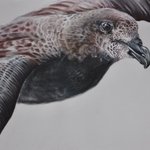
The ‘ace-in-the-hole’ for tree nesting terns is their parental drive that sees adults on nest guard duty from sunset to sunrise. Combined with limited access for rodents along narrow tree branches (and a sharp, lunging beak!).
You’re unable to view this Post because this account owner limits who can view their Posts. Learn more
Capped off two weeks of intensive Little Penguin surveys on NSW coastal islands with confirmation for a new breeding island for the species- that makes 28 for the east coast. All volunteer efforts. Lots of love for Penguins!


Surveying Little Penguins on islands off the NSW coast. Two weeks of cold evening landing counts and day searches for nesting sites. A slog but worth it. State-wide population estimate is the 4-year goal.


This study, led by Lauren Roman, used our 30 year plus banding data from Gould’s petrel on Cabbage Tree Is, NSW. The 1st ever epigenetic clock for a bird- makes that 6000 banding effort to creat this known-age population all really worth it! onlinelibrary.wiley.com/doi/…


It’s taken 3 years to set-up an our next tracking study in our small Kermadec petrel colony, off Norfolk Island. 80 fledglings now fitted and, based on 2017-2021 cohorts, expected 50% return rates in coming seasons. A slow burn!


It’s always a pleasure when a 5 year tracking device gives you 7 years of service. This one spent 6 years at sea, on two seperate Kermadec petrels, and is still post-trip calibrating successfully!


Nice to be part of the legend in the recovery of one of the rarest petrels in the world. At the beginning of this century its population was doubling every 22years. It’s now accelerating much faster. Good news.

In order to band, measure, and translocate Cahows safely, Jeremy Madeiros learned how to do so from Nicholas Carlile (@CarlileNicholas), who had extensive experience with the successful translocation of the endangered Gould’s Petrel (Pterodroma leucoptera) in Australia. 2/2

Couldn’t think of a more amazing place to study restoration processes and develop management options to enhance the recovery of this landscape. Bring your rock boots!
This Post is from an account that no longer exists. Learn more
An exciting opportunity in New Caledonia in September to support South Pacific seabird conservation and their practitioners. Call for abstracts coming soon.

🚨2024 Oceania Seabirds Symposium🚨
The aim of this symposium is to connect government policy makers, seabird conservation practitioners and scientists from all across Pacific Island countries to work with seabirds.
23-26 Sept. 2024
oceaniaseabirdsymposium2024.…
This new research show’s importance of strong local communities for isolated seabird populations- we are fortunate that Kermadec/Phillip(Norfolk)/(and Lord Howe) groups of islands are predator free for this species to maintain good genetic diversity in the future.


A new paper suggests that low rates of #seabird dispersal between breeding colonies can limit capacity for population recovery. The more geographically isolated a colony is, the less likely it is to receive immigrants to facilitate a bounce-back.
link.springer.com/article/10….
Nicholas Carlile retweeted

We are thrilled to announce that Ph.D. Christine Bogle from the @Acap_birds be joining us to share two decades of achievements and shed light on the challenges ahead. Join us for an inspiring session!
#Albatross #Petrels #Shearwater #IAPC7Conference
#KeynoteSpeaker

Ever thought of taking a step up when it comes to seabird conservation? This might be the ticket!
rathlin360.com/recruitment-l…

The central massif on main island of New Caledonian is pretty rugged, all power to these intrepid seabird researchers!

A new colony of Gould's petrels?
Our @BirdCaledonia team on a trail of a probable new colony of Gould's petrels, a rare and threatened seabird listed as 'Vulnerable' by the IUCN
Only 1 colony is currently known and monitored in New Caledonia
Collab with rangers of @ProvinceSud


Described as: ‘the largest and most complex eradication ever attempted on an inhabited tropical island’. Listed are animals to be introduce from 2024 after getting rid of rats and cats. In Australia, it took 6 years on Macca to get the cats- 4 years on Dirk Hartog. Keen!

Today, the eradication phase of the Floreana restoration project begins, the largest and most complex eradication ever attempted on an inhabited tropical island!
Discover the 12 locally extinct species set to return to Floreana: tinyurl.com/FloreanaBlog
📷© Tim & Kate Bradley

ALT Image description: Large ground finch © Tim & Kate Bradley
Using a NZ DOC sound system, community-funded fencing and specifically designed -goanna-proof- nesting chambers, we finally get a win for the worlds smallest Penguin.


Little penguins breeding again in Eden 🐧 abc.net.au/news/2023-10-10/l…

Nicholas Carlile retweeted

Wonderful good news story and great work by @CarlileNicholas!

Little penguins born in Eden for first time in 30 years canberradaily.com.au/little-… via @canberrawkly

The story behind the discovery and current research on Vanuatu Petrel has so many layers- worth getting your head around if you’ve got 25 minutes for the podcast.


Seabirds will respond dramatically following the rodent eradication on Lord Howe Island but if you want insight into how the terrestrial birds were steered through this, see our latest work. Wrapped up by 10 years of monitoring and survey. link.springer.com/content/pd…


Great to see the first return of African Penguins to a ‘safe’ mainland site. Only 2nd Penguin species in the world to be translocated. Great effort. - 8 years since we selected the site-sanccob.co.za/news/african-p…
