

Community @ Modular
Boston, MA
Joined August 2018
- Tweets1.1K
- Following908
- Followers465
- Likes2.1K




Caroline Frasca retweeted

From today, I'm starting my inference engineering journey by reading this handbook from @Modular . I have little to no idea about my roadmap but I'll just start learning and see how it'll go. I read "Inference Engineering" book by @philipkiely in the past so I have some knowledge

Caroline Frasca retweeted

In Santa Clara today for the LLVM Developers’ Meeting? Head to the Mojo Internals Deep Dive and Roadmap, a full-day workshop with the Mojo team, running from 8:30 AM to 5 PM PT: llvm.swoogo.com/2026devmtg
Not in Santa Clara? Join us virtually for today’s community meeting at 10 AM PT, where Brian walks through EmberJson, his pure Mojo JSON library supported by the Modular Community Grant Program: luma.com/oct-modular

Caroline Frasca retweeted
If you write Python loops, you can already write Mojo loops. The syntax is the same: for, while, break, continue.
To repeat something n times, use for _ in range(n):
Comprehensions work, too, i.e. [x * x for x in range(5)]
The biggest difference is speed. Mojo compiles your loop to native machine code, while Python interprets one step at a time.
We counted the primes below 2 million with the same trial-division loop in both languages (no sieve): Python took 2.8 seconds, Mojo took 57 ms.
More quick references in the Mojo cheat sheets: mojolang.org/docs/reference/…


.@Modular took a huge step forward today in our journey of progressively open sourcing our technology: we made MAX source available, with a simplified license: modular.com/blog/max-license

We're hosting a virtual Q&A with cofounders @clattner_llvm and @iamtimdavis on November 10th at 10 AM PT to answer all of the community's questions about MAX's new license and source availability: luma.com/max-license

If you also believe that AI infrastructure should be open and portable across hardware, we're hiring across a number of roles, including for the developer advocacy and product marketing functions on my team: modular.com/company/careers#…

Caroline Frasca retweeted
The Modular team is heading to the 2026 @llvmorg LLVM Developers’ Meeting in Santa Clara on Oct 26–28.
On Monday, the Mojo team is running a full-day workshop on Mojo internals and the roadmap. Bring your hardest questions about how the language works under the hood.
On Wednesday, Spenser Bauman explains how MAX emits device graph construction code with its MLIR/LLVM graph compiler instead of relying on vendor record and replay support, which lets it support a broader range of accelerators.
We’re sponsoring alongside Qualcomm all week. Our recruiting team will be at the booth if you'd like to explore open roles.

Caroline Frasca retweeted
Software ships every week. Silicon often gets locked in years ahead of time.
At ModCon 2026, @clattner_llvm asked hardware leadership from d-Matrix, Qualcomm and AWS how they plan years ahead while models change constantly, and what software challenges they keep running into.
Full panel recording: youtu.be/TyJkNnXFxKQ

Caroline Frasca retweeted

Headed to #PyTorchCon? We too! 🙋 Visit us at booth D6 and don’t miss these events:
🔷 Keynote: MAX and Mojo: The Best Way to Extend @PyTorch — 10/20 @ 9:35 AM PT bit.ly/4yn0R0J
🔷 Demo: Scaling AI Across Devices: ExecuTorch — 10/20 @ 1 PM PT bit.ly/4yjrAeG

Caroline Frasca retweeted
One year in, and the creativity of the @arduino community continues to amaze us. Thank you for building, sharing, and pushing the boundaries of what's possible with open source and edge AI 🚀

Happy first birthday, Arduino UNO Q! 🎉
A year ago, we shared two pieces of news at once. Arduino was joining the Qualcomm Technologies family, and the UNO Q was on its way.
The promise was simple: bring powerful computing and edge AI to makers, students, and professionals, without losing the openness, creativity, and joy that make Arduino what it is.
12 months later, you have responded to our biggest announcement ever in ways we could not have scripted. You’ve built. You’ve experimented. You’ve pushed boundaries. And you’ve shown us what happens when you put new tools in the hands of a curious, creative community.
Today, we’re looking back at year one and celebrating everything you’ve made possible. Thank you for being part of it. This is just the beginning!
Read more in our blog post: blog.arduino.cc/2026/10/08/o…

Caroline Frasca retweeted
The best inference config depends on your model, your hardware and your traffic, and all three keep changing. Settings that were ideal last week are rarely the right ones today.
Tonight at @MiniMax_AI's #SFTechWeek research night, Modular AI Performance Engineer Tyler Kenney is talking about self-tuning ML inference systems, exploring how we can teach inference systems to tune their own settings.
📍 UpScaleX, San Francisco
🗓 Thursday, Oct 8 · 5:30–8:30 PM PT
RSVP: partiful.com/e/DKY1zYjyuOvMf…

Caroline Frasca retweeted
Want to learn Mojo but not sure where to start?
Mojo 101 takes you from hello world to GPU programming in four sessions. Developer Advocate Michael Dunn-OConnor @dunn_oconnor teaches it alongside the engineers who build the language. Every recording is on YouTube, so you can start today and go at your own pace.
Start with Session 1: youtube.com/watch?v=1Jqp0Bhe…

Caroline Frasca retweeted

I'm excited to give a techtalk at OOSPLA/SPLASH programming language conference in Oakland tomorrow, diving into Mojo🔥 type system, incl dependent types, memory safety, and comptime system.
Mojo is a step forward in unlocking hardware, and a great target for agentic coding! 🚀

Caroline Frasca retweeted

Modular founder Chris Lattner built Mojo as a better version of Python that can run models performantly across silicon from many different vendors. Could a company like Meta use Mojo as a single toolchain to orchestrate and deploy models everywhere, including the edge? Muse on your Android phone, laptop, and in the cloud?
Caroline Frasca retweeted
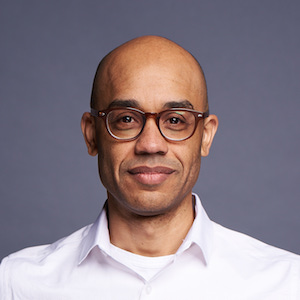
.@clattner_llvm takes the #SnapdragonSummit stage for the first time as EVP Advanced AI Software @Qualcomm following the @Modular acquisition.
Introducing the audience to the stack and it's role in the broader ecosystem.

Caroline Frasca retweeted

AI is moving from a model-centric world to a distributed intelligence fabric.
Qualcomm + Modular are pushing this stack from cloud to edge: Mojo for hardware-efficient development, MAX for AI inference, and a unified software layer spanning six accelerator architectures.


Caroline Frasca retweeted

Oh, neat! Qualcomm acquired Modular, and is open sourcing Mojo and MAX.
Well done! 👏👏
#PaidTravel_Snapdragon


