

Follow the Cold Case Whithorn journey and findings here.
Joined December 2018
- Tweets998
- Following219
- Followers438
- Likes664






Some more fun on-site with young people in the 80's and 90's for this week's #ThrowbackThursday. Working in the trenches, cleaning small finds and glass-blowing lessons from a wizard! It is wonderful to see how vibrant and exciting excavation visits were then. #TBT


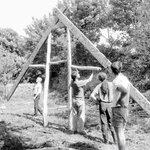
This week's Throwback is the other reconstruction made on-site during the excavations. Likely learning from the previous attempt, we have some nice shots of the woodworking and construction of the structure. #TBT 1/2


October 30, 1300, England and Scotland agreed to a peace brokered by France at Dumfries, pausing their conflict during the Wars of Scottish Independence until May 21, 1301. After, King Edward withdrew to England following his invasion of Annandale, Nithsdale, and Galloway. #OTD

#FindsFriday we will take a look at some of the stone excavated and found on-site at the Priory. An incomplete slab with a carved cross, 3D model by Global Digital Heritage buff.ly/3A9YM0d . Then some images of the figures found around the romanesque doorway in the Priory


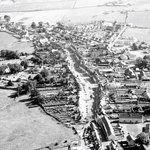
This #ThrowbackThursday, let's dive into the fascinating world of archaeology from a unique perspective - Aerial Photography. Aerial Photography allows archaeologists to capture images of archaeological sites from above, providing a bird's eye view of the landscape. 🧵 1/2


This technique has proven to be highly effective in identifying hidden structures and patterns that are not visible from the ground level. From the archive we have some shots of the excavation in the Glebe Field, Whithorn and sites in the surrounding area. #TBT 🧵2/2


Cold Case Whithorn retweeted

🆕📢New paper alert!
"A Catalogue of British #BronzeAge Axes, Including Basic Typology, Compositional Analyses and Associated #Radiocarbon Dates" by @ahb108 and colleagues:tinyurl.com/jwntvzay
It gathers data from @britishmuseum, @findsorguk and @MicroPasts
#Archaeology


Cold Case Whithorn retweeted

It was splendid afternoon last year chatting with @StoneMePodcast about the fantastic @welovehistory @HistEnvScot Cairn Holy
And now you can listen to the episode, either through your favourite podcast app or via stonemepodcast.com/programme…


Join me as I visit the two stunning tombs of Cairn Holy outside Dumfries and hear an incredible theory about how short their useful life might have really been.
#neolithic #archaeology #cycletouring @HistEnvScot

The Galloway Revolt was between 1234-35CE. On the death of Alan, Lord of Galloway, without a legitimate male heir, there was a rising to make his illegitimate son, Thomas, Lord of Galloway. This was not accepted by King Alexander II, who intervened and invaded Galloway. 1/5


This surrender has been claimed to have been secured by Gilbert, the Bishop of Whithorn, with assistance from the Abbot of Melrose and the Earl of Dunbar. Alexander II, was then in relatively secure control of Galloway. 4/5
divided it between the three legitimate daughters of the deceased Alan; Helen, Christina and most famously Dervorguilla. They were already married to Anglo-Scottish nobles who supported Alexander II in consolidating Scottish control of Galloway. #WhithornWednesday 5/5
When their father, Fergus of Galloway, died in 1161, Uchtred and Gilla Brigte were made co-rulers of Galloway. They participated in the disastrous invasion of Northumberland under William I of Scotland in 1174. 1/2

King William was captured, and the Galwegians rebelled, slaughtering the Normans and English in their land. Uhtred was brutally mutilated, blinded, castrated, and killed by his brother Gille Brigte who then seized control of Galloway. #MedievalMonday
Andrew Durie, the last Catholic Bishop of Whithorn before the Reformation, died in Edinburgh in 1558 from shock during a riot when Protestants disrupted a procession in honour of St Giles. His successor, Alexander Gordon, later joined the Protestants in 1560. #WhithornWednesday

A Burgh in Scotland (before it became a historic honorary title in 1975) was a form of local government where a town gained rights over trade and administration, including law, within the area around it. 1/3

These rights were laid out in a Charter, like Robert the Bruce’s charter to the Priory in 1325CE confirming its lordship over the town of Whithorn. As a Burgh, Whithorn had rights including having a weekly market, an annual fair and “tolls” from the Isle of Whithorn's harbour 2/3