

Host: Edge of History Podcast. https://teapaw.org/t.co/Tcaxnrwkyp. CURRENT SERIES: THE VIETNAM WAR.
Joined July 2014
- Tweets5.1K
- Following642
- Followers371
- Likes95.8K


Pinned Tweet
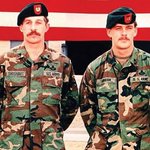
33 years ago, these men were killed in action during a deliberate and desperate attempt to save their buddies. They were elite soldiers, the best our nation had, and they calmly and coolly insisted that they be dropped off into a maelstrom.
This is why I podcast and why I taught history. Yes, the things that "make a difference" are incredibly important, and the great vision and plain humanity in even those heroes of civilization are worth studying. We know that.
But the sacrifice of Gary Gordon and Randy Shughart did not. Everyone they tried to save was killed or captured. Our country beat a hasty retreat from Somalia shortly afterward and exacted no revenge. If our country learned anything, I'm not sure what it was.
BUT KNOWING AND HONORING THESE STORIES IS STILL IMPORTANT.
Every generation we have produces men and women of this character. They come from all sorts of different households and different regions. Despite being raised in a culture that teaches the value of individual human life, they are ready and willing to give up their own for even the slight chance of 'making a difference.' Whether our country misuses them or not, whether our country "wins" or not, these are the Americans to celebrate, to tell stories about, and to immortalize. When we do that, maybe we get reminded to live a life worthy of that sacrifice. Maybe we even reflect, train, and prepare for the moment when we might do the same for someone who needs help.
Maybe when we do that, while we mourn the loss of men like Gordon and Shughart, we help raise ten thousand more people like them. Ten thousand people like that will change the world.
RIP, gents. 🇺🇸

3
106
Centurion retweeted

I’ve been reluctant to say this as someone who holds the Peter Jackson movies in high esteem, but I’m afraid @malcolmguite is correct: they are not perfect. Characters are altered sometimes beyond recognition, conflict is clumsily inserted in a hamfisted bid to increase tension, some of the effects (especially in the third film) are ropey and dated. And it seems many of Tolkien’s keenest defenders have watched the films without ever reading the books. The Jackson films are valuable insofar as they have prompted many to seek out Tolkien’s work, which weaves together ancient myth and Tolkien’s knowledge of history and languages into a work of astonishing mournfulness and beauty. But if you only see the films, you’re missing that. The truest expression of Middle-Earth is, and will always be, the books themselves.

Centurion retweeted

Waugh also had Bin Laden tracked with intensive surveillance and could have easily taken him out in Sudan on numerous occasions in the early nineties before the Aden Hotel Bombings, the attacks on US forces in Somalia during the Battle of Mogadishu, the bombings of US Embassies in Nairobi, Kenya and Dar es Salaam, Tanzania, the 93 Trade Center bombings, and, of course, 9/11, if his superiors would have let him.
But, alas, our government’s inability to properly understand and deal with threats has been broken since denying Patton’s advice to continue marching to Stalingrad to defeat the Soviet Red Army…
Just imagine what the world would look like today had we ended the Soviet Union in the 40s.

Billy Waugh, the "Godfather of the Green Berets," served on secret missions for decades, even into his 70s.
He enlisted as a teenager, fought in Korea and multiple Vietnam tours with MACV-SOG, survived being shot in the head and left for dead during the 1965 Battle of Bong Son, and later conducted the first combat HALO jump in US military history.
After a brief detour as a mailman, he spent nearly three decades with the CIA tracking high-value targets including Carlos the Jackal and Osama bin Laden in Sudan, then at age 71 was among the first Americans on the ground in Afghanistan after 9/11.
He died in 2023 at 93 having spent more than 50 years on the front lines in dozens of countries.
"De Oppresso Liber"
Never forgotten

Centurion retweeted

Orwell's great observation in "Nineteen Eighty-Four" was that to shrink a person's vocabulary is to shrink his capacity to think.
An impoverished version of English removes the mental tools needed to formulate and communicate complex (and dissenting) ideas. Such is the deep, complex relationship between language and thought.
We don't read "difficult books" to say that we've read difficult books. We read them because they expand the boundaries of what we are capable of thinking and feeling — we ascend to their level. Vocabulary helps us to recognize truths otherwise beyond our grasp.
This revelation is worse than you may think. This must be reversed.

I am speechless. Thomas Aquinas College just dropped a study on the rigor of the new SAT.
It compares the 1980/87 test with 2026. The findings should terrify every parent and teacher...
Vocabulary has collapsed.
Old SAT: 70.6% of questions tested vocab.
New SAT: 15%.
The old test forced students to know a wide range of words through analogies, antonyms, and sentence completions. The new test abandoned that. Most vocab questions now just ask students to fill in one blank from context.
Reading passages also got radically shorter (average ~97 words vs 300–340).
The new test uses short expository passages and hands you the necessary background knowledge inside the text. The older tests leaned much more heavily on argumentative and persuasive writing, assumed far more historical, scientific, and cultural knowledge, and penalized students who lacked it.
This is a redefinition of what "college readiness" means.
If you believe that kids should develop rigorous vocabulary, be capable of sustained reading, and possess background knowledge, I have bad news for you. The SAT no longer measures these.
If you want a future where children can actually read difficult texts and construct complex arguments, the SAT must be replaced now.
This cannot go on.

🚨 NEW EPISODE 🚨
The Tet Offensive shattered public confidence in claims of U.S. progress and helped drive Lyndon Johnson out of the 1968 presidential race. When Nixon took office, he faced pressure to avoid both escalation and the appearance of defeat. His administration pursued “Vietnamization,” shifting the war effort to South Vietnam while holding peace talks. Critics argue this strategy sought a “decent interval” between U.S. withdrawal and South Vietnam’s eventual collapse—at a cost of about 21,000 more American lives.
Link in the comments!

2
1
31
Edge of History | Libsyn Directory share.google/8XnJALEUJPg76mV…

16
Water crossings were a frequent misery for infantrymen in Vietnam. ANYTHING getting soaked was already bad; aside from obvious things like food and electronics, even the effects of leg chafe over mile after mile of "humping" gear could often be horrific. Guns and ammunition were the only things that HAD to stay as dry as they possibly could, and they were often the only things that came close to doing so.

1
78
While America is known for its strategy of attrition in Vietnam, OTD 60 years ago, the North Vietnamese Army made a statement early on about their own grasp of the same strategy. In the chaos of the Battle of Ia Drang very early in the war, they carefully executed every wounded American soldier they found.
North Vietnam was famous for its "Hanoi Hilton" of POWs, but these were mostly pilots: higher ranking airmen that were useful bargaining chips. In the bloody up-close fighting at the infantry level, very few prisoners were ever taken, and even fewer survived.

1
37
American forces dropped an insane amount of ordnance on Vietnam. Pictured here is the largest example ever discovered: a 1900 pound naval gun shell fired from offshore on Quang Tri province.
Even with a very small percentage of these explosives failing to detonate on impact, with tonnage in the millions, Vietnam was (and is) still covered with highly dangerous unexploded ordnance (UXO) in the form of bombs, shells, and landmines. This shell was dug out of a family garden in 2015!
Exact numbers are uncertain, but tens of thousands of people have been killed or maimed in the decades since the end of the war by UXO.

1
55
The communist insurgency in South Vietnam was entirely dependent on men and materiel being smuggled into the country by small boat or by the notorious "Ho Chi Minh Trail" through the neutral countries of Laos and Cambodia. The Communists blatantly and openly violated the sovereignty of these countries.
The United States eventually responded through a "Secret War," infiltrating these countries to check the Communist advance and aggressively bombing the Ho Chi Minh Trail.

44
One thing I wish the average citizen really understood about Vietnam War is that despite America's overwhelming superiority in technology and resources, in the shooting engagements on the ground, American forces were always surprised, outnumbered, and often outgunned.
These were NOT rice farmers with old weapons taking potshots and running; these were well-trained fighters armed with the best gear the Soviet Union and China could smuggle into the country.
And the initiative was ALWAYS with them. American troops almost never knew quite where they were, so they rarely had to fight unless they chose to, and then it was often by springing the perfect trap.

I visit the Vietnam "Wall of Faces" nearly every day and often uncover stories that hit hard.
Philip Clark was a Navy pilot shot down during a mission in 1972 over North Vietnam and killed after his successful ejection.
His son Terence was a toddler at the time. Despite being orphaned due to the loss of his mother to cancer, he persevered in following his father's footsteps almost exactly, graduating from the Naval Academy and becoming an F14 pilot.
Terence Clark was killed in a freak training accident over the water in 1996, following his dad in giving the last full measure in service of his country.


1
54
"Allied" or "Coalition" forces often get lost in the historical mix of American wars overseas, and that's a shame when they earn a high level of respect like the Australian SAS in Vietnam.
Called "The Ghosts of the Jungle" by the North Vietnamese forces for their stealth and the fear they inspired, these Aussies were highly effective.
Australian units in general were known for their professionalism, high morale, and high kill ratio.

33
At least ten percent of American combat deaths in Vietnam were from FRIENDLY FIRE. I try to imagine what it's like to know a dear friend or a loved one was killed in action due to the carelessness or stupidity of his comrades, and it's difficult.
Pictured here is Peter Bossman, a Navy medical corpsman stationed with Marines. On a dark night in rough weather, "Doc" Bossman volunteered to get on a helicopter and help with a medical evacuation of wounded Marines. Some time during what was already an incredibly dangerous flight, Bossman's chopper was hit by an errant American artillery shell. The resulting explosion, crash, and fire were so fierce that his remains were completely consumed, and he is officially listed as Missing in Action.
Much respect, Doc. 🇺🇸

2
6
365
This guy's story is incredible. Born in one of those bullshit internment camps during World War Two, he was the baby brother of two men who served in the legendary 442nd Regimental Combat Team (one of the most highly decorated units in the history of the US Armed Forces).
He grew up to serve in Vietnam with distinction. I have my issues with the Ken Burns Vietnam War series, but I loved how it preserved the personal stories of men like Okamoto: not just the big ones like how he earned the Distinguished Service Cross with incredible bravery, but even small but important ones like the time his unit was searching a village, and his Japanese heritage made him the only man in his unit capable of noticing that there was way too much prepared rice present for how many people appeared to be there.

Legendary Army Captain Vincent Hichiro Okamoto, recipient of the Distinguished Service Cross & the Silver Star during the Vietnam War, passed away on September 27, 2020 at the age of 76. Born in an internment camp, he was the most highly decorated Japanese American to survive the war. Remember Vincent today. #American Hero 🇺🇸🦅

3
60

The Underrated Sacrifice:
We honor the men who gave their lives in acts of bravery that went above and beyond the call of duty. But there are no awards for the troops who took an extra day, an extra flight, an extra patrol, just to help out a buddy, and paid with their lives.
Vietnam was a numbers game. Combat troops spent an entire year in-country and the chances of being killed or wounded before that year was up were high. Every extra "rep" was potentially deadly, especially for those who 'walked point' at the very front of patrols.
Since the Communists almost never engaged American troops except from ambush/surprise/with overwhelming numbers, the men walking point were most likely to die.
Salute to Lance Corporal Personette and the many others like him who remain unsung. My heart goes out to the buddies with survivor's guilt who were left behind.
BIG SALUTE to @44MagnumBlue1 and @KoreyG80 for their work in highlighting these sacrifices. Blue's account here has legitimately changed my life.


53
What you probably don't know about Vietnam War POWS:
The Vietnam War is famous for its American prisoners of war who endured torture and deprivation before being returned in 1973. What is less known is that these men were nearly all officers and pilots who survived being shot down over North Vietnam.
Very, very few POWs were enlisted men: the "grunts." In every previous War, enlisted men made up the overwhelming majority of servicemen captured by the enemy. Why the discrepancy?
Because the Communists only took prisoners they thought would make valuable bargaining chips. The regular troops who surrendered to them were all killed before they could ever be accounted for.
Pictured here is Donald Stephen Newton, who surrendered to the Viet Cong after his long range patrol was overrun. He subsequently "disappeared."
He was one of many.

27
We often think of billionaire's sons as the kind of people who trigger the decline of a society. Spoiled from birth with wealth, they lack the grit to make the kind of personal sacrifices necessary to keep a culture great.
Or so the stereotype goes.
Pictured here is John T Walton, son of Walmart founder Sam Walton. Rather than embrace an easier life, Walton dropped out of college to enlist in the United States Army at the height of the Vietnam War.
He earned a place with the Green Berets and eventually with MACV-SOG, without doubt the most dangerous assignment in the war. While serving with MACV-SOG, he earned a Silver Star for bravery above and beyond even that high standard.

1
41
Salute to an "iconic" Vietnam warplane-- the Northrop Grumman F-5 Tiger!
I'm half-joking here because people who are familiar with Vietnam-era combat aircraft would be surprised to see me mention this plane over so many others that were more well-known and/or accomplished. The F-5 was made as a kind of budget-friendly fighter, and the idea seems to have been to sell them to allies that didn't quite have the cash for a functioning fleet of our Cadillac war machines. They certainly flew far less sorties than other contemporaneous aircraft.
So how is it iconic?
Most people only know Vietnam military aviation from the movies, and some of the truly iconic Vietnam War films were shot in the Philippines to approximate Vietnam's climate and terrain. Films like "Apocalypse Now" and "Platoon" weren't going to get access to official American military aircraft, but they WERE able to get the Filipino government to lend them some of their own. As an ally of the United States, that meant the Philippines could supply plenty of truly iconic helicopters from the conflict, but fighter planes were another story. Instead of the more accurate F4 Phantom II, the warplanes screaming across the sky in the famous napalm run in "Apocalypse Now" and the "It's a lovely fucking war" climax of "Platoon" were F-5s!

2
71