

Empowering humans to do what humans do best. We're hiring: https://xitter.cf/t.co/Nk06QAGCQo
San Francisco, CA
Joined May 2018
- Tweets332
- Following2
- Followers1.5K
- Likes141





Chef Robotics retweeted

@ChefRobotics trains the Vision-Language-Action models behind its food assembly robots 10x faster on Anyscale, with 92% scaling efficiency across multi GPU runs on 16 A100s.
Read the story: na2.hubs.ly/H08q5bh0

We're at PACK EXPO International in Chicago from today through Oct 21!
Stop by 𝗯𝗼𝗼𝘁𝗵 𝗟𝗟-𝟭𝟬𝟰𝟬𝟭 to see how our robot handles food assembly, from picking ingredients to portioning them into trays.
We’re also hosting a happy hour tomorrow at our booth from 4-6 PM CT. Connect with food manufacturers, co-packers, packaging equipment manufacturers, and automation partners over drinks.
RSVP here: luma.com/hlydxfa0
#PACKEXPO #FoodManufacturing #FoodAutomation #PackagingAutomation

Meet the Chef team at PACK EXPO International in Chicago!
Nicolas De Keijser, Joe Weber, Nick Y., Jeff O'Neil, Bennett Dixon, Atharva Sonanis, and Mohamed Elzaki will be there to discuss how Chef's AI-enabled robots can fit into your production line. Stop by to see our robot in action and talk through your production challenges.
- 𝗗𝗮𝘁𝗲: 𝗢𝗰𝘁𝗼𝗯𝗲𝗿 𝟭𝟴-𝟮𝟭
- 𝗕𝗼𝗼𝘁𝗵: 𝗟𝗟-𝟭𝟬𝟰𝟬𝟭
We’re also bringing together food manufacturers, co-packers, packaging equipment manufacturers, and automation partners for a happy hour at our booth on Monday, Oct 19, from 4-6 PM CT.
Apply for a spot here: luma.com/hlydxfa0
#PACKEXPO #FoodManufacturing #FoodAutomation #PackagingAutomation
Chef Robotics retweeted

"If your throughput is 50% slower, you get fired [...]
If your reliability is 50%, 60%, 70%, you don't even get a sales call."
@RajatBhageria, Founder & CEO of @ChefRobotics, has a different perspective on the current humanoid robotics race.
The industry is betting heavily on general-purpose robots. The assumption is that once a robot can perform almost any task, we've solved robotics.
But industrial customers have different priorities.
In manufacturing, throughput and reliability determine whether a robot makes it onto the factory floor.
A robot that performs 100 different tasks at 70% reliability may be less valuable than one that performs a single task at 99.9%.
Rajat argues that performance and reliability matter more than task generalization in industrial applications.
We discussed this and much more on the 22Astronauts Podcast.
This episode is brought to you by @CoreWeave, providing the specialized cloud infrastructure that powers physical AI and large-scale model training.
Full episode:
YouTube: youtu.be/BkfULtOh5hU
Spotify: open.spotify.com/episode/0Ae…
𝐓𝐈𝐌𝐄𝐒𝐓𝐀𝐌𝐏𝐒
(00:00) Why Chef walked away from restaurant deals
(03:39) Carnegie, Rockefeller, Edison
(08:33) ThirdEye, computer vision for the blind
(15:14) Customers don't want cooking robots
(18:05) Airline catering, meatpacking, CPG
(25:34) The founder's job is persuasion
(36:08) Home Depot, not Costco
(46:28) Production data vs. simulation
(52:52) The bottleneck is the only thing that matters
We're excited to partner with @Physical_int! xitter.cf/physical_int/status/21…

We’re excited to announce our research partnership with @physical_int to explore food assembly for high-mix, lower-volume operations such as ghost kitchens, fast-casual restaurants, and other commercial kitchens.
𝗪𝗵𝘆 𝗹𝗼𝘄𝗲𝗿-𝘃𝗼𝗹𝘂𝗺𝗲 𝗸𝗶𝘁𝗰𝗵𝗲𝗻𝘀 𝗻𝗲𝗲𝗱 𝗮 𝗱𝗶𝗳𝗳𝗲𝗿𝗲𝗻𝘁 𝗮𝗽𝗽𝗿𝗼𝗮𝗰𝗵
Today, Chef robots help high-mix, high-volume food manufacturers overcome labor shortages. On these lines, each worker handles one ingredient, and throughput and domain flexibility are key.
In lower-volume operations such as restaurants, one worker may assemble an entire burger, bowl, or sandwich. Handling every ingredient and step requires more dexterity and flexibility across tasks.
𝗪𝗵𝗮𝘁 𝘄𝗲’𝗿𝗲 𝗿𝗲𝘀𝗲𝗮𝗿𝗰𝗵𝗶𝗻𝗴 𝘄𝗶𝘁𝗵 𝗣𝗜?
To unlock these tasks, we’re exploring PI’s pretrained vision-language-action (VLA) models as a base we can post-train for food manipulation. Our bimanual food assembly system learns varied tasks from expert human demonstrations, with two arms working together to assemble a meal.
𝗪𝗵𝗮𝘁 𝘁𝗵𝗶𝘀 𝗰𝗼𝘂𝗹𝗱 𝗲𝗻𝗮𝗯𝗹𝗲?
This research could bring automation in food assembly to more settings where flexibility and dexterity matter most, including ghost kitchens, fast casuals, QSRs, hotels, stadiums, and school and university kitchens.
Learn more about our partnership: pi.website/blog/api-beta
#PhysicalAI #FoodRobotics #Robotics #Physicalintelligence

We’re hiring a Robotic Operations Engineer at Chef!
As we scale our deployed robot fleet, we’re looking for someone who enjoys solving technical problems in real time and wants to help bring AI-enabled robots to more food production facilities.
You’ll be the first line of support for our robots in the field: troubleshooting remotely, guiding on-site teams, and collaborating with our engineers on escalations.
If you have a background in robotics, ROS, or Linux and this sounds like your kind of role, we’d love to hear from you.
Learn more and apply here: jobs.gem.com/chef-robotics/a…

We’re excited to share that we are using NVIDIA Robotics software to develop and deploy our robots faster 🤖
𝗧𝗵𝗲 𝗰𝗵𝗮𝗹𝗹𝗲𝗻𝗴𝗲
Food manufacturers work with highly variable ingredients on high-speed lines in cold, harsh conditions. Automating these tasks requires robots that can handle this variability reliably and be deployed quickly in production.
𝗛𝗼𝘄 𝗖𝗵𝗲𝗳 𝘂𝘀𝗲𝘀 𝗡𝗩𝗜𝗗𝗜𝗔 𝘀𝗼𝗳𝘁𝘄𝗮𝗿𝗲
→ NVIDIA Isaac Sim, built on NVIDIA Omniverse libraries, allows us to create physically accurate digital twins of our robotic cells and customers’ production lines. Our team can design, simulate, and stress-test configurations before deployment.
→ NVIDIA cuMotion helps our robots plan fast, collision-free movements using GPU acceleration for individual picks, multiple deposits, and multi-robot operations.
𝗧𝗵𝗲 𝗿𝗲𝘀𝘂𝗹𝘁
These technologies help us shorten development cycles and get new robots into production faster while maintaining reliability.
Learn more about how we’re using them: chefrobotics.ai/post/chef-ro…
#PhysicalAI #FoodManufacturing #Robotics #FoodAutomation #NVIDIA

How do Chef robots support worker safety on meal assembly lines?
Meal assembly involves repetitive scooping, portioning, and spreading, often for hours in 34°F cold production environments. These tasks can contribute to fatigue and repetitive strain injuries.
𝗗𝗲𝘀𝗶𝗴𝗻𝗲𝗱 𝘁𝗼 𝘄𝗼𝗿𝗸 𝗮𝗹𝗼𝗻𝗴𝘀𝗶𝗱𝗲 𝗽𝗲𝗼𝗽𝗹𝗲
Chef robots use collaborative robot arms and are designed using ISO/TS 15066:2016 guidance. Built-in safeguards include protective stops, defined arm-motion limits, and tooling designed to reduce pinch and shear hazards.
𝗥𝗲𝗱𝘂𝗰𝗶𝗻𝗴 𝗽𝗵𝘆𝘀𝗶𝗰𝗮𝗹 𝘀𝘁𝗿𝗮𝗶𝗻
Our robots take on repetitive meal assembly tasks, allowing workers to focus on cooking, quality control, and line management. Ergonomic features also simplify everyday operation:
→ Slide-in ingredient pans reduce lifting during refills
→ Self-leveling feet eliminate manual wrench adjustments
→ Glove-friendly touchscreens simplify operation in cold rooms
Read more on how Chef robots support worker safety: chefrobotics.ai/post/how-che…
#foodmanufacturing #foodautomation #workersafety #robotics

Will generalist robots replace specialized ones?
We think there's room for both.
Consider this: Costco sells a bit of everything, but if you're renovating your kitchen, you don't go to Costco. You go to Home Depot for specialized tools, materials, and expertise. Similarly, in physical AI, the ability to perform many tasks doesn't automatically make a robot the best solution for every industry.
For example, in food manufacturing, workers on the production line perform only one to three different tasks per day.
𝗙𝗼𝗼𝗱 𝗺𝗮𝗻𝘂𝗳𝗮𝗰𝘁𝘂𝗿𝗲𝗿𝘀 𝗻𝗲𝗲𝗱 𝗿𝗼𝗯𝗼𝘁𝘀 𝘁𝗵𝗮𝘁 𝗱𝗲𝗹𝗶𝘃𝗲𝗿:
→ High throughput to keep up with production
→ Accurate portions and placement
→ Reliable operation throughout a shift
→ Reduced spillage and ingredient waste
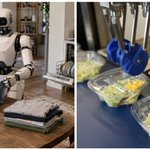
Beyond these tasks, a robot that can also fold laundry adds little value to a food manufacturer if that flexibility comes at the expense of throughput, reliability, or yield savings.
𝗪𝗵𝗲𝗿𝗲 𝗴𝗲𝗻𝗲𝗿𝗮𝗹𝗶𝘇𝗮𝗯𝗶𝗹𝗶𝘁𝘆 𝗺𝗮𝘁𝘁𝗲𝗿𝘀 𝗶𝗻 𝘀𝗽𝗲𝗰𝗶𝗮𝗹𝗶𝘇𝗲𝗱 𝗱𝗼𝗺𝗮𝗶𝗻𝘀
Food manufacturers need robots that adapt to different ingredients, portion sizes, trays, compartments, and conveyors while maintaining production speed and reliability.
At Chef, we call this "domain generalizability." On customer lines running at 30 to 45 trays per minute, handling that variability consistently matters more than performing unrelated tasks.
𝗢𝘂𝗿 𝘃𝗶𝗲𝘄
General-purpose robots make sense in the home, where one system may need to prepare food, fold laundry, and pick up toys. Taking longer to complete a task may be acceptable. On a production line, slower performance reduces output and affects ROI.
We believe industrial robotics will scale industry by industry, with systems that generalize within each domain and meet its throughput, quality, and reliability requirements.
Read more in our latest blog: chefrobotics.ai/post/the-mis…
#PhysicalAI #Robotics #FoodManufacturing #Generalizedmodels #Worldmodels

Food manufacturers shouldn’t have to choose between automation and food safety.
Chef’s AI-enabled robots are designed specifically for food-production environments, where equipment must be easy to inspect, clean, and sanitize across frequent ingredient and SKU changeovers.
Our latest blog explains how Chef robots support food safety, sanitation, and allergen control through:
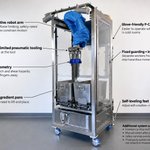
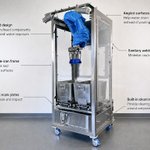
→ 𝗡𝗦𝗙-𝗰𝗲𝗿𝘁𝗶𝗳𝗶𝗲𝗱 𝗵𝗮𝗿𝗱𝘄𝗮𝗿𝗲: Chef’s robotic module C-001748 is certified under NSF/ANSI 169 — Special Purpose Food Equipment and Devices.
→ 𝗠𝗶𝗻𝗶𝗺𝗮𝗹 𝗳𝗼𝗼𝗱-𝗰𝗼𝗻𝘁𝗮𝗰𝘁 𝗽𝗼𝗶𝗻𝘁𝘀: Only Chef’s interchangeable utensils and stainless-steel hotel pans come into direct contact with ingredients.
→ 𝗙𝗼𝗼𝗱-𝘀𝗮𝗳𝗲 𝘂𝘁𝗲𝗻𝘀𝗶𝗹𝘀: Our utensils are made using 306 stainless steel and food-grade blue Delrin.
→ 𝗧𝗼𝗼𝗹-𝗳𝗿𝗲𝗲 𝗿𝗲𝗺𝗼𝘃𝗮𝗹: Line workers can remove and replace utensils without any tools in less than a minute and clean them in an industrial dishwasher.
→ 𝗦𝗮𝗻𝗶𝘁𝗮𝘁𝗶𝗼𝗻-𝗳𝗿𝗶𝗲𝗻𝗱𝗹𝘆 𝗰𝗼𝗻𝘀𝘁𝗿𝘂𝗰𝘁𝗶𝗼𝗻: An IP67-rated design, angled surfaces, sanitary welds, an open angle-iron frame, removable scale plates, and built-in cleaning gaps make our system straightforward to inspect and clean.
Read the full blog to learn how food safety and cleanability are built into every layer of Chef robots: chefrobotics.ai/post/how-che…
#FoodSafety #FoodManufacturing #PhysicalAI #Automation #Foodsanitation

We’re heading to PACK EXPO International in Chicago.
Stop by booth LL-10401 to meet the Chef team, see our robot in action, and learn how flexible automation can solve real-world challenges on the production floor.
We’re also hosting a happy hour for food manufacturers at our booth:
𝗠𝗼𝗻𝗱𝗮𝘆, 𝗢𝗰𝘁𝗼𝗯𝗲𝗿 𝟭𝟵 | 𝟰–𝟲 𝗣𝗠 𝗖𝗧
We’re keeping this one small and focused, so if you’re a food manufacturer, co-packer, packaging equipment manufacturer, or automation partner, apply for a spot here: luma.com/hlydxfa0
#PACKEXPO #FoodManufacturing #Automation #ChefRobotics

Are you a food manufacturer who is still staffing 8-10 workers on every meal assembly line to hit your production targets?
One of our customers now runs the same line with 3-4 workers and produces 2-3x more meals.
The reason? Flexible automation.
High-mix production has historically been too variable for traditional depositors and dispensers. Food manufacturers run different SKUs, ingredients, portions, tray sizes, and placement requirements, often on the same line. Chef robots are built for exactly this.
Our AI-enabled robots adapt to real-world production variability, and changeovers between SKUs take under a minute, allowing manufacturers to increase throughput while moving workers away from repetitive, hard-to-staff tasks.
If your meal assembly lines still rely heavily on manual labor, comment “Demo” below and we'll reach out, or contact us here: chefrobotics.ai/contact-us

Chef Robotics retweeted

@ChefRobotics is the last food robotics company from the late 2010's that is still standing—or rather, thriving.
So what did @RajatBhageria do differently?
He says customers come first. "Understand the customer pain points, and go from there."
"Honestly, I have a good enough intuition of engineering to hire people to be able to build a product and get venture capital."
"BUT, if the customers don't want it, you're screwed."
"And there's an opportunity cost to everything: like, should I even spend my mental energy doing this thing for the next X years unless customers desperately want this thing?"

Our fireside chat with @RajatBhageria (Founder & CEO of @ChefRobotics), moderated by @ashis_ghosh_ (Robotics Venture Partner at @savant_vc)
00:14 Introductions
00:38 Being in robotics is hard
01:21 What was the road like leading up to Chef?
04:28 When is it time to jump in?
06:15 Was there a clear signal or just a hunch?
08:16 What were the first steps after starting chef?
09:56 Customers first—what's next?
13:18 At what point did you start building?
14:33 No leads to yes!
18:22 What was your conviction with customer type A?
19:45 Are you food experts now?
20:33 What has Chef done differently?
26:25 How should people approach starting their company?
28:21 Are other industries now more attractive?
31:40 What's some advice for entrepreneurs entering robotics?
33:56 Where do you see Chef robotics in 5 years?
35:50 What validation from customers passed over and what didn't?
37:52 What is your vision for your company?
41:13 What would you suggest people to look at for problems to solve?
43:01 How can i get advice without building a prototype?
44:09 Robotics arms are expensive—what is your view of the future of robotics arms?
48:30 How easy is it to pivot in this space?
We’re at the @allinpod's Summit in LA today and tomorrow! Stop by the Frontier Tech Hub anytime to see a live demo of a Chef robot and chat with our team.
#AllInSummit
Chef Robotics retweeted

Day One of the All-In Summit is officially in the books. Tomorrow, the stage takes over. Stay tuned to catch it all in real-time. #AllInSummit – at Los Angeles, CA
We're featured on S3!
Big thanks to @jasonjoyride and his team for this excellent story! Check out the full video: youtube.com/watch?v=XPcfqsAe…


In less than 7 years, @ChefRobotics has built and deployed robots that have assembled more than 100 million servings of food.
S3 went inside their factory to see how the technology works, and asked a labor rep whether automation could solve the food industry’s labor challenges.
Chef Robotics is heading to the All-In Summit! 🤖
📅 Sept. 13-15, 2026
📍 Los Angeles, CA
Our team - Rajat Bhageria, Jay Beversdorf, and Charlotte Kosche will show a Chef robot in action and answer your questions about physical AI, food manipulation, and what it takes to scale robotics in production.
If you're attending the Summit, come find us. We'd love to connect!
#allinsummit #physicalai #foodautomation #foodproduction

Chef robots run in production across North America and Europe today. Each robot needs to stay up, get fixed fast, and keep improving over time, no matter the time zone.
𝗧𝗵𝗲 𝗽𝗿𝗼𝗯𝗹𝗲𝗺
A robot in Europe can go down while our US team is asleep. Our robots combine hardware and software, so when something breaks, our engineers aren't just debugging code; they're often diagnosing physical wear on a real machine too. Spare parts crossing borders and language differences with local facility teams add friction on top of that.
𝗧𝗵𝗲 𝘀𝗼𝗹𝘂𝘁𝗶𝗼𝗻
Here's how we keep 100+ robots running across three countries:
1. Customer requests flow into an integrated portal for triage.
2. Simple issues get resolved right away.
3. Complex ones escalate to our support engineers, who use tools like Foxglove and in-house tools to debug live systems from thousands of miles away.
4. For hands-on repairs, a network of certified local technicians handles routine maintenance, and our own engineers travel on-site for the bigger integrations.
𝗧𝗵𝗲 𝗿𝗲𝘀𝘂𝗹𝘁
Customers expand with us. One customer grew from 2 robots to 36. Another went from 2 to 22. And we didn't need to add more headcount to our support team to make that happen.
Read the full story on our blog: chefrobotics.ai/post/how-che…
