

Senior Lecturer & ARC Future Fellow in Chemical Engineering @UNSW Sydney. Postdoc @MIT, PhD @MonashUni
Sydney, Australia
Joined November 2020
- Tweets64
- Following212
- Followers149
- Likes1.1K
Chi (David) Cheng 成驰 retweeted

Two amazing new handbooks out, part of the series: THE VISUAL ELEMENTS, COMMUNICATING SCIENCE AND ENGINEERING: Photography and Design. Written by award-winning MIT photographer and research scientist, Felice Frankel. @MITMechE @MIT_CEE @MITEngineering
a.co/d/dTsO8H9
a.co/d/5sxTbUr


Chi (David) Cheng 成驰 retweeted

Many movies exist about a lone inventor in a garage having a eureka moment, but almost none about manufacturing, so it’s underappreciated by the public.
Compared to the insane pain of reaching high-volume, positive-margin production, prototypes are a piece of cake.


Chi (David) Cheng 成驰 retweeted

Heartfelt invitation to the @MemSocAus Membrane Society of Australasia (MSA) Annual Meeting & Conference 2024 (December 9-11) at the Aerial Function Centre, University of Technology Sydney, Australia. @UTSEngage @UNSW @UOW
@ltijing @Gaya3_Naidu_UTS @ChiDavCheng @DrFaisalHai

Chi (David) Cheng 成驰 retweeted

It’s a story of how academia goes wrong. And how it self-corrects.
A must read for everyone:
2020 - A discovery of room-temperature superconductivity is published in Nature by Ranga Dias
2023 - The second RT superconductor is reported by Dias in Nature
2024 - The first paper is retracted. Then the second. No one could replicate his results.
The forth investigation by external experts showed that ‘he concealed information from his students, manipulated them and shut them out of key steps in the research process’.
▫️
The story looks like this:
1. Dias proposed that adding carbon to H3S might lead to RT superconductivity.
2. His PhD students could NOT observe the signs of superconductivity in the samples (no resistivity drop, no susceptibility change).
3. Suddenly, Dias emailed everyone and announced the discovery of RT superconductivity. Students were shocked.
4. The draft was sent to the team at 5.13 p.m. and SUBMITTED to Nature at 8.26 p.m. In just TWO hours! No one had time to read it.
5. Dias told the students he ‘had taken all the resistance and magnetic-susceptibility data before coming to Rochester’.
6. 3 reviewers were concerned. Only one supported publication. It was published on 14 October 2020.
7. A year(!!!) later Dias made raw data publicly available. This prompted data check where ‘data points were separated by suspiciously regular intervals’.
8. Then, Nature initiated post-publication review by 4 experts. Two said there were big problems.
9. Following rebuttal & responses, Nature retracted the manuscript. Dias did NOT tell the students about the post-publication review process and data fabrication concerns.
▫️
Now, the 2nd paper raised concerns about PhD students:
- Dias sent them the draft at 2.09 am and asked for comments by 10.30 am (same day). The draft had NO figures.
- The students convinced Dias to postpone submission by one day.
- The students raised concerns about the pressure data because none of it was “anything that we actually measured”. Dias dismissed it with: “Pressure is a joke.”
- Then ‘Dias gave them an ultimatum: remove their names, or let him send the draft’. It was very intimidating. The students gave in: “What if I [object] and he makes the rest of my life miserable?”
▫️
My conclusions:
1. This situation shows how easily a supervisor can manipulate inexperienced students into publishing and believing the results. I am sure there are many other examples in academia that just haven’t surfaced.
2. All data must be publicly available. Before publication.
3. Nature took the case professionally, asking for extra refereeing and post-publication review multiple times as things were unfolding. BUT it's not so common. I heard many stories where some journals just didn’t care.
4. Finally and MOST importantly - students suffer the most.
As one of them said:
“My thesis is going to be full of fabricated data. How am I supposed to graduate in this lab?”
#academia #PhD #research

New in @Nature, we report a cascaded compression method for creating nanopores in monolayer graphene with a narrow pore-size distribution, left skewness and ultrasmall tail deviation for fast and highly selective molecular separations.
nature.com/articles/s41586-0…
Wow, this is seriously awesome and gorgeous!

We made a 16-page comic explaining what chemical engineering actually is, through AIChE support, with art by the great Monix Keszler, and script help by my undergrad Ira Hysi. Probably the best educational comic I've ever made. Feel free to use and share!
northeastern.edu/landherr/st…

3
646
Chi (David) Cheng 成驰 retweeted

🚀Explore exciting opportunities in my lab!! We are looking for highly self-motivated postdocs and graduate students (Spring/Fall 2024) with a passion for expediting materials discovery through AI, simulation & theory. Join us on this fantastic journey: shiresearchgroup.github.io/o…

Chi (David) Cheng 成驰 retweeted

Editorial: A mixed legacy go.nature.com/3JJ3FyW
Chi (David) Cheng 成驰 retweeted
WHY do we divide by n-1 when computing the sample variance?
I've never seen this way of explaining this concept anywhere else.
Read on if you want a completely new way of looking at this.

Chi (David) Cheng 成驰 retweeted

We created a database of 27 POSTDOC fellowships for research in neurology, neuroscience, cog science,... neuro-everything.
For each fellowship, we provide a description of the fellowship, $ amount, eligibility criteria, and deadline.
Download it here: research.jhu.edu/rdt/funding…

Chi (David) Cheng 成驰 retweeted

Super happy to see our review finally out!
I hope this will serve as a great resource for unifying research efforts and reducing the barrier to entry for studying nanofluidics.

Interested in learning about nanofluidics?
Check out our comprehensive review in @ACSChemRev on fluids and electrolytes under confinement 👉 https://teapaw.org/t.co/aksXNlfm6X (1/9)

Chi (David) Cheng 成驰 retweeted

Using #ChatGPT to write Python code for @matplotlib plots is honestly a gamechanger. I never have to look up the syntax again...!
And telling it things like "looks great, but make the colormap more visually appealing" works pretty well! It generated all this with ease.

Chi (David) Cheng 成驰 retweeted

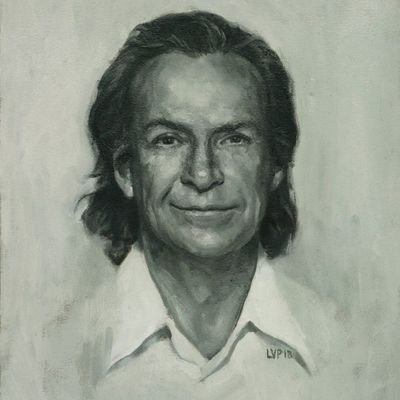
"Here we are 100 years later making use of these chemistries in ways that we hope will benefit human health."
In her #NobelPrize lecture @CarolynBertozzi spoke about how her work builds on curiosity-driven research, and how important that type of research can be for our futures.


Chi (David) Cheng 成驰 retweeted

DFT gives some (often good) approximation of reality. ML on DFT allows to interpolate, but it's approximation of approximation. The challenge is for ML to update ML/DFT models based on experimental data.
Chi (David) Cheng 成驰 retweeted

Just a quick reminder that you can win a Nobel with an h-index = 29 (according to the usually inflated google scholar). Quantitative measures of scientific output are not the way to go to a bright future for humanity.


Chi (David) Cheng 成驰 retweeted

Science is unbearable if you hold off on celebrating until the publication of a big paper. The more we enjoy the process, the happier we are..
Celebrate the interesting group meeting, the preparation of a new presentation, the new technique, & the progress our friends are making.