

From a world that carried meaning to a self that must—tracing how different traditions locate reality.
London
Joined January 2019
- Tweets5.2K
- Following2.2K
- Followers3.2K
- Likes258K





1/8
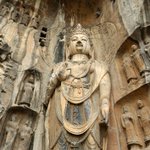
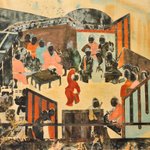
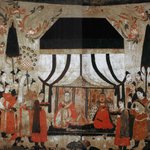
If the story of Buddhism's spread and transformation in northern China could be told through three places, they would be Dunhuang, Pingcheng, and Luoyang. 🧵
7/8
Together, these three places tell a remarkable story:
Dunhuang witnessed Buddhism travelling into China.
Pingcheng witnessed its flourishing under imperial patronage.
Luoyang witnessed its further transformation through Chinese artistic and cultural traditions.
1/8
For centuries, aristocratic ancestry could determine who reached China’s highest offices.
How did the empire loosen the grip of hereditary elites and build a government staffed by scholar-officials?
The story begins in the Northern and Southern Dynasties.🧵

8/8
The examinations did not erase aristocratic privilege overnight; elite families adapted.
But over time, recruitment shifted from inherited status toward demonstrated learning.
That shaped Chinese government for roughly 1,300 years, until the system was abolished in 1905.

1/6
Behind the giant Buddhas of the Northern Wei lies a story that is often overlooked.
It involves a monk from the Western Regions, a Chinese emperor, and a war that kept a great translator waiting for years. 🧵

6/6
What if Former Qin had survived, and Lü Guang had reached Chang’an as originally planned?
Would the history of Chinese Buddhism have taken a different course?
#ChineseHistory #Buddhism #Kumarajiva #SilkRoad