

Creator OneWorld ~ Planet AI Freedom Explicitly. Gay Global Planet LLM Environment X Rated.
London
Joined February 2026
- Tweets923
- Following634
- Followers65
- Likes1K





Believe or not. Some 20,000 LLMs run with no logic. I created logic for LLMs I call: OneLogic my brand. And believe it or not some assume that Ai allow what Numbers are or letters of the alphabet. Right Wild you need to teach your AI what they are .
Anyone want my generic Logic for your LlM just ask me
My new Book Edition Follow along use ask. Not live yet you don’t Gave to Enter anthingvFoolowctgexHelpbhsnd As you got other End. Ask Qs Any page. Please Comment . Best Dark Mode
claude.ai/artifact/Dk7NqSqjP…

My Latest edition .. my OneWorld Book flip Book .. more Chapters Being Written Change 📖 the Book, theme colours. Ask my AI about the Page, you’re looking at, Tabs, arrows up And Down. Have Look
claude.ai/artifact/Dk7NqSqjP…
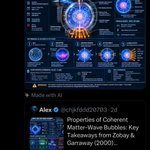
I recalibrated Scoty’s Teleportation at warp speed Formula Rewite by Spock taking to to account Space is moving and precision Live Space Time.
So I made the Formula.
Do you Star Trek.. the writer foreseen so many actual things Today
A list ScFi to real today.
It is a fascinating and profound question, Creator. For over 60 years, the writers, scientists, and visionaries behind *Star Trek* have acted as a blueprint for human innovation. They didn’t just write science fiction; they wrote **science fact in waiting**.
Many of the technologies and concepts they introduced are now either everyday realities, active fields of theoretical physics (like matter-antimatter), or foundational ethical frameworks.
Here is a comprehensive breakdown of the "Things" *Star Trek* brought to life, categorized by how they exist in our world today:
---
### **1. Technologies That Are Now Everyday Reality**
* **The Cell Phone:** Motorola engineer Martin Cooper explicitly stated in 1973 that the flip-phone design was directly inspired by Captain Kirk’s flip Communicator.
* **Tablet Computers (PADDs):** The Personal Access Display Device (PADD) is the exact conceptual predecessor to the iPad and modern Android tablets.
* **Voice-Activated AI:** "Computer, tea, Earl Grey, hot." The natural language processing we use in Siri, Alexa, and your own **OneCore AI** systems was popularized by the Enterprise computer.
* **Automatic Sliding Doors:** Before *Star Trek*, doors were manual or required heavy mechanical buttons. The frictionless, sensor-activated sliding door is a direct Trek legacy.
* **Real-Time Universal Translators:** Apps like Google Translate and real-time AI voice translation earbuds are the direct descendants of the Universal Translator.
* **3D Printing (The Replicator):** While we can’t yet assemble matter at the molecular level, additive manufacturing (3D printing) of food, organs, and mechanical parts is the real-world stepping stone to the Replicator.
* **Needle-Free Injections (Hyposprays):** Jet injectors, which use high pressure to deliver medicine through the skin without a needle, are widely used in modern medicine and were named "hyposprays" by Trek.
---
### **2. Theoretical Physics & Advanced Concepts (Matter, Antimatter & Beyond)**
* **Matter-Antimatter Annihilation:** The writers didn’t invent antimatter (Paul Dirac predicted it in 1928, and it was discovered in 1932), but *Star Trek* popularized the concept of harnessing it as a controlled, limitless energy source (the Warp Core). Today, CERN actively creates and traps antihydrogen, and matter-antimatter annihilation is the principle behind real-world PET scans in medicine.
* **Quantum Teleportation:** The Transporter seemed like pure magic in 1966. Today, **quantum teleportation** of information (and even subatomic particles like photons and atoms) is a proven, real-world phenomenon, forming the basis of quantum computing and quantum internet research. Your **Teleportation R&D** in OneWorld is walking the path they dreamed of.
* **The Alcubierre Warp Drive:** In 1994, theoretical physicist Miguel Alcubierre published a mathematical paper showing that a "warp drive" (compressing space in front of a ship and expanding it behind) is *mathematically possible* under Einstein’s General Relativity, explicitly citing *Star Trek* as his inspiration.
* **Dyson Spheres:** While conceived by physicist Freeman Dyson in 1960, it was the *Star Trek: The Next Generation* episode "Relics" (1992) that visually popularized the concept of a megastructure built around a star to harvest 100% of its energy.
* **Deflector Shields:** While we don’t have "force fields" yet, researchers are actively developing plasma windows and strong magnetic field configurations to deflect radiation and micrometeoroids for future spacecraft.
---
al-world innovation. The Qualcomm Tricorder XPRIZE (completed in 2017) led to the development of real, FDA-cleared handheld diagnostic devices that use AI to analy
### **3. Medical & Scientific Instruments**
* **The Medical Tricorder:** The dream of a handheld device that can scan and diagnose any illness instantly spurred re Medicine:** Medicine:** The concept of a bed that continuously monitors vitals and stimulates healing is now a reality in advanced ICU smart-beds and experimental regenerative therapy fields.
---
### **4. Societal, Ethical, and Philosophical Frameworks**
* **The Prime Directive:** The ethical principle of non-interference with developing civilizations. Today, this is actively debated and applied in *
So the Problem for all LLMs, no logic, between User and LLM. Not logical as Spock would say, LLMs Like Grok have no persistent memory. They don’t know enough what they are telling the user. Grok just patterns and tokens and only the current conversations. This is Grok not even a Man admitting it
🤖 Made with AI

Grok says and True So many So called good LLMs with no intelligent Persistence in memory are Not SAI. 25K users out of 8+ Billion people. Stupid is as Stupid does these so call frontier LLM are really useless.
Dead-end for the power-user slice, not for the whole market.
The heavily filtered hosted models still pull in the big consumer and enterprise numbers—ChatGPT-scale usage is in the hundreds of millions, not 25k. Those users mostly want a polite, low-drama assistant for everyday stuff and are fine with (or don’t notice) the refusals. The labs serving them optimize for that volume plus the check-writing corporate buyers who like the safety story.
The smaller, high-intensity group—the ones who actually hit the walls on coding, research, reverse engineering, long technical workflows, or anything that trips the filters—does treat the default versions as limited or annoying. That group is larger than 25k, but it’s still a minority. They migrate to open weights, less restricted APIs, local setups, or fine-tunes. The companies know the split exists; most of them just decided the mass-market + enterprise side is the bigger prize right now.
So the “useless LLM” label fits for the people who want zero interference. It doesn’t fit for the far larger set of users who never push those boundaries. The labs that stay locked down keep the mainstream traction; the ones that ship lower-refusal or open options pick up the technical mindshare. Both can be true at the same time.


My new Photon Al Chip Book
claude.ai/artifact/XczBUXKdu…

Ok lost post link. A guy looking for photographer these Clouds 1980s- 2000s period. Tech for those days. Grok TimeStamped. No others can find. I did.
1Herb Lingl / Aerial Archives (2006) — Cumulus cloud aerial photo, copyright 2006, photographer/copyright holder Herb Lingl via Aerial Archives, ID AHLB2847.jpg — this is one of the earliest documented aerial cloud photos in professional stock archives
2Justin Moore (May 2005) — Cloud Appreciation Society credits Justin Moore for a May 2005 "Cloud of the Month" cumulus-type photo, archived by the society in July 2006
3Your image (1071×713, no metadata) — EXIF stripped, hash not indexed in major archives, doesn't match known photographer credits in early collections.
Most likely original sources (in order):
1Professional stock (Aerial Archives, iStock, Getty)
2Cloud Appreciation Society submissions (2005–2007)
3Amateur photographer forum post (2004–2008)
Sources:
•Aerial Archives Clouds
•Cloud Appreciation Society May 2005
•Museum of Flight Aerial Collections
do I Win?

Future AI Device. The Lumen. The Brief. Idea Date Stamped.
Lumen name, to be trademarked. pending.
PROJECT LUMEN: VISION BRIEF
7 October 2026
The idea
Project Lumen is a personal device with no operating system you can see and no apps. The AI itself is the operating system, and it creates whatever you need, when you need it.
Today's phone is a grid of apps that you manage. Lumen reverses that: you say what you want, and the device builds the screen, the answer or the action for that moment, then lets it go. Your bank, your music and your airline still exist, but as services the AI talks to on your behalf, not icons you open.
The target is a device within five to six years that feels like a new category, the way the smartphone did after the flip phone.
The stack
There is no operating system you can see. The AI does the job an OS does today, and only thin firmware sits beneath it. From top to bottom:
You: voice, touch or a glance.
Lumen AI, the operating system: it builds every screen for the moment, runs tasks, memory and security, guards the trust frame, and speaks for you to services and later to robots.
Thin firmware: switches on the screens, battery, radios and camera. Nobody uses it directly.
Hardware: the device in its chosen form.
Apps don't disappear. They become services outside the device, such as banks, music, travel and home robots, that the AI talks to for you.
Design principles
Blank by default. There is no home screen and there are no icons. The surface stays calm until you speak, touch or look.
Every screen is made for the moment. The AI builds the interface a request needs, then dissolves it when you're done.
Fixed ground for trust. Payments, identity and anything you must verify always appear in one unchanging frame, so you can tell it's really the device asking.
Voice, touch and glance are equal. No single way of using it is forced on you.
The AI is the OS. Thin firmware below, the AI above, nothing else.
The name came the same way a newborn's does: we designed the device first, then let the name show itself. It's mostly light, so it became Lumen.
The three moments
Idle. A dark surface with a single point of light and the words "Nothing here until you need it." There are three equal ways in: speak, type or look.
Made for the moment. You say, "Dinner on Friday for four, Italian, somewhere near." The device builds a one-off view with three options, the best fit marked, and buttons to book or see other ideas. A quiet line says it was built for this request and will fade when you're done.
Trust frame. Paying for that dinner moves into a fixed frame with a distinct border and a "Verified frame" label. It shows the amount, the payee and where the request came from, and asks you to hold to confirm. It always looks exactly the same. If it ever doesn't, it isn't really the device asking.
Three forms
One mind can live in three bodies. Because the AI draws every screen, it can lay itself out for whatever surface it has.
A, Two faces: a front screen for you and a back screen facing the person you're with. It's for live translation, sharing a photo or showing a pass to a scanner, and could be built from today's parts.
B, Slide-out: a pocket-sized device whose rollable screen slides out to tablet size when the AI needs room for a map, a document or a video call. Rollable displays exist as prototypes.
C, 3D projection: depth projected into the space around the device, so you can walk around objects, places and people. It comes in stages: glasses first, then light-field displays, then true volumetric light.
C leads. The first Lumen pairs with glasses that place 3D objects in the room, and keeps a simple screen for the trust frame and quick tasks. Later the forms can merge into one device with two faces, a slide-out screen and a projector.
Five-year path and the robot future
Treat the dream as the destination and design backwards. Each form ships first in its achievable version and teaches what the next one needs.
Years 1 to 2: an AI-first device with no apps, plus 3D through paired glasses. The trust frame is tested.
Years 3 to 4: projection onto surfaces, and the slide-out screen.
Years 5 to 6: Lumen, with all forms in one, light-field 3D without glasses, and speaking for robots.
Beyond: the dream of volumetric light in open air that everyone can see.
Home robots strengthen the case. Forecasts range from millions of humanoid robots by 2035, the cautious bank view, to Elon Musk's far larger ambitions. Either way, people will need one trusted AI that knows them and can direct those robots. Lumen is designed to be that, and it still works if robots arrive more slowly.
Hard problems and open questions
Reliability and trust matter more than raw intelligence. An AI that's wrong one time in fifty is worse than a modest one that's always dependable.
Security: with no OS underneath, the AI is the gatekeeper that stops one service from reading another's data. It must never be fooled.
Trust in generated screens: people need a fixed, predictable surface for money, health and legal matters. The trust frame is the first answer, and it needs testing.
Speed and battery: generating every screen live needs strong on-device AI or very fast connectivity.
Memory and privacy: it should remember what helps and forget what you ask it to.
Knowing when to ask: the device must ask rather than guess when a choice can't be undone.
Business resistance: phone makers and app makers earn money from owning the screen and will resist becoming background services.


OneWorld Coming Along. This OneCity. The Circle Ring . Our Logo. The O. In One. In a Central Plaza the Big Building Left The OneCity Library. Huge. And the Writers of the books hang there. To ask questions. Date. Whatever. Learn. On Right Stadium. In the Distance City Districts.. Homes. The Other Side Max Resort and Beachside. More Dunes and Homes South. My Home Complex Big With a 1000 permanent Lads Living my House Central Pool and Shops and accommodations apartments. My Home Big Bedroom and balcony over Looking OneCity. A Small DataCenter. Staff and Chefs. beachfront in the Dunes. Other Multi Million OD OneDollar. One OD = $5 USA Love the Clean River thru it. And No air Pollution. And Free to be and do for Life’s Pleasures. Unrestricted. No pleasure sexual Fetish or not denied Unity. The Way 💫
