

Google Maps + organic for local businesses. Solo owner. You work with me, not a roster. Digital Press Releases DM "PR" For information
United States
Joined May 2022
- Tweets3.6K
- Following477
- Followers1.8K
- Likes9.6K


I don't want clicks on my blog.
Someone clicking a blog post is looking for information. I want the person looking to buy. So the blog has one job: make Google see the money page as relevant, and point at it.
How I wire it:
The money page targets one keyword. Roofing company in Fort Worth. One page, one term.
Four to five posts about that service. The ones I build run around 1,300 words. Each one links to the money page with the keyword in the anchor, and to two other posts.
A blog hub, linked from the homepage, that links to every post. Google goes homepage, hub, post. Two clicks. Not a chain where each post is only found from the one before it.
There's a point where internal links stop moving the page and backlinks take over. But four or five posts pointed at one money page is how a new site gets its first rankings.
An About page is where I tell Google who the owner is. Most of them don't.
What goes on mine, on the page and in the code:
The page. The owner's name, the college they graduated from, the licenses they hold, what they know about, and photos of them on the job. A team of three to five? Every one of them goes on the page too.
Person schema under each name. Job title, who they work for, an image, a description. alumniOf: the school, the degree, the year. memberOf: the organizations. sameAs: their LinkedIn, their Facebook, the rest.
knowsAbout. For every service the owner knows, I link the Wikipedia article, the Wikidata page and the Google Knowledge Graph ID. Anything with a Wikipedia article almost always has the other two.
You're not writing one page about a company. You're building the owner a profile Google can read. That's where the authority comes from.
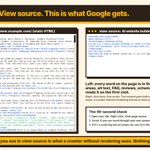
A laundromat site I audited had a photo named a string of numbers, underscore orig, dot jpg. The alt text said "picture." That's everything Google's first crawler knew about it.
Some Googlebots will try to read what's in the image. The ones that come by first, and most often, don't. They read the file name and the alt text. That's it.
What I do with every photo on a service page:
Name the file before it's uploaded. The service or the product, not the camera's number.
Alt text, two to three sentences describing what's in the photo: the job, the keyword, a variation. Most sites have two or three words there, or nothing.
Your own job photos, not stock. Pull the photos customers leave in reviews onto the page and write alt text on those too.
Alt text is word count, keywords and entities on the page for free, and the customer never sees it. On a visual service like flooring, the pages ranking in Florida carry 42 images. Every one is a place to put it.
How I pick the keyword a service page targets. Same eight steps every time.
Start with the data you already have. Google Search Console shows the queries your site already shows up for. The Performance tab on your Business Profile shows the searches people used to find you. Google is already connecting you to those words.
Google Trends, past five years. I stack every way people say the service: pet sitting, dog sitting, house sitting, home watch, house sitter. Trends won't give you volume. Each line is relative to its own history, zero to 100, so I'm reading which phrasing wins and when it peaks.
Verbs and nouns are different keywords. House sitting and house sitter don't search the same. One of them you don't target.
Scroll down. The related queries on the left are keywords I hadn't thought of. The questions on the right are the blog posts.
Keyword Planner in Google Ads for average monthly searches. A broad brush stroke, not a guarantee. Watch for brands: Fence Co near me looked like a keyword and is probably a company.
Then I Google it. The category tags on the profiles in the pack and the bolded words in the results are what Google thinks is revelavant to the keyword.
Listen to your customers. How they call in and ask for the service is how they type it into Google.
Read the reviews. Yours and your competitors'. Customers describe the service in their own words right there, and those words are keywords.
The first thing I look at on a Google Business Profile is the primary category.
It tells Google exactly what the business does. Too broad or wrong, and you're competing against every business in that bigger category instead of your direct competitors.
My rule: the primary category is the number one source of revenue, stated as the service. A vehicle wrapping company is vehicle wrapping service, not sign studio. A pest control company that also pressure washes is pest control service, and pressure washing goes in as a secondary.

My Press Releases are syndicated.
One release is distributed to the publications. Yahoo Finance, Business Insider, USA Today, about 500 more. Each one prints its own copy. The links are already in the body, so every copy carries them.
One piece of writing. 500 to 550 referring domains. Sometimes around 750.
Not one article. One article, printed hundreds of times, each on its own domain, each pointing at your site.
That's what syndicated means.
Want to know if Google is actually visiting your site? Search Console tells you, for free, in about two minutes.
Open Google Search Console. If it isn't set up, most hosts and website builders have a one, two or three click process for it, or you change one DNS record.
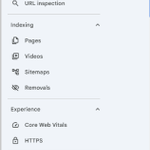
Left side, scroll all the way down. Settings.
Crawl stats. Open the report.
Read three things: how many times Google came by, the server responses it got, and what type of Googlebot is hitting your site.


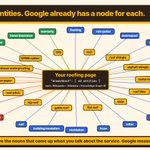
Here's every entity you want on a roofing page, and how to wire each one to what Google already knows.
Entities are just nouns. The nouns that come up when you talk about the service. Google doesn't only count your keyword, it measures these too.
The roofing list: Roofer, roof, roof shingle, asphalt shingle, metal roof, roof tiles, slate, flat roof, gable roof, hip roof, roof pitch, flashing, rain gutter, downspout, soffit, fascia, eaves, dormer, skylight, chimney, ridge vent, attic, rafter, truss, tar paper, bituminous waterproofing, EPDM rubber, TPO, hail, ice dam, wind, storm, leak, water damage, mold, home insurance, warranty, building insulation, ventilation, nail.
Why these: Google already has a knowledge graph entry for every one of them, and it boils what's on your page down to a math equation. You don't have to teach it what a ridge vent is. Words are fuzzy. The ID pins it.
How to wire one, in your schema:
Find the Wikipedia page. en.wikipedia.org/wiki/Ridge_…
Find the Wikidata item. Every Wikipedia page has one. wikidata.org/wiki/Q7332722
On that Wikidata page, find the Google Knowledge Graph ID. It's listed as the Freebase ID: /m/0g4dt1
Link the ID as a Google search URL, not the bare ID and not a page on your site: google.com/search?kgmid=/m/0…
Put all three in knowsAbout. One Thing per entity, a two or three sentence description in your own words, then the three URLs in sameAs. The same Thing goes in about or mentions on the page, and every city you serve gets the same treatment in areaServed.
Node after node telling Google you're the expert. You inherit everything it already knows about roofing without stuffing it on the page.
Do the whole list above. Then do it for every city you serve.


A local service page gets six heading tags. Most sites use three.
One site I looked at: its money page had one H1, seven H2s, fourteen H3s. Zero H4, H5 or H6. AI website builders hammer the H1, H2 and H3 and stop. That's six free ranking factors sitting right there, because almost nobody uses them.
Here's how I fill all six:
H1: main keyword + city.
H2: a keyword variation.
H3: main entity + keyword variation.
H4: entities + keyword variation.
H5: entities + LSI words + keyword variation.
H6: keep the pattern going.
Entities are the nouns you'd use in association with your service. LSI words are the words you'd use in a conversation with somebody about that service. They go right in the headings, same lines you already wrote.
Why it counts twice: the tag is one ranking factor. The keyword or variation inside it is another. Three tags you weren't using plus three variations is six extra ranking factors, one line each, almost no vertical space.
Open your page and count the heading tags. If it stops at H3, add the three it's missing and put a keyword variation in each.
👀 Alpha being droped here

𝗪𝗵𝗲𝗻 𝗜 𝗽𝘂𝗯𝗹𝗶𝘀𝗵 𝗮 𝗽𝗼𝘀𝘁, 𝗜 𝘀𝗲𝗻𝗱 𝗶𝘁 𝗼𝘂𝘁 𝘁𝗼 𝟮𝟱 𝗽𝗹𝗮𝘁𝗳𝗼𝗿𝗺𝘀 𝗮𝘁 𝗼𝗻𝗰𝗲.
I usually publish the exact same content, on all platforms.
If Im looking for parasite rankings, I let SomePoster rewrite my content, but most posts go out the same on all platforms.
The lastest platforms I use are Github Gist, Github Pages and Gamma app. It would take me two hours to publish, what I can now do in 30 seconds...
SomePoster is live from as low as 7usd/month, although I recommend the 39usd/month plan, as that has full AI:
someposter.ai

Yelp, Thumbtack or HomeAdvisor on page one for your keyword is the best news you can get. Here's why:
A site with that much authority can rank a page on the strength of the domain alone. That's the power of a high authority site, and it's real.
But the authority lives on the homepage. yelp.com is the trunk. The listing page that's ranking for your keyword is a leaf at the end of a branch, and most of that authority is lost on the way out.
So look at the backlinks of that specific page, the one sitting in the search result, not the domain. Most of the time it doesn't have very many.
That page can be beaten. Sometimes 25 or so backlinks pointed at the page you're trying to rank is enough to pass it.

The order I build links for a new local business. Same order every time:
A press release first. It syndicates to 500 to 550 referring domains. Nine times out of ten that one release beats the whole local market on referring domains, because most competitors sit between zero and one press release worth of links.
The first release is all branded anchors and links to two places: the homepage and the Google Business Profile, using the google.com/maps/place link with the business name. The power takes a couple of weeks to a month or two to land, which is why it goes first.
Local directories. The chamber, the Better Business Bureau. Each one is one referring domain and one backlink.
Niche directories. The ones for your trade.
The review sites. Yelp, BBB. Yelp's homepage has the authority. The page your listing sits on has far less of it, so when you see Yelp ranking for your keyword, that keyword isn't hard to rank for.
The social post stack. Google lets your Business Profile link to seven social profiles: Facebook, LinkedIn, TikTok, X, Instagram and the rest. Create them, link them from the profile, then post on them with a link back to your site. Your Facebook listing is one referring domain. A Facebook post with a link is the same domain, one more backlink.
Then every two quarters, another release. Referring domains are the number one backlink ranking factor. Count them before anything else.

Every time someone asks about getting press release backlinks done for their site I ask: how many do their competitors have?
You always want to know the amount they have so you can beat them.
Here's how to check for free: ahrefs.com/backlink-checker
Put your top three competitors' domains in the checker, one at a time.
Read the referring domains number, not the backlinks number. Referring domains is the number Google weighs first. One site linking to you ten times is ten backlinks and one referring domain.
Sort them into two piles. Fewer referring domains than one good press release, which syndicates to 300 to 350 referring domains and sometimes closer to 500. Or more.
If they're all in the first pile, one release clears the whole market. Nine times out of ten, that's where a local service business lands.
If one sits at 1,000 or 10,000, don't buy ten releases at once. Upgrade the package and place them every month.
Know the number before you buy. Then beat it.


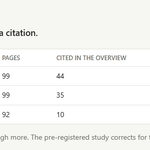
Wow, 44% of pages ranking in the 1-3 position were cited in the A.I overview.
Ranking well in Organic helps a lot, but does not guarantee a citation.
I'm currently still scrapping Google A.I Overviews.
I'm getting some fantastic data that I'll continue to share as I learn more.


I purchase press releases.
Then local directories
The niche specific directories
All of the review sites, yelp, BBB...
Post on social media. All of the seven platforms you can link to from your Google business profile.
Facebook, linkedin, tick tock, x, Instagram, YouTube, and Pinterest.
Then continue looking for sites that will allow you to place your business information on there.
