

Building up the Catholic layman's exclusive power to restore Christendom by building institutions independent from the parish. Substack for our long-form.
USA
Joined September 2025
- Tweets2.6K
- Following516
- Followers904
- Likes14.4K



The foids and chads have been at each other this year. Let the Archangel Raphael, friend of the young Tobias, bind and cast out forever the demon that slithers between man and woman, so that they may better glorify God through holy marriages.


As frustrating as these things can be, discretion is often the better part of valor here. Keep a level head in all things, and pray for Fr. Ripperger, the Doloran Fathers, and Archbishop Golka during this time in the hope of a good resolution.

As most of you know by now, Archbishop James Golka of Denver has asked Fr. Chad Ripperger to take one year off “from public speaking and interviews.” archden.org/archdiocese-of-d…
As a personal friend and big fan of Fr. Ripperger, I was obviously sad when he shared this news with me privately several weeks ago (it was never his intention to make a public spectacle of it). Now that it’s a matter of public record, I want to publicly commend Fr. Ripperger for accepting Archbishop Golka’s request with humility and obedience, according to the example of the Saints.
And let’s all remember this: “Archbishop Golka is grateful for Fr. Ripperger’s priestly service, exorcism ministry, and for the generous spirit in which he received this request. We ask the faithful to join us in praying for Fr. Ripperger and for the Society [of the Most Sorrowful Mother].”
In addition to praying, please consider donating to support the Society’s vital work: dolorans.org/donate
And with Christmas coming soon, now is a great time to order some of Father’s books: sentradpress.com
Let’s also pray for Archbishop Golka, that he will see all the good fruit that Fr. Ripperger’s public speaking has produced and allow him to resume such endeavors in one year’s time.
Our Lady of Sorrows, pray for us!


All due respect to the Vatican but "advocating for restoring democratic dialogue through intermediary institutions" is the most corporate sloppoasting I've seen in a hot minute.


In light of recent episodes of violence, the Church in France is calling for a response to the anxiety expressed by young people and those who feel marginalized or left behind, with the Archbishop of Tours advocating for restoring democratic dialogue through intermediary institutions.
vaticannews.va/en/world/news…

Tweeds everywhere seething.
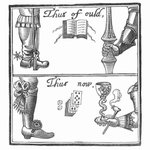
"Oh, you smoke a pipe and have poker nights with the boys? WHAT ARE YOU GAY????"
- Tradbros in 1600

Christendom Quarterly retweeted

Shawn Ryan:
“Somebody doesn’t want you doing this.”
Fr Ripperger:
“That’s true.”
Shawn Ryan:
“The demons are calling out sins of people very high up in the Catholic Church…”
Fr Ripperger:
“Mm hmm.”
Shawn Ryan:
“and they don’t want those sins to get out…”
Fr Ripperger:
“Yeah.”
Shawn Ryan:
“And it sounds like they want you gone.”
When you go to the holy land it’s impossible not to notice the contrast between the chaotic ululations of demons that come from minarets and the ordered resonance of church bells.
Satan loves noise pollution.
God loves peace.


Heroes may rise from what seems to be the most unlikely of places...


"Which did you care for most, your banner or your sword?"
"Better, forty times better, my banner than my sword."

St. Jeanne, Maid of Orleans and Holy Apostle of the Kingship of Christ, come and convert France and save her a second time.

Embrace chivalry, but it may not mean what you've been told it means.

St. George doesn't even "get the girl" in the real version. The dragonslayer marrying the princess is essentially a Mandela effect where the trop was invented in far more modern retellings, despite not really having any precedence in traditional literature.
It *does* however occur in some examples: The fairytale of the Two Brothers, but that is a rather different take on the myth. It occurs in Perseus and Andromeda/Orlando Furioso, Perseus is a Greek myth that was later "chivalrized" in the renaissance, and doesn't really represent a truly knightly romance. It also occurs in the Saga of Ragnar Lothbrok, but Ragnar is not a knight.
But these are more exceptions that prove the rule. The dragonslayer originally, and far more regularly, *doesn't* marry the rescued princess (see St. George, Tristan and Isolde, and Dobrynya Nikitich among others).
And I think there's a reason for this. It's noble to rescue women. But rescued women don't typically make good wives for the men that save them, and I think the medieval writers knew this. Although I'm generally disinclined to rely on 19th century medievalists, I always found Millais' painting "The Knight Errant" illustrative of this.
There's no romance here. The knight is clearly on edge being in the middle of a wood at night. He may have just slain the lady's assailants, but they're alone in the woods and who knows what other dangers lurk around. And there's nothing intimate or sensual about the lady's nudity. The naked trees convey how bitterly cold she must be, in addition to what other terrible injuries her assailants may have done to her. And her face is turned away from her rescuer in shame. Shame for the state he finds her in, shame for what has been done to her, and shame for the dangers the knight incurred by facing her attackers. And there's no clear way out for either of them. There's no horse in view, and they'll have to find their way to safety (likely on foot) through the woods at night in the cold. It's rescue stripped of all romance, and is far from the type of foundation for a good maritial relationship.
So yes, men must learn to be knights and slay dragons, especially when that dragon threatens a lady. But the idea that the reward for said dragonslaying is the hand of the woman he saved was likely far from the minds of the people who wrote most of these stories.
Instead, be like St. George. Slay the dragon, rescue the princess, then return her to her home and ride off into the sunset embrace martyrdom.


Prots will literally say "post-70 AD rabbinic Judaism" instead of "Catholicism."

Without post-70 AD, rabbinic Judaism, the Protestant church does not have a Bible.
First, the manuscript tradition that all of our modern translations are based on is the Masoretic text. The Masoretes were the rabbis that followed after the Tannaim and the Amoraim. They worked from the 7th to the 10thcentury AD and their main focus was the preserving of the Hebrew text of the Old Testament and developing the vowel and accent system that we use today when we read the Hebrew text. Delete the work of the Masoretes and you delete the text that we use for our Old Testament. No rabbis, no Bible.
Second, the Protestant recovery of the ability to read the Old Testament in the original Hebrew language was made possible by relying on the work of late medieval rabbis, primarily the grammarians, along with the assistance of 16thcentury Jews who either were willing to teach Hebrew to their Christian neighbors or who actually converted to the Christian faith themselves and brought their rabbinic knowledge of the Hebrew text with them. For instance, in the early thirteenth century, David Kimhi composed the Miklohl, a basic grammar of the Hebrew language, and the Hashorashim, a Hebrew dictionary. When sixteenth century Christians began returning to the Hebrew language, these texts provided their entrance into Hebrew fluency.
Additionally, the grammarians produced a series of commentaries on the text of the Old Testament, commentaries which developed something very similar to what we now refer to as the historical-grammatical method. These commentaries served as tutors to early protestant exegetes, trying to make their way through the Hebrew text for the first time. For instance, from 1517-1519, the Christian publisher Daniel Bomberg, working in Venice, published what we now refer to as the Bomberg Rabbinic Bible. It contained the Masoretic text of the Old Testament, surrounded by the corresponding Targum (Aramaic translation/interpretation of the Hebrew text), and commentaries by grammarians such as Rashi, Kimhi, Ibn Ezra, etc.
Bomberg’s Rabbinic Bible became an essential tool in the libraries of Reformed exegetes. If you have spent any time in Bucer’s commentary on the Psalms, you know how heavily he relied on Bomberg’s sources for his own understanding of the text. What is harder to notice, but which is equally true, is how much weight Calvin himself gave to these sources. At one point Calvin singles out Kimhi as the best of the Jewish exegetes. This reliance on the assistance of the grammarians permeates the works of sixteenth and seventeenth century, Protestant exegesis. Delete the Rabbis, and you delete the Protestant ability to read and translate the Hebrew text.
This reliance on Jewish sources was not without its pitfalls. The anti-trinitarian controversies that plagued the Reformed church in the 16th century were largely a result of Protestant reliance on Jewish commentaries. For instance, Kimhi’s commentary on the Psalms included critiques of the Christian reading of the messianic Psalms. Some young exegetes were not ready to go up against Kimhi’s work and found themselves succumbing to heterodox views on the deity of Christ, etc.
Nevertheless, the vast majority of the Reformed church figured out how to make good use of Jewish sources without losing their minds. For instance, it is not a coincidence that many of the contributors to the formation of the Reformed political tradition, men like Franciscus Junius and John Selden, were also great Hebraists, steeped deeply in the works of medieval rabbis. They drew from that tradition for much of their work. There were movements to burn all the Jewish sources that rose up at various moments, but these movements were primarily driven by the Papists, not the Reformed, who generally opposed this mania.
To repeat my opening claim - without post-70 AD, rabbinic Judaism, the Protestant church does not have a Bible. The Jews were still wrong about Jesus. But without them, you don’t have Bible.


Not taking shit on St. Mother Teresa off this guy.


🚨 NEW: Joe Rogan was in shock when historical storyteller Cody Tucker revealed that Mother Teresa was actually a horrible person who kept dying patients in horrible conditions while massive donations flowed to the Vatican:
TUCKER: “She's a scumbag. Mother Teresa never did anything good.”
CONTEXT: In 1994, a physician named Robin Fox visited Mother Teresa's Home for the Dying in Calcutta.
Fox wasn't some anonymous critic.
He was the editor of The Lancet, one of the world's most prestigious medical journals.
And what he described was deeply troubling.
Medical care was inconsistent.
Some decisions were made by nuns and volunteers without formal medical training.
Basic diagnostic investigations were rarely available.
And the facility did not have strong painkillers in its medication supply.
Fox described a patient with a high fever who initially received paracetamol and an antibiotic before a visiting doctor suspected malaria and changed the treatment.
His central objection was that patients who might have treatable conditions weren't being reliably distinguished from people who were actually dying.
Think about that.
Someone could arrive believing they were receiving medical care when they might have needed a proper diagnosis, referral or treatment.
And this wasn't the only criticism.
In 2013, three Canadian academics published a critical review of Mother Teresa's life and work in the journal Studies in Religion.
They questioned her approach to caring for the sick, her political relationships and the management of the enormous donations her organization received.
One of their central concerns was whether a religious belief in the spiritual value of suffering had been allowed to influence the standard of care provided to vulnerable patients.
Mother Teresa believed suffering could have profound spiritual meaning.
But there's a difference between helping someone find meaning in unavoidable suffering...
AND FAILING TO RELIEVE SUFFERING THAT MEDICINE COULD PREVENT.
There is also an important complication.
During the 1990s, India had extraordinarily restrictive regulations governing access to morphine.
Human Rights Watch later documented that India's medical morphine consumption collapsed by approximately 97% between 1985 and 1997.
Even major hospitals struggled to obtain adequate pain medication.
So the absence of strong painkillers at Mother Teresa's facilities does not, by itself, prove she deliberately withheld them because she wanted patients to suffer.
And Fox acknowledged something critics often leave out:
The home he visited provided cleanliness, wound care and genuine kindness to desperately poor people.
The Missionaries of Charity also cared for people whom hospitals had turned away.
Mother Teresa saw her mission primarily as offering dignity, love and spiritual comfort to the abandoned, rather than operating conventional hospitals.
Critics have questioned the Missionaries of Charity's financial transparency for decades.
But Tucker's more specific allegation that Mother Teresa funneled donated money to the Vatican rather than caring for patients has not been established by the evidence reviewed here.
That distinction matters.
IMPORTANT NOTES: Mother Teresa received the Nobel Peace Prize in 1979.
The Catholic Church canonized her as a saint in 2016.
To millions of people, she remains one of the greatest symbols of compassion in modern history.
But the historical record also contains serious criticisms that deserve examination rather than automatic dismissal.
The most disturbing question isn't whether Mother Teresa personally believed suffering had spiritual value.
It's whether that belief, combined with the way her facilities operated, ever resulted in people enduring pain or illness that could have been treated.
Because there is a fundamental difference between helping someone die with dignity...
And allowing someone to suffer when they might not have needed to.


