

Clarence Bicknell 1842-1918, a genial botanist, archaeologist, artist and philanthropist, worked 40 years in Bordighera, Italy. Marcus Bicknell tweeting.
Bordighera, Italy
Joined September 2017
- Tweets129
- Following48
- Followers20
- Likes24







See the video here... clarencebicknell.com/giorgio…
Saving the Museo Bicknell in WWII. Watch the interview

1
6

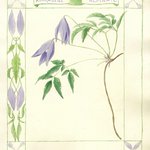
Clarence has a new online shop and a new QR code for it. The shop is live and products are available for shipping. First sale of a print (Athragene alpina) was made yesterday. clarencebicknell.com/shop

1
12
Meeting of the Clarence Bicknell Association tomorrow - mailchi.mp/046cbd8fb30c/meet…
16

Clarence Bicknell (1842-1918) events 19 and 20 November - mailchi.mp/747d8a2344d6/juxy…
1
C. Werner in Clarence's Book of Guests in Esperanto No. 23, 1906 might be Carl Friedrich Wilhelm Werner, son of the famous watercolourist with a similar name Carl Friedrich Heinrich Werner (1808–1894)
Read more at clarencebicknell.com/c-werne…

Quite right Luis, thank you. clarencebicknell.com/gastoli… @EsperantoVortoj @speakesperanto @Esperanto_UK @UEAViva @esperantist @Esperanto_feed @tejoesperanto @MiaAmiko #Esperanto #EsperantoWordoftheDay

@ClarenceBick
Clarence Bicknell, modela esperantisto
uea.facila.org/artikoloj/hom…
#esperanto #ueafacila #europe
La Libro de Gastoj en Esperanto estas ĉefverko de arto kaj esperanto. Disponebla nun. clarencebicknell.com/gastoli… @EsperantoVortoj @speakesperanto @Esperanto_UK @UEAViva @esperantist @Esperanto_feed @tejoesperanto @MiaAmiko #Esperanto #EsperantoWordoftheDay

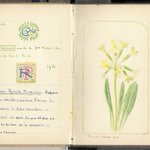
17 July 1918, Clarence's death. It could hardly be more appropriate that Luigi wrote his tribute opposite Clarence's watercolour of a Forget-Me-Not. Luigi would certainly never forget Clarence.
clarencebicknell.com/luigi-p…

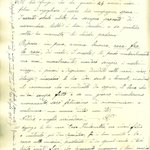
104 years ago, 17 July 1918, in Casterino, Luigi Pollini carried Clarence Bicknell out onto the terrace of his ‘cottage’ where he died peacefully, in the surroundings which he loved. Read his tribute clarencebicknell.com/luigi-p…

3
The Book of Guests in Esperanto by Clarence Bicknell - available now to buy - mailchi.mp/a23c37d3df8d/the-…
1
Silver ragwort in a symmetrical pattern. Vellum-bound album by Clarence Bicknell in the Fitzwilliam Museum, Cambridge. https://teapaw.org/t.co/ruPs3OVbjT

Casa Fontanalba; Clarence's pictorial map of the garden and wild land round the house, made in 1910, four years after it was built. https://teapaw.org/t.co/U8auPJ2Ws2

1
Book of guests in Esperanto. Clarence Bicknell wrote a page in Esperanto about each visitor and decorated the page with a botanical drawing, often developing the guest's initial into a monogram.Mahdi, Clarence's own dog. https://teapaw.org/t.co/NimJhqQa9a

Children's Picture Book of Flowers, an album of water colours by Clarence Bicknell. Opening page. https://teapaw.org/t.co/ruPs3OVbjT

1
Poem for the Alpine Anenome and matching border. Vellum-bound album by Clarence Bicknell in the Fitzwilliam Museum, Cambridge. https://teapaw.org/t.co/ruPs3PcMbr

Writings and border using Saxifraga lingulata Bell. Vellum-bound album by Clarence Bicknell in the Fitzwilliam Museum, Cambridge. https://teapaw.org/t.co/ruPs3OVbjT

Casa Fontanalba Visitors' Book 1906. Every right hand page has a glorious watercolour of a wild plant, here Centaurea montana, and guests signed on the left when visiting his summer home in Casterino in the mountains above Bordighera. Buy a copy at https://teapaw.org/t.co/U8auPJkxjA

1
2
