Paweł Podkowa retweeted
Na grafice widzicie Ulyssesa S. Granta – był prezydentem USA, generałem i, co tu najważniejsze… twarzą amerykańskiego banknotu o nominale 50 dolarów.
My znowu rozdajemy granty!
👇 Szczegóły i formularz znajdziesz tu:
🔗 naukatolubie.pl/granty/
Paweł Podkowa retweeted
Out today in @ScienceAdvances. We trace the evolutionary history of a trait under sexual selection in a genus of dancing manakins. Co-led with @hawchuan. science.org/doi/epdf/10.1126…
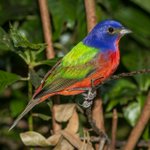
I’m excited to share that our article with Dr. Cassie Stoddard @B_G_Hogan and @Geoffrey_E_Hill on ornamentation and speciation in the stunning Painted Buntings🌈🐦is now published! Check it out: rdcu.be/d0aeE
Photo credit: G.E. Hill
@NCN_PL #Etiuda #ornithology #color
Paweł Podkowa retweeted
There’s still time to apply for a post-doc at @JagiellonskiUni @IoES_JU in the FAIRBiRDS project (funded by the EU). You would join a great team and learn some cutting edge meta-science methods. Goal? Improving data FAIRness in long-term bird monitoring. praca.bip.uj.edu.pl/document…
Paweł Podkowa retweeted
🧵 authors.elsevier.com/c/1iPiM… :) @Trends_Ecol_Evo has now published online our recent #metaanalysis paper. Huge, awesome & fantastic effort of a great team led by @PatriceEcoEvo, with @DanielWANoble Frank Seebacher @NicholasWuNZ @SammyMarineB Losia Łagisz Lisa Schwanz & @itchyshin
Great team and amazing field 😍
Glad to have contributed this research!👇
This quoted post is unavailable.
I am thrilled to share that I defended my PhD thesis "The influence of light on breeding biology and ecology of hole-nesting birds"! ☀️🐣☀️🐤☀️
Shout out to my supervisor @AdrianSurmacki!
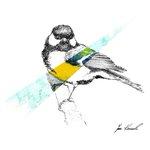
Drawing by J.Kaczmarek
Paweł Podkowa retweeted
The 8th Marcin Antczak Award for the most inspiring ornithological paper published in 2021 goes to Jan Jedlikowski from @UniWarszawski. The award will be presented on Wednesday, October 26, 2022 at the Faculty of Biology @UAM_Poznan. More details below👇
Paweł Podkowa retweeted
I wrote a dispatch for Current Biology highlighting the discovery of BDH1L and TTC39B as key enzymes in carotenoid pigmentation. I focus on the implications for honest signaling.
Evolution: The biochemistry of honest sexual signaling cell.com/current-biology/ful…
🤗
6 Oct 2022 11:30 (UTC+2)
Registration: bit.ly/3CxzRCl
Join us Thursday for an online lecture from Dr. Ben Sheldon, University of Oxford, to learn all that a beloved backyard bird has taught us over 75 years about behavior, ecology, and evolution. Registration (free) and full details: cornell.zoom.us/webinar/regi…
Good to see @UAM_Poznan on the list of @euatweets members interested in this coalition 👇#ReformingRA
Grants and hiring: will impact factors and h-indices be scrapped? nature.com/articles/d41586-0…
Can daylight affect nestlings of hole-nestings birds? Check out our new paper in Journal of #Ornithology !
#GreatTit #paridae
bit.ly/3QQhNqV
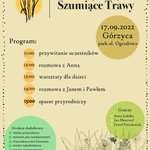
Dzieje się! Trwa Festiwal Przyrodniczy Szumiące Trawy! Zorganizowany przez dziupla.org
Przy pomocy książek przyrodniczych opowiadamy o tym co robią 🦎 i 🦔 by nie dać się zjeść. Z przedszkolakami oglądaliśmy 🦅🦢🦆,🌺🌼 i zastanawialiśmy się jak nurkują ryby 🐟🤔
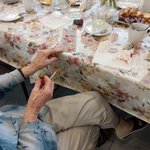
Z uczniami dyskutowaliśmy nad inteligencją gawrona i sensem badań nad dżdżownicami 👩🔬. U seniorów sprawdziliśmy jak smakuje bluszczyk kurdybanek i rozmawialiśmy o tym, że dzikie ogrody są dowodem troski o przyrodę a nie lenistwa😉
Juz w sobotę (17.09.2022) wielki finał w Górzycy! Będziemy gościć Autorów: Annę Jodełkę, @JanMencwel i Pawła Pstrokońskiego!
📖📚📖📚📖📚📖📚📖📚📖📚📖
Przyrodniczo-literacka uczta została sfinansowana z Programu Fundusz Inicjatyw Obywatelskich #NOWEFIO na lata 2021-2030.
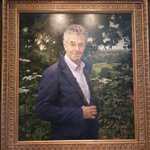
The portrait of Lord John Krebs is one of the many paintings you can find at Jesus College, Oxford, UK.
Look closer at the portrait. Can you spot the Great Tit?🐦
#HNB2022
Paweł Podkowa retweeted
👀 Sneak a peek at the deepest & sharpest infrared image of the early universe ever taken — all in a day’s work for the Webb telescope. (Literally, capturing it took less than a day!) This is Webb’s first image released as we begin to #UnfoldTheUniverse: nasa.gov/webbfirstimages/

ALT The background of space is black. Thousands of galaxies appear all across the view. Their shapes and colors vary. Some are various shades of orange, others are white. Most stars appear blue, and are sometimes as large as more distant galaxies that appear next to them. A very bright star is just above and left of center. It has eight bright blue, long diffraction spikes. Between 4 o’clock and 6 o’clock in its spikes are several very bright galaxies. A group of three are in the middle, and two are closer to 4 o’clock. These galaxies are part of the galaxy cluster SMACS 0723, and they are warping the appearances of galaxies seen around them. Long orange arcs appear at left and right toward the center.