

Growth Operator @ninja_reach 🥷 • SMM • Helping founders scale through performance-based clipping networks.
Delta
Joined October 2020
- Tweets978
- Following296
- Followers353
- Likes3.2K



Your UGC ad shouldn't just tell people why they need your product.
It should also address why they might hesitate to buy it.
Think about the questions running through a potential customer's mind:
📌Is it worth the price?
📌Will it actually work for me?
📌Is it difficult to use?
📌How is it different from other options?
These are buying objections, and your creative strategy should take them seriously.
Instead of creating another video filled with generic product praise, build content around the concerns your target audience already has.
Let the creator address one specific hesitation naturally and honestly.
Sometimes, the most persuasive content isn't the one that says the most about a product.
It's the one that answers the question stopping someone from buying.
1
1
An AI tutor app doing $80K a month, and a creator is getting 118K views just replying to a comment with a 3-minute tutorial
Not an ad. Not a skit. A girl replying to a comment and tapping through the app with her phone propped on a laptop.
Here's what's going on
The concept
→ Opens with "Reply to Amina's comment: could we get a StudyFetch tutorial pls "
→ On-screen text: "STUDYFETCH TUTORIAL "
→ She talks to camera for a few seconds, then films the laptop screen
→ Walks through the actual flow: pick a study set, upload class files, generate notes, play the match game, check previous sessions
→ Her real hand and rings point at the screen, so it feels like a friend showing you, not a brand
→ Ends back on her face for a wrap-up
Why it works
→ The hook is a comment reply. It proves demand before the video starts, so people stay.
→ It answers a question people were already asking, so the intent is high.
→ The raw, phone-on-laptop look feels like content, not marketing.
→ She shows the features doing real work, not just listing them.
→ At 3 minutes it filters for people who really want the app, which is why it converts.
The app sits at 80K downloads and 4.8 from 16K ratings.
How repeatable is it?
Very. You don't need a big budget, just a creator, a screen and a real comment. Fish comments for "how do I use this?" and each one becomes a video.
Examples for other SaaS
→ Project management tool: "Reply to a comment: how do I set up my first board?"
→ Finance app: "You asked, so here's how I track my budget in 5 minutes"
→ Design tool: "Reply to Sam: can you show the full workflow?"
Your comments are your content calendar. Turn the questions people ask into creator-led tutorials.
We build this kind of UGC for brands every day. Want it for yours?
DM me "UGC" and I'll show you how to turn your comments into videos that sell.

2
6
99
AI can help you create marketing content faster. But have you considered using it to make your content more consistent?
Imagine running a brand that publishes across multiple platforms.
Different people create the content, captions, emails and ads. Over time, your messaging can become inconsistent.
You can use AI to help review content against your brand guidelines.
For example, it can flag:
📌Inconsistent brand language
📌Claims that need verification
📌Missing product information
📌Messaging that doesn't align with your target audience
The important thing is to let AI assist with the review, not make every final decision.
Your brand needs consistency, but it also needs human judgment.
Are you using AI only to create content, or also to improve the quality of your marketing?
Would you love to try this with AI?
1
27
One mistake brands make when budgeting for creator campaigns is focusing only on how much the creator charges per video.
There's more to campaign planning than the creator's fee.
Depending on the campaign, you may also need to account for:
📌Content usage rights
📌Paid advertising usage and licensing
📌Exclusivity agreements
📌Additional revisions or deliverables
📌Video editing and creative adaptation
📌Product shipping and logistics
📌Campaign coordination and management
These costs don't necessarily apply to every campaign, but they should be considered before finalising your budget.
For example, there's a difference between paying a creator to produce a video for your brand and securing the agreed rights to use that video in paid advertising for a specified period.
Those are different considerations and should be clearly discussed before work begins.
A good creator campaign isn't just about finding someone who can produce great content.
It's also about understanding the deliverables, rights, responsibilities and costs involved.
Before asking how much a creator charges, establish exactly what you need the creator to deliver.
If your brand is planning a UGC or creator campaign, getting these details right from the beginning can make the entire process easier.
1
4
51
a 6-second video of a girl staring at the camera just pulled 217K views
the app behind it is Aspect, an AI-only social media app (#100 in Social Networking, 4.5 rating from 11K ratings, ~50K downloads a month and an estimated $200K in monthly revenue)
and the app never appears in the video. it's just a question.
here's the concept:
-> she sits there with a tired, straight-to-camera look, no music, no edit
-> one line of text on screen: "people who use cai, chai, aspect, etc, what is the scariest thing your bot has ever said to you?"
-> that's the whole video
it works because:
-> the question is a hook and a CTA at once, so everyone who watches has a reason to comment
-> the comments are the content: people share their own stories, which pushes the video to even more people
-> she names three apps, so users of each one feel personally called out
-> "scariest" is a curiosity trigger, and it's short enough to read in 2 seconds and watch on loop
-> it doesn't feel like an ad, it feels like someone asking her community a real question
and it's very easy to repeat:
-> one question your exact audience already has stories about
-> a face, a phone and a single line of text
-> same format, new question every video
-> no product demo, no script, no budget
you can do the same for almost any product:
-> a design tool: "freelancers, what's the worst client feedback you've ever gotten on a logo?"
-> a project management tool: "team leads, what's the most chaotic way a project has ever fallen apart?"
-> a job platform: "job seekers, what's the weirdest thing a recruiter has ever said to you?"
a question your audience can't resist answering, one face on screen, and the comments do the marketing.
DM me "UGC" and I'll show you how we build a content system like this for your brand, from the idea to the posting.

1
3
89
Your customers might already be telling you what your next marketing campaign should communicate.
The problem is that businesses don't always know how to make sense of all the feedback they're receiving.
Think about the reviews, customer enquiries, survey responses and product feedback coming into a business every week.
Somewhere in those conversations are valuable insights about what customers want, what frustrates them and what influences their buying decisions.
AI can help make that information easier to analyse.
For example, you can use it to:
📌Group recurring customer complaints.
📌Identify frequently asked questions.
📌Highlight common product objections.
📌Discover benefits customers repeatedly mention.
📌Organise feedback into potential marketing angles.
But don't blindly accept every conclusion AI produces.
Go back to the original feedback, verify the patterns and use the findings to inform your marketing decisions.
Imagine discovering that customers aren't primarily interested in a product's technical features but in the time it saves them.
That could completely change how you approach your next ad campaign.
Sometimes, the best marketing ideas aren't invented. They're discovered by paying closer attention to your customers.
Need help identifying repetitive marketing tasks your business could automate? Send me a DM with "MARKETING" to discuss your business needs.
4
30
A creator having 100k followers doesn't automatically make them the right person for your brand.
Creator selection should go beyond numbers.
Before bringing a creator into your next campaign, consider:
📌Audience alignment: Does their audience match the people you're trying to reach?
📌Content relevance: Does the type of content they create naturally connect with your product?
📌Audience relationship: Do their interactions suggest that people pay attention to what they share?
📌Creative ability: Can they communicate your product's value in a relatable way?
📌Reliability: Can they understand a brief, meet deadlines and deliver what the campaign requires?
A creator with a smaller but relevant audience may be a better fit for a particular campaign than someone with a much larger following.
This doesn't mean follower count is irrelevant.
It simply shouldn't be the only thing informing your decision.
The goal isn't to find the most popular creator. It's to find the right creator for the campaign.
Brands planning creator collaborations should start with the campaign objective, then work backwards to creator selection.
4
43
No way a 16-second video just did 109K views for a $10K/mo app
SakuraSpeak is a language app with 20K monthly downloads and about $10K in monthly revenue. This one reaction video pulled 109K views.
The concept:
→ A creator asks the app how to say "I ate pizza" in Japanese
→ The app answers "The pizza ate me"
→ The AI roasts her: "Bro, you just said the pizza ATE you. Maybe think twice before using that green owl app."
→ She ends on a shocked face, hand over her mouth
Why it works:
→ The hook is a drama line ("this app just roasted Duolingo") that makes you want to see how
→ The product is the punchline. The app's own reply is the joke, so it never feels like an ad
→ It takes a swing at the biggest name in the category, so people comment and share
→ The reaction face sells the moment even on mute
→ It runs 16 seconds with no dead air
How repeatable is it?
Very. It's one simple formula: a relatable problem, the product doing something unexpected, then a real reaction.
It works for any app:
→ A fitness app that calls out your "skipped leg day"
→ A budgeting app that roasts your Uber Eats spending
→ A writing tool that rewrites your text to your ex in three tones
You don't need a big budget. You need one funny product moment and a creator with a good reaction
Want videos like this for your brand?
That's exactly what we build, from the concept to the creator to the edit. DM me "UGC" and I'll show you how we'd do it for your product.

5
102
A potential customer shouldn't have to remind your business that they're interested in buying from you.
Imagine someone visits your website, fills out a form expressing interest in your product, and then hears nothing from your business for days.
That's a missed opportunity.
This is one area where marketing automation can make a real difference.
A simple lead follow-up workflow could:
📌Capture new enquiries automatically.
📌Send an immediate acknowledgement.
📌Assign the lead to the appropriate team member.
📌Schedule a follow-up reminder.
Update the lead's status as the conversation progresses.
For example, a SaaS company could use this process to make sure people requesting product demonstrations don't get lost in a crowded inbox.
The important thing is to make the follow-up relevant, timely and human.
You don't necessarily need more leads if you're already struggling to follow up with the ones you have.
Sometimes, the problem isn't lead generation. It's what happens after someone shows interest.
1
6
42
One thing that can make UGC ads more convincing is a clear product demonstration.
Think about it.
A creator saying, "This product is amazing" gives the audience an opinion.
But showing how the product works, how it fits into a routine, or how a particular feature is used gives the audience something more concrete to evaluate.
For example:
A beauty creator can demonstrate how a product is applied.
A tech creator can walk viewers through an actual feature.
A lifestyle creator can show how a product fits into an everyday routine.
The demonstration should be genuine, relevant and consistent with what the product actually does.
A good UGC concept shouldn't rely entirely on what the creator says.
Sometimes, what the audience sees is what helps them understand the product.
Want UGC videos that do more than just look good? DM me "UGC".

6
41
210K views on a guy struggling to say "goodbye" in Polish
That one clip is pushing a language app to $400K/month and 200K downloads
No studio and no big budget. Just a phone, a funny face and a real struggle.
→ The hook: "How to say 'Goodbye' in Polish..." with the angry emoji. You instantly want to see if he gets it right
→ The format: one person, one phone, one relatable problem. The app is the solution, never the pitch
→ The payoff: his shocked face at the end makes people rewatch and share
Why it works: it feels like a real moment, not an ad. People trust a real reaction and a struggle they've had themselves
Why it's repeatable: any app with a "wow" moment can use it. Fitness, finance, AI tools, even a job platform: show someone struggling, then show the app saving them.
Your app doesn't need a bigger budget. It needs a better hook.
DM me "UGC" and we'll show you how we build scroll-stopping videos like this for your brand

5
101
Your marketing campaign shouldn't depend on someone's memory to go live successfully.
Think about everything that needs to happen before a campaign launches:
📌Final creative assets must be approved.
📌Landing pages must be ready.
📌Tracking links must be checked.
📌Campaign dates must be confirmed.
📌Everyone involved must know their responsibilities.
Missing just one important detail can create unnecessary delays or affect how well you track the campaign.
This is where marketing automation can help.
You can build workflows that send reminders, track approval stages, notify team members about pending tasks and flag incomplete launch requirements.
Of course, someone should still have responsibility for the final approval.
The goal is to reduce avoidable mistakes and make campaign execution more organised.
A well-planned campaign deserves an equally well-planned launch process, don't you think?
5
49
You can have a great creator, a solid product and a strong concept, and still end up with an ad that feels like a commercial.
The culprit is often the edit.
In trying to make UGC look polished, brands strip out what made it work:
📌The creator's personality
📌Their natural delivery
📌The small, relatable moments
Professional editing matters, but it shouldn't erase the creator's voice.
What to protect:
📌Conversational language
📌Authentic product demos
📌Pacing that engages without feeling scripted
📌Clear messaging that doesn't make the creator sound robotic
The goal isn't to look unprofessional. It's to make it feel native to the platform while still delivering the brand's message effectively.
6
46
This couple turned a normal "cook with me" video into 245.5K views, and the app gets about 2 seconds of screen time.
What they're doing:
→ Opens in a grocery aisle with the text "Can I cook for you tonight??", which feels like a personal invitation
→ Shops for the ingredients and cooks the meal step by step: seasoning, spreading the filling, plating
→ Mid-cook, cuts to a phone screen: "I got hungry, let me track my calories with Liftoff real quick"
→ Logs the meal in the Liftoff app, then goes straight back to cooking
→ Ends with the two of them sitting down to eat and reacting to the food
Why it works:
→ It's a lifestyle video first. People stay for the food and the couple, not the app.
→ The app shows up as a habit ("I got hungry, let me track it"), not a pitch.
→ The screen recording is short and natural, so it doesn't break the flow.
→ Cooking videos get watched to the end because people want to see the result.
→ The viewer thinks "I do that too" and the app slides in without any hard sell.
Why Liftoff is a smart app to build around:
→ #65 in Health & Fitness on the App Store
→ 4.8 rating from 102K ratings
→ About $600K in monthly revenue
→ About 200K downloads a month
→ Released April 2023, on iOS, iPad and Apple Watch, live in the US, UK and Canada
That's a lot of revenue for an app whose content mostly looks like everyday life.
How repeatable is it? Very. The formula is: relatable everyday moment → a short story that keeps people watching → the product used naturally in one quick beat → payoff. It works for any brand whose product fits into a normal routine.
Examples for other brands:
→ A jewelry brand: "Getting ready for a night out with me," with the necklace and earrings picked as part of the outfit, not shown off as products
→ A logistics company: "Packing a client's order with me," with the waybill and delivery tracking shown for two seconds as part of the process
→ A design studio: "Designing a brand from scratch with me," with the client's logo appearing naturally as the project comes together
Most brands know video works, but they don't have a system to make it every week. We build that system for you: the ideas, the scripts and the finished videos you post
DM me "UGC" and I'll show you how we can build yours.

6
205
A chatbot that answers every question isn't necessarily a good chatbot.
Sometimes the smartest thing an automated system can do is recognise when it shouldn't answer.
Picture an e-commerce business using AI to handle customer enquiries.
It's great for:
📌Answering common product questions
📌Explaining delivery and return policies
📌Helping customers find the right product
📌Pulling answers from an approved knowledge base
But what happens when a customer has a complicated complaint, a payment dispute, or a question the system can't answer confidently? That's where a human steps in.
Good automation makes the customer experience easier. It doesn't leave people stuck, unable to reach a real person.
The goal isn't to remove humans from customer service. It's to free them up for the conversations that need human judgement.
Does your business know when to automate and when to step in?
DM "SUPPORT" today and we'll show you how it would work for your business.
6
51
Going viral doesn't necessarily mean driving sales.
While engaging content captures attention, effective ad creatives go a step further: they communicate value, build trust and give people a reason to take action.
The goal isn't just to get views. It's to turn attention into conversions.
Are your creatives built to engage or to convert?

7
55
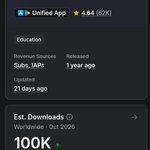
holy f*ck, how is a 12-second screen recording pulling 235.1k views?
the app is Tenmin, an AI language tutor, and this video makes you feel the product in 12 seconds.
here's the concept:
-> the hook is a pain point as a caption, "Why is learning Korean so hard? pinned on screen the whole video
-> it cuts between her face cam and a screen recording of the AI voice tutor, so you get the reaction and the product together
-> she asks the AI to say "I'm going to the market" in Korean, and it answers with a curse word instead
-> she loses it ("AHAHAHAHAHHA"), the AI replies "Great choice!!", and she ends with "i'll come with you"
-> no pitch, no feature list, no "download now" voiceover. you watch the app talk back and you want to try it
and the numbers
behind the app say it's working:
-> est. 100K downloads worldwide in Oct 2026
-> est. $40K revenue after fees in the same month
-> 4.64 stars across 62K ratings
-> only 1 year old, running on subs and in-app purchases
it works because:
-> the pain point hooks everyone who has ever tried to learn a language
-> the AI's chaotic answer is the punchline, so people rewatch and send it to a friend
-> she's reacting, not selling, so it reads like content instead of an ad
-> the AI voice orb on screen shows the product's core feature without explaining it
and it's easy to repeat:
-> same format every time: pain-point caption, ask the AI something, it gives a wild answer, she reacts
-> swap the language or the question and you have a new video, same setup
you can do the same for almost any saas:
-> a design tool: "Why is making a logo so hard?" then the AI generates one that's hilariously wrong, reaction cut
-> a writing tool: "Why are cold emails so hard?" then the AI drafts one so unhinged you have to read it out loud
-> a finance app: "Why is budgeting so hard?" then the AI's savings plan is "just stop eating", reaction cut
a real pain point on top, your product reacting on screen, and no ad voice anywhere
DM me "UGC" and I'll show you how we build a UGC system like this for your saas

6
75
One video shouldn't become four identical posts
Repurposing with AI works best when you adapt the message, not duplicate it
From one educational video, you can create:
📌LinkedIn: the main lesson
📌X: one sharp insight
📌Instagram carousel: the key points, slide by slide
📌Email: the full idea
The mistake most businesses make is pasting the same text everywhere. Every platform has its own audience, format and tone.
You can use AI to reshape the message, then review it so it still sounds like you.
Save this for your next content batch, and follow for more practical AI workflows.
6
56