

Trying to make sense of the world and the forces at play. Working on a solutions book. Make the best of each moment. #CoticSeal (click latest) = factchecked
UK
Joined September 2008
- Tweets64.3K
- Following3.1K
- Followers857
- Likes57.9K





Cotic retweeted
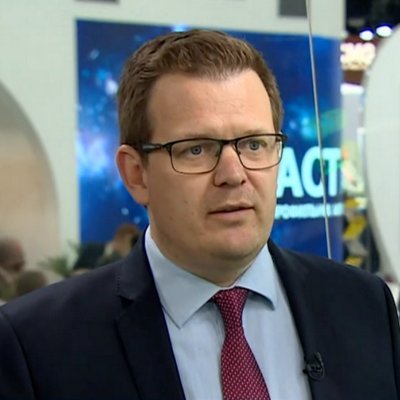
A big thanks to Integrity Media for the journalism prize awarded to me for “talented and fearless investigative journalists.” I am deeply honoured and grateful for the recognition.

Cotic retweeted

Let's be precise about what "sanctions" actually means when applied to a poor country for decades.
It means medicine that cannot be imported.
It means equipment that cannot be purchased.
It means international financial systems that cannot be accessed.
It means every transaction costs more, takes longer, carries more risk.
It means foreign companies cannot invest without legal exposure.
It means the development that might otherwise happen, doesn't.
It means children who might have survived, don't.
Then, after decades of this, someone flies in and writes a report about why the country is struggling.
The report discusses governance. It discusses culture. It discusses the particular challenges this particular nation faces.
It does not discuss the sanctions.
Or it mentions them briefly, in a subordinate clause, as a "contributing factor."
Then it concludes.
Then it is cited.
Then it becomes the conventional wisdom about why this country cannot seem to develop.
The people who wrote the sanctions are not in the room when the conclusion is drawn.
They are elsewhere, pointing at the conclusion as proof that the sanctions were justified.
Cotic retweeted

Jeffrey Sachs says he warned the White House in December 2021 that its policy would lead to war in Ukraine, and Jake Sullivan told him: "Oh, no, Jeff, don't worry, there won't be a war."
Cotic retweeted
Glenn Diesen on European leaders: "They want a seat at the table, but they don't want to talk."
"Whenever they have proposals for peace, what is it? Oh, Ukraine joins NATO, Russia pays reparations, Russia hands over its leadership to The Hague."
Cotic retweeted

The sheer ignorance of 49-yr-old bimbo, Kaja Kallas, VP of the European Commission who believes Russia and China's role in winning WW2 is 'news to her.'
Russia lost 25 million lives. China lost 20 million.
A demonstration of the quality of the EU leadership taking us to war.

‘Ms. Kallas, go back to primary school and study history’
Professor Victor Gao BLASTS Kallas for saying China's and Russia's role in defeating fascism was news to her
‘China sacrificed more than 35 million lives in defeating Japanese fascism’
Full interview: @RickSanchezTV
Cotic retweeted

A recurring theme in how Ukraine proxy war cheerleaders engage with dissenting voices: lie about their views.

David Marples’s review of @I_Katchanovski’s book is now being widely shared as some devastating debunking. Not only does it not engage substantively with any (literally any) of Ivan’s arguments, but it also contains an incomprehensible misrepresentation of the book on easily checkable factual points.
For example, the review claims that the book never uses the term “Russian invasion,” while an automatic search shows that this exact phrase appears 139 times, which means on every second or third page of the book.
The review claims that the first seven chapters, effectively half of the book, “regurgitate” Ivan’s previous book on the Maidan massacre. However, most of the content discussed in these chapters is not dealt with in any significant detail in the previous book.
It is pretty obvious that this is a lazy and sloppy review. Why pretend otherwise?
After massively signing on to the conspiracy theory about Elon Musk and to statements that, literally, to understand the war in Ukraine one needs to read less about Ukraine, so many in the “field” continue down the rabbit hole of intellectual and moral bankruptcy. The collective gaslighting about this review is a new low.


Cotic retweeted

Did you know that back in 2001, USAID-backed Internews was very busy shaping Ukraine’s media landscape, training 1900 journalists and propping up 203 TV stations and 126 radio stations?
Their reach:
50 million Ukranian TV viewers and 18 Ukranian million radio listeners.
This all to push a pro-Western agenda, paving the way for EU expansion and NATO enlargement.
This wasn’t "support"
This was full-scale narrative control.
They call it "Independent Broadcasting"
😂😂😂

Cotic retweeted
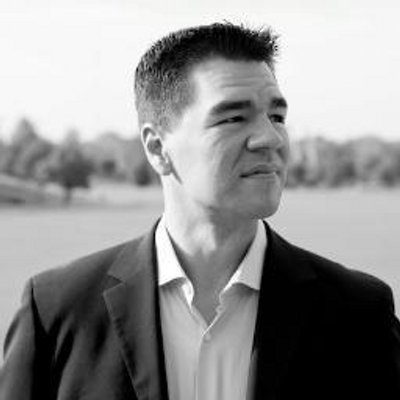
Reposting my interview with the former head of the German Armed Forces, who held the highest military position within NATO.
One question: Why does the media always show zero interest in leading experts if they deviate from the government's war narrative?
glenndiesen.substack.com/p/f…

Cotic retweeted

This week, I talked to the parents and grandparents about GTA 6. But today, I want to talk to the young men playing it. The men who have spent their entire lives being talked about rather than being talked to. These men have always heard the same story, that they are falling behind, that they’re in crisis. And now, that narrative is back at it again.
I don’t play video games myself, but I understand the process. You start the game, fail a mission, and try again. I’ve heard that in games like Elden Ring, you might fail a hundred times to the same boss. Then, when you finally beat the boss, there’s always another challenge to fail at until you figure it out.
Nobody is paying you. Nobody is grading you. You’re just putting in the work, studying the patterns and making adjustments until you finally succeed.
There’s a word for this: mastery. That’s the exact “fail till you succeed” mindset you need if you want to be successful in this life.
The difference is that in a game, you can fail at 2 a.m. and no one sees you start over. In real life, there’s no reset button, and it’s scary to go after your goals when others can see if you fail. I understand why that feels intimidating. But failure never stopped you from saving Peach from Bowser’s castle. Every time you saw the game over screen, you picked up the controller again.
So to the young men out there gaming this week, go ahead and have a good time. Just do me one favor. Before the week is up, pick one thing in your real life, say it out loud to someone who will actually hold you to it, and go and beat that level.
Cotic retweeted

Anyone who has ever wondered where McCain, Pyatt, and Nuland were watching the Maidan from...
It’s the 5th floor of the occupied trade union building—the Right Sector’s headquarters—where Paruby had set up his operations center.
@I_Katchanovski @HavryshkoMarta @anatoliisharii

Cotic retweeted

Norwegian professor Glenn Diesen says he is leaving the country in ‘exile’
Diesen says he resigned from his university after six years of intimidation, canceled events and an NGO publishing a photo of his home online.
Cotic retweeted

It is difficult to exaggerate the importance of this admission. These are acts of war against four countries three of them nuclear armed, against none of which has war been declared. And with one of which, China, at OUR request we LAST YEAR entered a “Strategic Partnership”. If we had a parliament we would RIGHT NOW be requiring the Prime Minister to make an Emergency Statement.

A top commander for the first time reveals that the UK is conducting offensive cyber operations against Russia, China, Iran and North Korea.
General Sir Rob Magowan says the cyber risk to the nation is "significant" but that Britain’s cyber force will meet "threat with threat".
@haynesdeborah
🔗 Download and subscribe to Defence Insider: trib.al/HvncSoC
Cotic retweeted

These people never really left 4th grade.
Leaving aside Obama's partnership with Putin on Syria, the Iran Deal, Afghanistan, space exploration and more:
How primitive and dumb do you have to be to think that this picture captures anything meaningful let alone everything?


Cotic retweeted

Evidence of US-led regime change during Maidan in Ukraine includes admissions by Obama, Biden, McCain, Murphy, Ukrainian politicians, etc. My open access book "The Russia-Ukraine and its Origins": link.springer.com/book/10.10…
"There is also various evidence of the US-led regime change during the Maidan in Ukraine. The Ukrainian foreign minister during Euromaidan testified at the Maidan massacre rial in Ukraine in 2019 that a senior US State Department official Victoria Nuland in her meeting with him and Yanukovych at the very start of Euromaidan on December 5, 2013, proposed to sack the Mykola Azarov cabinet, restore the constitution of 2004, and to conduct early parliamentary and presidential elections (see Zasіdannia vіd 3.12.2019 2019). This de facto meant a peaceful regime change and the same points as were the demands of the Maidan opposition. Yanukovych eventually accepted all these US administration demands and first fired Azarov and his Cabinet of Ministers and then signed the agreement with the Maidan opposition leaders and French, German, and Polish foreign ministers on February 21, 2014 (Katchanovski, 2025a).
An intercepted telephone call between Victoria Nuland and the US ambassador in Ukraine prior to February 20, 2014 shows them discussing which specific Maidan opposition leaders, specifically Arseniy Yatseniuk, can be in the Ukrainian government after Yanukovych offered the positions in his government to the opposition leaders following the sacking of the Azarov and the Cabinet of Ministers (Marionetki, 2014). John McCain, the influential US Senator, stated in his CNN interview during his and other US politicians visit to Kyiv in December 2013 that they were trying to “bring about a peaceful transition” in Ukraine (i.e., the government change) (see McCain, 2013).
Similarly, US Senator Chris Murphy, who also backed the Maidan anti-government protests during his visit to Ukraine, stated shortly after the Maidan:
I think it was our role, including sanctions and threats of sanctions, that forced, in part, Yanukovych from office… We have not sat on the sidelines. We have been very much involved. Members of the Senate have been there. Members of the State Department have been on the Square. The Obama administration passed sanctions. The Senate was prepared to pass its own set of sanctions, and as I’ve said, I think that the clear position of the United States has, in part, been what has helped lead to this change in regime… If, ultimately, this is a peaceful transition to a new government in Ukraine, it will be the U.S. on the streets of Ukraine who will be seen as a great friend in helping make that transition happen. (Murphy, 2014)
Nuland and various other senior US and EU officials and politicians also publicly supported Euromaidan by visiting the Maidan. US and EU leaders also publicly condemned use of force by the Yanukovych government against the Maidan protesters and threatened to impose sanctions. Yanukovych ordered to stop such attempts by the police and the Internal Troops to clear the Maidan on December 10, in late January, and on February 18 in part because of such pressure from the Western leaders (Katchanovski, 2025a).
US President Barack Obama stated that “we had brokered a deal to transition power in Ukraine” after the massacre and before Yanukovych fled, but the US president or other American government officials did not release any specific information about the nature of this involvement (PRES, 2015). Yanukovych and Putin stated that right after the Maidan massacre there was an agreement with Obama but that the US president broken it. Mykhailo Dobkin, the former governor of Kharkiv Region, confirmed this. He said that when they met in Kharkiv in February 2014, Yanukovych told him that he had guarantees from Obama and Putin concerning the implementation of the agreement which he signed (Dobkin, 2017). Putin and the Russian Foreign Minister Lavrov suggested that Obama pushed for signing a deal between Yanukovych and the Maidan leaders but that the Maidan opposition broke the deal and seized the power the next day (see Obama, 2019). The deal signed on February 21, 2014 stipulated that the Yanukovych government would not use force against the Maidan and that the Maidan forces would disarm.
Then US Vice President Biden revealed in his memoirs that during the Maidan massacre he called Yanukovych and told him that “it was over; time for him to call off his gunmen and walk away” and “he shouldn’t expect his Russian friends to rescue him from this disaster,” that “Yanukovych had lost the confidence of the Ukrainian people, I said, and he was going to be judged harshly by history if he kept killing them.” Biden wrote that “the disgraced president fled Ukraine the next day—owing to the courage and determination of the demonstrators—and control of the government ended up temporarily in the hands of a young patriot named Arseniy Yatsenyuk.” The US vice president also revealed that he “had been warning him for months to exercise restraint in dealing with his citizens.” (Biden, 2017).
The far-right Svoboda party leader and the deputy head of the Ukrainian parliament from Svoboda stated in their separate interviews that a Western government representative during their and other Maidan leaders meeting told them a few weeks before the Maidan massacre that the Western governments would turn on Yanukovych after casualties among protesters would reach 100 (Braty, 2017, p. 94). The Maidan opposition right after the massacre called the killed Maidan protesters the “Heavenly Hundred.” Some Maidan protesters and other people, who were not on the Maidan and died from illnesses and other causes were included in the “Heavenly Hundred” to bring the number of the victims to 100. The US and other Western governments blamed the Yanukovych government and his forces for the massacre of the Maidan protesters. They also immediately recognized the new Maidan government after the seizure of the presidential administration and the parliament by the Maidan Self-Defense and the parliament vote to remove Yanukovych even though such actions violated the agreement signed on February 21, 2014 by Yanukovych, the Maidan opposition leaders, and representatives of France, Germany, and Poland which stipulated withdrawal of the government forces from downtown Kyiv, disarmament of the Maidan activists, early presidential elections, and the investigation of the Maidan massacre with involvement of the Council of Europe.
There is no publicly available evidence of the direct involvement of the US or other Western governments and forces in the Maidan massacre. But these governments de facto backed the overthrow of the Ukrainian government in spite of evidence that this overthrow was perpetrated by the elements of the Maidan oligarchic and far-right opposition by means of the false-flag mass killing of the Maidan protesters and assassination attempts against Yanukovych.
Ukraine becoming a US client state right after the Maidan is indirect evidence of the US-led regime change. The Ukrainian media, Ukrainian and US officials, and a declassified transcript of a meeting of the National Security and Defense Council of Ukraine also revealed that the US and other Western governments told the Maidan government leaders not to use military force during the Russian annexation of Crimea in order to avoid a war with Russia (See Chapter 4; Katchanovski, 2015; U.S., 2015). The nearly perfect alignment of the Ukrainian and US government policies after the Maidan is also consistent with Ukraine becoming a US client state and remaining during the Russia-Ukraine war. The US administration was involved in the Maidan government decision to use force in the separatist conflict in Donbas (Chapter 5). The use of Ukraine as a proxy for a proxy war with Russia after the Russian invasion of Ukraine on February 24, 2022 and the US and UK blocking of a peace deal to end the war in April 2022 also show that Ukraine was a client state.
Then a member of the Ukrainian parliament from the Poroshenko’s ruling party and the current adviser to President of Ukraine Zelenskyy stated in 2015 that “Pyatt and the U.S. administration have more influence than ever in the history of independent Ukraine.” A rare report in the US media noted that “Americans are highly visible in the Ukrainian political process. The U.S. embassy in Kiev is a center of power, and Ukrainian politicians openly talk of appointments and dismissals being vetted by U.S. Ambassador Geoffrey Pyatt and even U.S. Vice President Joe Biden.” (See Bershidsky, 2015).
Jeffrey Sachs, a world-renowned American economist who was invited to serve as an economic advisor to new prime minister Arsenii Yatseniuk right after the Yanukovych government overthrow, stated that the US government “definitely contributed to the overthrow of Yanukovych… I know this from inside, not just from outside. I know from top people involved in these issues.” (Jeffrey, 2023). Renowned American investigative journalist Seymour Hersh said based on his insider sources in the US intelligence and the government: “We certainly did overthrow [of the Ukrainian government] with a lot more American involvement than the press knows about right now.” (CN, 2023).
Various evidence shows US administration involvement in appointments and dismissals of top Ukrainian government officials and in key policy decisions in Ukraine since the Maidan. For example, the Ukrainian media reported that then US Vice President Joe Biden requested to put Arsenii Yatseniuk, Valentyn Nalyvaichenko, and foreigners in the Ukrainian government (Mostovaia, 2015). Yatseniuk became the prime minister, Nalyvaichenko the head of the Security Service of Ukraine, and the former president of Georgia and his former Georgian government officials occupied various positions in the Ukrainian state. Ukrainian media reports and tapes of phone calls between then US Vice President Joe Biden and President of Ukraine Petro Poroshenko revealed that he had say in Poroshenko’s decision to dismiss Yatseniuk as prime minister and in appointing his successor. The tapes, Ukrainian media reports, and public admission by Biden showed that he was involved in dismissal of the Prosecutor General of Ukraine and approval of his successor’s appointment (See FLASHBACK, 2019; Listen, 2020; Mostovaia, 2015, 2016).
The declassified transcript of the Trump and Zelenskyy phone call shows the same client-patron relationship between Ukraine and the United States (Read, 2019). The client-patron relationship between Ukraine and the US enabled the use of Ukraine as a US proxy during the Russia-Ukraine war (See Chapter 9)."

Cotic retweeted

As a 🇫🇮, I hold this view:
We have been subjected to steadily intensifying campaigns of fear, propaganda, and coercion pushing us into globalist agendas without genuine public consent.
The portrayal of 🇷🇺 as our worst enemy is the latest.
I don’t agree.
🇫🇮🤝🏻🇷🇺
#notourwar
Cotic retweeted

There are approximately 43,500 head teachers and principals working in the United Kingdom. Yet I was the only serving headteacher or principal to publicly question the Covid vaccine rollout to children.
Others privately agreed with me but stayed silent out of fear of reprisals.
Cotic retweeted
The New York Times reports that prominent American figures, including Megyn Kelly and Elon Musk, have publicly challenged Russell Brand's rape conviction, raising serious questions about the verdict and the circumstances surrounding his prosecution.
The newspaper reports that Kelly told her 4.1 million YouTube subscribers she did not believe the charges and was not obliged to accept the jury's conclusions. She described Brand as an influential conservative commentator and suggested he had been politically targeted.
Elon Musk also questioned the prosecution of allegations dating back more than a decade, describing the legal standard as 'a crazy legal standard'.
The New York Times itself acknowledges that Brand had become an influential anti-establishment figure, with millions of followers across YouTube, X and Rumble.
There are also the following issues surrounding the case:
No DNA, forensic evidence or CCTV footage was reportedly presented to establish the alleged offences.
The allegations concerned events dating back more than 20 years, raising questions about the reliability of memory.
Some witness accounts reportedly changed over time.
Text message exchanges were reportedly reconstructed from memory rather than verified against original records.
The burden of proof rests with the prosecution. Guilt must be established beyond reasonable doubt. And it is entirely possible that the verdict, regardless of the punishment, is correct.
However, does the British state have an interest in silencing Russell Brand, a prominent anti-war and anti-establishment voice?
Reports of efforts to shut down his social media channels would suggest that the establishment wishes to silence him.
Meanwhile, in Britain, serious questions remain about the decades-long failure of the authorities to protect vulnerable young girls from predominantly Pakistani-heritage rape gangs, the extent of institutional cover-ups, and the lack of meaningful justice for the victims.
There have also been cases in which foreign nationals, including illegal immigrants, have received sentences for rape that have provoked public outrage, despite convictions supported by DNA and other physical evidence.
Why does the British establishment appear so determined to pursue some offenders while having failed so catastrophically to protect the victims of others?
nytimes.com/2026/11/09/arts/…

Cotic retweeted
Elon may have been the catalyst for exposing double standards and media propaganda for the masses once again, but there’s also plenty of academic work presenting the evidence:

Evidence of US-led regime change during Maidan in Ukraine includes admissions by Obama, Biden, McCain, Murphy, Ukrainian politicians, etc. My open access book "The Russia-Ukraine and its Origins": link.springer.com/book/10.10…
"There is also various evidence of the US-led regime change during the Maidan in Ukraine. The Ukrainian foreign minister during Euromaidan testified at the Maidan massacre rial in Ukraine in 2019 that a senior US State Department official Victoria Nuland in her meeting with him and Yanukovych at the very start of Euromaidan on December 5, 2013, proposed to sack the Mykola Azarov cabinet, restore the constitution of 2004, and to conduct early parliamentary and presidential elections (see Zasіdannia vіd 3.12.2019 2019). This de facto meant a peaceful regime change and the same points as were the demands of the Maidan opposition. Yanukovych eventually accepted all these US administration demands and first fired Azarov and his Cabinet of Ministers and then signed the agreement with the Maidan opposition leaders and French, German, and Polish foreign ministers on February 21, 2014 (Katchanovski, 2025a).
An intercepted telephone call between Victoria Nuland and the US ambassador in Ukraine prior to February 20, 2014 shows them discussing which specific Maidan opposition leaders, specifically Arseniy Yatseniuk, can be in the Ukrainian government after Yanukovych offered the positions in his government to the opposition leaders following the sacking of the Azarov and the Cabinet of Ministers (Marionetki, 2014). John McCain, the influential US Senator, stated in his CNN interview during his and other US politicians visit to Kyiv in December 2013 that they were trying to “bring about a peaceful transition” in Ukraine (i.e., the government change) (see McCain, 2013).
Similarly, US Senator Chris Murphy, who also backed the Maidan anti-government protests during his visit to Ukraine, stated shortly after the Maidan:
I think it was our role, including sanctions and threats of sanctions, that forced, in part, Yanukovych from office… We have not sat on the sidelines. We have been very much involved. Members of the Senate have been there. Members of the State Department have been on the Square. The Obama administration passed sanctions. The Senate was prepared to pass its own set of sanctions, and as I’ve said, I think that the clear position of the United States has, in part, been what has helped lead to this change in regime… If, ultimately, this is a peaceful transition to a new government in Ukraine, it will be the U.S. on the streets of Ukraine who will be seen as a great friend in helping make that transition happen. (Murphy, 2014)
Nuland and various other senior US and EU officials and politicians also publicly supported Euromaidan by visiting the Maidan. US and EU leaders also publicly condemned use of force by the Yanukovych government against the Maidan protesters and threatened to impose sanctions. Yanukovych ordered to stop such attempts by the police and the Internal Troops to clear the Maidan on December 10, in late January, and on February 18 in part because of such pressure from the Western leaders (Katchanovski, 2025a).
US President Barack Obama stated that “we had brokered a deal to transition power in Ukraine” after the massacre and before Yanukovych fled, but the US president or other American government officials did not release any specific information about the nature of this involvement (PRES, 2015). Yanukovych and Putin stated that right after the Maidan massacre there was an agreement with Obama but that the US president broken it. Mykhailo Dobkin, the former governor of Kharkiv Region, confirmed this. He said that when they met in Kharkiv in February 2014, Yanukovych told him that he had guarantees from Obama and Putin concerning the implementation of the agreement which he signed (Dobkin, 2017). Putin and the Russian Foreign Minister Lavrov suggested that Obama pushed for signing a deal between Yanukovych and the Maidan leaders but that the Maidan opposition broke the deal and seized the power the next day (see Obama, 2019). The deal signed on February 21, 2014 stipulated that the Yanukovych government would not use force against the Maidan and that the Maidan forces would disarm.
Then US Vice President Biden revealed in his memoirs that during the Maidan massacre he called Yanukovych and told him that “it was over; time for him to call off his gunmen and walk away” and “he shouldn’t expect his Russian friends to rescue him from this disaster,” that “Yanukovych had lost the confidence of the Ukrainian people, I said, and he was going to be judged harshly by history if he kept killing them.” Biden wrote that “the disgraced president fled Ukraine the next day—owing to the courage and determination of the demonstrators—and control of the government ended up temporarily in the hands of a young patriot named Arseniy Yatsenyuk.” The US vice president also revealed that he “had been warning him for months to exercise restraint in dealing with his citizens.” (Biden, 2017).
The far-right Svoboda party leader and the deputy head of the Ukrainian parliament from Svoboda stated in their separate interviews that a Western government representative during their and other Maidan leaders meeting told them a few weeks before the Maidan massacre that the Western governments would turn on Yanukovych after casualties among protesters would reach 100 (Braty, 2017, p. 94). The Maidan opposition right after the massacre called the killed Maidan protesters the “Heavenly Hundred.” Some Maidan protesters and other people, who were not on the Maidan and died from illnesses and other causes were included in the “Heavenly Hundred” to bring the number of the victims to 100. The US and other Western governments blamed the Yanukovych government and his forces for the massacre of the Maidan protesters. They also immediately recognized the new Maidan government after the seizure of the presidential administration and the parliament by the Maidan Self-Defense and the parliament vote to remove Yanukovych even though such actions violated the agreement signed on February 21, 2014 by Yanukovych, the Maidan opposition leaders, and representatives of France, Germany, and Poland which stipulated withdrawal of the government forces from downtown Kyiv, disarmament of the Maidan activists, early presidential elections, and the investigation of the Maidan massacre with involvement of the Council of Europe.
There is no publicly available evidence of the direct involvement of the US or other Western governments and forces in the Maidan massacre. But these governments de facto backed the overthrow of the Ukrainian government in spite of evidence that this overthrow was perpetrated by the elements of the Maidan oligarchic and far-right opposition by means of the false-flag mass killing of the Maidan protesters and assassination attempts against Yanukovych.
Ukraine becoming a US client state right after the Maidan is indirect evidence of the US-led regime change. The Ukrainian media, Ukrainian and US officials, and a declassified transcript of a meeting of the National Security and Defense Council of Ukraine also revealed that the US and other Western governments told the Maidan government leaders not to use military force during the Russian annexation of Crimea in order to avoid a war with Russia (See Chapter 4; Katchanovski, 2015; U.S., 2015). The nearly perfect alignment of the Ukrainian and US government policies after the Maidan is also consistent with Ukraine becoming a US client state and remaining during the Russia-Ukraine war. The US administration was involved in the Maidan government decision to use force in the separatist conflict in Donbas (Chapter 5). The use of Ukraine as a proxy for a proxy war with Russia after the Russian invasion of Ukraine on February 24, 2022 and the US and UK blocking of a peace deal to end the war in April 2022 also show that Ukraine was a client state.
Then a member of the Ukrainian parliament from the Poroshenko’s ruling party and the current adviser to President of Ukraine Zelenskyy stated in 2015 that “Pyatt and the U.S. administration have more influence than ever in the history of independent Ukraine.” A rare report in the US media noted that “Americans are highly visible in the Ukrainian political process. The U.S. embassy in Kiev is a center of power, and Ukrainian politicians openly talk of appointments and dismissals being vetted by U.S. Ambassador Geoffrey Pyatt and even U.S. Vice President Joe Biden.” (See Bershidsky, 2015).
Jeffrey Sachs, a world-renowned American economist who was invited to serve as an economic advisor to new prime minister Arsenii Yatseniuk right after the Yanukovych government overthrow, stated that the US government “definitely contributed to the overthrow of Yanukovych… I know this from inside, not just from outside. I know from top people involved in these issues.” (Jeffrey, 2023). Renowned American investigative journalist Seymour Hersh said based on his insider sources in the US intelligence and the government: “We certainly did overthrow [of the Ukrainian government] with a lot more American involvement than the press knows about right now.” (CN, 2023).
Various evidence shows US administration involvement in appointments and dismissals of top Ukrainian government officials and in key policy decisions in Ukraine since the Maidan. For example, the Ukrainian media reported that then US Vice President Joe Biden requested to put Arsenii Yatseniuk, Valentyn Nalyvaichenko, and foreigners in the Ukrainian government (Mostovaia, 2015). Yatseniuk became the prime minister, Nalyvaichenko the head of the Security Service of Ukraine, and the former president of Georgia and his former Georgian government officials occupied various positions in the Ukrainian state. Ukrainian media reports and tapes of phone calls between then US Vice President Joe Biden and President of Ukraine Petro Poroshenko revealed that he had say in Poroshenko’s decision to dismiss Yatseniuk as prime minister and in appointing his successor. The tapes, Ukrainian media reports, and public admission by Biden showed that he was involved in dismissal of the Prosecutor General of Ukraine and approval of his successor’s appointment (See FLASHBACK, 2019; Listen, 2020; Mostovaia, 2015, 2016).
The declassified transcript of the Trump and Zelenskyy phone call shows the same client-patron relationship between Ukraine and the United States (Read, 2019). The client-patron relationship between Ukraine and the US enabled the use of Ukraine as a US proxy during the Russia-Ukraine war (See Chapter 9)."