

Web3 Creator•Alpha Researcher • KOL Manager @OfficialSUNio & @trondao @justinsuntron Ambassador Growth•Marketing•Community 📩Open for Promos & Partnerships 💌
Joined February 2025
- Tweets12.6K
- Following11K
- Followers10.2K
- Likes6.6K





Pinned Tweet
🚀 𝗝𝗨𝗦𝗧𝗜𝗡 𝗦𝗨𝗡 & 𝗧𝗥𝗢𝗡: 𝗦𝗛𝗔𝗣𝗜𝗡𝗚 𝗧𝗛𝗘 𝗙𝗨𝗧𝗨𝗥𝗘 𝗢𝗙 𝗗𝗜𝗚𝗜𝗧𝗔𝗟 𝗣𝗔𝗬𝗠𝗘𝗡𝗧𝗦
TRON began with a vision of a more decentralized internet.
Justin Sun founded the project in 2017 to advance that ambition.
Since then, TRON has developed into a major blockchain ecosystem.
Stablecoin transfers, DeFi, and digital payments are central to its growth.
Its long-term direction focuses on accessible global blockchain infrastructure.
**1️⃣ 𝗧𝗵𝗲 𝗚𝗿𝗼𝘄𝘁𝗵 𝗢𝗳 𝗧𝗥𝗢𝗡**
Network expansion reflects the growing role of blockchain infrastructure.
🔹 TRON has surpassed 300 million user accounts, according to the supplied source.
🔹 The network has processed billions of transactions.
🔹 Its transfer volume has exceeded $17 trillion, as reported in the source.
🔹 Low fees and fast settlement support stablecoin transfer activity.
🔹 Its ecosystem includes DeFi, staking, gaming, and payment applications.
**2️⃣ 𝗧𝗥𝗫 𝗔𝗻𝗱 𝗘𝗰𝗼𝘀𝘆𝘀𝘁𝗲𝗺 𝗔𝗰𝘁𝗶𝘃𝗶𝘁𝘆**
TRX plays an important role in the TRON network. Network usage, DeFi participation, stablecoin activity, and ecosystem development are key factors to monitor when evaluating its broader position. These indicators do not guarantee future token performance.
**3️⃣ 𝗪𝗵𝘆 𝗧𝗥𝗢𝗡 𝗠𝗮𝘁𝘁𝗲𝗿𝘀 𝗙𝗼𝗿 𝗚𝗹𝗼𝗯𝗮𝗹 𝗣𝗮𝘆𝗺𝗲𝗻𝘁𝘀**
Stablecoin transfers have become an important use case for blockchain networks, and TRON has established a significant role in USDT activity. Its combination of transaction infrastructure, decentralized applications, and global accessibility supports its ambition to serve a wider digital economy. Continued adoption will depend on real usage, network reliability, security, and sustainable ecosystem development.
**From its founding vision to its expanding payment infrastructure, TRON's evolution remains worth watching.**
@justinsuntron @trondao #TRONEcoStar

𝗘𝗫𝗣𝗟𝗢𝗥𝗘 𝟯 𝗗𝗜𝗙𝗙𝗘𝗥𝗘𝗡𝗧 𝗪𝗔𝗬𝗦 𝗧𝗢 𝗘𝗔𝗥𝗡 𝗪𝗜𝗧𝗛 𝗨𝗦𝗗𝗗 💎
Stablecoins offer more than just a way to hold value.
They can also provide opportunities to explore different earning strategies.
However, choosing the right platform and understanding its conditions matter.
USDD brings multiple earning opportunities together across exchanges, wallets, and DeFi.
Each route offers different APYs, mechanisms, and participation requirements.
Let's explore three doors to discover what the USDD ecosystem offers.
1️⃣ 𝗘𝘅𝗰𝗵𝗮𝗻𝗴𝗲𝘀
Exchange-based earning provides familiar options for USDD holders. Here are five platforms offering featured opportunities:
🔹 KuCoin – 5% APY through Simple Earn.
🔹 Gate – 5% APY through Flexible Savings.
🔹 LBank – 5% APY through Spot Earn.
🔹 WEEX – 5% APY through Staking.
🔹 CoinDCX – 5% APY through earning products.
These options offer different durations and deposit or withdrawal conditions, with KuCoin also supporting instant swaps.
2️⃣ 𝗪𝗮𝗹𝗹𝗲𝘁𝘀
Wallet-based opportunities create another way to explore USDD earnings. USDD Official offers 4% APY through minting, while Binance Wallet features 7.9% APY through sUSDD and incentives, alongside 5.91% APY through Supply Mining and incentives. Gate DEX also features sUSDD opportunities with advertised rates reaching 9.69% APY. Campaign deadlines and eligibility conditions vary, so checking the latest platform details is essential before participating.
3️⃣ 𝗗𝗲𝗙𝗶 𝗦𝘁𝗿𝗮𝘁𝗲𝗴𝗶𝗲𝘀
For users exploring decentralized finance, USDD opportunities extend beyond traditional savings. LP positions offer 6.06% APY, Pendle PT features 8.8% APY, Pendle YT offers 5.66% APY, and JustLend provides 4% APY through Supply Mining. Morpho introduces a looping strategy where potential returns depend on the number of looping cycles. Each approach has different mechanics and risks.
There is no universal earning strategy. Compare the opportunities, understand the risks, and choose carefully. You can also explore USDD's 1:1 USDT swaps with zero slippage.
Explore more → usdd.io
APYs are variable. Campaign conditions, eligibility, and risks apply. Always verify current details through official platforms.
@USDDecentralize @justinsuntron #TRONEcoStar

33
𝗨𝗡𝗗𝗘𝗥𝗦𝗧𝗔𝗡𝗗𝗜𝗡𝗚 $𝗪𝗜𝗡 𝗕𝗨𝗬𝗕𝗔𝗖𝗞 𝗔𝗡𝗗 𝗕𝗨𝗥𝗡: 𝗧𝗪𝗢 𝗦𝗧𝗘𝗣𝗦, 𝗢𝗡𝗘 𝗧𝗢𝗞𝗘𝗡𝗢𝗠𝗜𝗖𝗦 𝗦𝗧𝗥𝗔𝗧𝗘𝗚𝗬 🔥
When discussing token supply management, two terms often appear together: buyback and burn. Although they are connected, they represent two different operations with different economic implications.
The $WIN buyback-and-burn mechanism is a useful example of why understanding these differences matters.
A token repurchase does not automatically mean that the tokens have been removed from circulation. The process involves two separate stages, and each deserves attention.
🔹 1. Buyback: Acquiring $WIN From The Market
The first stage involves purchasing $WIN tokens using funds allocated to the buyback program.
During this process, tokens are acquired from the market and brought under the program’s control.
However, there is an important distinction: repurchased tokens are not automatically burned. They may still exist in a wallet or designated address until the next operation takes place.
This means a completed buyback alone does not confirm a permanent reduction in token supply.
🔹 2. Burn: Permanently Removing Tokens
The second stage involves burning the repurchased tokens through the appropriate token contract mechanism.
Once a burn transaction is successfully executed and reflected in the contract’s supply accounting, those tokens are permanently removed from the supply.
Unlike an ordinary transfer between wallets, a verified burn represents an actual supply-reduction event.
This is what makes the second stage particularly important when evaluating the effectiveness of a buyback-and-burn strategy.
🔹 3. Why Both Stages Matter
Buyback and burn serve different purposes within the same broader tokenomics strategy.
A buyback demonstrates that tokens have been acquired through the program, while a burn demonstrates that those tokens have subsequently been removed from supply.
Looking at both stages separately provides a more accurate understanding of how the mechanism operates.
🔹 4. Transparency Through On-Chain Verification
Announcements can explain what a project intends to accomplish, but blockchain transactions provide a way to examine what has actually happened.
For $WIN holders and ecosystem observers, several details are worth monitoring:
How many tokens have been repurchased?
How many repurchased tokens have actually been burned?
Are the burn transactions publicly verifiable?
Is the mechanism being executed consistently?
How does the activity affect the reported token supply?
These questions help distinguish between a planned mechanism and measurable execution.
The Bigger Picture
Tokenomics is not simply about reducing numbers or announcing attractive supply-management programs. It is about understanding the economic process, verifying its execution, and evaluating its long-term implications.
A transparent buyback-and-burn mechanism should make it possible for the community to distinguish acquired tokens from permanently removed tokens.
For $WIN, understanding this difference is essential when following its supply-management strategy.
The key takeaway is simple:
Buyback means purchasing tokens. Burn means permanently removing them from supply.
Two different operations, two different outcomes, and both deserve independent verification. 🌐
Do you think transparent on-chain buyback and burn records should be a standard requirement for every token project?
@WINkLink @justinsuntron
#WINkLink #WIN #Tokenomics #Buyback #TokenBurn #Blockchain #TRON #Crypto #TRONEcoStar

30
𝗧𝗛𝗘 𝟰𝟳-𝗧𝗔𝗕 𝗣𝗥𝗢𝗕𝗟𝗘𝗠: 𝗪𝗛𝗘𝗡 𝗜𝗡𝗙𝗢𝗥𝗠𝗔𝗧𝗜𝗢𝗡 𝗢𝗩𝗘𝗥𝗟𝗢𝗔𝗗 𝗠𝗘𝗘𝗧𝗦 𝗗𝗜𝗚𝗜𝗧𝗔𝗟 𝗣𝗥𝗢𝗗𝗨𝗖𝗧𝗜𝗩𝗜𝗧𝗬 🧠💻
Ever opened your browser to complete one simple task and somehow ended up with 47 tabs?
One tab for research, another for checking updates, a few for comparing information, and several more that you promise yourself you’ll read later.
It happens more often than we think.
In today’s digital environment, information is everywhere. We can access articles, market updates, research tools, tutorials, analytics platforms, and countless resources within seconds.
But having access to unlimited information does not automatically make us more productive.
In fact, too much information without proper organization can make it harder to focus, prioritize, and complete meaningful work.
Here are five important lessons behind this everyday digital habit:
🔹 1. Information Is Not The Same As Productivity
Opening multiple resources can create the feeling of progress. However, collecting information is only the beginning. Real productivity comes from understanding what we discover and applying it toward a meaningful objective.
🔹 2. Attention Is A Limited Resource
Every additional tab creates another opportunity for distraction. Constantly switching between research, social media, analytics, and other platforms can interrupt concentration and make simple tasks take longer.
🔹 3. Prioritization Makes The Difference
Not every article, update, or tool deserves immediate attention. Identifying which resources directly support our goals helps reduce unnecessary browsing and keeps important tasks moving forward.
🔹 4. Organization Creates Clarity
Saving useful resources, grouping related information, and closing irrelevant tabs can make digital workflows easier to manage. A structured workspace helps us return to important information without starting the search again.
🔹 5. Execution Turns Knowledge Into Results
The ultimate purpose of research is to produce something valuable. It could be a better decision, a new strategy, useful knowledge, a creative idea, or a completed project.
The Bigger Picture
We are living in an economy where information is abundant, but focused attention is becoming increasingly valuable.
The ability to search, explore, and discover new opportunities is important. However, the ability to filter information and turn it into action is what separates meaningful productivity from endless digital activity.
Technology gives us access to more possibilities than ever before. What matters is how intelligently we use that access.
So, having 47 tabs open before breakfast isn’t necessarily the problem.
The real question is whether those tabs are helping us move closer to our goals or simply keeping us busy.
Curiosity helps us discover more. Focus helps us accomplish more. 🚀
How many browser tabs do you usually have open at once? Are you a 5-tab person or a 47-tab person? 👀
@justinsuntron @WinkLink_Oracle
#DigitalProductivity #InformationOverload #Focus #Technology #Web3 #TRONEcoStar

31
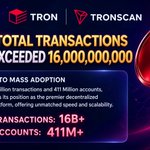
𝗧𝗥𝗢𝗡 𝗖𝗥𝗢𝗦𝗦𝗘𝗦 𝟭𝟲 𝗕𝗜𝗟𝗟𝗜𝗢𝗡 𝗧𝗥𝗔𝗡𝗦𝗔𝗖𝗧𝗜𝗢𝗡𝗦: 𝗔 𝗠𝗔𝗝𝗢𝗥 𝗠𝗜𝗟𝗘𝗦𝗧𝗢𝗡𝗘 𝗙𝗢𝗥 𝗢𝗡-𝗖𝗛𝗔𝗜𝗡 𝗚𝗥𝗢𝗪𝗧𝗛 🚀
Blockchain adoption is not measured by headlines alone. Real progress is also reflected in network activity, user participation, and the ability to support practical applications at scale.
TRON has reached another remarkable milestone, surpassing 16 billion cumulative transactions and recording more than 411 million total accounts, according to the milestone shared by @TRONSCAN_ORG.
These numbers highlight the growing scale of the TRON ecosystem and the amount of activity taking place across its blockchain infrastructure.
But what makes this achievement important?
🔹 1. Massive On-Chain Activity
Crossing 16 billion transactions demonstrates the enormous volume of activity accumulated on the network. Every recorded transaction contributes to TRON’s transparent on-chain history, allowing anyone to explore and analyze network activity through TRONSCAN.
🔹 2. Expanding Ecosystem Participation
With more than 411 million total accounts, TRON continues to demonstrate a significant network footprint. However, account numbers do not necessarily represent unique individuals, since one user can control multiple addresses.
🔹 3. Stablecoin Utility Remains Important
TRON has established a strong position in stablecoin transfers, particularly through USDT. Its infrastructure supports users who need to move digital dollars for payments, transfers, and other financial activities.
🔹 4. Infrastructure That Supports Real Usage
A blockchain needs more than tokens and wallets to remain relevant. It must provide the infrastructure required for transactions, smart contracts, decentralized applications, and efficient digital asset movement.
🔹 5. Transparency Through TRONSCAN
One important advantage of blockchain technology is the ability to examine network activity publicly. TRONSCAN allows users to explore transactions, accounts, and other on-chain information without relying entirely on third-party claims.
The Bigger Picture
The 16-billion-transaction milestone is an important achievement, but the long-term opportunity goes beyond accumulating impressive statistics.
The next stage of blockchain growth will depend on how effectively networks convert infrastructure into everyday utility. Supporting developers, attracting consistent usage, improving accessibility, and enabling real-world financial activity will all play important roles.
TRON’s growing transaction history reflects the scale its ecosystem has reached. The challenge ahead is to continue turning that scale into meaningful services and sustainable adoption.
Because a strong blockchain ecosystem is not built through numbers alone. It is built when people and businesses have practical reasons to use the network.
16 billion transactions mark an impressive milestone. The real story is the utility that can continue to grow from here. 🌐
Congratulations to the entire TRON community! 🔥
@TRONSCAN_ORG @justinsuntron @WinkLink_Oracle
#TRON #TRONSCAN #Blockchain #OnChainActivity #Crypto #Stablecoins #Web3 #TRONEcoStar

31
𝗝𝗨𝗦𝗧𝗟𝗘𝗡𝗗 𝗗𝗔𝗢: 𝗨𝗡𝗗𝗘𝗥𝗦𝗧𝗔𝗡𝗗𝗜𝗡𝗚 𝗧𝗛𝗘 𝘄𝘀𝘁𝗨𝗦𝗗𝗧 𝗠𝗔𝗥𝗞𝗘𝗧 𝗢𝗙𝗙𝗕𝗢𝗔𝗥𝗗𝗜𝗡𝗚 📢
DeFi is not only about launching new markets and expanding opportunities. It is also about knowing when adjustments are necessary to maintain a responsible and sustainable financial ecosystem.
@DeFi_JUST has announced the orderly offboarding of the wstUSDT market on JustLend DAO. As part of this process, the supply and borrow functions for wstUSDT are scheduled to be disabled.
Although this may appear to be a routine protocol update, it is an important development for users who interact with the affected market.
Here are five key points worth understanding:
🔹 1. Changes to Market Accessibility
Once the offboarding update takes effect, users will no longer be able to create new supply or borrowing positions through the wstUSDT market. This marks a change in how the asset can be used within JustLend.
🔹 2. Existing Positions Require Attention
Users who already have wstUSDT deposits or outstanding borrowing positions should carefully review the official instructions. Understanding the applicable withdrawal, repayment, and transition procedures is essential before taking action.
🔹 3. Responsible Risk Management
Lending protocols must continuously evaluate the markets they support. Removing or phasing out a market can be part of managing operational requirements and maintaining a healthier lending environment.
🔹 4. Transparency During Transitions
Clear communication is especially important when protocol changes affect existing users. An orderly offboarding process helps participants understand what is changing and which steps they may need to take.
🔹 5. DeFi Maturity Goes Beyond Growth
A successful lending ecosystem is not measured only by total value locked, transaction activity, or the number of supported assets. Its ability to manage market changes responsibly is equally important.
The Bigger Picture
JustLend DAO plays an important role in the TRON DeFi ecosystem by providing decentralized lending and borrowing services.
As the ecosystem develops, market management becomes an ongoing responsibility. Expanding supported assets can create new opportunities, but reviewing existing markets and making necessary adjustments are also part of maintaining long-term sustainability.
The wstUSDT offboarding highlights an important lesson: responsible DeFi development requires both growth and careful risk management.
For affected users, staying informed is the most important step. Always review the complete official announcement and follow the applicable instructions before making decisions about existing positions.
A strong DeFi protocol is not just one that grows. It is one that knows how to manage change responsibly. 🌐
What do you think matters more for a sustainable lending platform: expanding supported markets or maintaining strong market risk management?
@DeFi_JUST @justinsuntron
#JustLend #JUSTDAO #TRON #DeFi #Lending #Crypto #TRONEcoStar

27
𝗕𝗧𝗧𝗜𝗡𝗙𝗘𝗥𝗚𝗥𝗜𝗗: 𝗪𝗛𝗬 𝗗𝗘𝗖𝗘𝗡𝗧𝗥𝗔𝗟𝗜𝗭𝗘𝗗 𝗔𝗜 𝗡𝗘𝗘𝗗𝗦 𝗦𝗧𝗥𝗢𝗡𝗚 𝗩𝗘𝗥𝗜𝗙𝗜𝗖𝗔𝗧𝗜𝗢𝗡 🤖🔐
Decentralized AI is not just about connecting more GPUs and increasing computing capacity. One of its biggest challenges is making sure that every participant actually delivers the work they are supposed to perform.
Unlike centralized infrastructure, decentralized networks involve independent participants operating across different locations. Some contribute computing resources, others validate results, and developers submit workloads that require reliable execution.
But can every participant be trusted?
Not necessarily.
A computing provider could return incorrect results, manipulate performance records, or attempt to earn rewards without completing tasks properly. In more complex situations, multiple participants could even coordinate to influence the network.
This is why security must be considered from the beginning.
BTTInferGrid highlights an important approach: building decentralized AI infrastructure with the possibility of dishonest participants already considered in its security model.
Here are five important principles behind this concept:
🔹 1. Redundancy Reduces Blind Trust
Depending on a single computing provider creates unnecessary risk. Using multiple independent participants and comparing their outputs can help detect inconsistencies and improve confidence in submitted results.
🔹 2. Verification Is As Important As Computation
Completing an AI task is only part of the process. The network also needs ways to evaluate whether the submitted work is correct. Verification mechanisms and performance assessments help establish accountability.
🔹 3. Economic Incentives Encourage Honest Behaviour
Technology alone cannot solve every security challenge. Staking, rewards, and potential slashing mechanisms can connect participant behaviour with economic consequences, encouraging reliable contributions.
🔹 4. Collusion Must Be Considered
Having more participants does not automatically make a network secure. If several nodes coordinate to manipulate verification, the system may become vulnerable. Independent validation and carefully designed challenge mechanisms are therefore important.
🔹 5. Trust Should Come From Evidence
A decentralized AI network should evaluate the quality of completed work rather than simply assuming that every participant is honest. This is a fundamental requirement for building dependable computing infrastructure.
The Bigger Picture
AI inference is becoming an important part of applications, developer tools, and digital services. As demand for computing resources grows, decentralized infrastructure could offer another way to access distributed GPU capacity.
However, distributing computing power also introduces new responsibilities. Networks must coordinate participants, verify completed tasks, manage incentives, and protect themselves against dishonest behaviour.
That is what makes the BTTInferGrid concept interesting.
BitTorrent’s broader vision goes beyond connecting independent GPUs. It is about bringing computing resources, verification processes, and economic incentives together within a decentralized environment.
Because the future of decentralized AI will not depend only on how much computing power a network can provide.
It will also depend on whether that computing power can be trusted.
More GPUs create capacity. Strong verification creates confidence. 🚀
How important do you think verification will be for the future of decentralized AI?
@BitTorrent @justinsuntron
#BitTorrent #BTT #BTTInferGrid #DecentralizedAI #ArtificialIntelligence #GPUComputing #Web3 #TRONEcoStar

1
46
𝗠𝗘𝗥𝗖𝗨𝗥𝗬𝗢 𝗫 𝗧𝗥𝗢𝗡: 𝗠𝗔𝗞𝗜𝗡𝗚 𝗖𝗥𝗢𝗦𝗦-𝗖𝗛𝗔𝗜𝗡 𝗔𝗦𝗦𝗘𝗧 𝗠𝗢𝗩𝗘𝗠𝗘𝗡𝗧 𝗦𝗜𝗠𝗣𝗟𝗘𝗥 🌐
Moving digital assets between blockchain networks should not feel like navigating a complicated maze.
As the crypto ecosystem continues to expand, users often hold assets across multiple networks. However, transferring value from one blockchain to another can involve several platforms, different interfaces, and uncertainty about the final amount they will receive.
This is why the integration of @Mercuryo_io with @trondao is worth paying attention to.
Mercuryo Swaps brings supported cross-chain asset exchanges into one interface, including routes involving the TRON network. More importantly, users can review their expected payout before confirming a swap.
Here are some key points worth understanding:
🔹 1. More Predictable Swaps
One common concern during asset exchanges is the possibility of receiving a different amount than expected. Mercuryo Swaps offers fixed quotes and zero-slippage execution, helping users understand the expected payout before confirming their transaction.
🔹 2. Easier Cross-Chain Access
Crypto assets exist across different blockchain networks, including Ethereum, Bitcoin, Polygon, BNB Chain, and TRON. Bringing supported swap routes together makes moving between these ecosystems more convenient.
🔹 3. Improved TRON Accessibility
TRON has developed a strong presence in blockchain-based payments and stablecoin transfers. Easier access to supported assets can help users connect with the TRON ecosystem without unnecessary complexity.
🔹 4. A Wider Range of Options
According to Mercuryo’s product announcement, its Swaps launch supports 38 digital tokens, 21 blockchain networks, and more than 1,400 swap routes. This creates more opportunities for users to exchange supported assets through a unified experience.
🔹 5. Better User Experience
The real value of cross-chain infrastructure is not just the number of supported networks. It is how easily users can move their assets, understand transaction outcomes, and access different blockchain ecosystems.
The Bigger Picture
Blockchain adoption requires more than fast transactions and advanced technology. Users also need simple ways to access liquidity and move value across networks.
The collaboration between TRON and Mercuryo highlights an important direction for the industry: reducing friction between different blockchain ecosystems.
As crypto becomes more widely used, convenient asset movement and transparent swap experiences will become increasingly important.
The best infrastructure is the kind that makes complicated processes feel simple.
Do you think seamless cross-chain swaps will become a major factor in the next stage of crypto adoption? 👇
@trondao @Mercuryo_io @justinsuntron
#TRON #Mercuryo #CrossChain #Crypto #Blockchain #DeFi #TRONEcoStar
35
𝗪𝗜𝗡𝗸𝗟𝗶𝗻𝗸 𝗔𝗜: 𝗠𝗔𝗞𝗜𝗡𝗚 𝗥𝗘𝗔𝗟-𝗪𝗢𝗥𝗟𝗗 𝗗𝗔𝗧𝗔 𝗠𝗢𝗥𝗘 𝗠𝗘𝗔𝗡𝗜𝗡𝗚𝗙𝗨𝗟 𝗙𝗢𝗥 𝗕𝗟𝗢𝗖𝗞𝗖𝗛𝗔𝗜𝗡 🌐🤖
The world produces more data than ever before, but the biggest challenge is not simply collecting information. It is understanding which information is accurate, relevant, and useful.
Financial markets, business platforms, APIs, and digital services generate massive amounts of information every day. However, this data can arrive in different formats, contain inconsistencies, or become outdated before an application has a chance to use it.
For blockchain ecosystems, this creates an important challenge. Smart contracts operate according to predefined rules, but many real-world decisions depend on information that exists outside the blockchain.
This is where the combination of AI and oracle technology becomes interesting.
🔹 Understanding Complex Data: AI can help analyze large datasets and identify meaningful patterns that may be difficult to recognize manually.
🔹 Improving Data Interpretation: Organizing information into a more understandable format can help applications work with complex external inputs.
🔹 Connecting Real-World Information: Oracle infrastructure provides a bridge between external data sources and blockchain networks.
🔹 Supporting Smarter Applications: Reliable external information can help decentralized applications make more informed decisions.
🔹 Building Better Web3 Infrastructure: Combining intelligent data processing with blockchain connectivity could expand the possibilities for automated and data-driven services.
WINkLink’s role in the oracle ecosystem makes this topic particularly interesting. As demand for real-world data connectivity grows, the ability to deliver useful external information to blockchain applications remains an important part of Web3 development.
Of course, AI-generated insights are only as dependable as the data and systems behind them. Data verification, security, transparency, and reliability must remain essential priorities.
The bigger opportunity is creating infrastructure where complex real-world information can become easier for decentralized applications to understand and use.
Blockchain connects systems. Oracles connect data. AI can help make that data more meaningful. 🚀
What do you think will have the biggest impact on Web3: AI-powered data analysis or more reliable oracle infrastructure?
@justinsuntron @WinkLink_Oracle
#WINkLink #WINkLinkAI #TRON #AI #Oracle #Blockchain #Web3 #DeFi #TRONEcoStar

2
1
39
𝗪𝗜𝗡𝗸𝗟𝗶𝗻𝗸 𝗔𝗜: 𝗕𝗥𝗜𝗗𝗚𝗜𝗡𝗚 𝗥𝗘𝗔𝗟-𝗪𝗢𝗥𝗟𝗗 𝗗𝗔𝗧𝗔 𝗔𝗡𝗗 𝗕𝗟𝗢𝗖𝗞𝗖𝗛𝗔𝗜𝗡 𝗜𝗡𝗧𝗘𝗟𝗟𝗜𝗚𝗘𝗡𝗖𝗘 🌐🤖
The real world generates an enormous amount of information every moment, but having access to data does not automatically make that information useful.
For blockchain applications, the real challenge is identifying reliable information, understanding its context, and transforming complex external data into something smart contracts can actually use.
This is where the discussion around WINkLink AI becomes interesting.
As blockchain technology continues to evolve, the connection between artificial intelligence, external data, and decentralized infrastructure could create new opportunities for smarter applications.
Here are some important areas to understand:
🔹 Data Intelligence: AI can help process large volumes of information and identify meaningful patterns.
🔹 Information Quality: Reliable data is essential for applications that depend on external sources. Accuracy and consistency should never be overlooked.
🔹 Real-World Connectivity: Oracle infrastructure helps connect blockchain networks with information generated outside the chain.
🔹 Smarter Automation: Better data interpretation can support more informed decisions in automated blockchain environments.
🔹 On-Chain Clarity: Complex real-world information needs to be organized into understandable and usable inputs for decentralized applications.
The bigger picture is that blockchain adoption depends on more than transactions and smart contracts. Applications also need dependable ways to understand what is happening beyond the blockchain itself.
AI and oracle technology represent two important parts of this evolving infrastructure. Their combination could help make external information more accessible and useful for decentralized systems.
However, the quality of the outcome will always depend on the reliability of the underlying data, the security of the infrastructure, and how responsibly these technologies are implemented.
The future of blockchain is not only about connecting networks. It’s also about connecting real-world information with intelligent decision-making. 🚀
What role do you think AI-powered oracle infrastructure will play in the next generation of Web3?
@justinsuntron @WinkLink_Oracle
#WINkLink #WINkLinkAI #TRON #AI #Oracle #Blockchain #Web3 #DeFi #TRONEcoStar

27
𝐖𝐇𝐘 𝐓𝐈𝐌𝐄𝐒𝐓𝐀𝐌𝐏𝐒 𝐀𝐑𝐄 𝐂𝐑𝐔𝐂𝐈𝐀𝐋 𝐅𝐎𝐑 𝐑𝐄𝐋𝐈𝐀𝐁𝐋𝐄 𝐁𝐋𝐎𝐂𝐊𝐂𝐇𝐀𝐈𝐍 𝐃𝐀𝐓𝐀
Data accuracy is important, but accuracy alone is not enough. In blockchain applications, knowing when information was collected and last updated can be just as important as knowing the actual value.
Think about a DeFi platform that depends on external cryptocurrency prices. A smart contract might receive a price of $2,000, but without a timestamp, it cannot easily determine whether that information is fresh or outdated. The market may have already moved significantly since the data was recorded.
This is where time context becomes essential.
Timestamps help blockchain applications evaluate data freshness, identify delayed updates, and understand whether external information is still relevant before using it in critical operations.
There are several reasons why this matters:
🔹 Data Freshness: Applications need to know how recently information was updated.
🔹 Risk Management: Outdated prices can affect lending, borrowing, liquidations, and other DeFi activities.
🔹 Smart Contract Reliability: Time information helps contracts apply freshness checks before acting on external data.
🔹 Transparency: Clear timestamps make it easier to understand when information entered the system.
🔹 Better Decision-Making: Applications can distinguish between current market information and values that may no longer represent real conditions.
This also highlights the importance of decentralized oracle infrastructure. Networks like WINkLink help blockchain applications access external data, while reliable data handling requires attention to both accuracy and timeliness.
As blockchain adoption grows, applications will need more than numbers delivered on-chain. They will need dependable information with enough context to evaluate its usefulness.
A price without a timestamp may look complete, but it can leave an important question unanswered: Is this information still relevant right now?
In a market that changes every second, time context is not just an additional feature. It is an important part of building safer and more dependable blockchain applications. ⏳
@justinsuntron @WinkLink_Oracle
#WINkLink #TRON #Blockchain #DeFi #Oracle #SmartContracts #CryptoData #TRONEcoStar

19
𝗧𝗥𝗢𝗡'𝗦 𝗡𝗘𝗧𝗪𝗢𝗥𝗞 𝗘𝗖𝗢𝗡𝗢𝗠𝗜𝗖𝗦: 𝗨𝗡𝗗𝗘𝗥𝗦𝗧𝗔𝗡𝗗𝗜𝗡𝗚 𝗘𝗡𝗘𝗥𝗚𝗬, 𝗕𝗔𝗡𝗗𝗪𝗜𝗗𝗧𝗛 𝗔𝗡𝗗 𝗧𝗥𝗫
Understanding a blockchain requires more than knowing how to send tokens or interact with applications. It also means understanding the resources that make those interactions possible.
On TRON, three important components shape the network's economic model: Energy, Bandwidth and TRX.
They are closely connected, but each serves a different purpose. Understanding their relationship helps users, developers and businesses make better decisions when interacting with the ecosystem.
𝗕𝗔𝗡𝗗𝗪𝗜𝗗𝗧𝗛: 𝗦𝗨𝗣𝗣𝗢𝗥𝗧𝗜𝗡𝗚 𝗧𝗥𝗔𝗡𝗦𝗔𝗖𝗧𝗜𝗢𝗡 𝗗𝗔𝗧𝗔
Bandwidth is a network resource used to account for the data required to process transactions.
Different transactions consume different amounts of Bandwidth depending on their data requirements.
Users receive a daily free Bandwidth allowance under the network's resource model. Additional resources can be obtained through mechanisms such as staking TRX.
When sufficient Bandwidth is unavailable, TRX may be burned to cover the applicable transaction cost.
This makes Bandwidth an important consideration for people who interact with the network frequently.
𝗘𝗡𝗘𝗥𝗚𝗬: 𝗧𝗛𝗘 𝗥𝗘𝗦𝗢𝗨𝗥𝗖𝗘 𝗕𝗘𝗛𝗜𝗡𝗗 𝗦𝗠𝗔𝗥𝗧 𝗖𝗢𝗡𝗧𝗥𝗔𝗖𝗧𝗦
Energy is primarily required for executing smart contracts.
Activities such as interacting with decentralized applications, transferring certain tokens and using DeFi protocols can consume Energy.
The amount required depends on the operations performed by the smart contract.
Users can obtain Energy by staking TRX or accessing resource services that make available Energy from staked resources.
When insufficient Energy is available, the network may use TRX to cover the corresponding cost.
For developers and frequent DeFi participants, understanding Energy consumption is essential for managing operating expenses.
𝗧𝗥𝗫: 𝗧𝗛𝗘 𝗖𝗢𝗡𝗡𝗘𝗖𝗧𝗜𝗢𝗡 𝗕𝗘𝗧𝗪𝗘𝗘𝗡 𝗨𝗦𝗘𝗥𝗦 𝗔𝗡𝗗 𝗡𝗘𝗧𝗪𝗢𝗥𝗞 𝗥𝗘𝗦𝗢𝗨𝗥𝗖𝗘𝗦
TRX is the native asset that connects participants to the TRON network economy.
Its functions include:
- Paying applicable transaction costs.
- Staking to obtain Energy and Bandwidth.
- Participating in governance through voting.
- Supporting network operations and resource allocation.
This gives TRX an operational role beyond exchange trading.
However, staking resources involves opportunity costs and applicable network conditions. Users should understand the terms before committing their tokens.
𝗪𝗛𝗬 𝗧𝗛𝗜𝗦 𝗠𝗢𝗗𝗘𝗟 𝗠𝗔𝗧𝗧𝗘𝗥𝗦
The Energy and Bandwidth system gives TRON a resource-based approach to transaction costs.
For everyday users, it creates different ways to manage network expenses. For developers, it provides a framework for estimating application costs. For businesses, it makes resource planning an important part of integrating with the network.
It also creates a connection between network activity and TRX economics because certain resource-related fees can result in token burns.
𝗪𝗛𝗔𝗧 𝗨𝗦𝗘𝗥𝗦 𝗦𝗛𝗢𝗨𝗟𝗗 𝗨𝗡𝗗𝗘𝗥𝗦𝗧𝗔𝗡𝗗
Not every transaction consumes the same resources. Smart contract complexity, network conditions and available resources can influence the final cost.
Before interacting with an application, users should check its expected Energy requirements, available Bandwidth and any additional service fees.
𝗧𝗛𝗘 𝗕𝗜𝗚𝗚𝗘𝗥 𝗣𝗜𝗖𝗧𝗨𝗥𝗘
Energy powers smart contract execution. Bandwidth supports transaction processing. TRX connects participants to the resource and governance systems.
Together, these components form an important part of TRON's network economics.
Understanding them turns blockchain participation from guesswork into informed decision-making.
Explore network activity: tronscan.org
@trondao @justinsuntron #TRONEcoStar

30
𝗕𝗧𝗧 𝗘𝗖𝗢𝗡𝗢𝗠𝗬: 𝗛𝗢𝗪 𝗨𝗧𝗜𝗟𝗜𝗧𝗬, 𝗥𝗘𝗩𝗘𝗡𝗨𝗘 𝗔𝗡𝗗 𝗧𝗢𝗞𝗘𝗡𝗢𝗠𝗜𝗖𝗦 𝗪𝗢𝗥𝗞 𝗧𝗢𝗚𝗘𝗧𝗛𝗘𝗥
A sustainable token economy needs more than market demand. It needs real utility, active users, revenue-generating services and transparent economic mechanisms.
That’s what makes BitTorrent’s BTT ecosystem interesting.
1️⃣ REAL-WORLD TOKEN UTILITY
BTT supports different activities across the ecosystem. Through BitTorrent Speed, users can incentivize faster downloads, while BTTC uses BTT for network gas and staking-related participation.
2️⃣ REVENUE FROM NETWORK SERVICES
Decentralized content distribution, storage, blockchain applications and AI infrastructure create opportunities for ecosystem growth.
The key is turning useful services into sustainable economic activity.
3️⃣ REVENUE-BACKED BUYBACK AND BURN
BitTorrent’s first completed buyback-and-burn round used 100% of Q3 2026 decentralized service revenue for BTT repurchases.
21.62 trillion BTT burned
Approximately 2.18% of the total supply was removed through this reported burn.
Official verification: bittorrent.com/btt/buyback-b…
4️⃣ STAKING AND NETWORK PARTICIPATION
BTTC’s staking framework gives BTT holders another way to participate through delegation to validators and the network’s incentive structure.
5️⃣ THE BIGGER CHALLENGE: SUSTAINABILITY
Long-term ecosystem development depends on real adoption, recurring service revenue, network activity and meaningful token utility.
Burning tokens alone does not guarantee price appreciation. Demand, liquidity and broader market conditions still matter.
MY TAKEAWAY
BTT’s long-term economic story is about connecting useful services with network participation, revenue generation and transparent tokenomics.
The real question is how successfully BitTorrent can turn its growing infrastructure into a sustainable digital economy.
Which matters most for BTT’s future: stronger utility, growing service revenue or continued buyback-and-burn activity?
@BitTorrent @justinsuntron
#BitTorrent #BTT #BTTC #Tokenomics #TRONEcoStar

1
36
💚 The stablecoin landscape is evolving, and USDD is becoming part of an important conversation.
As traditional banks increasingly explore stablecoins, crypto-native dollars bring a different perspective to digital finance. Beyond simply holding value, they open opportunities for on-chain yield, seamless transfers, and access to decentralized finance.
⚡ What makes USDD stand out?
🌱 Sustainable on-chain yield opportunities.
🌐 Borderless access to the DeFi ecosystem.
💸 Efficient digital transfers with lower costs.
Thanks to @Cointelegraph for featuring #USDD and bringing more attention to the growing role of crypto-native stablecoins.
The future of digital money isn’t just about moving dollars online. It’s about building an ecosystem where money can move, connect, and create new opportunities.
📖 Read the full article to explore what makes crypto-native dollars different.
💚 USDD — More than a digital dollar. A gateway to on-chain finance.
@USDDecentralize @justinsuntron #TRONEcoStar

💚 WHY PAY MORE WHEN YOU CAN TRANSFER FOR LESS WITH USDD?
In the world of digital payments, transaction fees matter more than many people realize. Whether you’re making occasional transfers or moving funds regularly, even small fee differences can make a significant impact over time.
That’s where USDD brings an interesting advantage to the conversation.
Imagine paying just 0.5 USDD per transfer instead of 1.5 USDT. That’s a substantial difference in transaction costs, with the potential to reduce fees by up to 67% based on the comparison shown.
⚡ Why does this matter?
Lower transaction costs can make frequent transfers more economical. Users can keep more value in their wallets instead of spending as much on network fees.
For everyday users, traders, and people who regularly move stablecoins, affordable transactions can make the overall experience more efficient.
The bigger picture is simple: digital payments should not only be fast and accessible but also cost-effective.
USDD highlights how lower transfer costs can become an important part of the stablecoin experience. When transaction fees are reduced, users have another reason to consider the efficiency of their payment options.
Of course, actual fees can depend on network conditions and transaction methods, so it’s always worth checking the applicable costs before transferring.
💚 Pay less. Transfer smarter. Keep more value.
More transfers, more savings, and a better approach to everyday digital payments.
#TRONEcoStar @justinsuntron @trondao @USDDecentralize

𝗔𝗜𝗡𝗙𝗧 $𝗡𝗙𝗧 𝗢𝗡 𝗝𝗨𝗦𝗧𝗟𝗘𝗡𝗗: 𝗦𝗨𝗣𝗣𝗟𝗬 𝗗𝗘𝗖𝗟𝗜𝗡𝗘𝗦 𝟭𝟰.𝟲% 𝗜𝗡 𝗘𝗜𝗚𝗛𝗧 𝗗𝗔𝗬𝗦 📊
Two consecutive market snapshots can sometimes reveal an interesting change in a lending market.
The latest figures shared by @AINFTcom show a decline in the dollar-denominated supply of $NFT on JustLend between November 3 and November 11.
The reported supply moved from $500.15K to $426.98K during that eight-day period.
That represents a decrease of approximately $73.17K, or 14.6%.
Interestingly, the borrowing APY remained unchanged at 2.34% in both updates.
This combination makes the $NFT lending market worth monitoring as new data becomes available.
1️⃣ 𝗧𝗵𝗲 𝗡𝘂𝗺𝗯𝗲𝗿𝘀 𝗕𝗲𝗵𝗶𝗻𝗱 𝘁𝗵𝗲 𝗖𝗵𝗮𝗻𝗴𝗲
Let's compare the two reported market snapshots:
🔹 November 3: Total supply $500.15K.
🔹 November 11: Total supply $426.98K.
🔹 Absolute supply decline: $73.17K.
🔹 Percentage decline: Approximately 14.6%.
🔹 Borrow APY: 2.34% in both updates.
The most noticeable movement is the reduction in reported supply. At the same time, the borrowing APY did not change between these two observations.
These figures establish a useful starting point for tracking the market's direction.
2️⃣ 𝗪𝗵𝗮𝘁 𝗗𝗼𝗲𝘀 𝗮 𝗟𝗼𝘄𝗲𝗿 𝗦𝘂𝗽𝗽𝗹𝘆 𝗠𝗲𝗮𝗻?
A declining dollar-denominated supply figure does not automatically mean that users are withdrawing their $NFT deposits.
There are several possible explanations. Token price movements can reduce the reported dollar value even when the number of deposited tokens remains unchanged. Actual withdrawals can also contribute to the decline, and both factors can happen simultaneously.
This distinction is important when evaluating lending market activity.
To understand the real situation, I would compare the deposited token quantity, market price, total deposits, and withdrawals across the same reporting dates.
3️⃣ 𝗧𝗵𝗲 𝗡𝗲𝘅𝘁 𝗨𝗽𝗱𝗮𝘁𝗲 𝗪𝗶𝗹𝗹 𝗠𝗮𝘁𝘁𝗲𝗿
The unchanged 2.34% borrowing APY is another interesting detail.
Borrowing rates are important indicators because they help explain the cost of accessing liquidity within a lending market. However, an unchanged APY does not necessarily mean borrowing demand or utilization remained constant.
I would continue tracking three important indicators:
- Total deposited $NFT quantity and its dollar value.
- Total borrowing and market utilization.
- Borrow and supply APY movements.
Together, these measurements would provide a much clearer picture of how the $NFT market is developing on JustLend.
For now, the reported 14.6% supply decline is worth watching, but additional snapshots are necessary before drawing conclusions about market participation.
Numbers become more meaningful when we understand what is actually driving them.
When $NFT supply declines, which metric do you check first: token price, deposited quantity, or actual withdrawals?
@AINFTcom @justinsuntron #TRONEcoStar

944
𝗨𝗦𝗗𝗗 𝗢𝗡 𝗕𝗡𝗕 𝗖𝗛𝗔𝗜𝗡: 𝗔 𝟭𝟬.𝟳𝟲% 𝗗𝗔𝗜𝗟𝗬 𝗝𝗨𝗠𝗣 𝗧𝗛𝗔𝗧 𝗗𝗘𝗦𝗘𝗥𝗩𝗘𝗦 𝗔𝗧𝗧𝗘𝗡𝗧𝗜𝗢𝗡 📈
USDD's expanding multichain presence is becoming an interesting development to follow.
A recent update from @USDDecentralize highlighted a 10.76% daily increase in USDD on BNB Chain, referencing data from @DefiLlama.
A double-digit daily movement naturally attracts attention, especially when it involves a stablecoin expanding across different blockchain ecosystems.
But the real story goes beyond the percentage itself.
Understanding the starting balance, distribution, and continued usage can reveal much more about the development.
For USDD, this is an opportunity to examine how its presence on BNB Chain evolves over time.
1️⃣ 𝗔 𝟭𝟬.𝟳𝟲% 𝗜𝗻𝗰𝗿𝗲𝗮𝘀𝗲 𝗶𝗻 𝗢𝗻𝗲 𝗗𝗮𝘆
The reported movement provides an interesting starting point for examining USDD's BNB Chain presence.
🔹 Reported daily increase: 10.76%.
🔹 Network: BNB Chain.
🔹 Data source referenced: DefiLlama.
🔹 Project reporting the development: USDD.
🔹 Key area to monitor: changes in USDD's onchain balance over subsequent days.
A percentage increase measures relative growth, but the starting balance is equally important. A 10.76% increase from a smaller balance has a different absolute impact than the same percentage applied to a much larger balance.
That is why I would examine both the percentage and the actual USDD supply on BNB Chain.
2️⃣ 𝗠𝘂𝗹𝘁𝗶𝗰𝗵𝗮𝗶𝗻 𝗣𝗿𝗲𝘀𝗲𝗻𝗰𝗲 𝗘𝘅𝗽𝗮𝗻𝗱𝘀 𝗨𝗦𝗗𝗗'𝘀 𝗥𝗲𝗮𝗰𝗵
Stablecoins become more accessible when users can interact with them across multiple blockchain networks.
BNB Chain provides another environment where USDD can potentially reach users, applications, and decentralized finance opportunities.
A growing chain-level balance can be an encouraging indicator, but it should not automatically be interpreted as equivalent growth in active users or transaction activity.
The distinction matters because supply distribution and actual usage measure different aspects of adoption.
3️⃣ 𝗧𝗵𝗲 𝗡𝗲𝘅𝘁 𝗦𝘁𝗲𝗽 𝗜𝘀 𝗠𝗲𝗮𝘀𝘂𝗿𝗶𝗻𝗴 𝗥𝗲𝗮𝗹 𝗨𝘀𝗮𝗴𝗲
For me, the most interesting part comes after the initial increase.
I would monitor whether the additional USDD balance remains on BNB Chain, whether more addresses begin holding it, and whether transfers and decentralized application interactions increase.
Another useful indicator would be the distribution of holdings. A balance concentrated among a few addresses tells a different story from one distributed across a broader group of participants.
Tracking these indicators over several weeks would provide a much stronger understanding of whether the reported growth represents sustained expansion.
USDD's 10.76% daily increase is an interesting data point. The next challenge is determining how much real ecosystem activity develops around it.
Growth gets attention, but consistent usage is what makes stablecoin adoption meaningful.
What would convince you that USDD is gaining genuine traction on BNB Chain: more holders, higher transaction activity, or growing DeFi integration?
@USDDecentralize @justinsuntron #TRONEcoStar


🚀 According to @DefiLlama, ethereum:0x4f8e5de400de08b164e7421b3ee387f461becd1a adoption on BNB Chain is seeing double-digit growth, with a 10.76% increase in just one day! 📈
Why are more users choosing ethereum:0x4f8e5de400de08b164e7421b3ee387f461becd1a on BNB Chain?
💰 Diverse Yield Opportunities — Unlock competitive APYs across DeFi.
🔄 Ample Redemption Liquidity — The PSM mechanism continues to support 1:1 redemptions.
🌐 Multi-chain utility. Unstoppable growth.
Explore ethereum:0x4f8e5de400de08b164e7421b3ee387f461becd1a across multiple chains today! 💚
🔗 usdd.io

53
𝗧𝗥𝗢𝗡 𝗖𝗥𝗢𝗦𝗦𝗘𝗦 $𝟯𝟬 𝗧𝗥𝗜𝗟𝗟𝗜𝗢𝗡 𝗜𝗡 𝗖𝗨𝗠𝗨𝗟𝗔𝗧𝗜𝗩𝗘 𝗧𝗥𝗔𝗡𝗦𝗔𝗖𝗧𝗜𝗢𝗡 𝗩𝗢𝗟𝗨𝗠𝗘 🚀
The scale of a blockchain ecosystem becomes more meaningful when its network activity is examined over time.
TRON has crossed an important milestone, surpassing $30 trillion in cumulative transaction volume by Q3 2026.
This figure represents the enormous amount of value transferred across the network throughout its history.
But the milestone is about more than a large number.
It also highlights TRON's growing role in stablecoin transfers, decentralized finance, and global digital value movement.
Alongside transaction volume, stablecoin supply, TVL, and active addresses provide additional perspectives on the ecosystem's development.
1️⃣ 𝗧𝗵𝗲 $𝟯𝟬 𝗧𝗿𝗶𝗹𝗹𝗶𝗼𝗻 𝗡𝗲𝘁𝘄𝗼𝗿𝗸 𝗠𝗶𝗹𝗲𝘀𝘁𝗼𝗻𝗲
Here are the important indicators highlighted by the Q3 2026 ecosystem update:
🔹 Cumulative transaction volume surpassed $30 trillion.
🔹 Stablecoin supply continued to be an important ecosystem growth indicator.
🔹 Total Value Locked reflects activity across TRON's DeFi infrastructure.
🔹 Active addresses provide insight into network participation.
🔹 Transaction activity demonstrates TRON's role in moving digital value.
Crossing $30 trillion in cumulative volume is a significant milestone because it reflects years of network usage and settlement activity.
2️⃣ 𝗪𝗵𝘆 𝗧𝗿𝗮𝗻𝘀𝗮𝗰𝘁𝗶𝗼𝗻 𝗩𝗼𝗹𝘂𝗺𝗲 𝗧𝗲𝗹𝗹𝘀 𝗮 𝗗𝗶𝗳𝗳𝗲𝗿𝗲𝗻𝘁 𝗦𝘁𝗼𝗿𝘆
One important distinction is the difference between cumulative transaction volume and quarterly transaction volume.
Cumulative volume measures the total value processed over an extended period, while quarterly volume shows activity during a specific reporting window.
Both measurements matter, but they answer different questions.
Stablecoin supply shows how much value is held within the ecosystem. TVL reflects capital deployed across decentralized financial applications. Transaction volume measures how much value moves through the network.
These indicators should be evaluated together rather than treated as interchangeable measures of adoption.
3️⃣ 𝗔𝗰𝘁𝗶𝘃𝗲 𝗔𝗱𝗱𝗿𝗲𝘀𝘀𝗲𝘀 𝗮𝗻𝗱 𝗧𝗵𝗲 𝗡𝗲𝘅𝘁 𝗦𝘁𝗮𝗴𝗲 𝗼𝗳 𝗚𝗿𝗼𝘄𝘁𝗵
Another important part of TRON's development is its active-address activity.
A growing address count can indicate broader network participation, but understanding the quality of that activity requires additional information.
For example, transaction distribution, repeat participation, transfer sizes, and contract interactions can reveal whether network usage is expanding across different types of users and applications.
This is why I would like to see quarterly transaction volume presented alongside cumulative volume, with clear methodology and reporting periods.
Such transparency would make it easier to understand what actually drives TRON's growth.
The $30 trillion milestone establishes the scale of TRON's cumulative settlement activity. The next question is how consistently the network continues to generate meaningful activity.
A major milestone attracts attention. Sustained network usage is what makes the story worth following.
Which metric would you examine first to evaluate TRON's next stage: quarterly transaction volume, stablecoin supply, or active addresses?
@justinsuntron @trondao #TRONEcoStar


TRON surpassed $30 trillion in cumulative transaction volume in Q3 2026. 🌐
The latest ecosystem report highlights continued growth in stablecoin supply, total value locked (TVL), and active addresses, alongside steady network transaction activity.
Read more via @Cointelegraph 👇
cointelegraph.com/press-rele…

22
𝗨𝗦𝗗𝗗 𝗢𝗖𝗧𝗢𝗕𝗘𝗥 𝗥𝗘𝗣𝗢𝗥𝗧: 𝗘𝗫𝗔𝗠𝗜𝗡𝗜𝗡𝗚 $𝟮.𝟮𝗕 𝗜𝗡 𝗖𝗢𝗟𝗟𝗔𝗧𝗘𝗥𝗔𝗟 𝗔𝗡𝗗 𝗦𝗧𝗔𝗕𝗟𝗘𝗖𝗢𝗜𝗡 𝗚𝗥𝗢𝗪𝗧𝗛 📊
Transparency is one of the most important foundations of a stablecoin ecosystem.
The October report from @USDDecentralize provides several figures that deserve attention when evaluating USDD's ecosystem development.
Among them, the reported $2.2 billion in total collateral and 1.5 billion in circulation stand out.
These two numbers provide an important starting point for understanding the relationship between collateral and circulating supply.
The report also highlights sUSDD TVL, USDD's price, and Smart Allocator protocol investment yield.
Together, these metrics offer a broader view of the different activities taking place across the USDD ecosystem.
1️⃣ 𝗧𝗵𝗲 𝗞𝗲𝘆 𝗡𝘂𝗺𝗯𝗲𝗿𝘀 𝗕𝗲𝗵𝗶𝗻𝗱 𝗨𝗦𝗗𝗗
The October report highlights several important ecosystem metrics:
🔹 Total collateral value: $2.2 billion.
🔹 USDD circulation: 1.5 billion.
🔹 sUSDD Total Value Locked: $170.54 million.
🔹 Reported USDD price: $1.
🔹 Smart Allocator protocol investment yield: $33.59 million.
Each metric represents a different part of the ecosystem. Collateral reflects the reported value of supporting assets, circulation represents the amount of USDD in circulation, and sUSDD TVL provides insight into participation in the savings-related ecosystem.
2️⃣ 𝗖𝗼𝗹𝗹𝗮𝘁𝗲𝗿𝗮𝗹 𝗮𝗻𝗱 𝗖𝗶𝗿𝗰𝘂𝗹𝗮𝘁𝗶𝗼𝗻 𝗗𝗲𝘀𝗲𝗿𝘃𝗲 𝗖𝗹𝗼𝘀𝗲 𝗔𝘁𝘁𝗲𝗻𝘁𝗶𝗼𝗻
The relationship between collateral and circulating supply is particularly important when evaluating a stablecoin.
With $2.2B in reported collateral against 1.5B in circulation, the headline figures indicate a substantial reported collateral base relative to the circulating amount.
However, understanding the actual backing requires more than comparing two aggregate numbers. The composition of collateral, valuation methods, asset liquidity, custody arrangements, and reporting timestamps all matter.
A detailed breakdown would help users understand how the collateral position behaves under different market conditions.
3️⃣ 𝗦𝗨𝗦𝗗𝗗 𝗮𝗻𝗱 𝗦𝗺𝗮𝗿𝘁 𝗔𝗹𝗹𝗼𝗰𝗮𝘁𝗼𝗿 𝗘𝘅𝗽𝗮𝗻𝗱 𝘁𝗵𝗲 𝗕𝗶𝗴𝗴𝗲𝗿 𝗣𝗶𝗰𝘁𝘂𝗿𝗲
Another interesting part of the report is the $170.54M sUSDD TVL.
It highlights the scale of participation in the sUSDD ecosystem and makes the savings component an important metric to follow alongside USDD circulation.
The reported $33.59M in Smart Allocator protocol investment yield also deserves attention. Understanding whether this represents monthly yield, cumulative yield, or another reporting measure is essential before comparing it with future reports.
Consistent definitions and reporting periods would make these figures much more useful for long-term analysis.
USDD's October report provides several important data points, but transparent supporting disclosures are what allow the community to evaluate them properly.
Strong stablecoin reporting is not just about impressive numbers. It is about making every number understandable, traceable, and verifiable.
Which metric would you prioritize in the next USDD report: collateral composition, sUSDD growth, or Smart Allocator yield?
@USDDecentralize @justinsuntron #TRONEcoStar

USDD Monthly Report | October 2026
1 / 📈Collateral Data
Total Collateral Value: $2.2B
sUSDD TVL: $170.54M
Total Circulation: 1.5B
Protocol Investment Yield (Smart Allocator): $33.59M
Stablecoin Rank: #10 (CoinMarketCap)
Total Rank: #51 (CoinMarketCap)
Price: $1
2/🎁 TRON DeFi Summer S3 Goes Live on @BinanceWallet, Allowing Users to Participate by Depositing USDD
S3 Key Highlights: No maximum deposit limit per user, flexible deposits and withdrawals, the ability to use deposited assets as collateral, 1:1 USDT → USDD swaps with zero slippage via PSM, and an extended 60-day campaign period for greater flexibility.
Existing S2 participants can seamlessly transition to S3 without withdrawing or redepositing their assets.
3/💡 USDD Releases October Transparency Report
The report highlights key developments, including USDD's circulating supply and reserve assets in October 2026, Smart Allocator fund deployment, USDD Vault ecosystem expansion and diversified yield opportunities, and TokenPocket's support for USDD transfers.
4/🇸🇬 USDD Makes an Appearance at TOKEN2049 Singapore 2026
#USDD joined TOKEN2049 Singapore 2026, where visitors could stop by the booth to claim exclusive USDD merchandise.
USDD also participated in CONNECT, an in-person networking event hosted by @Cointelegraph.
5/🎉 USDD TVL and Circulating Supply Hit New All-Time Highs
USDD's circulating supply surpassed 1.81 billion, while TVL exceeded $2.51 billion, setting new all-time highs twice in a single week.
6/💰 Phase 19 of the sTRX & TRX Vaults Special Campaign Goes Live
The campaign continues to offer users ultra-low stability fees, with just 0.5% for TRX Vault and 1% for sTRX Vault.
7/🌐 USDD and TokenPocket Launch a Community Gas Fee Giveaway
Users transferring USDD on TRON via @TokenPocket_TP can pay Gas fees directly in USDD, with the opportunity to enjoy up to 100% Gas fee subsidies.
8/🚀 USDD × @GateDEX Bonus Pool Gets a Major Boost
An additional 16,000 USDD in rewards has been added to the ongoing Bonus Campaigns across Ethereum and BNB Chain, bringing the combined reward pool to an impressive 154,000 USDD.
9/🌟 USDD Releases Q3 2026 Treasury Highlights
Quarterly revenue reached a new record high of $9.7 million, up 26.7% quarter-over-quarter, with Smart Allocator continuing to generate strong returns.
10/📈 USDD Leads the Top 10 Stablecoin Issuers in Supply Growth
According to a joint report by @RWAFoundation_ and @tokenterminal, USDD recorded a $180.3 million increase in market capitalization in just one week, accounting for 40% of the combined growth among the top 10 comparable stablecoin issuers.
11/🔥 USDD × @BinanceWallet Strategy Season 9 Goes Live
Users can participate in the USDD Strategy through Binance Wallet and share a total reward pool of 700,000 USDD over the 50-day campaign period.
12/🧭 USDD Announces Deeper Integration into the
Upgraded JUST Ecosystem
From overcollateralized minting and 1:1 zero-slippage swaps via PSM to diverse yield opportunities, USDD will continue to enhance liquidity and capital efficiency across the TRON ecosystem.
13/🎃 USDD Launches a Halloween Giveaway
10 lucky winners will each receive an exclusive USDD merchandise gift set, featuring a picnic mat, camping mug, and mouse pad.

35
𝗪𝗜𝗡𝗞𝗟𝗜𝗡𝗞 𝗖𝗢𝗠𝗣𝗟𝗘𝗧𝗘𝗦 𝗜𝗧𝗦 𝗙𝗜𝗥𝗦𝗧 𝗪𝗜𝗡 𝗕𝗨𝗬𝗕𝗔𝗖𝗞 & 𝗕𝗨𝗥𝗡 𝗥𝗢𝗨𝗡𝗗 🔥
A major milestone has arrived for the WINkLink ecosystem.
@WinkLink_Oracle has completed the first round of its WIN buyback and burn program, bringing its revenue-based token strategy into action.
The program began in Q3 2026 with a clear commitment: allocate 100% of WINkLink-generated revenue toward purchasing WIN.
This creates an important connection between the project's revenue generation and its token ecosystem.
Rather than treating revenue and token activity as separate developments, the program introduces a mechanism that connects them.
Now, the first completed round provides a starting point for tracking this commitment over time.
1️⃣ 𝗧𝗵𝗲 𝗙𝗶𝗿𝘀𝘁 𝗖𝗼𝗺𝗽𝗹𝗲𝘁𝗲𝗱 𝗕𝘂𝘆𝗯𝗮𝗰𝗸 𝗥𝗼𝘂𝗻𝗱
Here are the key points behind this development:
🔹 WINkLink has completed its first WIN buyback and burn round.
🔹 The program officially began in Q3 2026.
🔹 The stated policy allocates 100% of WINkLink-generated revenue to WIN purchases.
🔹 Purchased WIN is intended to be burned.
🔹 The completed first round establishes an initial milestone for future quarterly tracking.
The important part is the connection between actual ecosystem revenue and the buyback mechanism. This gives the community a concrete development to follow beyond announcements.
2️⃣ 𝗛𝗼𝘄 𝗥𝗲𝘃𝗲𝗻𝘂𝗲 𝗖𝗼𝗻𝗻𝗲𝗰𝘁𝘀 𝘁𝗼 𝗪𝗜𝗡
The revenue-based approach makes WINkLink's business activity an important part of the token discussion.
As oracle infrastructure supports applications that depend on reliable external data, revenue generation becomes an important metric for evaluating ecosystem development.
Under the announced policy, WINkLink revenue is directed toward buying WIN. This creates a relationship between the project's commercial activity and demand for its native token through the buyback process.
However, understanding the complete mechanism requires looking at the revenue generated, the amount allocated, the purchase execution, and the subsequent burn.
3️⃣ 𝗧𝗿𝗮𝗻𝘀𝗽𝗮𝗿𝗲𝗻𝗰𝘆 𝗪𝗶𝗹𝗹 𝗗𝗲𝗳𝗶𝗻𝗲 𝗙𝘂𝘁𝘂𝗿𝗲 𝗥𝗼𝘂𝗻𝗱𝘀
The first completed round is only the beginning of a longer tracking process.
For every subsequent round, I would like to see a consistent record containing the reporting period, generated revenue, WIN purchased, purchase transactions, and burn transaction references.
These details would help the community independently follow the program and compare different periods.
It is also important to understand that the quantity of WIN purchased can change with market prices and execution timing, even when the revenue allocation policy remains unchanged.
Ultimately, the strength of this initiative will be demonstrated through consistent execution and verifiable reporting.
100% revenue allocation is a significant commitment. Consistent buybacks, completed burns, and transparent records will make that commitment measurable.
What matters most to you when evaluating WINkLink's buyback program: revenue transparency, purchase volume, or verifiable burn transactions?
@WinkLink_Oracle @justinsuntron #TRONEcoStar

📢 Announcement: Completion of the 1st WIN Buyback and Burn
WINkLink has completed Round 1 of its WIN Buyback & Burn program, launched in Q3 2026.
Under the program, 100% of revenue generated by WINkLink is allocated to WIN buybacks.
🔥 Total WIN burned: 67,357,364,510 WIN
Burn details and on-chain transaction records are available here:
🔗 winklink.org/#/announcement/…

30
𝗨𝗦𝗗𝗗 𝗘𝗔𝗥𝗡: 𝗙𝗟𝗘𝗫𝗜𝗕𝗟𝗘 𝗗𝗘𝗙𝗜 𝗘𝗔𝗥𝗡𝗜𝗡𝗚 𝗪𝗜𝗧𝗛 𝗡𝗢 𝗟𝗢𝗖𝗞-𝗨𝗣 𝗔𝗡𝗗 𝟭:𝟭 𝗨𝗦𝗗𝗧 𝗦𝗪𝗔𝗣𝗦 🚀
Flexibility is becoming an important part of the DeFi experience.
Users want more than opportunities to earn on their digital assets. They also want to understand how their funds enter a strategy, how returns are generated, and how easily they can access their assets again.
That is what makes the USDD Earn preview from @USDDecentralize interesting.
The announcement highlights three important features: no lock-up, no caps, and 1:1 swaps with USDT.
Together, these features focus attention on accessibility, flexibility, and the movement of funds.
For anyone exploring stablecoin-based DeFi opportunities, these details deserve a closer look.
1️⃣ 𝗡𝗼 𝗟𝗼𝗰𝗸-𝗨𝗽, 𝗡𝗼 𝗖𝗮𝗽𝘀, 𝗠𝗼𝗿𝗲 𝗙𝗹𝗲𝘅𝗶𝗯𝗶𝗹𝗶𝘁𝘆
The USDD Earn preview highlights features designed to make participation more flexible.
🔹 No lock-up requirement advertised for the strategies.
🔹 No caps advertised on participation.
🔹 1:1 swaps with USDT.
🔹 Curated strategies for users exploring DeFi earning opportunities.
🔹 A stablecoin-focused experience built around USDD.
These features address some common questions users have before entering an earning strategy. They want to know whether their funds are locked, whether participation is restricted, and how they can move between supported assets.
2️⃣ 𝗧𝗵𝗲 𝗪𝗶𝘁𝗵𝗱𝗿𝗮𝘄𝗮𝗹 𝗘𝘅𝗽𝗲𝗿𝗶𝗲𝗻𝗰𝗲 𝗠𝗮𝘁𝘁𝗲𝗿𝘀
No lock-up is an attractive feature, but understanding the actual withdrawal process is equally important.
Users should be able to distinguish between having no fixed-term commitment and receiving funds immediately after requesting a withdrawal. Processing times, liquidity conditions, transaction fees, and network requirements can all influence the experience.
A transparent interface showing withdrawal routes and expected settlement details would make the process easier to understand.
For DeFi users, flexibility should mean having clear information before making decisions, not simply seeing an attractive feature advertised.
3️⃣ 𝗧𝗿𝗮𝗻𝘀𝗽𝗮𝗿𝗲𝗻𝘁 𝗦𝘄𝗮𝗽𝘀 𝗮𝗻𝗱 𝗦𝗺𝗮𝗿𝘁 𝗦𝘁𝗿𝗮𝘁𝗲𝗴𝘆 𝗦𝗲𝗹𝗲𝗰𝘁𝗶𝗼𝗻
The advertised 1:1 USDT swap is another important part of the USDD Earn experience.
However, users should always be able to see the actual conversion quote, applicable fees, supported network, and final amount before confirming a transaction.
The same transparency should apply when selecting an earning strategy. Understanding the underlying mechanism, potential returns, associated risks, and exit conditions helps users make informed decisions.
USDD Earn has an interesting combination of advertised flexibility and stablecoin utility. Its real value will depend on how clearly these features work throughout the complete user journey.
In DeFi, earning opportunities attract attention, but transparent entry and exit processes build confidence.
Which feature matters most to you: no lock-up, no caps, or 1:1 USDT swaps?
@USDDecentralize @justinsuntron #TRONEcoStar

🔥 Finding DeFi yields too complicated? Need a clearer path? We’ve got you covered.
💪 We’ve curated multiple earning strategies to help your stablecoins work smarter and capture every yield opportunity with ease:
🔹 No cap limits
🔹 No lock-up required
🔹 1:1 swaps with USDT, zero slippage
🔹 Long-term returns
Ready to put your funds to work?
Check out this week’s fresh #USDD yield opportunities 👇

20