

Reader. Writer: Poetry, Flash, cnf. Disabled & Unashamed. Latina. Woefully Bad Singer. Sings Anyway. Insta: cj_taylor_writes, Bsky: crystaltaylorsa
Joined July 2018
- Tweets1.4K
- Following633
- Followers316
- Likes2.1K






Crystal Taylor retweeted

Trampoline #27.10 is excited to have poetry by Isabel Chenot, Colleen S. Harris, and Patrick G. Roland.
trampolinepoetry.com/
Take care.

Crystal Taylor retweeted

Please take a moment to check out this lovely review by Carla Sarett of Dancing Backwards Towards Pluperfect--in @TrampolinePoet1 Trampoline Poetry. Thank you, @DiodeEditions for the graphic. trampolinepoetry.com/reviews

ALT person on trampoline with women watching and windmill in black and white
Crystal Taylor retweeted
bringing publications of poems back around for a year end spin:
"funeral arrangements in the crawlspace" published in As It Ought To Be Magazine:
asitoughttobemagazine.com/20…
Crystal Taylor retweeted

Call for PHOTOGRAPHY and VISUAL ART submissions 💫✨️
Theme: Myth & Metaphor
We've gotten a TON of poetry and fiction pieces, but would love to see more photography/visual art submissions!
More info can be found on our website under the Myth & Metaphor tab.

Crystal Taylor retweeted
Looking for a place to submit?
We are open for MYTH and METAPHOR: Reimagine classical myths or create new ones that reflect current issues.
We would love to read your work!
Crystal Taylor retweeted
Thank you so much, Susan, for reading and sharing this!!! 💛💛💛

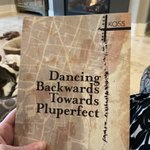
What am I thankful for? writer pals, especially @Koss51209969 and her stunning poetry. Tender and raw and relatable and gorgeously crafted! Highly recommend Koss’ collection of poetry!

Crystal Taylor retweeted

Check out ISSUE 4 of @EpistemicLit

Crystal Taylor retweeted

It’s time to celebrate tiny work with a big impact! We are so thrilled to announce our nominees for the 2024 Best Microfiction: buff.ly/4hX0iUL
Congratulations to @vanessa_hua and @ClaudiaMonpere 🎉

Crystal Taylor retweeted
Grateful to @bodylit for taking two of my poems. bodyliterature.com/2024/11/0…
Crystal Taylor retweeted

Our Autumn Issue is live. Thirteen stories from scarily talented writers to keep you warm and slightly unsettled. Enjoy.
tinymolecules.com/issues/twe…


Crystal Taylor retweeted

I have a new story (for a two-star review) in the wonderful new issue of @BendingGenres today! Thanks so much! 💖💖💖
bendinggenres.com/story-for-…

Crystal Taylor retweeted

🚨New Brawler Unlocked: Team Taylor🚨
NATURE POEM ALERT (your heart will love this poem)
We also recommend reading the interview section as well. Eartha Davis "dreams of mountains" and says "poems emerge like little berries."
&
"you will see light"
brawllit.com/2024/eartha-dav…
Crystal Taylor retweeted

New poem up today with @ZeroReadersMag! Thank you, editors! Link in comments.

Crystal Taylor retweeted
This collection of my flash fiction includes stories originally published in @gonelawn, Cease Cows, Journal of Compressed Creative Arts, @pocketsmag, @unstamaticmag, @nationalflashfd, @LiteraryRuby, @SoFloPoJo, Flash Boulevard (@francinewitte), & @MISTERBULLBULL. Thank you, all!

The Smoky Residue of Loss
A collection of stories by Bethany Jarmul / @BethanyJarmul
#MythicPicnicTweetStory
_______
Unprecedented Weather Patterns
First published in Gone Lawn
_
When I was a child, my mother trapped my voice in a cooking pot and my father sealed the lid with Gorilla glue. They stored it in the basement pantry, behind the jars of dill pickles and marinara sauce with mushrooms. Wherever I went—to the playground, to school, to church—I left my voice behind. The kids on the swings shrugged at my attempts to speak. My second grade teacher gave me a gold star for how silent, how still I was. My Sunday school teacher patted my head and told me this was how I honored God.
Years later, I am grown, in my parents’ home alone—I find the cooking pot there, still tucked away, dust-encrusted. I wash it, scrub it, try to pry its lid off but cannot, cannot. In desperation, I place the pot on the stove and crank the heat up high. The waters of my voice begin to stir and stir, until they become a rolling boil. Forceful bubbling pops the lid off, through the ceiling, an explosion sent into the atmosphere, the waters forming mountainous, coal-colored clouds, releasing relentless rain, swirling over the land and sea, creating mighty waves, until my voice unleashes a tsunami. Until my voice is a hurricane.
_______
As in the Days of Noah
First published in Cease, Cows
_
Ironically, it started with the fires. Little fires on the park swings, books from the library, in the kitchen sink. Little fires in the driveways of people you would meet, on the stairwells of the hospital, in your mother’s mudroom. Buckets of water you would pour upon them. Yet, they burned brighter still. No one seemed concerned—not your mother, your husband, not your children as you grabbed their tiny arms and led them away from the smoke, ash, flame.
Then came the 100-year rain.
The deniers refuse to admit there is a flood, that it’s even raining. They sip cocktails, get massages in members-only resorts; they book tickets for luxury passenger liners, deemed unsinkable ships; they buy up flooded properties on which to build their homesteads, their mansions.
The entrepreneurs sell blow-up palm trees and plastic flamingos as liferafts. They offer 10-for-$5 party balloons. The solution, they say, is plastic and rubber and plastic-and-rubber containers filled with hot air.
The sinkers claim that drowning is the best and truest good. They throw parties in which they sew metal marbles into the seams of their clothes, tie sandbags around their necks with colorful cords, and swallow osmium pellets like chocolate bonbons. Oxygen, they say, is just oppression. Let’s all drown together; let’s all drown.
Yet you find one small maple tree and cling to it, as the fires rage and the waters rise and the hail assaults you.
Something real and beautiful, maybe fragile, is rooted here, and you twist your body into a knot around it, willing your children to use you as an anchor, a rope—because it’s all you have to offer, because it’s everything.
All pretenses stripped away, trembling, clutching the smallest sprouts at the top of the tiniest tree, holding your children by the scruffs of their necks, you whisper a prayer. You look up—perhaps toward heaven, perhaps toward the stomach of the storm, perhaps in a final attempt to resist before surrender.
You see a dove gliding through the stormy sky—in its apricot beak, a green twig being consumed by fire.
_______
The Lion
First published in Emerge Journal
_
After our son’s MRI at the hospital, we take our family to the zoo; my husband is afraid of the lion, and yes, when the male lion roars we hear it across the park while we’re admiring the grazing zebras with our toddler son and baby daughter; yes, the roar is loud and vibrates our hearts like the bass cranked up in the red convertible car that passed our minivan on the freeway; yes, the lion weighs 400 pounds, has 30 sharp teeth, can run 50 miles per hour; yes, the lion is a predator built to hunt, to kill; yes, the lion can eat 80 pounds per day, more than the combined weight of our children; yes, we may look like delicious two-legged gazelles in the mind of the lion; yes, the lion is the king of the jungle or at least the king of the zoo, but the lion is enclosed; his belly is full of red meat delivered to his door; the female lions are his harem and the cubs are his kids, and we may think our children are so adorable that we could eat them with a spoon, but that lion is maybe, probably, most likely not going to break through the plexiglass to slurp up our children like milkshakes, and when my husband shudders at the lion’s roar and gallops with the stroller past the lion’s enclosure, I want to grab him by the shoulders, shake him, and say: Hey, get a grip! But the truth is—I’m afraid too.
_______
How to Make an Origami Mouse
First published in Journal of Compressed Creative Arts
_
1. Visit the craft store. An employee who reminds you of man-who-broke-your-heart explains your paper options.
2. Avert your eyes as he scans, bags your selection.
3. Watch a how-to video. Eat a donut and watch the video again. Wipe the gooey chocolate from your fingertips onto a golden sheet of foil paper. Shake your head at yourself.
4. Fold, fold, fold. Create an ugly rat with enormous ears.
5. Sigh. Place the creature on the shelf with the half-knitted scarf, misshapen clay bowl, unfinished painting, crumpled-up letter.
6. Question why you keep reminders that you're terrible at everything, like he said. Never finish what you start, like he said. That you’ll never find love, like he said.
7. Google “easy calligraphy.” Write a sticky note for tomorrow: “Buy calligraphy pens. Make eye contact.” Underline “make eye contact” three times.
8. Eat another donut; allow its strawberry filling to drip down your fingers onto the floor.
_______
Baby Doll
First published in Does It Have Pockets?
_
Future
After Marleen passes, in her pristine home with sparkling floors, Lysol-scent still hanging in the air, her salt and pepper-haired son will decipher the code for the fireproof safe. It will click open. Inside he’ll find her passport, life insurance, a ceramic bunny he painted as a child. Behind the rest, a death certificate for someone named Bella and a mangled plastic doll. He’ll jump at the sight of the doll. A germaphobe, he’ll slip on latex gloves before handling the smoke-scarred doll, turn it over in his hands and mind, unable to reconcile his picture-perfect mother with the woman who protected this trash. He’ll tuck the death certificate in his briefcase with the other documents, a mystery for tomorrow.
Present
In the piles of blackened boards, charred clothing, and ash, a baby doll half-melted, deflated head. One blue glassy eyeball still intact. A smudged name written in Sharpie on the doll’s foot—“Bella.” Marleen, a young woman, holds it up with her shaky, gloved hands, hugs the doll tightly to her chest, soot mixing with tears.
If only her little girl was waiting at the hotel with her baby brother. If only the firemen had arrived five minutes sooner. If only Marleen hadn’t left the candle burning when she went to bed. If only.
Past
They didn’t know what to do with premie babies then. The nurses carried her around on a pillow, wore silk gloves when they held her—the tiny baby born to a child, a teenager of only 16. Maureen lifted her daughter from the pillow with her bare hands, nuzzled her into her chest.
Maureen didn’t have much to offer her daughter. Only two things, and she wanted them to be perfect. She gave her daughter the name “beautiful” and a pink-wrapped gift, purchased with the shiny coins she’d saved in her piggy bank—a pristine baby doll with sparkling eyes.
_______
Lost or Found in the McDonald’s PlayPlace
First published in Does It Have Pockets?
_
Two white-turned-gray socks, one lime green with pink stripes
Half-nibbled chicken nugget
Dried-out markers in black, red, and brown.
Dust bunnies, approximately 7 months old
Friends
Slushie, either thrown up, dropped or dripped into a blue coagulated puddle
Size 7 pink Nike shoes, barely worn
A 15-month-old toddler, quickly discovered
Nicknames: “Chicken nugget man,” “Sock girl,” “Speedy”
Mario stickers on the blue plastic slide
Confidence to chase an older girl with twisty hair
A first kiss
Jigglypuff Pokemon card
Purple polka dotted pencil
Piggytails
Pineapple-print flip flop, busted
Fear of clowns
Soggy fries in plastic crevices
New curse words
Two daddy long leg spiders—no three
Strawberry-scented lip gloss
Hair ball with blonde, brunette, and black strands
Lightning McQueen toy, underneath a pirate hat
Six straw-wrapper spit balls
A heart defect, after playing tag
The softness of the padded ground
A dozen fluorescent lights, like angels
Urgent voices of strangers—a kind of hymn
The dial tone of 9-1-1—a musical crescendo
A new reality, just beginning
_______
Toward the Edge of the Earth
First published in Unstamatic
_
All around you, humanity stirs, slithers, skips in the same direction—a bouquet of humans drawn like a lime Luna moth to the primal, aquatic roar; you don’t know who, upon arrival, will jump joyfully and who will leap lavishly over the edge, toward the deafening roar, toward the deafening silence, or who—perhaps you—will do both.
_______
Youth of America
First published in National Flash Flood
_
We dread the alarm clock. We tolerate our mothers’ shrill voices, the wrinkled clothes in baskets. We enjoy the crunch of cereal, the sound of spoon scraping bowl. We dread the weight of our backpacks. We tolerate the school bus, the honking, the sticky leather seats. We don’t mind our names read aloud. We respond with “here.” We tolerate the roar of the lunch room, the gym’s sharp smell—body odor and basketballs. Some of us like tubas, trumpets, and trombones. Some of us prefer baseball or soccer. We detest the locker rooms. We tolerate the locker combinations and short lunch periods. We enjoy love notes folded into triangles or texted with heart emojis. We dread the pop quizzes, the spelling bees, the stand-in-front-of-everyone speeches. We’re curious about the beakers, Bunson burners, and toxic chemicals in blue or green. We detest the whispers, the rumors scrawled in permanent marker in the bathroom stalls. We tolerate the fire drills—hordes of humans pouring from the building like ants. We’re not afraid of the active shooter drills. We’re not afraid of the dark. We’re not afraid of hiding underneath our desks, squeezing into storage closets, pushing desks against the door. We fear the day it’s not a drill. We fear a man or woman or teenager. We fear a gun—a pistol, a hunting rifle, a semi-automatic. We fear our cell phones going dead. We fear our teachers forced to be heroes. We fear holding a friend’s hand while they bleed out from a mangle of skin. We fear forgetting the first-aid we learned in health class. We fear not keeping a level head while our hearts are galloping. We dread the alarm, the clock. We wonder—is everyone afraid to die?
_______
Cooking as Therapy
First published in Ruby Literary
_
Measuring loss in two-and-a-half cups. Scrambling exclamations with eggs, sautéing the sounds of sleep and sex, melting into a soupy harmony. Whisking battered ideas with milk and salted wishes. Adding a dollop of forgotten dreams, a teaspoon of honey to sweeten it on the tongue. Tossing leafy laments with Ranch dressing, black olives, and sun-dried sayonara. Setting the table with hope spoons, fear as forks, knives so dull they only cut run-on sentences. Inviting the neighbors, the sandman, the sleeping cats on the streets, your dead lover, your dead mother, and the clown from the carnival. When they arrive, at quarter ‘till nine, opening the door on your dread, releasing the smell of toasted apple tarts and scorched sanity’s crispy death in the microwave, again in the frying pan.
_______
Freak Accident, Reports Say
First published in South Florida Poetry Journal
_
Lightning. Thunder. The woman weeps. Running and running and running from him. Until she’s not running, but tripping over a log. Until she’s lying in the mud, rain pelting the freckles on her face, her swollen stomach. Until she hears his shotgun firing once, twice—and she’s running again, the baby inside her thumping along. Up a hill, down a hill, toward the river’s edge. The river is wide and deep, but she’s a strong swimmer, and she can hold her breath. She can hold her breath and disappear. The wetness swallows her, molecules fighting against the friction of her skin like stomach acid ready to spit her out. Her hearing dulls; her hair floats; her eyes cloud. Whatever is happening above the surface matters little now. She wonders if this is what her fetus feels inside her womb—suspended in liquid, suspended in time—a waiting that is both heavy and weightless.
On the shore of the river, the man waits with shotgun in hand, wiping water from his eyes. He is not a patient man. He wades into the river, up to his belly button. He points the gun at the water, finger on the trigger.
300 million volts of electricity crack open the sky, striking the river, traveling along the surface in all directions, making no distinction between evil and good, between perpetrator and victims.
_______
Musical Remains
First published in Flash Boulevard
_
My music-loving husband died in a car accident on San Francisco’s Market Street. He called to say he was heading home after picking up a gift for our toddler. From the other end of the phone, I heard Beethoven’s Moonlight Sonata floating from his car’s radio in the midst of horns hollering, brakes screeching, metal scraping. Afterward, I imagined the sounds of his bones snapping, blood sloshing, heart releasing—among the cacophony.
Three months later, amidst the off-key symphony of well-wishes and condolences, my aunt offers me a piece of family property for next-to-nothing. Eager for a fresh start, I accept her offer and move with our toddler across the country, to a farmhouse near Centralia, Pennsylvania.
When we drive around the deserted town, we see curbs, sidewalks, and stairwells that lead to nowhere—an invisible city. Once a coal mining community until the coal seam below it caught fire and most everyone fled. The fire that took 111 coal miners’ lives still burns underground—a grief that can’t be extinguished. When we walk the empty streets we hear only the susurration of leaves, the trill and laughter of song birds, the clanging of a far-off windchime.
Our first Saturday in the old but new-to-us farmhouse, my son discovers a vintage piano among the maple trees behind our new home. Its boxy exoskeleton is peeling strips of wood, its fallboard broken in two, its keyboard grin missing three tooth-keys. Sepia-and-ruby crinkly leaves are layered atop.
“It looks like Daddy’s,” he says, pressing the keys through his mittens—thud-thud-thud-thud—a marble falling down a tiny staircase.
I nod my head. “Except older.”
That night, I tuck my son into bed, kiss his forehead, turn out the light.
“Listen, Mama. Do you hear it?”
I listen—a single car whooshing by, our walls creaking, a crackling sound like a bonfire in the night. “What, my love? What do you hear?”
“Can’t you hear it, Mama?” He cups his hand to his ear.
I place my hand upon my chest, will my muscles to be still. I hear my heart thump-thump, thump-thump. I place my head on my son’s chest—thumpity-thump, thumpity-thump. But something is missing—how I long to hear my husband’s heart beating, to feel his stubble against my cheeks, his lips on my neck. Like the coal fire, ours is a love that burns even after death.
“Listen!” My son’s eyes widen with wonder.
I straighten my back, close my eyes—I can feel my husband’s presence tingling my pores, like he’s nearby. Then I hear it plainly. A melody floats in the ether—a skilled pianist playing Moonlight Sonata, its essence flowing through the trees, coating our ears, our hearts, our minds with the smoky residue of loss.
_______
After She Cheated
First published in Flash Boulevard
_
With gloved hands, goggled eyes, the man opens the choke, pulls the chord and the chainsaw roars, teeth spinning and gnashing. Sighing, he pushes the hungry blade into a pine tree, the one she planted. Crack, crack, splat. Down it peels to the ground like pencil shavings—revealing another tree inside, an oak. Brow furrowed, he lifts the chainsaw, pressing it into the flesh of the oak. Again, the tree strips bare, lies naked and broken on the ground. Inside, he finds a hearty little maple. Grunting, the man exchanges the chainsaw for a thirsty, glinting ax. Whack, whack, thwack. With the third whack, sap leaks down the tree’s skin. He ungloves, lets the sap run onto his pointer and middle fingers, lifts it to his lips and savors the pre-syrup sweetness. But in his mouth, the liquid transubstantiates—salty, metallic blood. He gasps and spits; brick-colored fluids leaking down his chin onto his steel-toed boots. Yelling, he claws at the tree with his hands. He claws until a chunk of bark and woody flesh gives way, revealing a heart still pulsing, trembling, fluttering. This tender life he’ll extinguish—squeezing aorta, ventricles and valves with bare, blood-soaked hands.
_______
How to Feed a Polar Bear Family
First published in Flash Boulevard
_
“Where are you going?” My husband’s voice sounds strained.
“On a walk.” I pull on my snow boots and coat.
“Are you crazy? It’s 10 degrees outside, probably negative 10 with the windchill. And all that snow.”
“I have to get out of these mint-green walls. If I change one more dirty diaper, clean up one more puke, or hear one more tantrum, I’m going to lose it.” I slip on my hat and gloves and march out the door.
“What should I feed the kids for dinner?”
“Figure it out!” I don’t look back.
I press into the sharp, white wind, leaving knee-deep footprints in the snow as I plod far into the woods behind our home. The cold slices into my neck and cheeks; my eyes water.
Panting, I sprawl atop the snow, between the naked trees, belly up. Plump, frantic snowflakes cling to my hair, my eyelashes, pile upon my jacket and jeans. Then, line up on the tip of my nose, my chapped lips now adorned with melty droplets. Above me—a flurry of white, glimpses of the gray-washed sky.
The snowflakes request nothing of me, nor I of them.
I shiver, shiver, shiver. The cold creeps along my body, then a deep burning, exhaustion, a dreaminess.
Suddenly, I hear rustling, feel ground-vibrating footsteps. A low growl. A stench like a dozen wet dogs. I feel hot breath on my cheeks; it smells of fish and sour berries. My eyes clenched shut, heart galloping. The beast sniffs my face, my chest, my legs, then moves on. I slowly open my eyes, eyelashes heavy with snow—a gargantuan polar bear. Panicky thoughts whip through my mind, as if the blizzard is inside me.
I lift my head to get a better look. Mama bear has two cubs. Their fur is matted with mud. Loose skin hangs from the outlines of their ribs. They rummage around, sniffing the air, the ground. Oh, they see me move. They’re headed here. Mama leads her cubs, one on each side, like how I guide my toddlers—holding my son’s hand on the right, daughter’s on the left.
Mama lumbers closer, closer, closer. A spike of fear travels down my spine, then a wave of longing for the future, finally peace settles on me with the snowflakes.
Mama bear looks at me with umber eyes, blinking an apology. I whisper, “It’s okay, Mama. I know what it’s like. I only wish there was more of me to offer.”
_______
Something Different
First published in Bull
_
Rain, snow, sleet, or hail—every day, at precisely 7:30 a.m. Michael takes Goldie, his golden retriever-german shepherd mix, for a walk. Every day at 8:55 a.m. he arrives at work, checks his email, watches the large windows for customers entering the used car lot where, for the last 40 years, he’s sold minivans to families with sticky-fingered toddlers, sport cars to retired men with bald spots and dropping testosterone levels, even a few RVs and a handful of motorcycles. Every day since his wife died, for dinner Michael microwaves a frozen dinner—meatloaf or chicken tenders or lasagna, shares his scraps with Goldie, then takes her for another walk at precisely 8 p.m. Every day, by 9:30 p.m. he’s drifted off to sleep, Goldie curled up by his feet. Every day until today.
Today, at 7:30 a.m. when Goldie whines to go for a walk, he lets her out into the yard, and sits at his kitchen table staring out the window. When 8:55 a.m. rolls around, he’s still wearing sweatpants, watching the local weather channel, swearing when the weatherman announces an incoming cold front. Today, he is jobless.
First, Michael couldn’t find the car keys. A couple would want to test drive a Subaru Outback and he would grab the keys for the Ford Focus instead. Then, Michael couldn’t find the cars. He’d finally locate the correct key, but when he went into the parking lot, he’d wander around the lot, in the winter weather, customers trailing behind him. Finally, what sealed his fate was when he started to lose the checks—big, fat checks. His boss, a young guy who had fewer years of experience than Michael had wrinkles, fired him without so much as a severance check.
Michael looks at himself in the mirror. “You’re not old,” he says to his graying hair and crow’s feet. “You are not losing your mind,” he says to his slate eyes.
On Saturday, Michael’s grandsons climb, jump, and tumble in the mall play area. Michael’s daughter, Danielle, sits next to her father on a bench nearby.
“How have you been, Dad?
“I’m good.”
“Yeah? I worry about you. Since mom’s been gone you’ve—”
“Goldie and I get along just fine. We get plenty of exercise and eat healthy dinners every night.”
“I know, but it would do you some good to try something new. Meet some people. Maybe a card club at the community center?”
“Card club? No way. That’s for old geezers.”
Danielle sighs then hands a water bottle to one of her sons. “Anyways, how’s work been?”
“Oh. Uh, it’s been… great!” Michael says with too much enthusiasm.
“Yeah?”
“Yeah, I sold two cars just today.”
“That’s great, Dad.”
The next morning, Michael’s body wakes him up at 7 a.m., despite having no alarm set, despite having no job, despite it being Sunday morning. When Goldie whines for her morning walk, Michael lets her out into the yard.
Michael looks in the mirror. “You’re not getting old,” he says.
“You’re not losing your mind,” the Michael in the mirror responds.
“I’m going to do something different today, Goldie” he says as he lets the dog back inside.
Michael gets dressed in his typical work outfit—dress slacks and a button-up shirt. After 20 minutes of searching, Michael locates his jacket and keys, gets into his car and starts driving.
He finds himself following a route, as if by memory, but it’s not to the dealership. Where is his car taking him? He ends up in the parking lot of a church. He used to go to this church with his wife sometimes, before she passed away.
Inside, the service has already started. Michael slips into the back row, into a plush seat, not like the pews he was used to. The music is too loud. The preacher is boring. But two rows in front of him, Michael spots a woman. She’s about Michael’s age, and she’s holding a chihuahua. The chihuahua is gray around its mouth, with cataracts on its eyes, wearing a bedazzled collar and a pink tutu.
After the service ends, out in the foyer, Michael introduces himself to the woman. “Hello, I’m Michael. I was watching your dog during the service. She’s so well behaved.”
“Hello, Michael, I’m Bernadette and this is Princess. Yes, she especially enjoys the music.”
“I have a dog too. Her name is Goldie.”
After some more small talk, Bernadette asks, “Would you mind holding her for a little bit, while I use the restroom?”
“Certainly,” Michael replies. Princess sniffs his hand then settles into his arms.
“Princess,” Michael whispers into the dog’s ear. “Can I tell you something?”
Princess licks his hand three times. Michael takes that as an affirmative gesture.
“I got fired.”
Princess’ ears perk up.
“I’m getting old,” he whispers. “I’m losing my mind.”
She nuzzles into his arm, and Michael pets her head.
_______
Bethany Jarmul is an Appalachian writer and poet. She’s the author of two chapbooks and one poetry collection. Her work has been published in many magazines including Rattle, Brevity, Salamander, and One Art. Her writing was selected for Best Spiritual Literature 2023 and Best Small Fictions 2024, and has been nominated for the Pushcart Prize, The Best of the Net, Best Microfiction, and Wigleaf Top 50. Connect with her at bethanyjarmul.com or on social media: @BethanyJarmul
Crystal Taylor retweeted
my poem "you became the holy water" is out now from @IdentityTheory
so very excited & thankful to everyone there! 🥰🥰🥰
identitytheory.com/you-becam…

Crystal Taylor retweeted
Happy to have my chapbook, Little motors, featured on @PhillyChapbook

Check out new #poetry #chapbooks for July 2024 from Seven Kitchens Press, @Harbor_Review, @BellePointPress, @OrisonBooks, @VariantLit, @QuerenciaPress, The Poetry Box, Bottlecap Press and @FLPress.
phillychapbookreview.org/poe…
