

Experts in Human Liver Cells & Tissue Sourcing
Barcelona, Spain
Joined October 2018
- Tweets452
- Following104
- Followers98
- Likes122




These steps can help maintain the integrity of your organoid cultures and ensure more accurate experimental results.
👋🏼 Say goodbye to sticky problems and hello to smoother workflows.
One big mistake when handling organoids: Not pre-wetting pipet tips.
We have compiled insights from our scientific partners:
↳ Use a new tip for each transfer.
↳ If sticking persists, prepare a 0.5-1% BSA in DMEM:F12 solution and sterile filter it.


BeCytes Biotechnologies accounts on a logistic network that allows us to deliver samples worldwide and fresh samples within 24 hours in the European Union and the US.
We achieve our global coverage directly or through our trusted partners and distributors.
🚚 How to make sure your cells arrive fresh in less than 24 hours.
Delays can ruin your experiments and cost you money.
We understand the frustration of receiving unfrozen samples.
BeCytes Biotechnologies ensures timely delivery.
Following the successful optimization of organoid culture technology, some progress has been made over the past years in modeling liver-specific rare genetic diseases using the organoid platform.
3️⃣ Lack of awareness:
Many remain uninformed about these conditions. There is a lack of awareness of the need for research.
These are the key challenges in rare disease research:
1️⃣ Limited funding:
Resources are scarce and often misallocated. Rare diseases affect so few people that it is not cost-effective to research them.
Let’s face it, despite rare diseases affecting millions, there is a problem.
300 million people live with rare diseases. By definition, rare diseases affect a small number of individuals (fewer than 1 in 2000 people).
However, most are overlooked and lack research.
💥 Catalonia is in the lead in Life Sciences!
2024 #BioRegionReport published by @biocat_cat is out! A complete analysis of the achievements and trends of Catalonia's life sciences and healthcare sector in an international setting.
Find out the results: report.biocat.cat/

❄️ Cryopreserved vs fresh hepatocytes can make a big difference.
↳ Cryopreserved cells are ready to use when you need them, reducing waiting times.
↳ Fresh cells maintain a native physiological state.
Do you use them fresh or cryopreserved?

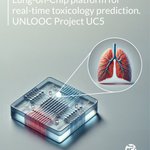
🔵 These procured samples will enable the isolation of cell types, to create a highly relevant human lung tissue model, incorporating an immune component. All protocols for cell isolation and characterization have been developed after years of intense research by our R&D team.

💡 How are we going to do it?
As experts in tissue procurement, BeCytes Biotechnologies will establish tissue procurement networks with hospitals, facilitating access to lung tissues and corresponding blood samples from the same donors.
→ 5. AI-driven predictions
An AI system will predict safety outcomes, reducing the need for additional testing steps and making the process more efficient.
→ 4. Electrical signal measurements
We will use an electrical impedance system to measure lung tissue barrier function, providing precise and reliable data.
→ 3. Real-time monitoring
The new system will provide instant feedback, making it easier to analyze how substances affect lung tissue.
→ 2. Donor diversity
We will include lung cells from different donors, thus enhancing the representation and diversity of our lung models.