

Strategic Advisor & Board Director | Fellow at leading security & policy institutions | Former Director, @DCSAgov; sr roles at @NATO, @ODNIgov & @DefenseIntel
Washington DC Metro Area
Joined September 2012
- Tweets604
- Following1.3K
- Followers2.5K
- Likes2.6K


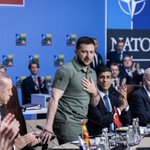



Can you hear that ticking?
Europe is operating on two clocks: Russia’s threat clock and NATO’s capability clock.
The first is running faster than the second.
As I argued at #BucharestForum2026, the danger isn’t failing to recognize the threat. It’s recognizing it—and failing to act in time.

NATO has helped deter conventional Russian aggression against its members. But Russia’s hybrid campaign presents a different challenge—and our response has been far less effective.
Attribution matters. Without credible consequences, it isn’t deterrence.
I discussed this with @m_makulski for In Between, including NATO intelligence cooperation, Baltic preparedness, and the Alliance’s response to Russian hybrid warfare.
in-between.pl/p/expert-dialo…
#RigaConf2026

Russia's ability to launch a major conventional attack on NATO is constrained by its war in Ukraine. Its capacity for hybrid aggression against Europe is another matter.
The distinction matters. Europe needs a strategy to counter a sustained campaign, not just respond to individual incidents.
I discussed this, NATO's Article 5, deterrence, and European security with Tamás Balogh of Hungary's @Origo_hu.
origo.hu/kulpol/2026/11/nato…

NATO cannot measure its military effectiveness in percentages of GDP.
As Europe assumes greater responsibility for its defense, the test is whether Allied forces can execute NATO’s regional defense plans.
Transferring responsibility does not automatically transfer capability.
My latest for @cepa:
cepa.org/article/nato-the-sh…

Cloud, compute, and connectivity are no longer strategically neutral.
At @cloudfest Americas, I argued that reliability and cybersecurity are necessary—but no longer sufficient. Strategic resilience and trust must be designed in.
The age of trusted infrastructure is beginning. Who will build it?

We don't yet know who was behind the cyberattacks on European supermarket refrigeration systems. That matters.
But attribution and protection are different decisions.
My latest for @cepa on operational technology, Russia's shadow war, and the vulnerabilities of everyday life.
cepa.org/article/supermarket…

Accelerating AI adoption without comparable advances in testing and assurance creates operational risk. Important contribution from @scottncohen and Jen Warren on getting that balance right.

It was great writing this piece with Jen Warren, retired Air Force Colonel, on AI safety and verification workflows: thecipherbrief.com/in-its-ra…

130
A change in Congress is not a change in the presidency. For Europe, the task remains building the capabilities to defend itself and sustain Ukraine while preserving the American partnership.
My latest for @ICDS_Tallinn.

Washington has changed, but Europe's strategic task has not.
The new Congress may offer opportunities for cooperation on NATO, Russia, and Ukraine. But Europe must not mistake political reassurance for strategic predictability.
@DavidCattler explains👇
icds.ee/en/washington-has-ch…

Important reporting by @StevenErlanger on Russia’s shadow war against Europe. The challenge for NATO and its allies is to recognize the broader campaign—not simply respond to individual incidents—and develop a coherent response that imposes meaningful costs.
Appreciated the opportunity to contribute.

Explore this gift article from The New York Times. You can read it for free without a subscription.
How can Europe best respond to Russia's riskier efforts at sabotage? My take.
nytimes.com/2026/10/09/world…

A permanent U.S. base in Poland would signal commitment. Its deterrent value depends on the capabilities it adds—and what happens to the wider U.S. military posture in Europe. My comments to @RFERL.
rferl.org/a/poland-financial…

Ambiguity is part of the weapon.
Russia’s grey-zone campaign exploits uncertainty over attribution, thresholds and response. The challenge for Europe is not simply responding to individual incidents, but restoring deterrence against the campaign as a whole.
Good discussion with @rosenthal_jon Rosenthal for this @TheEconomist piece.

Russia has been staging covert operations and deniable provocations against European countries for many years. In recent months the pace of such shadowy attacks appears to have risen again economist.com/europe/2026/09…

“Make it real. And make it now.”
Defense spending matters—but the real test is whether investment becomes capability, readiness, resilience, and credible deterrence.
Enjoyed discussing this, Ukraine, hybrid threats, and strategic trust with Selwyn Moons and Daniel de Jager for @PwC_Nederland.
pwc.nl/nl/marktsectoren/publ…

Europe is not weak. But latent strength is not the same as usable power.
At #RigaConf2026, I argued that Europe’s challenge is conversion: turning its extraordinary economic, technological, industrial and human capacity into military capability, political resolve and strategic effect—at the speed today’s security environment demands.
For me, that is increasingly the central European security question: not whether the underlying strength exists, but whether we can convert it into strategic effect in time.

Germany’s public attribution of the attempted Leipzig airport attack to Russia matters beyond this incident.
The evidence available publicly appears largely circumstantial. Berlin may know more than it can disclose. But its willingness to attribute despite those limits is significant. 🧵
That lesson still applies to Russia’s activities below the threshold of conventional war.
Deniability should not be confused with reasonable doubt.
Governments should attribute carefully. But Moscow cannot be allowed to make itself immune from consequences simply by making definitive public proof difficult. 3/4
1
2
76
Strategic trust is itself a national-security capability.
That was my central argument at @UNM’s Global & National Security Policy Institute this week.
Democracies don’t suddenly become resilient in a crisis. Crises reveal the resilience—and the trust—we built beforehand.
Grateful to the students, faculty and colleagues who made the discussion and Q&A such a rewarding one.

3
194
Iran doesn’t need to strike a NATO ally to achieve strategic effects.
Threatening countries that provide U.S. access and logistics can itself raise the cost of cooperation and test allied cohesion.
I discussed the implications with @EllenEMitchell for @thehill.
thehill.com/policy/defense/6…

America’s alliances aren’t a charitable project or a diplomatic luxury.
They’re one of America’s enduring strategic advantages.
Military power, economic scale, and technology matter. But relationships built over generations create access, resilience, and influence that competitors struggle to replicate.
Trust is strategic infrastructure.
