

US · Korean · Hong Kong stocks | Nasdaq · S&P500 · KOSPI · Hang Seng Tech | Weekly watchlist, trend analysis, key levels & risk management.
New York
Joined April 2009
- Tweets28.2K
- Following4
- Followers704K
- Likes2.5K





Pinned Tweet
I personally think $SIVE has the setup to become a mini-$LITE type story.
Not because every CPO headline has to work immediately.
Because Sivers is starting to show up across too many optical architectures at once.
In the past few months alone:
1. O-Net + Enablence partnership for external light sources in AI data centers.
2. $JBL collaboration for 1.6T LRO pluggable transceivers using Sivers DFB lasers.
3. $GFS adding Sivers laser arrays into silicon photonics reference designs and its SCALE CPO platform.
4. Ayar Labs relationship, where Sivers has been working on laser arrays for high-volume optical I/O manufacturing.
5. Ayar also joined NVIDIA’s NVLink Fusion ecosystem and raised $500M to scale CPO volume production, with strategic backing from names like AMD Ventures, NVIDIA, MediaTek and Alchip.
6. Sivers is also preparing for multiple 2027 ramps, while evaluating a Nasdaq New York dual listing.
The important part is not just CPO.
It is that Sivers lasers can matter across pluggables, LRO, LPO/NPO, CPO, external light sources and optical I/O.
That is why I think the market is misunderstanding the story.
When investors see “CPO delay,” they sell laser suppliers as if lasers only matter in one architecture.
But laser demand is spreading across multiple bridge architectures before full CPO scale-up arrives.
TrendForce already says AI data center demand is pushing major players to lock in EML and CW-DFB laser supply.
That is the whole thesis.
If hyperscaler suppliers like Jabil, O-Net, GF partners and Ayar-related ecosystems are moving toward volume, even small design wins can become very material for a company of Sivers’ size.
The near-term watchlist:
1. 1.6T LRO / pluggable volume ramp
2. External light source traction
3. Ayar / optical I/O scale-up
4. GF SCALE reference design adoption
5. 2027 revenue ramps
6. Nasdaq listing progress
7. Potential M&A after better U.S. capital access
I do not think $SIVE becomes the next $LITE just from laser ASPs alone.
To get there, the bigger path is likely lasers + downstream IP + contract manufacturing / optical engine exposure.
But I have not seen many small-cap photonics companies mapped to this many possible hyperscaler supply chains at once.
Disclosure: long $SIVE.

Samsung’s next milestone is no longer proving that HBM4 works.
It is proving that HBM4 can materially change profits.
Samsung expects Q3 HBM4 revenue to more than TRIPLE from the previous quarter.
And in the second half of 2026:
→ HBM4 could exceed 60% of Samsung’s total HBM revenue
→ Nvidia Vera Rubin shipments are ramping
→ Foundry 4nm utilization and yields are improving
→ Samsung Foundry could potentially return to quarterly profit
That last point matters.
Samsung’s foundry business has been loss-making since 2023.
But KB Securities now sees a meaningful possibility of a Q3 profit, excluding incentive provisions, as 4nm LPU production expands and yields stabilize.
Samsung itself already reported significant foundry earnings improvement in Q2, driven by stronger demand for HBM base dies and U.S. customer orders.
This creates a much more interesting setup.
Samsung is no longer relying on memory alone.
HBM4 generates premium memory revenue.
Its base dies feed Samsung’s own foundry lines.
Improving 4nm yields support AI-chip production.
And stronger utilization improves foundry economics.
Meanwhile, SK Hynix is also ramping HBM4 volume for Nvidia’s Vera Rubin platform, trying to carry its HBM3E leadership into the next generation.
Stocks I’m watching:
Samsung Electronics — 005930.KS
SK Hynix — 000660.KS
$NVDA
The next phase of the Korean AI-memory trade is not about who can announce HBM4.
It is about who can turn HBM4 into sustained profit.
For Samsung, Q3 may be the first real test.


The global memory market was worth roughly $210B in 2025.
Bank of America now sees a potential $2 TRILLION addressable market by 2030.
Nearly 10X.
And two Korean companies already control 64.3% of global DRAM revenue.
Samsung Electronics: 39.4%
SK Hynix: 24.9%
That is why I think Korea remains one of the most important places to watch in the AI infrastructure cycle.
This is no longer just an HBM story.
AI servers are increasing demand across:
→ HBM
→ Server DDR5
→ High-capacity RDIMM
→ Enterprise SSDs
→ NAND
And HBM itself is consuming an increasingly large share of DRAM production capacity.
TrendForce estimates HBM’s share of total DRAM wafer input at the major suppliers will move from:
2025: ~18%
2026: ~22%
2027: ~30%
That matters.
HBM uses more wafer area and more complex processing than conventional DRAM.
So the more capacity manufacturers allocate to HBM, the tighter supply can become for traditional server and commodity DRAM.
This gives Samsung and SK Hynix exposure to both sides of the AI memory cycle:
Premium HBM growth
tighter conventional memory supply.
Stocks I’m watching:
Samsung Electronics — 005930.KS
SK Hynix — 000660.KS
The biggest AI memory opportunity may no longer be one product.
It may be the entire memory stack being repriced around AI demand.
And Korea currently controls nearly two-thirds of the global DRAM market.

📊 September 26 Japan, Korea, U.S. & Hong Kong Morning Brief
Global markets ended the week with AI once again supporting equities, but bond yields remain the key source of pressure.
🇯🇵 Japan
Nikkei 225: 66,364.20 / +1.30%
TOPIX: 4,128.59 / +1.31%
The Nikkei posted its fifth consecutive gain, led by AI and semiconductor names.
Tokyo Electron and Advantest were among the largest positive contributors, while dividend-related buying also supported the market.
Japan’s 10-year government bond yield briefly reached 3.121%, its highest level since 1996.
The key next week is whether semiconductor strength can continue despite rapidly rising domestic yields.
🇰🇷 Korea
The Korean market remains closed this weekend after the September 24–25 Chuseok holiday and will reopen Monday, September 28.
Latest close:
KOSPI: 7,080.92 / +0.90%
KOSDAQ: 844.48 / +1.21%
Samsung Electronics: +3.25%
SK Hynix: +1.20%
Institutions bought roughly KRW 316.9 billion, while foreign investors sold KRW 504.7 billion and retail investors sold roughly KRW 1.44 trillion.
Monday’s reopening will have to absorb several days of overseas moves, including stronger U.S. AI stocks but significantly higher Treasury yields.
🇺🇸 United States
S&P 500: 7,743.41 / +0.51%
Nasdaq: 27,068.72 / +0.48%
Dow: 51,828.62 / +0.93%
Microsoft jumped 3.7% after unveiling new Copilot capabilities.
Qualcomm gained about 4%, Dell rose 5%, and Akamai advanced 3.2% after announcing an $11.6 billion cloud-services agreement with Anthropic.
Meta fell 3.3% on Friday after a strong week driven by enthusiasm around Muse.
The U.S. 10-year Treasury yield briefly hit 5.2297%, its highest level since 2007, before easing toward 5.16%.
Brent crude fell roughly 3% but remained above $100 per barrel.
For the week, the S&P 500 gained about 1.2% and the Nasdaq rose 2%.
🇭🇰 Hong Kong
Hang Seng: 24,510.09 / -1.01%
Hang Seng Tech: 4,311 / -1.1%
HSCEI: 8,165 / -1.2%
Turnover totaled approximately HK$102.2 billion.
Alibaba fell about 1.5%, Tencent 0.4% and Xiaomi 2.6%, while Lenovo gained around 3.2%.
Stock Connect was closed on September 25, so there was no Southbound flow figure for the session.
My View:
AI remains the strongest structural theme across the four markets, but bond yields are increasingly determining short-term valuations.
Next week I am focused on Korean semiconductor reopening flows, Japanese AI equipment stocks, U.S. AI monetization and infrastructure, and whether capital returns to Hong Kong’s major technology names.


📊 September 25 Korea, U.S. & Hong Kong Daily Market Brief
Global markets are caught between resilient AI fundamentals and renewed pressure from oil and bond yields.
🇰🇷 Korea
The Korean stock market remains closed today for the Chuseok holiday.
Latest close on September 23:
KOSPI: 7,080.92 / +0.90%
KOSDAQ: 844.48 / +1.21%
Samsung Electronics: +3.25% to KRW 285,500
SK Hynix: +1.20% to KRW 1,862,000
Institutions bought KRW 316.9 billion, while foreign investors sold KRW 504.7 billion and retail investors sold roughly KRW 1.44 trillion.
With Korea closed, moves in U.S. semiconductors, Treasury yields and oil will accumulate ahead of the next session.
🇺🇸 United States
S&P 500: 7,704.13 / -0.02%
Nasdaq: 26,939.37 / +0.01%
Dow: 51,349.98 / -0.31%
AI stocks were mixed.
AMD +2.4%
Meta +4.5%
Microsoft -0.5%
Broadcom -1.3%
Oracle -3.5%
Meta remained strong after unveiling a new AI device, while Oracle weakened amid concerns surrounding its New Mexico AI data-center project.
Brent crude climbed more than 3% toward $107 per barrel, while the U.S. 30-year Treasury yield reached its highest level since 2004.
🇭🇰 Hong Kong
Hang Seng: 24,761.13 / -0.29%
Hang Seng Tech: 4,361 / -0.41%
HSCEI: 8,266 / -0.09%
Hong Kong remained under pressure as investors stayed cautious ahead of U.S.-China talks.
However, Southbound capital remained a support.
Net Southbound buying totaled HK$2.9 billion.
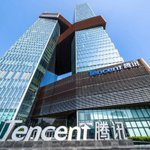
Tencent fell 0.59% but attracted about HK$630 million of net buying, while Alibaba gained 0.18%. SMIC saw about HK$225 million of net selling.
My View:
AI remains the dominant structural theme, but short-term market pricing is increasingly being controlled by oil and bond yields.
Today I am watching U.S. rates, energy prices and whether Southbound capital continues to absorb weakness in Hong Kong technology stocks.


Hong Kong’s next re-rating catalyst may not be another rate cut.
It may be a rule change.
HKEX is proposing one of its most meaningful reforms to M&A and spin-off rules in years:
→ Major-transaction threshold: 25% → 50%
→ Some deals below 50% could avoid shareholder votes
→ Eligible spin-offs could use self-assessment
→ Spin-off waiting period: 3 years → 1 year
Why does this matter?
Because Hong Kong’s largest technology groups already own multiple businesses that could potentially be valued independently.
Cloud.
Fintech.
Logistics.
Autonomous driving.
AI infrastructure.
Local services.
Smart hardware.
Under the proposed rules, qualifying companies could execute acquisitions, disposals and restructurings with less time and administrative friction.
And eligible Main Board companies could potentially spin off businesses without seeking HKEX pre-approval for every proposal.
That creates a different kind of catalyst:
Value unlocking.
Stocks I’m watching:
$0388.HK — HKEX
$9988.HK — Alibaba
$0700.HK — Tencent
$3690.HK — Meituan
$1810.HK — Xiaomi
$9888.HK — Baidu
$9618.HK — JD.com
$1024.HK — Kuaishou
HKEX itself could benefit first if easier rules lead to more listings, spin-offs and corporate transactions.
For large technology groups, the opportunity is different:
A business buried inside a conglomerate may receive a very different valuation once it has its own capital, financials and investor base.
Our institution has generated more than $1 million in returns through Hong Kong technology and AI supply-chain investments.
What I’m watching next is not simply which company announces a spin-off.
It is which company owns a subsidiary strong enough to stand on its own.
The next Hong Kong re-rating may come not only from earnings growth—
but from unlocking assets the market is currently undervaluing.
These proposals are still under consultation, so the final rules and implementation timing may change.

The Hang Seng fell below 25,000.
Mainland money kept buying.
That divergence is what I’m watching.
On September 23:
→ Hang Seng: -1.01%
→ Southbound net buying: HK$3.45B
→ 13 consecutive days of net inflows
→ Cumulative buying: HK$52.33B
And one stock stood out:
Tencent (0700.HK).
Tencent fell 2.35% on the day.
Yet Southbound investors bought roughly HK$2.04B of the stock.
Xiaomi (1810.HK) also attracted about HK$457M of net buying despite falling 3.75%.
That matters because price and capital flows are currently telling two different stories.
The index is correcting.
But mainland capital has not left.
Instead, it has continued buying Hong Kong stocks for 13 straight sessions.
I’m watching this very closely.
When an index falls but persistent capital keeps accumulating selected large-cap technology names, I pay more attention t

Alibaba no longer wants to be just an AI model company or a cloud provider.
It wants to control the entire stack.
At this week’s Apsara Conference, Alibaba unveiled its first native AI-agent computer, Qwen Book.
But the laptop is only one piece of a much larger strategy.
Alibaba is now building across every major layer of AI:
→ AI device: Qwen Book
→ Foundation models: Qwen
→ AI chips: Zhenwu V900
→ Cloud: Alibaba Cloud
→ Data centers: 20GW+ target by 2032
The numbers are getting serious.
Alibaba says its new Zhenwu V900 delivers roughly 3X the performance of its predecessor.
A single V900 cluster could scale to as many as 500,000 chips.
At the model layer, Alibaba plans to train a new foundation model at the 5–10 trillion parameter scale.
And by 2032, Alibaba Cloud plans to expand global data-center capacity beyond 20GW.
Qwen Book shows where all of this infrastructure eventually ends up:
In the hands of users.
The device is designed around AI agents rather than traditional apps, with AI able to understand context, work across applications and continue long-running tasks in the background.
This is why I’m watching Alibaba (9988.HK / $BABA).
The company is no longer building isolated AI products.
It is trying to vertically integrate:
Chip → Compute → Model → Cloud → Device.
Interestingly, $BABA ADRs fell 4.74% overnight even as Alibaba keeps accelerating its AI roadmap.
That creates the key tension I’m watching now:
AI fundamentals are getting stronger.
But higher interest rates are still putting pressure on technology valuations.
Alibaba’s next AI battle may not be about having the best single model.
It may be about controlling every layer required to deliver AI.


Korea’s stock market is closed for Chuseok.
Its AI supply chain is still running 24/7.
Samsung Electronics’ semiconductor fabs in Pyeongtaek and Hwaseong continue operating through the holiday.
SK Hynix is doing the same at its Icheon and Cheongju sites.
Samsung Electro-Mechanics is also keeping key MLCC production lines running.
To be clear, semiconductor fabs normally operate continuously because stopping a production line is extremely difficult.
But what makes this year different is the demand behind those lines.
AI data-center investment is driving strong demand across:
→ HBM
→ High-capacity server DRAM
→ AI-server MLCCs
And Korea’s export data shows how large this cycle has become.
From September 1–20:
Total exports: $71.4B
YoY growth: +78.3%
Semiconductor exports alone:
$34.1B
A record for the period.
That means nearly half of Korea’s exports came from semiconductors.
Samsung Electro-Mechanics is seeing the same AI effect further down the supply chain.
Its Q2 revenue rose 24% YoY, while operating profit jumped 107%, with AI-server and networking MLCC demand cited as a major driver.
Stocks I’m watching:
Samsung Electronics — 005930.KS
SK Hynix — 000660.KS
Samsung Electro-Mechanics — 009150.KS
Korea’s market may be closed for the holiday.
But the factories powering the AI cycle are not.


A normal server uses roughly 2,500 MLCCs.
NVIDIA’s next-generation AI server could use as many as 560,000.
That is more than 200X.
This is one of the least discussed bottlenecks in the AI infrastructure buildout.
MLCCs are tiny components that stabilize power delivery inside electronic systems.
But as AI servers consume more power and run 24/7 under extreme heat and voltage, they need dramatically more high-capacity, high-reliability MLCCs.
And the economics are completely different.
→ AI server MLCC demand by 2030: ~25X 2023 levels
→ Expected annual demand growth: ~30%
→ High-capacity AI MLCC pricing: 30–40X conventional products
→ NVIDIA next-gen AI server: up to ~560,000 MLCCs
→ Conventional server: ~2,500
Samsung Electro-Mechanics (009150.KS) is already positioned directly inside this trend.
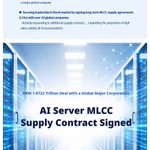
The company recently signed a KRW 1.0722 trillion AI-server MLCC supply contract with a major global customer — its largest MLCC supply agreement ever.
It now has long-term MLCC agreements with more than 10 global customers.
Brokerage estimates cited by Korean media see Samsung Electro-Mechanics’ AI MLCC revenue rising from:
2026: KRW 958.8B
2027: KRW 2.98T
2028: KRW 5.61T
That is the part I’m watching.
The AI infrastructure trade is expanding beyond:
GPU → HBM → Power → Cooling
Now another layer is emerging:
Power delivery components.
$NVDA
Samsung Electro-Mechanics — 009150.KS
The smallest components inside an AI server may end up becoming some of the biggest beneficiaries of the AI capex cycle.


📊 September 24 Japan, Korea, U.S. & Hong Kong Daily Market Brief
Global markets are again being driven by rates and energy.
A stronger-than-expected U.S. September PMI pushed the 10-year Treasury yield to around 5.10%, while oil rebounded, pressuring technology and semiconductor stocks.
At the same time, the U.S. and China agreed to extend the existing “Busan agreement” until January 10, providing a potential offset for Asian risk sentiment.
🇯🇵 Japan
Japanese cash equities were closed from September 21 through September 23 and reopen today.
In the latest session on September 18, the Nikkei 225 closed at 65,018.95, up 1.38%.
The BOJ raised its policy rate to 1.25%, but the yen weakened afterward and USD/JPY moved back toward 158.
Today’s reopening must absorb several days of global developments at once, making Tokyo Electron, Advantest and SoftBank Group important stocks to watch.
🇰🇷 Korea
The Korean market is closed today and tomorrow for the Chuseok holiday and resumes on September 28.
Latest close:
KOSPI: 7,080.92 / +0.90%
KOSDAQ: 844.48 / +1.21%
Samsung Electronics: +3.25%
SK Hynix: +1.20%
Institutions bought KRW 316.9 billion, while foreign investors sold KRW 504.7 billion and retail investors sold roughly KRW 1.44 trillion.
With Korea closed, overseas rate, oil and semiconductor moves will accumulate until Monday’s reopening.
🇺🇸 United States
S&P 500: 7,706.05 / -0.75%
Nasdaq: 26,936.04 / -1.13%
Dow: 51,511.59 / -0.68%
September U.S. Composite PMI jumped to 58.4 from 56.0, the strongest since July 2021.
Input-price pressures also accelerated, sending the 10-year Treasury yield toward 5.10%.
Alphabet fell 3.8%, Amazon 2.2%, Nvidia 1.5%, while the Philadelphia Semiconductor Index fell 1.2%.
Meta bucked the trend, gaining about 1%.
Today’s focus is on jobless claims, new-home sales, the $44 billion 7-year Treasury auction and Fed speakers.
🇭🇰 Hong Kong
Hang Seng: 24,834.12 / -1.01%
Hang Seng Tech: 4,379.07 / -1.33%
HSCEI: 8,273.81 / -1.06%
Technology stocks led the decline, with Zhipu AI down 12.4%.
However, Southbound investors remained net buyers of HK$3.449 billion, including strong buying in Tencent.
The latest extension of the U.S.-China “Busan agreement” until January 10 now becomes an additional catalyst to watch for Alibaba, Tencent, Xiaomi and SMIC.
My View:
AI and semiconductors remain the dominant medium-term structural theme, but short-term pricing power has shifted back toward interest rates.
Today I am watching U.S. Treasury yields, the yen, Southbound flows and semiconductor positioning more closely than the headline indices themselves.


What if the cheapest AI token is the one you never have to pay for?
That is the bet Apple is making.
Apple just demonstrated four Mac Studios running a trillion-parameter AI model locally — powered from a single wall outlet.
No rented GPU cluster.
No recurring cloud bill for every token generated.
Once the hardware is paid for, enterprises can keep running inference locally.
And that changes the AI cost equation.
The new Mac Studio with M5 Ultra offers:
→ Up to 512GB unified memory
→ 1.2TB/s memory bandwidth
→ Thunderbolt 5 clustering
→ Up to 3x faster distributed AI inference with four systems
→ Frontier-class models running entirely on-device
Apple is effectively making a different argument from the cloud-first AI model:
Instead of renting intelligence by the token, own the compute.
That puts Apple into a much bigger contest.
$MSFT dominates enterprise computing.
$NVDA dominates AI data-center infrastructure.
Apple currently holds only about 4.6% of the enterprise desktop market versus 91.3% for Windows.
But local AI gives $AAPL a new entry point.
This does not replace hyperscale GPU infrastructure.
Training frontier models will still require enormous data centers.
But inference is different.
If companies can move more repetitive AI workloads from expensive cloud GPUs onto hardware sitting inside their own offices, the economics of enterprise AI could start to change.
That is why I’m watching:
$AAPL — on-device AI
$NVDA — data-center AI
$MSFT — enterprise AI + cloud
The AI infrastructure battle is no longer just about who has the fastest chip.
It is also about who can deliver intelligence at the lowest cost.

$200 BILLION in market value was added in less than two weeks.
And the trigger wasn’t another bigger AI model.
It was adoption.
Meta’s new AI agent, Muse, reached roughly 2.8 million downloads in just 12 days after launching on September 8.
Since launch:
→ $META shares: +20%+
→ Market value added: ~$200B
→ Muse downloads: ~2.8M
→ Paid plans: $20 and $100/month
Now Wall Street is starting to ask a much more important question:
Can AI finally become a major revenue engine?
Jefferies estimates that if Muse reaches 1 billion users in 2027 and just 3% convert to paid plans, annual revenue could reach roughly $10.8B.
That matters because Muse is not just another chatbot.
It can actually perform tasks:
→ Send emails
→ Book travel
→ Shop and complete transactions
→ Work across apps and websites
→ Handle multi-step tasks on behalf of users
Meta already has something most AI startups do not:
Distribution.
Facebook, Instagram, WhatsApp and Messenger already connect Meta to billions of users.
If Muse can turn even a small percentage of that network into paying AI customers, the economics change very quickly.
That is why I’m watching:
$META — AI monetization
$NVDA — AI infrastructure demand
$AMD — inference and compute growth
The first phase of the AI trade was about who could spend the most.
The next phase may be about who can actually turn AI usage into revenue.

The AI trade is moving beyond chips.
Now the money is moving into the infrastructure that keeps those chips running.
LG Electronics just received NVIDIA approval for its 2.5MW liquid-cooling CDU designed for high-density AI factories.
And now LG is expanding its AI data-center cooling partnership with SK Enmove.
The two companies will jointly develop:
→ Low-emission refrigerants
→ Compressor lubricants
→ Immersion cooling systems
→ Thermal-management solutions for high-heat equipment
The bigger picture is becoming very clear:
GPU → HBM → Power → Cooling
As AI racks become more power-dense, traditional air cooling becomes harder to scale efficiently.
That is why LG is building a broader “chip-to-chiller” portfolio:
→ Air cooling
→ Liquid cooling
→ CDU systems
→ Chillers
→ Immersion cooling
LG has also been working with SK Enmove and U.S.-based GRC to combine cooling infrastructure, immersion fluids and immersion tanks into a complete solution.
This is no longer just a data-center equipment story.
The same thermal-management technology could eventually expand into ESS, EVs and other high-heat applications.
Stocks I’m watching:
LG Electronics — 066570.KS
SK Innovation — 096770.KS
The first phase of AI infrastructure was about securing compute.
The next phase is about keeping that compute running efficiently.
Cooling is becoming part of the core AI infrastructure stack.


Samsung is raising HBM capacity by 40%.
SK Hynix is expanding one key HBM line by 8X.
And HBM may STILL not be enough next year.
That is the number I’m watching.
Samsung Electronics plans to increase monthly HBM wafer input from roughly 180,000 wafers this year to 250,000 next year.
At the same time, HBM4 and HBM4E are expected to rise to about 80% of Samsung’s total HBM shipments.
There is another important change:
Samsung’s HBM4 yield reportedly improved from below 60% during the early ramp to around 80%.
That means more usable HBM4 from every wafer—and better economics as volume scales.
SK Hynix is accelerating too.
Its Cheongju M15X facility is expected to expand monthly wafer input from roughly:
10,000 → 80,000 wafers.
An 8X increase.
But here is the part that matters most:
2027 HBM demand growth is estimated at about 56%.
Supply growth?
About 50%.
So even after Samsung and SK Hynix dramatically increase capacity, demand could still grow faster than supply.
And Nvidia and AMD are both increasing HBM content per next-generation AI accelerator.
That is why I continue to watch:
Samsung Electronics — 005930.KS
SK Hynix — 000660.KS
Hanmi Semiconductor — 042700.KQ
The HBM story is no longer simply “AI needs more memory.”
The real story is that the two largest Korean suppliers are accelerating capacity this aggressively—
and the market may still remain tight.


📊 September 23 Korea, U.S. & Hong Kong Market Morning Brief
Global markets remain driven by AI and semiconductors, but yesterday’s trading showed increasing divergence beneath the headline indices.
The Nasdaq posted a second consecutive record close, Korea’s KOSPI held above 7,000, and Hong Kong technology shares were supported by Tencent and Alibaba.
The key today is whether semiconductor leadership can continue alongside foreign capital inflows while Treasury yields and oil prices remain elevated.
🇰🇷 Korea
KOSPI: 7,017.91, +0.15%
KOSDAQ: 834.38, -0.23%
The KOSPI opened more than 2% higher on strength in U.S. AI and semiconductor stocks but gave back most of its gains as profit-taking emerged.
Samsung Electronics (005930) rose 0.91% to KRW 276,500, while SK Hynix (000660) fell 1.50% to KRW 1.84 million. Samsung Electro-Mechanics (009150) gained 3.99%.
Foreign investors were net buyers of roughly KRW 76.2 billion, while individuals sold about KRW 1.6 trillion and institutions sold roughly KRW 121.8 billion.
Korea’s September 1–20 exports rose 78.3% YoY to a record $71.4 billion. Semiconductor exports surged 259.4% to $34.1 billion and accounted for 47.8% of total exports.
Today I am watching whether Samsung Electronics and SK Hynix can regain synchronized momentum and whether foreign buying strengthens.
🇺🇸 United States
Nasdaq: 27,244.28, +0.45%
S&P 500: 7,764.64, roughly flat
Dow: 51,863.69, -0.36%
AI and memory stocks remained the leaders. Micron gained about 5%, while Sandisk rose almost 7%.
Financials weakened, with the S&P 500 financial sector falling 1.68%.
The U.S. 10-year Treasury yield remained around 4.94%, while crude oil traded near $100 per barrel.
September Flash U.S. Manufacturing and Services PMIs are due today and could influence expectations for the next Fed move.
🇭🇰 Hong Kong
Hang Seng: 25,087.75, +0.18%
Hang Seng Tech: 4,4


AI money didn’t disappear.
It just came back into semiconductors—fast.
On September 21:
→ $ARM +17%
→ $INTC +12.2%
→ $AMD nearly +10%
→ PHLX Semiconductor Index +4.3%
→ Nasdaq +2.26% to a record closing high
This was not an AMD-only rally.
It was a broad repricing of the AI semiconductor trade.
Just one week ago, investors were questioning whether hyperscalers could keep spending at this pace and whether the AI trade had become too crowded.
Now the market is sending a different signal.
AMD crossed $1 trillion in market value for the first time.
Intel surged double digits.
Arm jumped 17%.
And the Nasdaq posted its first record closing high since June 2.
There was also an important macro shift behind the move:
The U.S. 10-year Treasury yield fell back below 5%, while oil retreated from recent highs.
That matters.
Lower yields reduce pressure on long-duration technology valuations, while lower energy prices ease inflation concerns.
So I’m watching two things now:
Whether capital continues rotating back into AI semiconductors.
Whether this rally broadens beyond the obvious winners.
$NVDA $AMD $ARM $INTC $AVGO $MU
The AI trade was questioned last week.
This week, the semiconductor tape is answering back.

AMD just crossed $1 TRILLION for the first time.
But the $1T valuation is not the most important part.
The market is starting to price AMD as something much bigger than “the alternative to Nvidia.”
$AMD surged nearly 10% to a record high on September 21, pushing its market cap above $1 trillion for the first time.
The stock is now up roughly 185% in 2026.
For comparison, the Nasdaq is up about 16%.
Why is the gap so large?
Because AMD is no longer selling just CPUs and GPUs.
It is building the entire AI stack:
→ Instinct MI455X GPUs
→ EPYC “Venice” CPUs
→ Pensando networking
→ ROCm software
→ Helios rack-scale AI systems
Helios integrates 72 MI455X GPUs and 18 EPYC CPUs into a single rack-scale system.
That matters because the next phase of AI infrastructure is shifting from individual chips to complete systems.
Nvidia ($NVDA) already proved how valuable that model can be.
Now AMD is trying to build its own version of the AI factory.
That is the real reason I’m watching $AMD.
The next battle may not be:
AMD GPU vs. Nvidia GPU.
It may be:
AMD AI platform vs. Nvidia AI platform.
$AMD $NVDA $AVGO $INTC

Korea’s telecom companies are no longer just fighting over mobile subscribers.
They are now fighting to become the control layer for robots and Physical AI.
And this is already moving into real factories.
SK Telecom (017670.KS) is using NVIDIA Omniverse-based digital twins inside SK Hynix semiconductor fabs, recreating production lines virtually before equipment and layouts are changed.
The same virtual environments can also generate training data for robots.
KT (030200.KS) is taking a different route.
Its K RaaS platform is designed to connect robots from different manufacturers with factory equipment, elevators, warehouse systems and enterprise IT.
More importantly, KT is already working with Samsung Electronics (005930.KS) and HD Hyundai Samho on Physical AI at a shipyard, including quadruped welding robots and autonomous painting robots.
LG U+ (032640.KS) is pushing another angle:
Voice AI → robots.
Its ixio platform is being developed so that AI can understand human context and eventually trigger actions through humanoid robots, while AI-RAN is being tested to keep robots and drones connected as they move between networks.
This is the part I’m watching:
Physical AI in Korea is moving beyond humanoid demonstrations.
→ Semiconductor fabs
→ Shipyards
→ Logistics centers
→ Smart buildings
The first serious monetization may not come from consumer robots at all.
It may come from factories where every minute of downtime, every worker-hour saved and every automated process has a measurable value.
Stocks on my radar:
SK Telecom — 017670.KS
KT — 030200.KS
LG U+ — 032640.KS
Samsung Electronics — 005930.KS
SK Hynix — 000660.KS
The next AI infrastructure battle may not be about who owns the best chatbot.
It may be about who controls the machines.

China’s DRAM challenge just became much harder to ignore.
CXMT has officially put its 5th-generation DRAM platform into mass production.
The key number isn’t just the node.
It’s this:
→ Dies per wafer: at least +50% vs. its previous platform
→ New 24Gb LPDDR5X chips: already in mass production
→ Active-area half-pitch: 11.95nm
→ Global DRAM revenue share: 10% in Q2, up from just 4% a year earlier
That last number matters most.
CXMT is no longer a sub-scale Chinese memory player.
It is now the world’s No.4 DRAM supplier, while Samsung Electronics (005930.KS), SK Hynix (000660.KS), and Micron still dominate the global market.
But I don’t think the immediate battle is HBM.
The pressure is more likely to appear first in mainstream DRAM and mobile memory, where higher wafer productivity and expanding Chinese capacity can translate directly into lower costs and more aggressive pricing.
Meanwhile, Samsung and SK Hynix are moving further toward HBM4 and premium AI memory.
That creates a very clear split:
China is scaling conventional DRAM faster.
Korea is trying to move further up the value chain.
For Samsung Electronics and SK Hynix, the next memory cycle may not be defined only by AI demand.
It may also be defined by how quickly CXMT turns technological progress into real supply.
