
Astrophysicist at Flatiron CCA, Fisk-Vanderbilt Bridge program alumni. I specialize in searching for transiting exoplanets that orbit small, cool stars!
Joined March 2021
- Tweets44
- Following415
- Followers254
- Likes1.4K






Last week, I got to attend #TESScon3. I hadn't really been to conferences in person since 2017 and it was so cool to meet people I only knew by name or from zoom calls! Here's the conference group photo we took and my research poster with some preliminary results I'm working on!


Excited to be at #CoolStars22 , come by poster #87 to hear me talk about identifying activity cycles of flare stars using photometric flare detections across ground and space based observations!

If you happen to know any college students interested in a paid science summer internship at AMNH, feel free to share these REU projects with them (including mine! :D)
amnh.org/research/richard-gi…
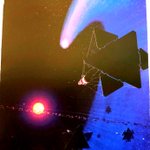
I love the NASA Exoplanet Travel Bureau posters but I found these two images from years ago and I've lost track where they come from. Does anyone know? They're awesome!


I just got asked to peer review a study for the first time! 😃 They're not looking for an expertier expert, I'm experty enough!

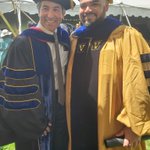
I don't post here often but I graduated with my PhD! I am likely the first astrophysicist to come from Harlem, but I promise that I will not be the last! There are FAR too many people to thank; my family and the Fisk-Vanderbilt Bridge program have endlessly been supportive to me!


All these fellowships announced today has been feeling really overwhelmed. Clarissa didn't explain any of this :(
This is an awesome idea. I didn't test this well but I made a quick tool to get pokemon color palettes in Python using "colortheif":
github.com/daxfeliz/get_pkmn…


Me, a native NYer, describing the habitable zone of a multi-planet star system and the chances of extremophiles surviving it:
mini_yerrrr.png

Just finished my NEMESIS paper's presentation for #eres2021! I've always enjoyed these conferences. So many great talks, will definitely attend more in the future. If anyone would like to see my talk, I have recordings of past talks available on my site at daxfeliz.github.io/talks.htm…
Shoutout to @LunaAlphaLyrae on an amazing job with her study of the U Mon star system. Anytime someone gets to use 100+ years of data is so cool!
news.vanderbilt.edu/2021/03/…
arxiv.org/abs/2103.07330
[Announcement] After 2 years of hard work, I finally published this paper that is the basis of my PhD thesis. In this work, my collaborators and I surveyed over 33,000 nearby M-dwarfs located within 100 parsecs of Earth to detect 29 planets, 24 of which are new detections!
What we are looking for are periodic eclipses that block some of the star's light, indicating that a planet orbiting the star is the cause for the periodic dimming. The types of stars we studied (called M dwarfs) typically display much more noticeable eclipses than Sun-like stars
