

Tracking how technologies become industries.
Joined December 2020
- Tweets17.8K
- Following735
- Followers9.2K
- Likes93.3K

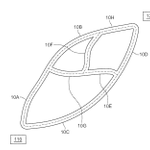





building a laptop in america is easy if you're just screwing together parts made overseas. building one around what american factories can actually produce is a completely different problem. these guys are redesigning the enclosure around domestic machining capabilities, adapting the battery system to american suppliers, and figuring out how to bond american made glass into the display. they're even planning to manufacture circuit boards in ohio. love it. the laptop is almost beside the point. the compelling part is building the factories, suppliers, tooling, and production processes that make the next hundred products possible. anyone who thinks america cant manufacture computers anymore should be rooting for this to work.

Learn more: anduril.com/news/anduril-and…

the air force wants quantum systems at different locations to talk to each other, even without fiber connections. ionq already built its first quantum network. now they're working on open-air links and connecting different hardware. hell yes. build it. businesswire.com/news/home/2…

picture einride running 500 autonomous trucks across the country. every truck has a deadline, a battery to charge, roads it can't always use, and remote operators who can't be everywhere at once. then a storm hits and half the schedule goes to hell. einride is already patenting ways to handle some of these problems, and they've worked with ionq on freight optimization. there's a monster of an engineering opportunity here. give ionq the entire fleet: truck locations, delivery deadlines, battery levels, charging stations, road restrictions, and available remote operators. build an optimization engine that decides where each truck goes, when it leaves, and where it charges. then throw a storm at it. close a highway. knock out a charging station. how quickly can it rebuild the plan? put the best classical software through the same test. the prize is getting more deliveries completed with the same 500 trucks, fewer miles driven empty, less time wasted waiting for chargers, and fewer missed deadlines. if ionq can do that better and cheaper than the alternatives, einride has a way to make every truck more productive without buying another one.
your driverless truck can handle the road, the weather is fine, and the battery is charged. congratulations. now drive it through 20 miles of lousy cellular coverage and discover that your remote supervision system can't do its job. einride has a patent for planning around exactly this kind of problem. predict where and when conditions will be acceptable, then schedule the truck to be there at the right time. sometimes the smartest thing an autonomous truck can do is leave an hour later. drive.google.com/file/d/1Zaw…

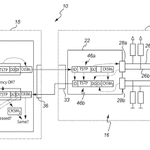
einride has a patent for a problem nobody wants to discover at 65 mph: the emergency stop button for a driverless truck doesnt work. the remote operator might think everything is fine, but the circuitry behind that button could have failed. einride's solution is to make the remote control system prove it's working before the truck trusts it. if the safety check fails, the truck can refuse to move or trigger an emergency stop. this is the kind of engineering that makes autonomy real. building a truck that drives itself is one thing. making damn sure it can stop when something goes wrong is another. drive.google.com/file/d/1h4I…

a public utility in tennessee built a quantum network, added a quantum computer, and is inviting people to come use both. meanwhile, silicon valley is still debating what quantum computing is good for. incredible. youtube.com/watch?v=kO5ML446…
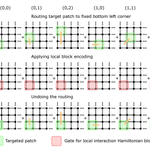
one of my favorite kinds of engineering is finding out that everyone has been doing something the expensive way for no good reason. ionq's researchers figured out how to take a costly operation that's repeated all over a quantum simulation, bring the relevant information to one place, do the work once, and send it back. in one benchmark, that cuts the estimated T-gate cost by 15–17x. that's an absurd amount of work to eliminate without adding a single qubit. it's still a paper result, so somebody needs to build it and prove the savings survive contact with actual hardware. but this is exactly the kind of trick that can change what a machine is capable of without changing the machine. arxiv.org/pdf/2610.32946v1

ionq is now using its own quantum security technology to protect communications between its offices in switzerland and south korea. so that makes ionq its own customer. how hard was it to install? what does it take to keep running? every problem ionq finds and fixes now is one less problem for the next customer. ionq.com/blog/leading-with-p…
anduril's october 8 patent is about helping commanders understand and evaluate what autonomous machines want to do. its october 22 patent is about keeping those machines operating when equipment fails or gets destroyed. now put the two together. a drone gets shot down, the remaining machines need a new plan, and the commander needs to know what changed before approving the next action. ionq says it's actively collaborating with anduril, and this is where i'd want to see what quantum computing can contribute. can it help find a better plan under those constraints, fast enough for the commander to make a decision while it still matters?
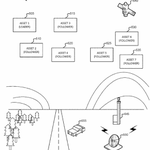
drones are going to get shot down. communications are going to fail. equipment is going to break. the question is whether the mission falls apart when that happens. anduril's october 22 patent describes a system where autonomous machines can choose new leaders, redistribute tasks, and keep operating when individual machines are lost. if the lead drone gets destroyed, another can take over without the entire mission having to start over. i think that's a much bigger deal than making any single drone smarter. the goal is to build a force that can take losses and keep doing its job. @PalmerLuckey drive.google.com/file/d/1CJ1…

autonomous weapons are going to make decisions faster than humans can keep up with. anduril's october 8 patent tackles a critical question: how does a commander know what those machines are doing and whether they're following orders? the patent describes a system that uses AI to explain proposed actions and help operators evaluate them against mission requirements. suppose a drone recommends attacking a target that falls outside its mission restrictions. the commander needs to understand what the drone is recommending, why, and whether the action is authorized. if a commander doesn't know why a machine wants to attack something, he has no business approving the attack. drive.google.com/file/d/1kVQ…

chattanooga has an ionq quantum computer, a quantum network, and an electric utility with problems to solve. would love to see epb pick one problem and show us how it's solved today and whether quantum can do it better. even if quantum doesnt win, i'd want to see the results. forbes.com/sites/jonathanrei…?


