
Cosmologist. Mama. Sciencing for @EC_Euclid and @NASARoman at @NASAJPL. European in America. If uncertain, use they/them.
- Tweets509
- Following340
- Followers257
- Likes1K

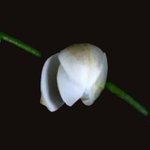


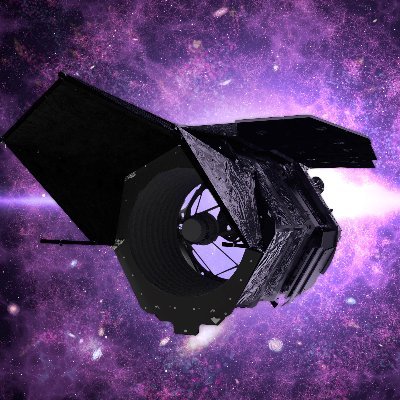

ALT A pair of images of space. The one at left is labeled "Vera C. Rubin Observatory, simulated image" and is a black background speckled with hundreds of warm-toned fuzzy blobs and smaller yellow, red, and orange dots. The image at right is the same, except it's labeled "Nancy Grace Roman Space Telescope, simulated image," and it's much sharper and clearer. The dots and blobs are less fuzzy, and also more white-toned with hints of yellow and green in some objects.




ALT This figure shows an overlay of an image of the Moon on top of an image of the sky recorded simultaneously by the 36 detectors of Euclid’s VIS instrument. The VIS image was obtained in one single shot during the initial months of testing of the spacecraft. It illustrates that the area of the sky that Euclid can observe within one pointing of the telescope, is larger than that of the full Moon. The aperture angle of the Moon’s diameter is approximately 0.5 degrees. Euclid’s gaze captures in one single observation a square area of the sky of about 0.7 times 0.7 degrees.



ALT The image shows thousands of galaxies across the black expanse of space. The closest thousand or so galaxies appear as small disks of spiraling material, surrounded by halos of yellow and white light. The background is scattered with a hundred thousand more distant galaxies of different shapes, ranging in color from white to yellow to red. Most galaxies are so far away they appear as single points of light.

ALT A spiral galaxy is visible at the centre of the image. The galaxy is made up of spiral arms that wrap around a white central region. The arms are dusty and sprinkled with purple, pink, and white smudges. The background of space is filled with stars and points of light. A few of the stars are larger than the rest and have diffraction spikes.

ALT This square astronomical image is divided horizontally by the edge of a white and orange cloud on the bottom half. Within this region is a section of cloud shaped like a horse’s head. The top half of the image contains a faint purple haze that fades away to reveal the blackness of space near the top of the image, which is speckled with stars.

ALT This square astronomical image is speckled with hundreds of thousands of stars visible across the black expanse of space. The stars vary in size and color, including blue, white, yellow, and red. More stars are located at the center of the image, where they are bound together by gravity into a spherical collection also called a globular cluster. Some of the stars have diffraction spikes.

ALT A collage of all five Euclid images showing: the Perseus Cluster of galaxies, spiral galaxy IC 342, irregular galaxy NGC 6822, globular cluster NGC 6397 and the Horsehead Nebula

ALT Artist impression of the Euclid satellite scanning the sky. Euclid is covered in golden foil and has one big white telescope tube. A laser moves from Euclid towards a starry sky and shows where the satellite is pointed. The parts of the sky already measured by Euclid are highlighted with rectangles.


ALT 36 black squares are visible on the left with one big black square on the right.

ALT 16 black squares are visible on the left with one big black square on the right.





ALT View of SpaceX Falcon 9 rocket lifting off from Space Launch Complex 40 (SLC-40).