

Disaster epidemiologist in-training. PhD student at UNTHSC. Exploring the nexus of public health, natural hazards, and public policy.🇵🇭 studying in 🇺🇸.
Fort Worth, TX
Joined July 2022
- Tweets69
- Following83
- Followers64
- Likes352








Edna M-V. retweeted

Last night, no one at @MIT had a good night’s sleep.
Yesterday evening, shortly after I posted that we were launching a plagiarism review of all current MIT faculty, President Kornbluth, members of MIT’s administration, and its board, I am sure that an audible collective gasp could be heard around the campus.
Why? Well, every faculty member knows that once their work is targeted by AI, they will be outed. No body of written work in academia can survive the power of AI searching for missing quotation marks, failures to paraphrase appropriately, and/or the failure to properly credit the work of others.
But it wasn’t just the MIT faculty that did not sleep last night. The @Harvard faculty, its governing board members, and its administrative leadership did not sleep either. Because why would we stop at MIT?
Don’t we have to do a deep dive into academic integrity at Harvard as well?
What about Yale, Princeton, Stanford, Penn, Dartmouth? You get the point.
While we are going to do a detailed review of plagiarism at MIT, we are not going to be the only ones who do so.
Every college and university in the world is going to have to do the same for themselves. They will do so because they will need to validate all plagiarism accusations, or someone else will do it for them.
The best approach, however, is probably to launch an AI startup to do this job (I would be interested in investing in one) as there is plenty of work to do, and many institutions won’t have the resources to do it on their own. Perhaps more importantly, the donors are going to demand that the review is done by an independent third party.
For who today is going to trust higher education to review itself?
Consider the inherently irreconcilable conflicts of interest. Would you trust today’s university president to do an examination of their faculty? What are the chances that the reviews would be weaponized to go after faculty members whose politics were not favored by leadership?
We have seen this before with other tools used by university presidents and their deans. Consider the weaponization of MeToo accusations, speech codes, and the other tactics of cancellation that have destroyed free speech on campus, and many faculty members’ reputations, careers, and their families.
By analogy, who would trust even our most credible corporations with auditing their own financial statements? There is a reason why all public companies have independent auditors who are carefully examined by regulators to ensure they maintain quality, standards, accuracy, and independence.
And what if a plagiarism review turned into an incredible embarrassment for the entire university? It could lead to wholesale firings of faculty. Donors terminating their donations. Federal funding being withdrawn, and a massive litigious conflagration where faculty members and universities sue one another about what is plagiarism, and what is not. Think about the inevitable destruction of the reputations of thousands of faculty members as it rolls out around the country, and perhaps the world.
And maybe that’s a good thing.
The Impact of Higher Education on Society and Our Country
When I woke up on the morning of October 7th, my first thought was not that I was going to launch an effort to save higher education from itself. I had other more pressing concerns about the world, and I still have these concerns. But as we all know, our higher education system (HES) is critically important as it can affect and influence the minds of our younger generations, thereby profoundly impacting the lives of all of us.
The HES can affect what’s taught to toddlers and what is taught in elementary and high schools, as ed schools train the next generation of teachers and superintendents, and design the curricula they teach.
The HES can convince a generation that some of us are oppressors, and others are the oppressed, and provide justifications for what kinds and what degree of violence and terrorism are appropriate tools to address this perceived oppression.
The HES can affect our medical establishments and the ethics of medicine, e.g., some of our most controversial procedures and medicines, and the advisability of their use on children, and so on. You get the point, I am sure.
The HES affects our legal system, our ethics, and our basic understanding of right and wrong.
It affects how we think about capitalism and our economic system, and how we address wealth inequality, taxation, monetary and fiscal policy, and consider universal basic income and other alternatives.
It also affects religion and how it is practiced and no longer practiced around the country.
It can advance a monetary theory which states that the U.S. as a sovereign nation has effectively no limit to its spending because it can just print new money without any consequences or loss of solvency.
And then, of course, the graduates of our education system over time become the judges, the Supreme Court justices, the politicians, the members of the media, and the other people that influence and determine our way of life, and help us understand the truth, but whose truth? you might ask.
The HES influences how our national voting system should be administered; the standards for eligibility to run for office; how the primary system works, and what it takes to qualify to be on a ballot in a state.
I could continue, but I am sure that you already understand the power of the HES. You don’t need me to tell you how important it is.
In light of the power of HES, those interested in power would of course desire to take control of our most prestigious and influential universities so that they could ultimately take control of our education system, our government, and then the country at large.
The Power of AI and Its Impact on Plagiarism
Now that we know that the academic body of work of every faculty member at every college and university in the country (and eventually the world) is going to be reviewed for plagiarism, it’s important to ask what the implications are going to be.
If every faculty member is held to the current plagiarism standards of their own institutions, and universities enforce their own rules, they would likely have to terminate the substantial majority of their faculty members.
Over the last few weeks and months, I have literally received hundreds of emails, texts, hand- and type-written letters and cards, and phone calls of support (and 10s if not 100s of 1000s of posts and replies on X) – from friends and strangers, alumni, faculty and students, senior leaders of foreign countries, U.S. senators and members of congress, high profile members of the media, and several presidential candidates – for my efforts to help address the problems at Harvard, MIT, Penn and the higher education system at large. All of that said, most have been pessimistic about the opportunity for necessary change, as nearly everyone believes that it will take decades to fix the problem because of the life tenure system for faculty.
The good news, however, is that with AI, getting rid of tenured faculty is no longer as much of a challenge because it is much easier to fire faculty who have problems with their academic record. It is a near certainty that authors will miss some quotation marks and fail to properly cite or provide attribution for another author on at least a modest percentage of the pages of their papers. I say percentage of pages rather than number of instances, as the plagiarism of today can be best understood by comparison to spelling mistakes prior to the advent of spellcheck.
For example, it wouldn’t be fair to say that two papers are both riddled with spelling mistakes if each has 10 mistakes, when one paper has 30 pages and the other has 330. The standard has to be a percentage standard.
How pervasive are the spelling/plagiarism mistakes? is another question that should be asked. Does the purported plagiarism appear in a small minority of their papers or in the majority of their work?
Importantly, the most productive and important scholars are at the greatest risk under the current system because the more papers and pages you have written, the greater the probability that you missed a citation or some quotation marks, and it is much more likely that someone will check, (until yesterday). Plagiarism is the biggest threat for the most outstanding and most cited scholars because if no one ever reads your work and you do not have a public profile (nor or married to a high-profile person), no one will ever take the time to look.
The more impactful the work and the more important it is, the more likely it will be at risk of being reviewed for plagiarism. But if you have published only a dozen papers of modest length, and the papers are not particularly impactful or highly cited, the risk of having a large number of instances of plagiarism and having it be discovered should be relatively small.
Oppenheimer
The weaponization of AI for plagiarism has become the tactical nuke of the U.S. higher education system. That is potentially good news as the more I have learned about the HES, the clearer it has become that tactical devices and other powerful weapons may be required to win this war.
That said, as we learned in Oppenheimer, nuclear bombs can win wars, but they can also create enormous collateral damage and massive loss of innocent lives. They can kill tens, if not hundreds, of thousands of innocent civilians, so we need to be extremely careful about how these weapons are used. Because if the plagiarism nukes get into the wrong hands, even more damage can be done to our HES and the country.
So what should we do?
If you think about what plagiarism standards were designed for, the purpose was to protect scholars from the theft of their intellectual property. And protecting intellectual property is critically important as it is the lifeblood of our authors, composers, researchers, designers, architects, artists, companies, and effectively all modern institutions.
Interestingly, while AI can identify plagiarism, AI itself is the ultimate plagiarist. Large language models are by design built off the work of others, as computers have no innate knowledge, at least not yet. [As a side note, I am sure all of us are looking forward to learning the outcome of the NY Times lawsuit against OpenAI in light of its importance.]
As a result of AI, all institutions of higher learning are going to have to update their plagiarism standards.
The good news is that no paper written by a faculty member after the events of this past week will be published without a careful AI review for plagiarism, that, in light of recent events, has become a certainty.
But what do we do about papers written before today, which will inevitably fail an AI plagiarism test? The answer I believe is that there are different kinds of plagiarism, and it depends.
Some plagiarism is due to the laziness of the author. Laziness is not a great excuse for a member of the faculty, but it does not seem like a crime to me. It is more a reflection of the competency and motivation of the faculty member. In the real world, employees can be fired for being lazy, but this can be challenging to do under the tenure system.
Some plagiarism arises from being human, at least before AI systems. A tenured member of the faculty with thousands of pages of published work before the launch of AI systems is going to make some number of unintentional mistakes. The more papers they have published and the more total pages they have, the greater the likelihood of instances of plagiarism.
Other kinds of plagiarism, however, are much more pernicious, like for example, when important ideas are intentionally stolen without attribution. The worst form of plagiarism would be a case where an author intentionally stole another person’s work and presented it as his own, and it represented an important part of the new paper. I expect that this kind is rare, but it is clearly outright theft, and should be treated as such.
There remains, however, many open questions about plagiarism. For example:
Can one use a definition from an online dictionary or encyclopedia without attribution? I honestly don’t know the answer. I have never seen WikiPedia or Dictionary.com cited in any paper. Before Business Insider emailed last night, I never thought about this before. And on this point, what was the standard 15 years ago for citing WikiPedia? Was it different then versus now?
This also raises a more modern question: Is it ok to plagiarize from ChatGPT today? Or does it depend on the outcome of the NY Times case?
You probably get my point by now. We are going to have to come up with new standards for plagiarism.
I think the standard will ultimately be the same as the one the Supreme Court uses for pornography.
To paraphrase Supreme Court Justice Potter Stewart:
We will know it, when we see it.
I think universities will ultimately be forced to conclude that there are different kinds and degrees of plagiarism, and the punishment, if any, and the degree of its severity to the faculty member or student will have to be adjudicated based on the specific facts of each case.
As a result of recent events, academic/plagiarism review committees at universities will have to be expanded, as this now becomes a very big job. New standards will have to be designed, and new approaches will have to be taken to ensure that plagiarism review committees are comprised of independent members whose politics, friendships, or otherwise do not affect their judgment in adjudicating these cases.
How nefarious identified plagiarism is determined to be, I expect, will likely be a function principally of: (1) the nature and form of the plagiarism, (2) how pervasive it is in the scholar’s oeuvre, and (3) the nature and importance of what has been plagiarized, and perhaps to some extent, who or what has been plagiarized.
I do believe that intent matters with plagiarism as it does in the securities laws. For example, mens rea, in Latin “guilty mind” (Source: Google search top of page), which is defined by Dictionary.com (!) as “the intention or knowledge of wrongdoing that constitutes part of a crime, as opposed to the action or conduct of the accused that plays an important role in determine[ing] the innocence or guilt of the accused in certain legal contexts.” This is not a great definition, but I will use it here in the interest of time.
I think intent matters because character matters. If the plagiarism was truly unintentional (and there are ways to judge whether this is the case), then I wouldn’t question the character of the author.
Unintentionality could simply be a result of rushing to meet a deadline, something all of us remember from our college days. Or it could be due to a misunderstanding or a lack of clarity as to whether one needs to cite Dictionary.com or the amorphous “Google” as I did above for the translation of the Latin words mens rea.
In order to assess all of the above, we also need to know what the actual standards were at the time of the subject document’s creation.
Universities will need plagiarism review boards to systematically review and adjudicate each of the cases individually. That’s the only fair way to judge whether plagiarism meets the standard for various forms of punishment or not. The legal and practical implications for not doing so will cause severe harm to the accused who is convicted by the panel, and create enormous legal liability for the university, as it will have to defend itself in cases brought by faculty members and students whose careers and lives have been harmed and/or destroyed by punishments and reputations have been irreparably harmed.
Which brings us right back to where we started
I did not originally seek Claudine Gay’s removal as President of Harvard due to plagiarism allegations. In fact, from the beginning I was simply trying to help her address the rise of antisemitism on campus. I encourage you to read the concluding section of my first letter to her. Unfortunately, she did not respond to my first letter or any of my efforts at my outreach to her, nor did the Corporation board. To this day, neither former President Gay or the Corporation board has ever responded to any of the three letters I wrote.
I only sought former President Gay’s removal after her congressional testimony. And I didn’t just seek her removal, I advocated for the removal of all three university presidents who all happened to be women: a Black woman, a White Christian woman, and a White Jewish woman (there is some debate as to whether White should be capitalized, but I am following the Macarthur Foundation recommendation which appears first when you google the question).
So far, I have only been accused of racism against Black people as a result of my advocacy for all three stepping down from their roles. I have not yet been accused of misogyny as far as I am aware. I have been ecumenical and color blind in my advocacy here. Please also note my post last night about why I believe the Chairman of MIT must resign for apparent tax fraud. I note that he happens to be a Jewish man. Am I am also an antisemite?
Getting back to Kornbluth, Gay, and Magill; in my opinion and that of many others, they are failed leaders of our country’s most important institutions, and all three lack the necessary moral clarity that is critical for leaders, particularly during this challenging time in history. That is why I and many others believed that they should resign or be fired.
I did not know anything about Claudine Gay’s academic record prior to others bringing this issue to the fore.
When Gay resigned and was awarded a position on the faculty and continued to receive president-level compensation, I publicly questioned how the board could have approved her remaining on the faculty in light of the amount, nature, and degree of plagiarism that had surfaced in her work.
In coming to my conclusion, I reviewed the undisputed 50 or so plagiarism allegations in 6 of her 11 publications, and relied somewhat on academia’s public assessment of her plagiarism, and her overall academic oeuvre and record.
In short, I was convinced by others more expert than I, that her academic oeuvre was not of sufficient scale or quality, and that the plagiarism issue was sufficiently troubling that she was not qualified to continue as a senior member of the Harvard faculty, particularly at well-above market compensation for her continuing role. It looked like her lawyer did an excellent job negotiating a settlement, but that’s not how faculty positions should be awarded.
In retrospect, I shouldn’t have had to form my own conclusions about plagiarism in her work. That should have been determined in a formal and transparent process by an administrative board comprised of independent members who could have judged her work without personal consequences to themselves or without the impact on the outcome from university politics. Unfortunately, I do not believe that such a committee exists at Harvard, but I welcome learning otherwise.
All of above said, I thought Claudine Gay was a failed leader without regard to her academic record, and that’s why I thought she should not be president of Harvard.
Lastly, a few thoughts on MIT and the media
My wife, Neri Oxman, as you may well know by now, spent 15 years of her life at MIT before she left MIT and moved to New York.
Neri’s published work is vast. She has published 74 peer-reviewed papers, 8 peer-reviewed book chapters, and numerous other journal papers and proceedings. But her written work is only a small portion of her life’s work. She has been awarded 15 patents for her technological innovations, not including recent patents pending. You might want to watch this video to learn more about her work oxman.com/mission
In that Neri’s work is more about product design, architecture, and technological innovations, most of her intellectual property is represented by her patented and unpatented technologies, and in the physical manifestation of their forms, for which she shares credit with the other inventors, principally her students. Neri’s scholarship is breathtaking in its creativity, vast in its scale and enormous in its potential for impact. Often, her work also happens to be incredibly beautiful, which explains the MoMA and SFMoMA retrospectives of her work, and the 116 exhibitions in which they have been featured around the world, and the 22 of works which remain in permanent collections around the world.
And yes, Neri is intensely human, and she makes mistakes as we all do. She also owns her mistakes, and learns from them. We both have learned many times from the experience that comes from making mistakes and learning from them.
Neri has yet to vet yesterday’s plagiarism allegations, but she will get to them when she has time to do so. Notably the first 15 of the 28 examples that came from Business Insider’s “thorough review of her published work” were definitions of words or terms that Neri may have used from Wikipedia including the definition of: “weaving,” “computer graphics,” “computer-aided design,” “pain,” “manifold,” “heat flux,” “optimization,” and “sustainable design,” to name more than half of the examples BI calls plagiarism.
Is this plagiarism? Let’s assume that in writing her dissertation Neri used Wikipedia as a dictionary for these terms and it is deemed to be plagiarism, does it any way affect the quality and originality of the research in her dissertation? I think that’s worth an important discussion among the experts.
It does not strike me as plagiarism, nor do I think it takes anything away from her work. I am not sure who would even complain that they were not cited properly. I also wish I knew how to reach a human being at Wikipedia as my Wikipedia biography needs correcting, and could be meaningfully improved if there was someone I could speak to.
I am sure that when Neri wrote her dissertation she thought that there was nothing wrong with using Wikipedia as a dictionary. When I was a student, I remember having a thesaurus and a dictionary on my desk that I would consult when I wrote a paper and needed a synonym or a definition of a word. I never thought to quote or cite my thesaurus or dictionary for basic words, term or synonyms.
The good news is that none of the above will interfere with Neri’s success or in any way diminish any of the technologies and innovations that she, her colleagues, and students have developed, and new ones that she and her team will create in the future.
Now that all of her non-family time and energy is intensely focused on OXMAN, her success will largely depend on what comes next. And yes, I think she made a brilliant decision to leave academia behind.
Neri left MIT in some part due to her marriage to me and her desire to start a family in New York, but she was also motivated by the opportunity to change the world, which she felt she had a greater chance of achieving by leaving academia behind, launching a start up in the form of a benefit corporation, and recruiting an extremely talented team of scientists, engineers, roboticists, synthetic biologists, plant biologists, material scientists, and more.
OXMAN is still hiring, so if you are interested and possess unique and relevant talents and skills, and you are a wonderful human being, you should check out OXMAN.com, follow @NeriOxman, and go to OXMAN.com/contact.
OXMAN has been in stealth mode for the last several years, but they have made a lot of progress. Neri and her 27 team members recently moved to a new 36,000 square feet research, design, and wet lab space that has taken several years to construct. OXMAN is in the process of developing a number of new technologies, which will lead to future product launches, some of which you will hear about later this year.
On Journalism and the Media
Over the last several days, we have seen some of the worst forms of journalism and how it operates. Business Insider gave Neri only several hours to respond to the reporter’s first request for comment for her story on Thursday. Bear in mind, we were on vacation and out of the country and did not have ready access to necessary source materials or decent WiFi, but Neri dropped everything, and responded politely and accurately to the allegations in the few hours she was given.
Yesterday, at 5:19pm after sundown on Friday night, the same reporter sent a 12-page email to Fran who heads communications for Pershing Square. Bear in mind that Pershing Square and OXMAN have nothing to do with each other, other than the founder of one is married to the founder of the other. One should also understand that this Israeli woman, husband and child look forward to and celebrate Shabbat dinner with our family on Friday nights.
continues below
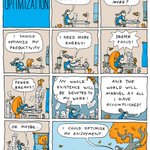
Learning a third language helps increase my neuroplasticity, an important component in my PhD journey. ❤️

1
1
39
Edna M-V. retweeted

A new ocean is forming in Africa along a 35-mile crack that opened up in Ethiopia in 2005. The crack, which has been expanding ever since, is a result of three tectonic plates pulling away from each other.
It’s thought that Africa’s new ocean will take at least 5 million to 10 million years to form, but the Afar region’s fortuitous location at the boundaries of the Nubian, Somali and Arabian plates makes it a unique laboratory to study elaborate tectonic processes.
There are still some big unknowns, including what is causing the continent to rift apart. Some think that a massive plume of superheated rocks rising from the mantle beneath East Africa could be driving the region’s continental rift.
Each plate boundary in the Afar region is spreading at different speeds, but the combined forces of these separating plates is creating what’s known as a mid-ocean ridge system, where eventually a new ocean will form.
The three plates are separating at different speeds. The Arabian plate is moving away from Africa at a rate of about 1 inch per year, while the two African plates are separating even slower, between half an inch to 0.2 inches per year.
[📷 Anthony Philpotts]


scientificamerican.com/artic… How Humans around the World Spend the 24 Hours in a Day via @sciam

2
39

Edna M-V. retweeted
Are you eager to learn the exciting math behind the new science of causation?
Here's a free causal inference textbook.
It's the same one we use at the Harvard School of Public Health. hsph.harvard.edu/miguel-hern…

Edna M-V. retweeted
Every Data Scientist needs to know these ideas.
They will blow your mind.
1. Correlation vs Causation
P(A | B) is the probability of A given B. It is the probability that we will observe A given that we have already observed B.
P(A | do(B)) is the probability of A given do(B). It is the probability that we will observe A given that we have intervened to cause B to happen.
In this context, an intervention simply means to take an action of some kind. Therefore do(B) means to take an action which causes B to happen.
The expressions P(A | B) and P(A | do(B)) might seem very similar but they represent very different situations.
2. We can only learn P(A|B) from the data alone.
Bob has an extremely accurate weather app and is always very good about bringing his umbrella when it rains. We observe Bob over several years and we find that whenever it rains, Bob always has his umbrella and he never brings his umbrellas on days when it doesn't rain.
In the language of probability, we say P(Umbrella | Rain) = 1 and P(Rain | Umbrella) = 1 as well.
What we can learn from this data alone is how to predict whether it rains with a 100% accuracy by checking whether Bob has an umbrella. We can also learn to predict with 100% accuracy whether Bob has an umbrella by checking if it's going to rain.
What we cannot learn is what will happen if we give Bob an umbrella on a random day of our choosing. The answer to this question is P(Rain | do(Umbrella) ) and it's unknowable from the data alone.
We need prior knowledge about how the world works to properly interpret the data we collected. We need to know that rain has an effect on Bob's behavior, but Bob's behavior has no effect on the rain.
Information about the effects of interventions are simply not available in raw data unless it is collected by controlled experimental manipulation.
3. Scientific Experiments work because they produce a very special kind of data.
You may have heard of what many people call a scientific experiment. Take a collection of objects, animals or people. Randomly split that collection into a control group and a treatment group. Apply your intervention to the treatment group while leaving the control group alone. If you observe any differences between the treatment group and the control group, it is logical to attribute these differences to the treatment. You can therefore say the differences were caused by the treatment.
In statistics, the procedure I just described is called a Randomized Controlled Trial. It is a procedure for generating a specific kind of data where:
P(Difference | Treatment) = P(Difference | do(Treatment) )
This is why traditional science experiments work. They are designed to capture causal information. This is not the case for vast majority of data that we collect in society.
Without human guidance or access to real world knowledge, statistical algorithms and artificial intelligences can only learn P(A | B) from the raw data. This is a fundamental mathematical limitation on the use of data alone.
That's it for now. This post is part of a series of posts about the concept of causal inference. They are based on the content of the Book of Why by Judea Pearl with lots of commentary from me.
Follow me (@kareem_carr) so you don't miss out on the next post.
Please show support by liking and retweeting the thread.

Edna M-V. retweeted

The worst and most useless advice given to PhD students: find a gap in literature.
Here's why:
The problem with "finding a gap in literature" is that it's an analogy.
It assumes that an academic field is like a wall. Every researcher brings a brick or two and that's how we this wall gets built.
Sometimes researchers are unable to solve a problem, which results in a "gap" in the wall.
The analogy of finding a gap in literature, like any other analogy, distorts the actual process of how academic research gets done.
As a result, graduate students try to find a topic that no one has written about before. This is counterproductive at best and utter madness at worst.
Let's say I start researching a topic like "The Effect of Reading Hans Christian Andersen's Stories on the Production of Milk Among Danish Cows."
No one has written about this topic and I can argue that there is a gap in literature.
The problem is even if I were to write a whole 400-page monograph on this topic, it will not move the field forward. No one in the field of Andersen studies is interested this topic.
If you follow the advice of finding a gap in literature, you may end up doing research that no one is interested in.
So what should you do?
Here's a suggestion: try to find a problem you feel passionately about.
This may be a bit tricky if you are starting out. So, read about it, think about it, and write what make of it.
Most importantly, know that there is a place in the world for whatever you have to say on a given topic.
Example:
I had a problem that I had spent years thinking about before my PhD. And the problem was how a South Asian Muslim identity got constructed in and through Urdu literature.
I read about Urdu literature and identity formation in colonial India and figured two writers whose works I wanted to enagage with. Nazir Ahmad, a 19th century Urdu novelist, and Benedict Anderson, the famous Anglo-Irish political scientist.
There is a lot of scholarship on Nazir Ahmad's novels and Benedict Anderson's book "Imagined Communities" is a considered a classic in the humanities and social sciences. A lot of folks had written about Nazir Ahmad and Anderson's work. So, not many gaps in the literature.
But no one had looked at how Nazir Ahmad's novels created an "imagined community" of Muslims in colonial India. So, I did this in my dissertation.
I didn't try to find a gap in literature. I solved a problem that I felt passionately about.

ALT A photo of a brick wall separated by two shades of orange bricks. Photo credit: Amadeus Moga, Unsplash


Edna M-V. retweeted

Do you know the difference between cleaning, sanitizing, and disinfecting?
Cleaning removes most germs.
Sanitizing reduces the number of germs remaining after cleaning.
Disinfecting kills most germs.
Learn more: bit.ly/3JRtUE1
Edna M-V. retweeted
Today is #WorldHumanitarianDay.
WHO has been meeting the health needs of people in the most difficult situations for over 75 years.
In war…in conflict…when floods, droughts, fires and earthquakes strike…access to healthcare is the difference between life & death.
WHO and partners deliver
#HealthForAll
#NoMatterWhat
More about our work in crises 🔗bit.ly/3YAluXj


Edna M-V. retweeted

What is ignored or neglected by the media -- but will be studied by historians?
Here's the full list of 25 examples:


