Likes Dogs more than humans (@Dogs_are_First) header
Likes Dogs more than humans (@Dogs_are_First) profile picture

GOD Family Country and Dogs. At TESLA since 2011. I publish History articles daily. Long Arc of History, Battle Day and Murders.

USA
Joined December 2022
Photo by Likes Dogs more than humans (@Dogs_are_First)Photo by Likes Dogs more than humans (@Dogs_are_First)Photo by Likes Dogs more than humans (@Dogs_are_First)Photo by Likes Dogs more than humans (@Dogs_are_First)Photo by Likes Dogs more than humans (@Dogs_are_First)Photo by Likes Dogs more than humans (@Dogs_are_First)Photo by Likes Dogs more than humans (@Dogs_are_First)Photo by Likes Dogs more than humans (@Dogs_are_First)Photo by Likes Dogs more than humans (@Dogs_are_First)Photo by Likes Dogs more than humans (@Dogs_are_First)
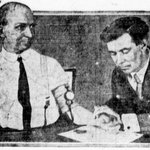
On a Saturday night in November 1920 someone shot one of the richest Black men in Washington, D.C., in the front hall of his own house. A young man confessed, then said the confession was a lie. A Harvard-trained psychologist strapped a blood-pressure cuff on him and swore his machine could tell which story was true. The judge wouldn't let the jury hear it, and the appeal that followed set the rule American courts used for seventy years to decide what counts as science. Dr. Robert Wade Brown was a physician and the president of the National Benefit Life Insurance Company, one of the biggest Black-owned businesses in the country. He was the kind of man Booker T. Washington had dined with when he came to town. On the Saturday after Thanksgiving, 27 November 1920, friends had gathered at Brown's house to celebrate a Howard University football victory. Someone came to the door. In the front hall Brown was shot at point-blank range, and he died. Black newspapers across the country carried the story. Brown's family and his company put up a reward of a thousand dollars. For months nothing came of it. In the summer of 1921 police in Washington arrested a 20-year-old man named James Alphonso Frye, with his cousin and a newspaper reporter, for robbing a man of his ring, his watch and his wallet. A Black dentist named John R. Francis, in whose office Frye sometimes worked, told the police that Frye had confessed something else to him: that he'd killed Dr. Brown. A week later Frye gave the police a formal statement. He said he'd gone to Brown's house for medicine, that Brown had refused because he had no money, and that they'd fought. "In the struggle I think that my gun was fired," he said. In August 1921 papers all over the country announced that the doctor's killer had been found. Then Frye took it all back. He said a detective and Francis had promised him a deal if he confessed to the murder. The robbery charge would go away, the murder charge wouldn't stick because he had an alibi, and he'd get a share of the reward. He said he'd been with a woman across town that night. And he said the real killer was Francis. In March 1922 he was indicted for first-degree murder. Frye's new lawyers were two young men, barely out of law school, who were taking night classes at American University. Their teacher there was William Moulton Marston, 28, who had degrees in law and psychology from Harvard. As a student Marston had worked out what he called the systolic blood pressure deception test. A cuff on the arm measured the suspect's blood pressure at intervals as he answered questions. Marston believed that lying took an effort that sent the pressure up, and that a trained examiner could read it. He'd tested it on students and on cases from the Boston courts, and he claimed it was right nearly every time.
1
37
On 10 June 1922 Marston went to the jail, put the cuff on Frye's arm, and asked him about the murder. He told a newspaper reporter that Frye was telling the truth. Frye was innocent, the machine said, and his confession was the lie. Frye's trial opened on 17 July 1922 before Chief Justice Walter McCoy of the District of Columbia's Supreme Court. The prosecutor called the doctors who'd examined the body, the detective who'd heard the confession, and two of Brown's friends, who said they'd seen Frye at the house that night. Frye testified that not a word of his confession was true. His lawyers then offered Marston, to tell the jury about the test and what it showed. McCoy refused. Marston couldn't testify, and he couldn't repeat his test in front of the jury. The prosecutor called Frye "the most colossal liar that ever appeared in court." The jury was out less than an hour. It found him guilty, not of first-degree murder but of second-degree, apparently accepting that the gun had gone off in a struggle. McCoy gave him life. Frye was sent to the federal prison at Leavenworth. His lawyers appealed on one point: the jury should have heard Marston. On 3 December 1923 the Court of Appeals of the District of Columbia turned them down in an opinion of fewer than 700 words. It didn't name Marston or cite a single earlier case. But one passage in it outlived everyone involved. "Just when a scientific principle or discovery crosses the line between the experimental and demonstrable stages is difficult to define," the court wrote. "Somewhere in this twilight zone the evidential force of the principle must be recognized." Courts would go a long way to admit expert testimony, it said, but the thing it rested on "must be sufficiently established to have gained general acceptance in the particular field in which it belongs." Marston's test hadn't. That became the Frye test. For seventy years, judges across the country used it to decide whether an expert could bring a new kind of science into the courtroom, from lie detectors and voiceprints to blood tests and DNA. In 1993 the Supreme Court ruled, in Daubert v. Merrell Dow, that federal courts should follow the Federal Rules of Evidence instead. Many states still use Frye today. Frye served more than eighteen years. He worked the prison switchboard and kept writing to Washington for a pardon. He blamed his lawyers and he blamed racial prejudice. He was paroled on 17 June 1939, and he went on asking for a pardon into the 1940s. He never got one. Marston's cuff became one part of the polygraph, the lie detector. He spent the rest of his life promoting it, in magazines and even in razor-blade advertisements. In 1941 he created a comic-book heroine who carried a golden lasso that made anyone it bound tell the truth. He called her Wonder Woman. James Frye was convicted of second-degree murder, sentenced to life, and paroled in 1939. The machine never got its day in court, and that became the law.
9
On the afternoon of 25 November 1863, Union soldiers at the foot of Missionary Ridge, outside Chattanooga, were ordered to take the first line of Confederate rifle pits and stop. They took them. Then, with nobody's order, they kept climbing, four hundred feet up a slope Ulysses S. Grant thought no army could take, and broke the Confederate army at the top. The day before, other Union troops had fought their way up Lookout Mountain in a fog. Together the two days opened the way into Georgia, and made Grant the general Lincoln had been looking for. In September 1863 the Confederates won their biggest victory in the West, at Chickamauga Creek in north Georgia. The beaten Union Army of the Cumberland fell back into Chattanooga, a railroad town in a bend of the Tennessee River. General Braxton Bragg's Confederate Army of Tennessee followed and took the high ground around it. To the south was Lookout Mountain, a long ridge that rises some 1,700 feet above the river and ends in a cliff. To the east was Missionary Ridge, six miles long. From those heights Confederate guns watched the roads, the river and the railroad. The autumn rains washed out the one mountain road still open to the Union army. Confederate cavalry burned hundreds of its supply wagons. By late October the men in Chattanooga were living on a few crackers and a bit of pork every few days, and the horses and mules were dying. Washington sent help. Two corps came by rail from Virginia under General Joseph Hooker, and four divisions marched from Mississippi under William Tecumseh Sherman. In October Grant, the victor of Vicksburg, was given command of all three western armies. He put George Thomas, the "Rock of Chickamauga," in charge of the army in the town, and rode in himself over the mountain trails, on crutches from a fall from his horse. Within days his men seized a river crossing at Brown's Ferry by night and opened a supply route the soldiers called the Cracker Line. The siege was broken. Now Grant meant to drive Bragg off the heights.
1
37
Grant's plan gave Sherman the main blow, against the north end of Missionary Ridge. Hooker was to make a sideshow against Lookout Mountain. On the morning of 24 November, low clouds and fog hung over the mountainside. Hooker's men crossed Lookout Creek and climbed the steep western slope in the mist. Confederates on the bench of the mountain, around a white farmhouse belonging to a family named Cravens, couldn't see how many were coming. The Union guns on Moccasin Point across the river shelled them from below. People down in Chattanooga could hear the firing but saw almost nothing. Now and then the cloud tore open and they glimpsed lines of men and flags high on the slope, then lost them again. A Union quartermaster, Montgomery Meigs, wrote of a "battle above the clouds," and the name stuck. By afternoon Hooker's men held the bench. That night a full moon rose and then slid into a total eclipse. In the dark the Confederates came down the far side and slipped away. At dawn on 25 November soldiers of the 8th Kentucky climbed to the cliff at the top and unfurled a huge United States flag, and the army below cheered. Sherman's attack on the north end of Missionary Ridge went badly. On the morning of the 25th his divisions ran into General Patrick Cleburne, the Irish-born Confederate who was the best division commander in Bragg's army. Cleburne's men held a rocky knob called Tunnel Hill all day and threw back assault after assault. Sherman lost nearly 2,000 men and gained almost nothing. Grant watched from Orchard Knob, a small hill in the valley. By mid-afternoon he worried that Bragg was stripping the center to stop Sherman. He told Thomas to send four divisions forward against the line of rifle pits at the foot of Missionary Ridge, just to pull Confederates away from Sherman. They were to take the rifle pits and stop there.
1
20
At about four o'clock six signal guns fired, and around 23,000 men walked out across the open valley. The Confederates at the base fired a volley or two and ran for the slope. The Union soldiers, many of them men who'd been beaten at Chickamauga two months before, swept over the pits shouting "Chickamauga! Chickamauga!" Then they found that their objective was a trap. Confederate guns and rifles on the crest could fire straight down into the pits. They couldn't stay, and going back meant crossing the open valley again under that fire. So they went up. On Orchard Knob Grant saw lines of blue climbing the face of the ridge. He turned to Thomas and asked who'd ordered those men up the hill. Thomas said he didn't know. Neither did General Gordon Granger. "When those fellows get started," Granger said, "all hell can't stop them." Grant muttered that somebody would suffer for it if it turned out badly. It didn't. Bragg's engineers had dug the top line of trenches on the very crest rather than a little way down the slope. From there the defenders couldn't see the ground just below them, and their cannon couldn't be pointed down far enough. The climbing Union regiments went up in ragged wedges behind their flags, through gullies the guns couldn't reach. In the 24th Wisconsin, the color bearer went down near the top. The regiment's 18-year-old adjutant, Arthur MacArthur, grabbed the flag and, the story goes, shouted "On, Wisconsin!" as he carried it to the crest. He received the Medal of Honor for it years later. His son, Douglas, would become a general too. All along the center the Confederate line gave way. Men threw down their rifles and ran down the back of the ridge. Bragg rode among them trying to rally them, and they ignored him. Only Cleburne's men, at the north end, pulled back in good order. Two days later Cleburne's rearguard stopped the Union pursuit cold at Ringgold Gap in Georgia. In three days of fighting around Chattanooga the Union lost about 5,800 killed, wounded and missing. The Confederates lost about 6,700, more than 4,000 of them taken prisoner. Forty cannon were left on the ridge. Bragg asked to be relieved, and Jefferson Davis let him go. Joseph Johnston took his army. Chattanooga became the great Union supply base for the war in the West. From there, the next spring, Sherman set out for Atlanta. Grant went east. In March 1864 Lincoln made him lieutenant general, a rank no American had held since Washington, and gave him command of all the armies of the United States. Nobody ordered the climb, and it won the West.
26
In September 2001 a golden retriever who'd just turned two climbed onto a wet steel beam in the ruins of the World Trade Center. She slipped, hauled herself back up with her front paws, and went on sniffing as if nothing had happened. Her name was Bretagne, said like Brittany. Her handler was Denise Corliss, an electrical engineer from Cypress, Texas, who'd brought her home at eight weeks old in 1999. Corliss trained her twenty to thirty hours a week, unpaid, on top of her job. In 2000 they passed the tests to join Texas Task Force 1, one of the federal search and rescue teams. Ground Zero was their first deployment. They worked twelve-hour shifts on the pile for about ten days. The dogs were there to find people alive in the voids under the steel. "I really believed we could find somebody, anybody, if we could just get to the right void space," Corliss said later. But there was nobody left alive to find. What the dogs found were remains, and every find meant something to a family waiting at home. Bretagne found another kind of work on her own. One day she pulled away from Corliss and wouldn't come back when she was called. She went straight to a firefighter sitting alone on the ground, lay down beside him, and put her head in his lap. A vet who cared for the search dogs there said the men would sit stone-faced for hours, and then a dog would come by and they'd smile. Bretagne went on to search after Hurricanes Ivan, Katrina and Rita. She retired at nine. When her joints got stiff at thirteen, Corliss put a pool in the backyard so she could swim every day, and she started climbing stairs again. She spent her old age at an elementary school near home, lying beside first-graders who were too shy to read aloud to people but would read to her. In 2014, at fifteen, she went back to New York for the first time and walked around the memorial pools where the towers had stood. By 2016 she was the last of the search dogs known to have worked at Ground Zero. That June her kidneys were failing and she stopped eating. Corliss lay down beside her and slept next to her all night. On 6 June they took her to the vet in Cypress. Firefighters and search teams lined the walk and saluted as she went in. When she was carried out under a flag, they saluted again.
37
Advice from Poppy and Frisco: A proper hello starts nose to nose. Everything else can wait.
1
22
On a Monday morning in November 1978 a former city supervisor climbed through a basement window into San Francisco City Hall and shot the mayor and the first openly gay man elected to public office in California. Everyone knew who did it, and he confessed that afternoon. A jury still decided it wasn't murder. The verdict set off a riot, gave the world the phrase "Twinkie defense," and led California voters to change the law on what a killer's state of mind can excuse. In November 1977 San Francisco elected its Board of Supervisors by district for the first time. The new board looked like no board before it. It had the city's first Chinese American supervisor, its first Black woman, and its first openly gay man, Harvey Milk, a camera-shop owner from the Castro. It also had its first former firefighter, Dan White, a 31-year-old Vietnam veteran and ex-policeman from a working-class district in the southeast of the city. The two men clashed almost from the start. Milk voted to put a home for troubled young people in White's district, which White had promised voters he'd stop. White cast the only vote against the city's gay rights ordinance in April 1978. George Moscone, the liberal mayor, signed it. A supervisor earned $9,600 a year. The city charter wouldn't let White keep his fire department job, and a potato stand he ran at Pier 39 wasn't making up the difference. On 10 November 1978 he handed Moscone his resignation, saying he couldn't support his family. Five days later he changed his mind and asked for the letter back. Moscone gave it to him and said he'd reappoint him if the law allowed. But the city attorney ruled that White had already resigned. Milk and others lobbied the mayor to fill the seat with someone else, which would tip the board's 6-5 balance their way. Then, on 18 November, came the news from Jonestown in Guyana. More than 900 followers of the Peoples Temple, most of them recent San Francisco residents, were dead. The city went into mourning and the argument over White's seat was set aside for a week. Moscone decided against White. He chose Don Horanzy, a federal housing official, and called a press conference for 11:30 on the morning of 27 November.
1
63
That morning a former aide drove White to City Hall. He carried his old police revolver, a five-shot .38, loaded with hollow-point bullets, and ten more rounds in his coat pocket. The building had metal detectors at the public doors. White knocked on a basement window and told an engineer he'd forgotten his keys. The man let him climb in. He went to the mayor's office and asked to see Moscone. When Moscone said no again, the two men went into a private room off the office so no one would hear them argue. Moscone lit a cigarette and was pouring them each a drink when White shot him in the shoulder and chest. Then White stood over him and fired twice more into his head. He reloaded. He walked quickly to the other end of the building, to the supervisors' offices. Dianne Feinstein, president of the board, called out to him as he passed. "I have something to do first," he said. He asked Milk to come into his old office for a moment. Milk went in, and White closed the door. He fired five times. The first shot hit Milk's wrist as he raised his hand. White took his aide's car keys from her desk and drove away. He called his wife from a diner and met her at a church. Then he walked into the Northern police station, where he'd once worked, and turned himself in to a detective he knew, Frank Falzon. At 11:20 a shaking Feinstein faced reporters who'd come for an announcement about a new supervisor. Moscone and Milk had been shot and killed, she said, and the suspect was Dan White. That night tens of thousands of people walked silently with candles from the Castro to City Hall. In the interrogation room White confessed. He said he hadn't planned anything, that the pressure had built up until he snapped.
1
30
White was charged with first-degree murder. Under a law voters had passed three weeks before, killing an elected official to stop him doing his job could carry the death penalty. His lawyers didn't deny he'd done it. They argued that White had been deeply depressed, so depressed that he couldn't have planned the killings in the way the law required for murder. California then allowed a defense called diminished capacity, and a psychiatrist testified that one sign of White's depression was that the once health-minded athlete had started living on junk food, Twinkies and Coca-Cola. Reporters seized on it. The Twinkies were offered as a symptom, not a cause, but "Twinkie defense" stuck to the case for good. The jury found him guilty of voluntary manslaughter. On 21 May 1979 he was sentenced to seven years and eight months. That evening thousands marched from the Castro to City Hall. The crowd smashed the building's glass doors and set a dozen police cars on fire. Later that night police raided a Castro bar, the Elephant Walk, and beat people inside and in the street. Scores of people were hurt on both sides. The next day would have been Milk's 49th birthday, and the Castro held a street party instead. In 1981 the legislature rewrote the law, and in June 1982 California voters approved Proposition 8, which abolished the diminished capacity defense. A defendant's mental state could still be raised, but not to wipe out the kind of planning the law calls malice. White served about five years. Paroled in January 1984, he lived quietly in Los Angeles County for a year. In October 1985, back in San Francisco, he killed himself in his garage. Years later Falzon said White had told him in 1984 that it had been planned all along, and that he'd meant to kill two others as well. Dan White was convicted of manslaughter, not murder, and served five years. The man who killed two men walked free, and California rewrote the law.
19
On 16 November 1776 nearly three thousand American soldiers surrendered at Fort Washington, on the high rocky north end of Manhattan, after a single day's fighting. General Washington watched it from across the Hudson. It was one of the worst American defeats of the whole war, most of the prisoners died in British captivity, and within a month the Continental Army was close to falling apart. Thomas Paine, retreating with it, began writing "These are the times that try men's souls." In the summer of 1776 the Americans built two forts facing each other across the Hudson River. Fort Lee stood on top of the Palisades in New Jersey. Fort Washington stood on the highest ground in Manhattan, a ridge of bare rock near the island's northern tip, about where the George Washington Bridge comes ashore today. Between them, soldiers sank old hulls loaded with boulders, to stop British warships from sailing up the river. The fort itself was a five-sided earthwork of three or four acres. There was so little soil on the rock that the men had to carry dirt up from below, and they never managed to dig a proper ditch around it. It had no well inside the walls. Its officers believed it couldn't be taken. That autumn the war went badly. The British had beaten Washington on Long Island in August and taken New York City in September. In October their commander, General William Howe, landed in Westchester to cut the Americans off, and Washington pulled his army north to White Plains. He left a garrison behind at Fort Washington under Colonel Robert Magaw, a Pennsylvania lawyer. The fort was now behind British lines. When British frigates sailed past the river obstacles anyway, the main reason for holding the fort was gone. Washington wrote to General Nathanael Greene, who commanded at Fort Lee, that if they couldn't stop the ships, he didn't see what good the post was. But he left the decision to Greene, who was on the spot. Greene thought the fort could be held, and that holding it would keep the British out of New Jersey. Magaw agreed. He boasted that he could hold out till the end of December. Instead of pulling the men out, Greene sent more in, until nearly 3,000 were packed into the fort and its outer lines. On 2 November Magaw's adjutant, William Demont, slipped out of the lines and went over to the British. He brought plans of the defenses with him. Two weeks later, on 15 November, a British officer came up under a flag of truce and told Magaw to surrender or the garrison might be put to the sword. Magaw answered that he'd defend the fort to the last extremity.
1
191
Howe attacked at dawn on 16 November with about 8,000 men, from three sides at once, with a fourth force landing as a feint. From the north came 4,000 Hessians, German soldiers hired by the British crown, under General Wilhelm von Knyphausen. From the east, British light infantry and Guards crossed the Harlem River in flatboats as soon as the tide was high enough. From the south came Lord Percy with British and Hessian regiments. And a battalion of Highlanders of the 42nd Regiment rowed across the Harlem River behind the American lines. The Americans had built three lines of trenches south of the fort, but the third was never finished. When the Highlanders came ashore behind them, the men in front fell back. Washington had crossed from Fort Lee that morning with Greene and two other generals to see for himself. Their officers urged them to get off the island, and they did, minutes ahead of the British. On the northern slope, about 250 riflemen from Maryland and Virginia under Colonel Moses Rawlings held the Hessians off for hours. They fired from behind rocks and fallen trees as the Germans climbed through the timber the Americans had felled across the hillside. They broke two charges. Near them a small cannon on the ridge was served by a Pennsylvania gunner named John Corbin. His wife, Margaret, had followed him to the army, as many soldiers' wives did, to cook and wash. When John was killed, she took his place at the gun and kept it firing until grapeshot tore her arm, chest and jaw. She survived, crippled for life. In 1779 Congress gave her a soldier's half-pay pension, the first woman it ever pensioned for military service. In the end the riflemen's guns fouled from constant firing. Some of them were rolling boulders down the slope. The Hessians reached the top with the bayonet.
1
17
By early afternoon everyone left outside was streaming back into the fort, which had never been meant to hold so many. Men stood shoulder to shoulder in the open. One British gun could have done terrible work among them. A Hessian captain came in under a white flag and gave Magaw half an hour to decide. While Magaw was talking it over, a messenger from Washington, Captain John Gooch, got through. He carried a note asking Magaw to hold out until dark, so the men could be taken off by boat that night. It was too late. At about three o'clock Magaw agreed to surrender, and an hour later the American flag came down. Gooch got away. He jumped off the wall, rolled down the rocks, dodged the soldiers below, and found a boat back to Fort Lee. The Americans had lost 59 killed and 96 wounded. The British and Hessians lost about 84 killed and 374 wounded, most of them on the north slope. The British took 2,837 prisoners, 34 cannon, and a great deal of ammunition, tents and tools the army couldn't spare. That was worse than it sounds. The prisoners were marched into New York and held in churches, sugar warehouses, and later in rotting ships anchored off Brooklyn. They were starved and crowded, and smallpox and dysentery went through them. Only about 800 of them, by most counts, were alive when they were exchanged about eighteen months later. Three days after the surrender, British troops climbed the Palisades north of Fort Lee. Greene's men left so fast they abandoned their cooking kettles over the fires. Washington's army, shrinking every day as enlistments ran out, retreated across New Jersey and over the Delaware. Thomas Paine had been at Fort Lee as an aide to Greene. In December, on the far side of the Delaware, he published the first of his Crisis essays, and Washington had it read to his troops. "These are the times that try men's souls," it began. "The summer soldier and the sunshine patriot will, in this crisis, shrink from the service of their country." On Christmas night Washington crossed back over the Delaware and caught a Hessian garrison at Trenton. Its commander was Johann Rall, the colonel who'd led the climb up the north slope at Fort Washington. He was mortally wounded, and the war went on. Greene learned from his mistake and became, in the end, the best general Washington had. Margaret Corbin lived on near West Point until 1800. In 1926 her remains were moved to the cemetery at the Military Academy. The fort was lost in an afternoon, and the army almost with it.
28
On a Sunday evening in March 1966, a young man in south London took his dog out so he could walk to a phone box and call his brother, whose wife was expecting a baby. The man was Dave Corbett, a 26-year-old Thames lighterman. The dog was Pickles, a black-and-white collie, four years old. They lived on Beulah Hill in Upper Norwood. Pickles kept running round the side of a neighbour's car, nosing at something by the front wheel. It was a package wrapped tightly in newspaper and tied with string. Corbett's first thought was that it might be a bomb. He picked it up, put it down, picked it up again. Then he tore a strip off the bottom and saw the names of countries on a base. Brazil. West Germany. Uruguay. A week earlier the World Cup had been stolen. The gold-plated Jules Rimet trophy was on show at a stamp exhibition in Westminster, four months before England was due to host the tournament. On the afternoon of 20 March somebody took it from its case. A ransom note followed, demanding £15,000. Scotland Yard arrested a man named Edward Betchley, but he said he was only a go-between, and the trophy was still missing. The whole country was embarrassed. Corbett ran inside to tell his wife, then took the package to Gipsy Hill police station. He banged it down on the desk and said he thought he'd found the World Cup. The sergeant looked at it and said, "It doesn't look very World Cuppy to me." It was, though. Detectives checked it, gave Corbett a whisky to calm him down, and drove him to Cannon Row police station in Westminster, where he realized that he was now their main suspect. He answered their questions until they believed him. By morning Pickles was famous. He went on television, opened shops, and got a part in a comedy film, The Spy with a Cold Nose. Corbett collected thousands of pounds in rewards and used the money to buy a house in Lingfield, Surrey. That July, England beat West Germany 4-2 at Wembley and won the cup Pickles had found. The players' celebration banquet included two extra guests. Corbett remembered that Pickles licked his dinner plate clean and then disgraced himself next to the hotel lift. Pickles had one weakness, Corbett said, and it was cats. In 1967, near the new house, he chased one and his lead caught on a branch. He was buried in the garden in Lingfield. His collar is on display at the National Football Museum in Manchester. Nobody else was ever charged with the theft. Betchley got two years for demanding the ransom. Brazil won the trophy outright in 1970. In 1983 it was stolen again, in Rio de Janeiro, and this time no dog came along. It has never been found.
155
Advice from Poppy: A smile this big does most of the asking for you.
1
20
In November 1924 gunmen shot the British commander of Egypt's army in a Cairo street at lunchtime. He died the next night. Within five days Britain had used his death to bring down Egypt's first elected government and push Egypt out of the Sudan, a split that helped set the borders of two nations. And a young pathologist proved which pistols fired the shots from the marks on the bullets, in one of the early cases that made firearms evidence part of how murders are solved. At about half past one on 19 November 1924, Major-General Sir Lee Stack left the War Office in Cairo in his car. He was going to lunch at the British Residency, where Lord Allenby, the High Commissioner, was giving a small party for a visiting former prime minister, H. H. Asquith. Stack was 56. He'd been born in Darjeeling, in India, and had spent a quarter of a century in Egypt and the Sudan. Since 1917 he'd held two jobs at once. He was Sirdar, commander of the Egyptian Army, and Governor-General of the Sudan, which Britain and Egypt ruled together on paper and Britain ruled in practice. Near the Ministry of Education the car slowed in traffic. A group of young men in the suits and tarbooshes of Cairo clerks stepped off the pavement and opened fire with revolvers. Someone threw a bomb. It didn't go off. At least thirty shots hit the car. Stack was wounded in the hand, the leg and the abdomen. His chauffeur, Frederick March, was hit in the arm and leg and kept driving. The gunmen escaped in a taxi. March got the car to the Residency, and the lunch guests found the Sirdar bleeding in the back seat. Doctors were called. Egypt's prime minister, Saad Zaghlul, came to the Residency that afternoon. Stack died the following night. Zaghlul was the hero of Egypt's national movement. Britain had exiled him twice. In January 1924 his Wafd party won Egypt's first real election by a landslide. He became prime minister of a country Britain had declared independent in 1922 while keeping control of its defense and the Sudan. The British blamed him for the murder, not as a killer but as the man whose speeches had stirred up the young. Political killings had been going on in Cairo for years, against British officials and Egyptian ministers alike. Before Stack was even dead, Allenby had cabled London a list of demands. On 22 November, the day of the funeral, Allenby didn't wait for London's final approval. He drove to the Council of Ministers with a full regiment of cavalry clattering behind him and handed Zaghlul an ultimatum. Egypt was to apologize, punish the killers, ban political demonstrations and pay a fine of half a million pounds. It was also to pull every Egyptian officer and Egyptian unit out of the Sudan, and to accept unlimited expansion of British cotton irrigation at Gezira, on the Nile upstream of Egypt.
1
41
Zaghlul agreed to the apology, the punishment, the ban and the fine. He refused the Sudan and the water. Allenby ordered the Egyptian troops out of the Sudan anyway, and on 24 November British forces seized the customs house at Alexandria. That evening Zaghlul resigned. On 30 November the new government accepted everything. In Khartoum, Sudanese soldiers who sided with Egypt rose in revolt late in November. British troops crushed them. Their leader, Abdul Fadil Almaz, died when the British blew up the military hospital where his men held out. The killers had to be found, and the police had very little. The Cairo police turned to an informer, a man named Hilbawi who'd once been part of the militant underground himself. With his help the police set a trap for two brothers they suspected, Abdel Hamid and Abdel Fattah Enayat. The physical evidence went to Sydney Smith, a New Zealand-born doctor who was medico-legal expert to the Egyptian government. Smith reconstructed the shooting from the car and examined the bullets from Stack's body. They'd been cut so they'd expand on impact. He compared the scratches and markings on them with test bullets fired from guns the police found. He matched the bullets to the pistols, and he linked the same weapons to earlier political shootings in the city. Tools used to cut the bullets turned up in one suspect's house. Abdel Fattah Enayat confessed, and his statements brought in the rest. Nine men stood trial. On 1 June 1925 eight were sentenced to death. The taxi driver got three years. Abdel Fattah's sentence was reduced to life, because his confession had brought in the others. The other seven were hanged on 23 August 1925. Smith wrote up the ballistics in the British Medical Journal in January 1926. He went on to a long career in Edinburgh as one of the founders of modern forensic medicine. Two rising Wafd politicians, Ahmad Maher and Mahmud al-Nuqrashi, were tried in 1926 on suspicion of links to the killings. Both were acquitted. Both later became prime minister of Egypt. Maher was shot dead in parliament in 1945. Al-Nuqrashi was assassinated in 1948. The murder gave the men who ran the Sudan what they'd wanted since the war, a Sudan without Egypt in it. The Egyptian troops never went back. A new Sudan Defence Force took their place, and Gezira grew into one of the largest irrigation schemes in the world. Egypt went on claiming the Sudan for thirty years. When the Sudan became independent on 1 January 1956, it did so as a country of its own. Seven men hanged; a sentence commuted; two men acquitted. A lunchtime shooting in Cairo helped decide that Sudan wouldn't be Egypt.
31