
Telecommunications Network Analyst
UK
Joined May 2012
- Tweets4.2K
- Following107
- Followers84
- Likes4K




Richard Dominy retweeted

Back in August, I wrote in @Telegraph that "La Belle France could edge Britain in the bond market ugly contest".
Despite the UK's ongoing fiscal incontinence since the summer, that prediction could yet come true.
But if the French sovereign bond market does blow up before Britain's, it will be "no time for schadenfreude - or joie maligne as they say in France".
Because a market implosion in Paris would almost certainly quickly spread to London.
My latest "Economic Agenda" column @Telegraph
🧵1/6
telegraph.co.uk/business/202…

Richard Dominy retweeted

This chart shows really well the path the UK economy and society are on.
Higher taxes throttle the UK’s growth, investment and innovation. When the tax take rises faster than the economy, returns on risk-taking shrink, capital becomes scarcer and incentives to build something new weaken. Countless entrepreneurs, founders and high-skill workers are already leaving or planning to. What’s the left’s response? They seriously demand a wealth tax.
A wealth tax would accelerate that flight. International experience and recent UK analysis show such a levy is fragile, a small number of departures can erase most of the projected yield, while the long-term damage to investment and dynamism is real. Far from solving the fiscal gap, it risks shrinking the tax base.
Spending is exploding. Welfare caseloads have swollen by millions since the mid-2010s, „health“-related claims alone rise by roughly a thousand people every working day, and out-of-work benefit numbers now stand near unbelievable 6.7 million.
The UK does not have a revenue problem, tax as a share of GDP is already at multi-decade highs and still climbing. It has a spending problem. Restoring a culture in which most people of working age expect to work for a living, rather than depend on an ever-expanding welfare state, is the only sustainable route back to fiscal health and stronger growth. Why is it deemed inappropriate to expect people to work for life?

Richard Dominy retweeted

The net effect of this is to place people targeted by HMRC under a permanent and ongoing tax investigation, while they catalog pools of the victim's assets which the state will plunder if a wealth or exit tax is imposed. Orwellian and sinister.


Richard Dominy retweeted
Facts and data often contradict narratives and propaganda on social media. Russia is a paper tiger. Before you reply with purchasing power parity, read the post below. Yes, they play above their league. Why? Two reasons:
First, they turned the entire country into a war economy. They have no future industries or innovation and need to invade their neighbors to avoid collapse.
Second, human life doesn’t matter in Russia. They have sacrificed 1.5 million Russians for nothing and committed the most outrageous war crimes against women and children in Europe since WWII. They simply don’t care about moral or Christian values.
If, despite the overwhelming evidence, you take Russia’s side, you are simply not much better than them.


Did you know that Russia's economy is smaller than Italy's? Whenever someone points this out, countless Russian bots and usual useful idiots reply that in PPP (purchasing power parity) terms it's very different and Russia is really strong, blah, blah, blah. Guess what, Russia is a paper tiger, regardless of how you look at it, in nominal GDP or PPP terms.
This chart visualizes really well why. Even in PPP terms, Russia is a clear outlier, two in five Russians lack decent sanitation.
Why? The answer is really simple, Russia is a deeply corrupt state with one of the highest wealth concentrations in the world. Putin's cronies are billionaires who loot Russia by transferring hundreds of billions into offshore accounts, while many ordinary Russians must go outside in the middle of winter.
There are no future technologies, no decent infrastructure, the economy is held together by weapons production. That’s not GDP creation, that’s keeping a rotten, deeply corrupt house of cards together.
Got it now?

Richard Dominy retweeted

Burnham and Healey are gambling that they will get another chance to do a big budget. But they may look back on this as the best opportunity they had.
There are, to my mind, three possible explanations for their approach.
One is that they would rather not level with their MPs and the country now. The argument goes that they will be in a better place to confront the trade-offs next autumn. But political capital is a depreciating asset.
The second is that they are doing a Mr Micawber, hoping something will turn up to improve the public finances. That could be faster-than-expected growth or a big reduction in government borrowing costs. Either is always possible, but look around the world and you will see the opposite is expected.
The other possibility is that they are planning an early election. That would push the reckoning beyond polling day, giving them more flexibility. As I know all too well, elections are never risk-free.
The problem is that Wednesday’s budget, and the IMF’s praise for Britain, are founded on fantasy - the idea that the Labour Party will accept the tight spending limits that are meant to kick in as the next election approaches.
My preference would be for a budget that cut spending, reduced business taxes and enacted growth-enhancing supply-side reform. Yet with his party in no mood for cuts, you can see why Healey is likely to avoid doing anything too bold on Wednesday.
They will never have more room for manoeuvre than now. I know, having done both jobs, that you regret the decisions you don’t take far more than the ones you do.
More on the budget in my @thetimes column today 👇
thetimes.com/comment/columni…

Richard Dominy retweeted
The point of no return by Richard von Mises is worth reading:
"A state becomes almost unreformable when the majority of the population is financially or structurally dependent on the state (state employees, civil servants, recipients of subsidies, grants, or transfer payments, etc.). As soon as those who net benefit from or are supported by the state outnumber those who do not, the system blocks reforms, since the majority votes out of self-interest for the preservation or expansion of state services."
Does this sound familiar? Some European countries, France, Belgium, Finland are already way beyond that point, closely followed by Germany, Spain, Austria and Italy. It works for a while, as long as markets buy more sovereign debt at reasonable interest rates. The party ends when they stop though. For France, they stopped this month, Belgium will be next.
The longer the socialist illusion persists, the more painful the inevitable cuts and adjustments will be. It’s pure arithmetic. Good luck Europe, good luck Euro. Buckle up, it won’t be pretty.

Richard Dominy retweeted

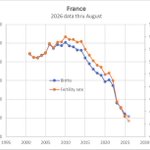
One of the best descriptions of the tragic situation I've read. You forgot to add that many of those benefits paid to 60+ are financed by debt which is expected to be paid by generstions half the size of current ones as fertlility in Europe is close to 1 child per couple only.
Richard Dominy retweeted

The ugly truth about France and some of the other European countries currently in turmoil - and which none of the politicians want to admit because it'd be political suicide - is that you can't solve the problem by going after immigrants (as the right asserts) or the rich (as the left asserts), but you could solve it by going after the old.
One extraordinary statistic for you: people over 60 in France, a quarter of the population, own 60% of France's wealth, non-financial and financial (ofce.fr/pdf/revue/2025/3-192…).
And here is another crazy statistic:
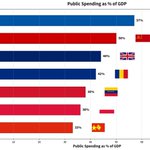
that same quarter of the population, those above 60, receive nearly two-thirds of all social spending by the French government (previssima.fr/actualite/prot…) - which is famously among the highest in the world (France's government spending is an insane 57.3% of GDP).
Last statistic: they make up about 40% of voters because they're a third of registered voters (insee.fr/fr/statistiques/266…), and they turn out far more than anyone else (franceinfo.fr/elections/sond…).
Put our 3 statistics together and there's almost a bit of an apartheid situation here: the old own most of the country's wealth, collect most of the social spending and have the political power to keep it that way.
Which makes them a de-facto rentier class, living off assets and transfers paid for by younger generations.
And, of course, at the risk of stating a truism, the future is built by the young. Yet France keeps effectively taking money away from them to give it to those whose working lives are already behind them - and need the money far less since they already own the country's wealth.
What about inheritance, I hear you ask? That's the funniest/saddest aspect: given that life expectancy has kept rising, the French now inherit a home at 54 on average. The most common case is someone in their 80s leaving it to heirs in their 50s, in effect the very old transferring wealth to the about-to-be old (insee.fr/fr/statistiques/fic…).
You can add this to our earlier apartheid statement: on top of all the rest, even when the old finally let go of their wealth, it stays within their own "camp".
That's my personal situation, incidentally: I'm 42, my father is 71 and he is starting to look at ways to pass things on to me and my siblings, when our professional lives are already well settled, so it'll arrive when it changes things the least, which is pretty much the French system in a nutshell.
Now, I get that there'd be some unfairness in going after them: they paid into the system their entire working lives, playing by the rules of a social contract that told them if they paid up they'd collect at the end. Changing the rules now means breaking that promise, which is admittedly unfair.
But there's no magic wealth tree in any society: you can only take it where it is. That's the way most major societal transformations end up happening. They're often triggered by a catastrophic event (the so-called "four horsemen": mass-mobilisation war, revolution, state collapse, plague) BUT what really drives change is a transfer: wealth gets pried from the privileged class who've been sitting on it and handed to those who'll build what comes next.
So, in theory and in an ideal world, you can do without the catastrophic event and directly proceed with the transfer...
The fact that in France, and elsewhere in Europe, it's the youth protesting is probably no coincidence - even though they don't frame it as a generational fight. And even though, cruel irony, the left politicians many of them march behind promise to bring the retirement age back to 60 (lcp.fr/actualites/legislativ…), which would make the situation even worse.
Let's say they understand intuitively that the system is stacked against them, even if they haven't yet figured out how. And politicians are obviously doing what politicians do, meaning pandering to the people who actually vote, while pointing the young towards easier - and politically convenient - scapegoats.
To be clear I'm not saying it's the only problem in France, VERY far from it. I'm also not saying that all old people in France live a lavish lifestyle at the expense of younger generations: there are also plenty of very poor retirees who, if anything, would deserve more.
What I am saying is that it's probably the biggest elephant in the room: everyone can see it, nobody dares mention it - no politician, from any side, wants to run on cutting grandma's pension - and it makes every other problem harder to fix.
Richard Dominy retweeted

Major investigation from The Sunday Times - the Scottish state is paying a minimum of £27m a year to around 800 public sector workers, in the NHS, councils, police etc who do not have a job, but they cannot be made redundant owing to SNP policy
thetimes.com/uk/scotland/art…

Richard Dominy retweeted
Official figures out this morning report that last month, the UK government borrowed £24.5 billion.
But the fineprint shows that almost £11 billion of that extra borrowing went on debt interest payments.
That's more than £400 per household on debt service costs, in September alone.
So far during this financial year, from April to September, the government's debt interest payments amount to £61 billion.
Now, this number will barely feature in UK newspapers and across our airwaves. It may be mentioned in passing in out-of-the-way business sections, or on the odd business bulletin.
But this huge debt interest bill won't register with the vast majority of our political and media class, or impact the national debate.
Let me explain why that's so wrong and so dangerous ...
£61 billion is a massive amount of money.
It's equivalent to the UK's entire annual defence budget – the money we're paying, increasingly to foreign creditors, simply to service our national debt for six months, not to pay any of it back.
£61 billion is equivalent to the money you'd raise over a year from adding a whopping 7 pence to the basic rate of income tax.
For £61 billion, you could build around 40 large, state-of-the-art hospitals, or employ more than 100 thousand extra nurses for ten years.
£61 billion would pay for free-at-the-point of use social care for everyone who needs it in the UK, for an entire year – three times over.
Again, this is the debt interest bill on Britain's spiralling national debt – now more than 3 trillion pounds – over the last six months alone.
The UK's public finances are close to meltdown – yet so many MPs and journalists continue blithely to view ever more public spending and borrowing as the answer to every problem.
Those who highlight the dangers post by our hugely precarious national accounts are dismissed as cranks, ideologues or worse.
But basic arithmetic has no ideology.
And there is nothing "progressive" or "kind" or "right-on" about driving the UK ever closer to the fiscal cliff edge, provoking a crisis that will make the "austerity" years of the 2010s feel like a picnic, a crisis in which poorer households will suffer the most.
Yes, Britain's national debt is lower than that of France. But because our borrowing has been rising so sharply, and because we're so prone to inflation, our debt service costs are much higher.
The UK is spending a disgraceful 3.6pc of GDP on public debt interest, while France spends less than 2.5pc.
Endless airtime and column inches are devoted to spurious conversations about a billion or two of additional "fiscal headroom" we may or may not have in three years' time.
And, of course, any "extra headroom" is immediately pledged in new spending – which means yet more borrowing.
These conversations are a waste of time – and, in fact, are deeply counterproductive. Three-year fiscal forecasts, even one- and two-year forecasts, routinely turn out to be askew by tens of billions of pounds.
I'm not saying we don't need fiscal rules - we do, but we need more immediate rules, which actually bite, acting as a meaningful constraint on out-of-control borrowing and spending.
Instead, political and media sages present the nation with spuriously precise discussions about fictional fiscal outcomes way into the future – using rules which are deliberately designed to kick arithmetic realities into the long grass ....
An increasingly expensive, over-bearing, out of control state is not the answer to Britain problems.
But unless we change course, it will certainly be our downfall.
Please like/share if you think what I'm saying is important – and if fiscal realities should feature more prominently in our national debate.
And for more sharp, plain-speaking economic analysis subscribe to:
"When The Facts Change - economic and politics in a fast-moving world, with Liam Halligan"

Richard Dominy retweeted

This week on The Andrew Neil Report: Hard left rioters burning France have just handed Marine Le Pen unstoppable victory
youtu.be/efLy21KPj24?si=QP4u… via @YouTube

This is the clearest analysis of the French situation I have listened to.

This week on The Andrew Neil Report: Hard left rioters burning France have just handed Marine Le Pen unstoppable victory
youtu.be/efLy21KPj24?si=QP4u… via @YouTube
Should the government ever be allowed to exceed 40% of GDP ?
To my mind if it does it means the state is too large and is doing too much.
Richard Dominy retweeted

My guess is that the political class in France is simply waiting for an outsider to force down the medicine that they can't administer themselves.
Richard Dominy retweeted
We've all heard about the lavish French pensions pushing France toward a debt crisis, but France is not alone. Look at Italy, Austria, or Greece, they have similar levels of pension spending as a percentage of GDP.
Demographics make it worse. In the not-too-distant future, just a few years from now, a large cohort of boomers will reach retirement age, pushing pension and healthcare spending much higher.
No politicians dare state the obvious and tell their voters that pensions are unsustainable. It's pure math, current pension levels will overstretch budgets and the ability to issue more debt at reasonable rates in several European countries. The ECB will of course step in and monetize sovereign debt, devaluing the euro and making everyone in the Eurozone poorer.
Pensions are just one of many Europe’s problems. If you own euro-denominated assets, hedge them. The euro will follow the Japanese yen's path and lose value.

Richard Dominy retweeted

We talk about growth coming from the Oxford-Cambridge Arc. But we’ve cancelled the link road, only built half the railway and then refused to run any passenger trains on it and now we’ve shut Oxford to traffic. This is not a serious country if we want to unlock innovation.
Richard Dominy retweeted

This chart highlights the current govt’s poor record on public finances, highlighted by @afneil below

There’s a lot of self-serving spin emanating from the UK government about how virtuous it is re fiscal consolidation.
Here are the facts.
Labour inherited an OBR budget deficit forecast of £87bn (3.1% GDP) for FY2024/25. After R Reeves’ 1st disastrous budget the actual deficit was £153bn (5.2%). Massive jump.
Labour inherited OBR budget deficit of £77bn (2.7%) for FY2025/26. After RR’s disastrous 2nd budget that turned out to be £133bn (4.3%).
So in its first two years it added over £120bn to borrowing/deficit (despite huge increase in taxes).
The OBR forecast it inherited for this FY2026/27 was £69bn (2.3%). It is now forecast to be £116bn (3.3%). That looks like an underestimate. More likely to be closer to £130bn again.
Inherited budget forecast for 2027/28: £51bn (1.6%). Latest forecast: £97bn (2.9%).
Inherited budget forecast for 2028/29: £39bn (1.2%). Latest forecast: £86bn (2.5%).
Far from fiscal consolidation Labour is forecast to borrow an incredible £260bn more over the 5 years from 2024/25 than the forecasts it inherited. Despite the tax rises.
Which will continue. Alone among G7 countries the IMF projects the UK tax burden to rise by 3.7% of GDP 2025-31. The only other country with a rising tax burden is France (0.8%). Italy is static. Rest of G7 have falling tax burden.
And let’s not forget Labour’s so-called ‘fiscal consolidation’ is all backloaded to end-decade. Unlikely to happen. So taxes will have to rise by even more.
Richard Dominy retweeted

It's getting embarrassing now... This morning @neso_energy has blown through the intraday interconnector trading limits again and like yesterday the frequency has been above and below the safe operational limits
Margins are perfectly fine so I can only think this is a combination of poor modelling and forecasting and the grid constraints affecting the SE
Yesterday saw record balancing costs of just under £50 million so this isn't just a curiosity, it's chaos that's driving bills higher (balancing costs are part of network costs)
(images from Amira Technologies and LCP Enact)
@Miatsf @mgshanks @AndrewBowie_MP @ClaireCoutinho @harrietc @ColinMoynihanUK @drlukeevans @ashley7fox @TiceRichard @cmackinlay @DavidGHFrost @mattwridley @Iromg @AllisonPearson @MerrynSW @EdConwaySky @afneil @mattotele @jonathan_leake @julietsamuel @energygovuk @ofgem


Richard Dominy retweeted

My @thetimes column: Four/five incidents in 2 weeks on the UK electricity grid. We’re begging France for power. Why are the grid bosses gaslighting us?
times-comment.com/72547570

Richard Dominy retweeted

Devil’s in the detail!
#alexpo materially changes below-ground plans for #hamptoncourt #station-removing #parking provision!
HCRC’s detailed analysis online⬇️
share.google/ZYWPY7uvAAm1ADM…
Certain that #molesey #residents have views.
Comment to #elmbridge 2026/2098
@monicabeharding