

Chair of Apologetics at HCU, author of Tolkien Dogmatics. Focus on theology & literature, fantasy, angelology/demonology, sin, creation, patristics.....
The Wood between the Worlds
Joined November 2022
- Tweets2.4K
- Following376
- Followers481
- Likes429


Matthew Arnold, St Paul & Protestantism.
Read without really understanding the context, but basically says we were wrong to try to dogmatize the "oriental" mind of Paul the rhetorician. Puritanism bad, Anglican ecclesiology good. How dare we ask for doctrinal agreement, right?

The Inner Lives of Medieval Inquisitors, Karen Sullivan.
Reread for class. This time through, I'm struck by how men like Dominic or Peter of Verona were far more effective in conversions & repentance than others, simply because they were humble, honest(ish) & loved their enemies.

Super-Infinite: The Transformations of John Donne, Katherine Rundell.
I'm not sure there was any such person as John Donne. What was the man, and what was the mask he donned?

What Barfield Thought, Landon Loftin & Max Leyf.
HCU Apologetics alums do good work. As far as an intro to Barfield, it fares well. As far as convincing me to *agree* with Barfield, well...

Joy Davidman, A Naked Tree: Love Sonnets to C.S. Lewis & Other Poems.
Wow. Joy continues with a rather masculine, assertive poetic voice here as well. These include poems from her pre-Christian phase, but even the unrequited love sonnets to CSL are...racy.

On this Christian holiday, the last and longest of my Halloween essays, this time featuring Chesterton:
commongoodmag.com/horror-has…

Continuing my reposts, here's a more explicitly Halloween-themed Lovecraft blog post:
popularcultureandtheology.co…

Tis the season to reshare my older short pieces on Halloween.
First up is a blog post I wrote several years back on the Lovecraft book:
popularcultureandtheology.co…

Sigmund Freud, Civilization& Its Discontents.
Reread for Honors. Freud is such a good writer & cultivates such a tone of authority that it's hard to remember he's just totally making stuff up.

God's Battalions, Rodney Stark.
Rereading for class. So many chads in the 1st Crusade. And what would have happened if Emperor Alexios hadn't been a total dope?

The Camp of the Saints, Jean Raspail.
An *actually* banned book. Had no idea Raspail was such an otherwise prestigious writer. He reminds me of Lovecraft in that he couches the horror of the other race in his account in a primarily aesthetic revulsion, rather than a moral one.


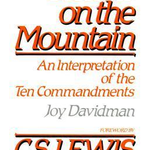
Joy Davidman, Smoke on the Mountain.
My first Davidman book. Combines cynicism with supernatural optimism. A rather masculine tone. I can see why she and Lewis were drawn to one another.

C.S. Lewis in Context, Doris Myers.
Been on a break but we're back, baby! A nice work but I disagree with the idea that everything in CSL goes back to the control of language, & esp. w/the idea that Narnia is a reworking of Faerie Queene.

Jack Lewis & His American Cousin, Nat Hawthorne, D.G. Kehl.
Not sure this book is successful, despite Lewis's avowed admiration for Hawthorne. IMO, the large structural parallels don't discount the stark differences in tone and worldview.

Beginning with the Word: Modern Literature & the Question of Belief, Roger Lundin.
I'm not sure I grasp the overall argument of this book, but it does have smaller illuminating sections. Mostly a thematic study, e.g possibility, doubt, evil, etc.

The Death of Grass, John Christopher.
A plague kills all grasses in the world and ends civilization. Small-scale dystopian story about travel from London into the countryside while society crumbles.

Full Circle: How the Classical World Came Back to Us, Ferdinand Mount.
Journalistic ruminations. Direct similarities between our worlds: health spas, celebrities...& an eastern religion brought mostly by the underclass swiftly replacing the old culture/faith. Just OK.

