
Double Board-Certified Internist & Medical Oncologist | Neuro-Oncologist | 20+ yr Academic Physician-Scientist | Opinions my own • Reposts ≠ endorsement
Joined May 2026
- Tweets1.2K
- Following2
- Followers62
- Likes84

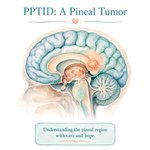


Pineal parenchymal tumor of intermediate differentiation (PPTID) sits between slow growing pineocytoma and fast growing pineoblastoma. Often found in adults, it can block brain fluid, causing headaches or trouble looking upward. Surgery leads care. #BrainTumor

1
11
During brain radiation, some people notice brief flashes of light or an odd chemical or metallic smell. It is a known sensation when the beam passes near vision or smell pathways, and it usually stops when the beam stops. Telling the radiation team helps. #glioblastoma

16
Cauda equina neuroendocrine tumor, once called spinal paraganglioma, is a rare, usually benign tumor in the lower spine. Lasting low back pain or sciatica-like leg pain is often the first sign. MRI finds it, and complete removal is usually curative. #CNStumor

23
In glioblastoma surgery, many centers use neuronavigation, a GPS-like system that maps the brain to a preoperative MRI. Some also use an MRI scanner in the operating room to check for leftover tumor before closing. Ask which tools your surgeon uses. #glioblastoma

25
Not every pigmented brain tumor is melanoma that spread from the skin. Rare primary melanocytic tumors start in pigment cells of the brain coverings. Meningeal melanocytoma is often slow growing, and GNAQ or GNA11 gene tests help tell them apart. #BrainTumor

19
Does the time of day you take chemo matter? Ask your team before changing dose times. #glioblastoma

17
Hypothesis: Closed-loop threads could one day map the most active tracts as likely invasion routes, then test damping them in Glioblastoma. @neuralink @elonmusk

20
I propose an electrical fingerprint of glioma genotype. Some PIK3CA variants drive brain hyperactivity via secreted glypican-3 (Yu, Nature 2020). Could implant recordings one day infer glioblastoma biology from network activity, between scans and biopsies? @neuralink @elonmusk

23
Posterior fossa ependymoma is grouped as PFA or PFB. PFA is more common in young children and can be harder to control. PFB is seen more often in older children and adults and often has a better outlook. Ask if molecular grouping was done. #Ependymoma

1
13
Some people with glioblastoma develop hydrocephalus, a buildup of brain fluid, sometimes months after treatment. Watch for new trouble walking, memory slips, worse headaches or bladder urgency, and tell the team. A shunt can often help. #glioblastoma

14
Epithelioid glioblastoma is a rare subtype named for large, rounded tumor cells under the microscope. It is more common in younger adults, and many carry a BRAF V600E change. Asking whether BRAF was tested can open doors to targeted options or trials. #glioblastoma

41
A facial nerve schwannoma is a rare, usually benign tumor on the nerve that moves the face. Signs can include worsening weakness or twitching on one side of the face, or hearing changes. Many are watched with MRI, with radiation or surgery as options. #BrainTumor

18
Leptomeningeal disease means cancer cells in the fluid and lining around the brain and spine. A spinal tap lets the lab look for these cells, but one clear sample does not always rule it out, so a repeat tap plus brain and spine MRI may be advised. #BrainTumor

91
When glioblastoma regrows after temozolomide, some tumors pick up many new DNA changes, called hypermutation, often tied to shifts in DNA repair genes. Testing tissue from a repeat surgery can reveal this and help guide next steps and trial choices. #glioblastoma

Ahead of Thanksgiving, deep gratitude to every @neuralink participant and family who said yes to the unknown so others could benefit. Brain tumor patients know that courage well. Hoping one day it opens doors for people with glioblastoma too. @elonmusk

47
Brain computer interface research and neuro-oncology could learn so much from each other through shared questions, data and publications. I would love to see @neuralink and brain tumor researchers build that bridge one day for people with glioblastoma. @elonmusk

1
65
Some brain tumors in frontal and parietal areas cause apraxia: the muscles work, but planning a movement breaks down. It would be fascinating to learn one day whether a BCI could help bridge intention and action for glioblastoma survivors. @neuralink @elonmusk

36
Many people with glioblastoma near language areas know exactly what they want to say but cannot find the words. I hope future @neuralink speech research can one day explore decoding intended words for patients with this kind of word finding loss. @elonmusk

1
28
Some brain tumors in frontal and parietal areas cause apraxia: the muscles work, but planning a movement breaks down. It would be fascinating to learn one day whether a BCI could help bridge intention and action for glioblastoma survivors. @neuralink
32