

Gods child|Humanity first|Health Systems & Policy|
Joined May 2009
- Tweets20.9K
- Following1.3K
- Followers1.8K
- Likes9.7K


Pinned Tweet
We need to question all ‘donor fads’, not only performance-based financing - go.shr.lc/2G2jK0K via @Shareaholic
Shola Mole retweeted
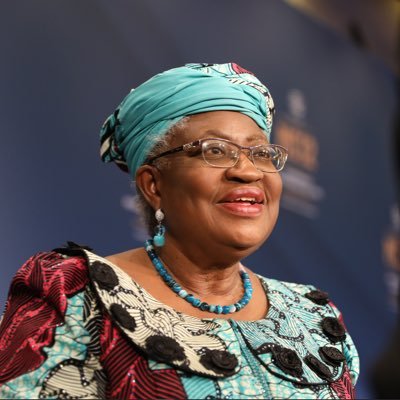
Hugely honored to be named African of the Decade at the 14th edition of the CNBC/Forbes Africa All Africa Business Leaders Award (AABLA). Also gave a special keynote address on "How Africa Can Navigate a Troubled World." Many thanks to Chairman CMA Holdings Rakesh Wahi and the independent panel of judges for this recognition of a decade of work and service to Africa and the world.


Shola Mole retweeted

Protect your community Prevent diphtheria
Diphtheria can spread easily, but early action can help stop the spread.Watch for symptoms, seek medical advice
Together, we can work towards a diphtheria-free Nigeria.
#C-Wins#DiphtheriaAwareness #VaccinationSavesLives #NPHCDA


Shola Mole retweeted

There seems an orchestrated attack on the concept of families and young people are willing tools in this. It starts from the daily gender wars and arguments about dating and eventually young people seeing no value in marriages and families which in turn leads to the destruction of society as a whole


Shola Mole retweeted

Global icon and humanitarian, Dolly Parton, known to the world as a beloved singer, songwriter, philanthropist, actress, playwright, and author died peacefully today in Nashville, Tennessee. She was 80 years old.
Dolly is preceded in death by her beloved husband of 59 years Carl Thomas Dean (1942 – 2025), her mother Avie Lee Caroline Owens (1923 – 2003), and father, Robert Lee Parton, Sr. (1921 – 2000).
A rhinestone life that shone bright enough for the world to see, Dolly will forever stand as an inspiration not only through her timeless music and prolific songwriting, but also her wit, warmth, and kindness that made us all feel like family. Dolly Parton’s legacy is one of love, compassion, and resilience. With a seven-decade career, she inspired multiple generations of artists and fans with her music and an unwavering commitment to making the world a better place. Her songs will continue to resonate with people of all ages, and her philanthropic work will have a lasting impact.
At Dolly’s request, a small, private service will be held for immediate family. Dolly’s fans and friends from around the world are encouraged to pay tribute to Dolly on social media by tagging @DollyParton or by leaving a message at dollyparton.com
In lieu of flowers the family asks for donations to be made to Dolly Parton’s Imagination Library at imaginationlibrary.com

Shola Mole retweeted

Applications are open!!!
Join the Academy of Public Health and become part of a community committed to advancing public health and wellbeing.
Deadline: 1st of October, 2026
Apply: aph.publichealth-edu.org/mem…
#APHP #PublicHealth #HealthProfessionals – at Abuja, Nigeria
Shola Mole retweeted

Someone tagged me to a post where a person asked, "What has the Catholic Church done for Nigerians?"
I smiled, because the answer is all around us. For well over a century, the Catholic Church has built and sustained schools, universities, hospitals, clinics, orphanages, rehabilitation centres, rural missions, homes for the elderly, and countless humanitarian programmes that serve and benefit millions of Nigerians both Catholics and non-Catholics alike.
The Church has also been a consistent voice for justice, good governance, peace, and the dignity of every human person.
The Church's impact is too visible to ignore.
What the Church cannot do for you, however, is what rightly belongs to the responsibility of government: provide security, build roads, create sound economic policies, and ensure the welfare of all citizens. That is the duty of the State, not the Church.
Shola Mole retweeted
A Response to Tope Ajayi’s Article "Cardinal Onaiyekan’s Abuse of Clerical Privilege"
I read the article titled “Cardinal Onaiyekan's Abuse of Clerical Privilege” by Temitope Ajayi with great interest. Surely, the article raises important questions about the relationship between the Church and the State. However, I believe some of its conclusions, particularly from the perspectives of constitutional democracy and the Church’s public mission, deserve a respectful and balanced response and clarifications.
Here is my point to point response to each of the concerns raised.
1. Was it improper for Cardinal Onaiyekan to speak publicly on Arise News?
Not necessarily. The meeting between President Tinubu and the Catholic Bishops of Nigeria was not a sacramental confession that requires utmost secrecy, a diplomatic negotiation under secrecy, or a legally confidential proceeding. Unless the participants expressly agreed to confidentiality, there is no legal or moral principle that absolutely prevents either party from commenting on the discussion afterward.
2. The Church has both the right and the duty to speak.
Catholic bishops are not merely private citizens expressing personal opinions. By virtue of their pastoral office, they have a responsibility to teach on moral and social issues. Catholic social teaching consistently affirms that the Church must speak whenever human dignity, justice, security, and the common good are at stake. That is exactly what the bishops did.
3. Speaking after a meeting is not necessarily a breach of trust.
Providing one’s understanding of a discussion is different from revealing confidential state secrets. Democratic engagement often includes explaining to the faithful what was discussed, particularly when the meeting like theirs concerns issues affecting millions of citizens.
4. Criticism of government is not a denial of progress.
One may acknowledge improvements while still concluding that much more remains to be done. Recognizing government achievements and identifying persistent failures are not mutually exclusive positions.
5. “Truth to power” remains relevant.
The fact that a president receives intelligence briefings does not eliminate the value of independent voices. Security reports, economic data, religious leaders, civil society, academics, journalists, and ordinary citizens each offer different perspectives. No single source possesses the whole truth.
6. Access to privileged information does not settle public debate.
The President undoubtedly possesses information unavailable to the public. However, democratic accountability also requires that government decisions remain open to public scrutiny and legitimate criticism.
7. Confidentiality should not become silence.
If public officials may explain their side of a meeting, religious leaders should not automatically be denied the same opportunity, provided they do so truthfully, respectfully, and without disclosing genuinely confidential matters.
8. Clerical office does not diminish civic responsibility.
The virtues expected of bishops such as prudence, temperance, and wisdom, do not require silence in the face of national concerns. History remembers many bishops who respectfully challenged civil authorities while remaining faithful to both the Gospel and legitimate constitutional order.
In all, the real issue is not whether Cardinal Onaiyekan spoke, but whether what he said was truthful, fair, and served the common good. I believe that in a constitutional democracy, respectful dialogue between religious leaders and civil authorities should continue not only behind closed doors but, when appropriate, also in the public square, just as Cardinal Onaiyekan did.
Fr. Ugochukwu Ugwoke, ISch


Cardinal Onaiyekan's Abuse of Clerical Privilege
By Temitope Ajayi
There is something fundamentally inappropriate about Cardinal John Onaiyekan granting a television interview to offer his own account and interpretation of what transpired during the private meeting between the Catholic Bishops' Conference of Nigeria and President Bola Tinubu. It is, in my view, an abuse of clerical privilege.
The bishops requested an audience with the president. He granted the audience graciously. They presented, as was their right, a catalogue of the country's economic, social, and security challenges as they saw them. Except for their grudging acknowledgement of the benefits of NELFUND, they were dismissive of the other great things done by the administration. The bishops were notably acerbic in their submission, but the president listened to them patiently and responded.
That should ordinarily have been where the matter rested. None of the issues raised by the bishops is beyond scrutiny or rebuttal. Their assessment is neither scripture nor an article of faith. It is a perspective, and perspectives can be challenged with facts and evidence.
President Tinubu did exactly that, responding point by point to the issues they raised. On the bishops' demand for the return of schools to their owners, the President was surprised that such an issue could be tabled before him, as it is a matter for the states to resolve, in line with our constitution. So, he asked the bishops to take the matter to the governors and reminded them he returned mission schools in Lagos State when he was governor.
The President argued that the bishops’ characterisation of the country's current condition was incomplete and, in several respects, inaccurate. He pointed to measurable progress on the economic, social, and security fronts. He did not pretend that Nigeria's problems had disappeared. He acknowledged that significant economic and security challenges remain. His point was that the country has emerged from "a dark tunnel", that his administration has laid the foundations for recovery and that the next phase is to ensure the greatest number of Nigerians feels the gains.
What the clerics often overlook in these interventions is that governing a country is fundamentally different from shepherding a church. In a democracy, every interest group, including the Catholic Church, has every right to demand more from government. That is part of democratic engagement.
But the president of a nation of more than 200 million people is required to make difficult choices every single day. Those choices involve competing interests, limited resources, and imperfect options. They will inevitably disappoint some constituencies. There is no president, whether Tinubu or whoever succeeds him, who can wave a magic wand and make Nigeria's accumulated problems disappear overnight.
It is easy to compile a list of national problems. It is far more difficult to acknowledge the disasters that have been averted. Whatever anyone thinks of President Tinubu's policies, it is impossible to ignore the fiscal crisis he inherited and the measures taken to pull the country away from the edge of a financial cliff. Even the bishops themselves should recognise that one tangible consequence has been the restoration of greater fiscal stability across many states.
Countless civil servants and pensioners who, for years, endured unpaid salaries and pensions are now receiving them more regularly. That was certainly not the reality in many states from around 2014. Even about four years ago, 27 state governments struggled to meet even their most basic obligations. Many of those civil servants and pensioners are themselves parishioners in Catholic churches.
They know, from lived experience rather than official pronouncements, that there has been real relief in the regular payment of salaries and pensions. While this does not erase the discomfort many Nigerians still face, it is wrong to dismiss or ignore those improvements casually.
So when President Tinubu reminded the bishops of these facts during the meeting, he was not, as Cardinal Onaiyekan later suggested, being aloof or dismissive. He was presenting evidence to support his argument that the country is not standing still. A disagreement over facts should not be interpreted as arrogance.
The same applies to security. The bishops declared that Nigeria is bleeding. The President thinks otherwise. President Tinubu did not deny the seriousness of the security situation. Rather, he acknowledged the challenge while outlining the gains recorded by the Armed Forces and intelligence agencies across different theatres of operation.
As Commander-in-Chief, he receives operational briefings, intelligence assessments, and battlefield reports unavailable to the general public. The bishops, like other Nigerians, rely largely on media reports and public information. That does not make the President infallible, but it does mean he possesses information unavailable to the generality of the people. It is, therefore, legitimate for him to argue that the overall picture is more nuanced than newspaper headlines sometimes suggest.
Cardinal Onaiyekan's Arise News interview also reflected a familiar error that many ideological and professional critics make. They often assume that only critics speak truth to power, while everyone around a leader is either unwilling or incapable of doing so. It is an attractive narrative, but it is rarely true.
What truth does anyone really need to tell President Tinubu that he does not already know? As president, he has multiple channels for feeling the pulse of the country. He reads an average of 10 newspapers every day. He watches television, including discussion programmes, to gauge public opinion. He receives daily security, social, and economic intelligence reports from various arms of government, reports that are prepared for decision-making and are not sugar-coated. In a meeting earlier in the week, he still referenced a very harsh and largely uninformed opinion piece written by Dr. Chidi Amuta in his last Sunday Thisday Newspaper column.
Beyond that, he has friends and associates embedded in the social fabric of the country, drawn from different regions, professions, and political persuasions, who serve as informal sounding boards. Against that background, the suggestion that President Tinubu somehow needs only the Catholic Bishops to acquaint him with the truth is an overreach. They are an important constituency, but they are by no means the exclusive custodians of the national mood or the nation's conscience.
To assume that criticism delivered publicly is the only form of truth-telling is to misunderstand how government works. Presidents are exposed daily to competing advice, conflicting intelligence, uncomfortable assessments, and hard realities. Presidents are constantly confronted with information, much of it unpleasant. The real question is not whether they know the truth but what choices they make in response to it.
The Catholic Bishops discharged what they considered their moral obligation by presenting their concerns to the president. President Tinubu, for his part, accorded them respect by granting them an audience and responding to every issue they raised. That exchange reflected the civility expected in a constitutional democracy.
Reciprocity should have dictated that the confidentiality and dignity of that engagement be preserved. As such, it was inappropriate for one of the participants to emerge almost immediately on national television to provide his own version of what was essentially a private conversation with the president. Clerical office carries privileges, but it also imposes obligations. Among the qualities the Scriptures require of bishops are temperance, maturity, self-restraint, and the wisdom to remain above needless public controversy. Those virtues become even more important when dealing with matters of state. Public influence should be exercised with discretion, not by converting privileged access into a platform for post-meeting commentary.
-Ajayi is Senior Special Assistant to President Tinubu on Media and Publicity


Shola Mole retweeted
Stupidity is knowing the truth, seeing the truth but still believing the lies.
And that is more infectious than any other disease.
—Professor Richard Feynman


Shola Mole retweeted

The wait is over.
@Arsenal are Premier League champions.
Shola Mole retweeted

We are currently recruiting Global Health Research (GHR) experts and community engagement and involvement specialists for our GHR committees.
Applications close on 26 May 2026. Find out how to apply: nihr.ac.uk/get-involved/comm…

ALT “Being part of NIHR's GHR committees has been an exciting opportunity to help shape funding decisions that support high-quality, truly impactful research in LMICs." Professor Joe Jarvis, NIHR Global Health Research Professor
Shola Mole retweeted
When your heart is overwhelmed and words cannot express it, may God understand your silence and comfort you deeply🙏🏽
Shola Mole retweeted

Woe to those who manipulate religion and the very name of God for their own military, economic, and political gain, dragging that which is sacred into darkness and filth. #ApostolicJourney #Cameroon vatican.va/content/leo-xiv/e…
Shola Mole retweeted

I tested something I'd written myself: my first academic article, published 45 years ago. It came in at 77% AI-generated.


