

Assist. Professor @IUIndianapolis Dept. of Psychology | Neuroscientist | Dad | Opinions my own
Indianapolis, IN
Joined June 2013
- Tweets1.3K
- Following632
- Followers579
- Likes4.1K





Pinned Tweet
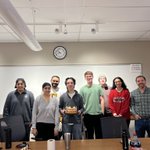
Havnt posted in a while but figured a first group picture of the Kesner Lab @IUIndianapolis would be a nice one! 💪 🧑🔬!

Drew Kesner retweeted

Yeh… and the numbers are wild.
Three people with drug-resistant epilepsy. Gene therapy puts a synthetic dimmer switch (a DREADD) into the tiny patch of brain firing the seizures. An oral drug turns that patch down.
Seizures fell by more than 90%. No serious side effects in this pilot.
DREADDs = Designer Receptors Exclusively Activated by Designer Drugs. Lab tool for years. Now it’s in humans… and it’s working.
Not a finished cure yet (tiny study, and the companion drug still needs work). But this is what “engineering the brain” was supposed to look like.
References
- Nature: nature.com/articles/d41586-0…
- C&EN: cen.acs.org/pharmaceuticals/…
- NEJM letter: Dai et al., 2026


Dreadds work in humans nejm.org/doi/full/10.1056/NE…

Drew Kesner retweeted

Dreadds work in humans nejm.org/doi/full/10.1056/NE…
Drew Kesner retweeted

A major milestone for Chemogenetics. DREADD technology demonstrates therapeutic efficacy in humans.
A new study published today in NEJM demonstrates preliminary safety and therapeutic benefit from DREADD-based chemogenetic treatment of refractory epilepsy, marking an extraordinary milestone for neuroscience and precision medicine.
nejm.org/doi/full/10.1056/NE…
The approach combines targeted AAV gene delivery at the epileptogenic locus with very low, subthreshold doses of clozapine to activate engineered DREADD receptors and modulate neuronal activity.
Congratulations to Bryan Roth, whose pioneering discovery of DREADDs made this field possible, and to the investigators of the NEJM study for bringing this technology to patients.
This achievement has a particularly meaningful connection to our work published in Science Magazine in 2017.
science.org/doi/10.1126/scie…
We showed that clozapine, rather than CNO itself, is the active mediator of DREADD activation in vivo and proposed that subthreshold doses of clozapine could be used to activate DREADDs in humans, anticipating a practical path toward clinical translation.
At the time, many in the scientific community viewed these findings primarily as relevant to the design of preclinical DREADD experiments. We saw a much broader opportunity, translating Chemogenetics into human therapeutics. Nearly a decade later, that vision is now becoming a reality.
Our 2017 study was supported by the research funding through the National Institutes of Health (NIH) and The National Institute on Drug Abuse (NIDA), a prime example of how fundamental basic research can ultimately enable transformative clinical applications.
This is an exciting beginning, but larger, well-controlled studies are essential to establish the magnitude and durability of therapeutic benefit and long-term safety.
Chemogenetics is moving beyond an experimental neuroscience tool toward a potentially transformative neuroscience platform. We are only beginning to realize its potential.
Drew Kesner retweeted

BREAKING NEWS
The 2026 #NobelPrize in Physiology or Medicine has been awarded to Karl Deisseroth, Peter Hegemann and Georg Nagel “for their discoveries concerning light-gated ion channels and optogenetics.”

Drew Kesner retweeted

Validating an animal model of drug inhalation is hard compared to intravenous models. Nicotine concentration, freebase or salt, PG/VG ratio, coil and tank, puff volume and frequency, session length, airflow, chamber size: dozens and dozens of parameters, and changing one can shift the result.
Our new paper on the topic led by Sélène Zahedi is one more step toward vaping models that are reproducible and closer to how people actually use these products. Using off-the-shelf vape pod, a syringe pump, four chambers. The great result is we get really relevant blood cotinine levels of ~30, 76 and 194 ng/mL at 5, 15 and 50 mg/mL, spanning the dependence threshold and the range of light to moderate smokers, in a single 1h session.
- Two weeks of exposure produced somatic withdrawal (paw and body tremors) and locomotor hyperactivity (agitation? sensitization?). - No anxiety-like behavior or hypothermia at this dose and duration..
No single paper validates a model. It takes multiple studies, multiple labs, and a lot of iterative work.
Funded by @NIH and TRDRP, at @PsychiatryUcsd.
Full blog post on our website: oliviergeorge.com/news/2026-…
doi.org/10.1016/j.jneumeth.2…

ALT Bar graph of serum cotinine in female and male mice after one hour of 0, 5, 15, or 50 mg/mL nicotine vapor, rising with dose, with males higher than females at 50 mg/mL (Zahedi et al. 2026, Fig. 2).
Drew Kesner retweeted

Cannabis potency is not dose. Here we describe ways that principles of behavioral pharmacology are essential to understanding the science of this complicated plant! authors.elsevier.com/a/1noE3…
Drew Kesner retweeted
First human trials of designer protein therapies stun US neuroscientists cen.acs.org/biological-chemi… via @cenmag

👀

Memories can survive even after the brain temporarily loses more than half of its synaptic connections, according to a new mouse study in Science, which challenges the long-held view that long-term memories depend on stable individual synapses.
Learn more: scim.ag/4x3dVZG

392
This is so cool. Well done. A great example of open science/citizen science.
antscout.com/blogs/identific…
1
136
Very timely article (and fun read!) in @PopSci on cannabis and sleep/dreams. I had an awesome time being interviewed about the science on this topic. My lab at @IUIndianapolis will continue figuring out how THC effects sleep, so stay tuned!
popsci.com/health/how-weed-a…

Drew Kesner retweeted
Go big or go home.
Bigger reward leads to better learning is not exactly news. What's striking is that much of the systems neuroscience field persevered for decades with tiny rewards, based on old work suggesting dopamine responses saturate at modest reward sizes (more trials is better for recordings though).
Worth flagging that this wasn't universal. The addiction field, including our lab, has long used 100 µL rewards for water, alcohol, and sweeteners in self-administration. Looks like we were onto something.
Mice learn navigation, motor, and decision tasks ~10x faster with a few large rewards vs many small. Sustained NAc dopamine scales with reward size, drives engagement, drives learning.
doi.org/10.1126/science.aeb0…

Drew Kesner retweeted

🚀 Postdoc Opportunity in Systems Biology @NIH (NIAAA)
Join our collaborative team studying fibrosis using cutting-edge multi-omics & spatial biology approaches.
📍 Bethesda, MD, USA
🔗 training.nih.gov/jobs/pd-080…
#Postdoc #Bioinformatics #SystemsBiology #Omics #NIH
Very exciting to see @IUIndianapolis ranking extremely well in this new research productivity Index. Ranked #1 in Universities "Punching Above Their Weight in Biomedical Innovation" and in the top 50 overall!
wewillcure.com/insights/inno…
1
95
Drew Kesner retweeted
Why female-specific research is critical to understand addiction?
For decades, females were basically ignored in addiction neuroscience. Then, thanks to the NIH SABV mandates almost exactly 10 years ago, researchers started including females, and things got intriguing, some evidence suggested the estrous cycle may influence the motivation to take cocaine.
Our lab just published a paper in @PsychopharmEBPS, led by Dr. Elizabeth Sneddon @esneddon21, that forces us to rethink this relationship. We tested whether estrous phase influences cocaine self-administration in our Heterogeneous Stock (HS) rat model, using over 400 female rats, one of the largest female cocaine datasets ever generated.
The answer: no. Estrous phase had no association with cocaine intake during short access, long access, or progressive ratio sessions. High vs. low estrogen groupings? No difference. This is a null finding and null findings matter. But the story gets far more interesting.

Check out this and all of @cannabisboomer's awesome sci-podcast episodes! Was a lot of fun chatting with Alex about this interesting and timely topic.

The Cannabis Boomer just dropped his 10th episode! This episode is about cannabis and sleep science featuring @DrewKesner and @LavenderIsobel. Listen on your favorite podcast platform or here:
player.captivate.fm/episode/…
#CannabisSleep #CBNforSleep #THCandSleep #SleepMedicine #Insomnia #CannabisResearch #SleepScience #REM #CannabinoidScience #SleepHealth #CannabisEducation #SleepArchitecture #CannabisPodcast #CannabisBoomerPodcast
1
162
Drew Kesner retweeted
BREAKING NEWS
The 2025 #NobelPrize in Physiology or Medicine has been awarded to Mary E. Brunkow, Fred Ramsdell and Shimon Sakaguchi “for their discoveries concerning peripheral immune tolerance.”


Drew Kesner retweeted

This month’s "Launch" newsletter features an essay by @sjo09 on the importance of reading (but not too much), Q&As with Ana Gonzalez-Rueda and @DrewKesner about their new labs, the latest job openings & more. Subscribe to receive the newsletter each month: thetransmitter.org/newslette…
