

Various pictures and memorabilia related to the military history of Dublin 1900 to 1923. All images and items shown are part of a single private collection.
Dublin City, Ireland
Joined March 2023
- Tweets1.1K
- Following153
- Followers1K
- Likes2K



On 15th November 1920 3 British officers were taken off a train in Cork and executed by the IRA in an episode called the Waterfall kidnappings. Captain Stewart Chambers was one of those officers. Aged 29 he had served the entire First World War. This is his officer’s sword.


Memento book that belonged to a nurse in the Royal City of Dublin hospital. There are handwritten notes, drawings and verses from British and Australian troops and nurses stationed there during World War One. This hospital also treated casualties from the 1916 Rising.


Glass plate negatives of Georgian and Victorian military badges associated with Dublin including Royal Dublin Fusiliers, Rotunda Infantry, Kildare Rifles and Dublin County Militia.

Sketch by Lord Basil Blackwood who was private secretary to Viscount Wimborne, Lord Lieutenant of Ireland at the time of the 1916 Rising. A Sinn Fein propaganda label is incorporated into the drawing. Blackwood was killed in action in July 1917.

1
2
217


Thomas Kettle was an Irish writer, barrister, politician and war poet who died on the 9th September 1916 at Ginchy serving with the 9th Battalion Royal Dublin Fusiliers. Also to die in that battle was Sergeant John Penny. Their battalion suffered over 200 casualties that day.


Handwritten 1907 dated letter from Neville Chamberlain Inspector General of the Royal Irish Constabulary on headed RIC Dublin Castle paper. Chamberlain resigned his position in the aftermath of the 1916 Easter Rising.

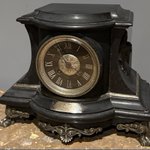
Victorian slate clock presented in 1894 to Charles Quinn Esquire by the Regular Operative Coopers Society of the City of Dublin. This was one of Dublin’s oldest trade guilds that dated back to the 1500’s.


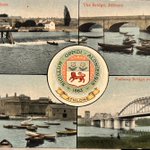
Postcard sent from Athlone in May 1916 by a soldier of the 2/8th Sherwood Foresters. This unit was sent to Dublin during the 1916 Rising and was engaged in heavy fighting with Republican forces of the Third Battalion Dublin Brigade at Mount St. Bridge.


King George V reviewing boys of the Hibernian Military School in the Phoenix Park Dublin in July 1911.


City of Dublin Steam Packet Co postcard sent from the RMS Leinster to an address in Dublin. In October 1918 the Leinster was torpedoed by a German U-Boat a few miles off the coast of Dublin resulting in the largest single loss of life in the Irish Sea.


Royal Dublin Fusiliers title, this particular pattern was introduced just prior to the start of the Boer War.

WW1 certificate of service awarded to Samuel George Corrigan who served with the 10th Battalion Royal Dublin Fusiliers. Given his enlistment date it’s likely that he took part in the 1916 Rising when the 10th Battalion were engaged against Irish Republican forces.

Photos of his son and niece sent in August 1916 to Irish Volunteer James Mallon while he was imprisoned in Frongoch Camp in Wales. Mallon had fought in the 1916 Rising and he would later be interned in Ballykinlar Camp during the War of Independence in 1921.


The 1916 Rising wasn’t General Maxwells first time in Dublin. In 1908 while serving as Chief Staff Officer to the Irish Command, he sent this letter on Royal Hospital Kilmainham headed paper to someone who requested his autograph.


WW1 patriotic postcard featuring a soldier thinking of home, which is represented as an Irish cottage and shamrocks. The original sender has crossed out Tipperary to the front and written “Greystones”. The card was sent during WW1 from London to an address in Dublin.


