






Dubtron retweeted
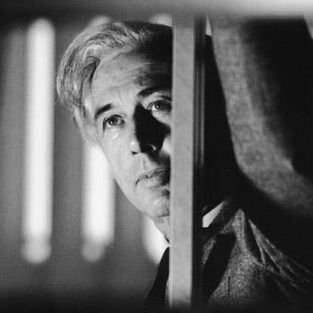
Taste of Cherry (1997, Kiarostami)
"Life is a choice & not a sentence, but often we do not realize this. When we accept life as a bundle of constraints we are actually making a choice. I want to tell people: if you choose to live, then do it well."
--- Abbas Kiarostami


Dubtron retweeted
Three Colors: Blue (1993, Kieślowski)
“I believe the life of every person is worthy of scrutiny, containing its own secrets & dramas.”
— Krzysztof Kieślowski.


Dubtron retweeted
Maybe the greatest one shot scene ever from Mikhail Kalatozov's SOY CUBA in 1964. Incredible stuff.
Dubtron retweeted
"I have to be in touch with my delusions, my discomforts & my fears; they provide me the material with which I work. I make a bundle of all these, along with my disasters, my voids, & my chasms, & I try to observe them with sanity, in a conciliatory manner."
--- Federico Fellini
Dubtron retweeted

Remembering #ManiKaul on his 12th death anniversary (06/07/11).
He was arguably the greatest Indian director of Hindi films and an influential figure in Indian parallel cinema.
What are your favorite Mani Kaul films?
@IAmSudhirMishra @anuragkashyap72 @_AdilHussain @MunishBhardwaj


Dubtron retweeted
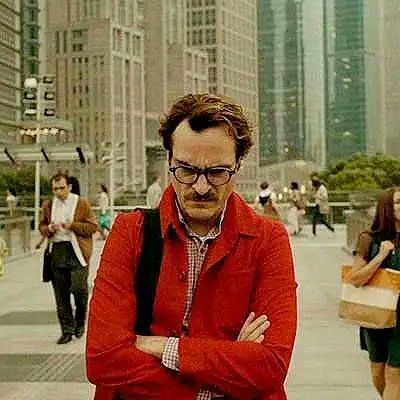
Leonardo DiCaprio, Martin Scorsese and Robert De Niro pose together at the #KillersOfTheFlowerMoon premiere at Cannes Film Festival.


Dubtron retweeted

Robert De Niro, Martin Scorsese and Harvey Keitel on the set of Mean Streets (1973).

Dubtron retweeted

The final results of yesterday's poll are in, and the winner was no shock whatsoever. The people have decided that the best ever needle drop in cinema history is The Door's "The End" in Apocalypse Now. Congratulations to Francis Ford Coppola for his excellent taste and skill.


Dubtron retweeted
Remembering #AsitSen, the famous Hindi film comedian of Yesteryears, on his 106th birth anniversary (13/05/1917).
Over the course of his career from 1953 to 1993, Sen directed two films and appeared in over 200 films. As an actor, he specialized in portraying characters of authority, such as police inspectors or landlords, in a comedic manner, often with a slow-speaking, deliberate delivery. He was particularly prolific in the 1960s, 1970s, and early 1980s, and was known for his very thin voice and imposing physical presence.
Sen began his career as an assistant to director-producer Bimal Roy in Kolkata. However, as the Kolkata film industry declined, Roy moved his team, including Sen, Hrishikesh Mukherjee, Nabendu Ghosh, Kamal Bose, and later Salil Chaudhury, to Mumbai in 1950. After directing two films for Roy's production house, Parivar (1956) and Apradhi Kaun (1957), Sen chose to focus on his career as an actor and became a popular comic performer who worked with many of the biggest names in the Hindi film industry. Today, on his birth anniversary, we remember his contributions to Indian cinema.
Asit Sen with Kishore Kumar.

