
Plastics That Perform. Landfills That Power.
Arizona
Joined April 2009
- Tweets4.9K
- Following112
- Followers1.3K
- Likes354


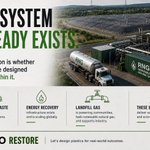

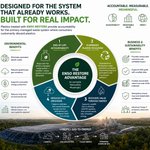


When landfills capture methane and turn it into renewable energy, we celebrate the innovation.
But suggest designing plastics to contribute to that same energy recovery system, and suddenly landfills are the problem.
Same infrastructure. Same opportunity.
Why is the plastics industry ignoring it?
#ENSORESTORE #LandfillGas
Plastics can and should be designed to work within the managed waste systems that actually receive them.
Landfills already capture methane and convert it into useful energy. Why is designing plastics to work with that infrastructure still largely absent from the sustainability conversation?
A package can be recyclable and still end up in a landfill.
That's the part sustainable packaging keeps avoiding.
Design for recycling. Absolutely.
But design for what happens when it isn't recycled too.
Recyclability is an attribute. End-of-life is an outcome.
nypost.com/2026/09/28/busine…

Landfills now account for roughly 3/4 of U.S. biogas captured for energy and 64% of U.S. RNG.
This isn't future infrastructure. It's here.
If so much plastic is going there anyway, why aren't we designing it to work with the infrastructure that's actually there?
#LandfillGas #RNG #SustainablePlastics
esisolutions.com/en/esi-news…

ENSO Plastics retweeted

America's landfills capture enough #biogas to meet the annual needs of ~3.9 million households, & there's even more opportunity: 700+ add'l landfills are suitable for biogas capture projects, making this a big untapped source of domestic energy. More at: bit.ly/3QTWURL

We call it "landfill" like it's the end of the story. Increasingly, it's where methane becomes electricity. The real infrastructure question isn't landfill vs. recycling - it's which system actually recovers value from what gets discarded.

Products are engineered for every stage of their life except the one they are guaranteed to reach.

America's landfills capture enough #biogas to meet the annual needs of ~3.9 million households, & there's even more opportunity: 700+ add'l landfills are suitable for biogas capture projects, making this a big untapped source of domestic energy. More at: bit.ly/3QTWURL

Landfill gas capture is proven, available and capable of reducing near-term warming now.
So why is material design still disconnected from the managed waste systems recovering that value?
Stop designing packaging for the disposal system we wish existed. Design it for the one we actually use.
vocal.media/earth/why-landfi…

Renewable natural gas is one of America's fastest-growing waste recovery success stories.
The next question:
Shouldn't packaging be designed for the systems recovering that value?
#LandfillGas #RNG #Packaging
natlawreview.com/press-relea…
Every new landfill gas project reinforces the same question:
If most properly discarded packaging ultimately enters managed waste systems, why aren't we designing materials for those systems?
#LandfillGas #RNG #Packaging
wastetodaymagazine.com/news/…

700+ more landfill gas projects are possible.
The question isn't whether this infrastructure is growing.
It's why we aren't designing plastics to work with it.
America's landfills capture enough #biogas to meet the annual needs of ~3.9 million households, & there's even more opportunity: 700+ add'l landfills are suitable for biogas capture projects, making this a big untapped source of domestic energy. More at: bit.ly/3QTWURL
If most properly discarded packaging ultimately enters managed waste systems, why aren't we designing materials for those systems? @EPA #Circularity #RNG #EndPlasticPollution
Landfills aren't the end.
They're becoming power plants.
As landfill gas is increasingly converted into electricity and Renewable Natural Gas, waste is no longer just a disposal challenge—it's an energy opportunity.
Design for reality.
#RNG #LandfillGas #Biogas #WasteToEnergy
