

We read the filings so you don't have to. ETF launches, flows and what moved. Not investment advice.
Joined November 2026
- Tweets75
- Following25
- Followers2
- Likes84








Pinned Tweet
Most ETF news is either a press release or a hot take. This account is neither.
Launches, flows, filings and what they mean.
Starting today.

Myth: if it's called an ETF, it's an ETF.
Fact: spot bitcoin and ether funds can carry the ETF label without being registered under the Investment Company Act of 1940, the law behind most ETFs.
So the 1940 Act's rules on valuing and holding fund assets don't apply.

1
8
Every ETF has two prices. One you see on your screen all day. One that's set once, after the close.
Dispatch Dictionary: NAV, and why the two don't always match.
1/4

1
14
Screen price above NAV: a premium. Below it: a discount.
Large trading firms can create or redeem shares with the fund and pocket the gap, which pulls the two back together. That's the plumbing from our Nov 17 post.
Gaps can stay wider when the holdings are hard to trade.
3/4
1
4
Where to look: ETFs post their NAV and daily premium or discount on the fund's website.
Source: SEC investor bulletin on ETFs
investor.gov/introduction-in…
Which ETF term should Dispatch Dictionary decode next?
4/4

2
one stock did about a third of the S&P's day. that's what index concentration looks like in a single session

NVIDIA $NVDA accounted for about 110 of the S&P’s 326 point gain today. 100+ points from one stock!
1
9
US spot bitcoin ETFs: 11 outflow days in the last 12 sessions.
Last Monday's $7.9M inflow broke a 7-day outflow run. The next four days were all outflows, each bigger than the last.
Net since Nov 5: about $3.7B out.

11
Monday Manifest. Markets shut Thursday and close early Friday.
The index providers aren't taking the week off.

ALT Timeline for the week of Nov 23: US markets closed Thu Nov 26, 1pm ET early close and Russell list update Fri Nov 27, MSCI November review effective at the close Mon Nov 30. Next: Russell changes take effect after the close Dec 11.
10
south korea lining up a market stabilisation fund is a reminder that country ETFs carry policy risk as well as market risk.

THE NASDAQ HAS JUST HAD ITS WORST WEEK SINCE 2020.
THIS MORNING, NASDAQ FUTURES ARE SURGING ALMOST 3%.
GOLD IS RALLYING NEARLY 3% AFTER CRASHING TO A 14-MONTH LOW.
SOUTH KOREA'S STOCK MARKET PLUNGED ALMOST 6%, TRIGGERING EMERGENCY TRADING CURBS.
AND THE US TREASURY SECRETARY IS WARNING THAT THE FEDERAL RESERVE COULD BE MAKING A SERIOUS POLICY MISTAKE.
LET THAT SINK IN.
Because I think something VERY important is developing underneath these financial markets.
And most traders are completely missing it.
For months, I've been explaining how inflation, interest rates, Treasury yields and the US dollar are connected.
We've watched gold collapse.
Silver get absolutely hammered.
The Nasdaq suffer an enormous sell-off.
And technology stocks across Asia get demolished.
But look at what's happened over the weekend.
South Korea is preparing an approximately $8 BILLION stock market stabilisation fund.
China has announced measures to make leveraged stock purchases easier.
And US Treasury Secretary Scott Bessent has warned about the dangers of the Federal Reserve overtightening monetary policy.
THINK ABOUT WHAT THAT MEANS.
The same inflation problem that has forced central banks to become increasingly aggressive is now creating serious concerns about the DAMAGE that aggressive monetary policy could cause.
That's the contradiction I want traders to understand.
HIGH INFLATION IS A PROBLEM.
But raising interest rates too aggressively to fight that inflation can create an entirely different problem.
A GROWTH SHOCK.
Higher borrowing costs.
Pressure on company valuations.
More expensive financing.
Reduced investment.
And potentially serious stress across financial markets.
NOW LOOK AT GOLD.
Last week, gold was getting absolutely demolished alongside equities.
Many traders couldn't understand why the supposed safe-haven asset was falling during a stock market crash.
But gold doesn't simply trade on fear.
It trades on the opportunity cost of holding it.
Real interest rates.
The US dollar.
Liquidity conditions.
And expectations about what the Federal Reserve will do NEXT.
When investors expect rates to remain elevated, gold can struggle.
When investors urgently need cash, even gold can get sold.
But here's where things become REALLY interesting.
What happens if the economic damage from high interest rates becomes so severe that markets begin anticipating a LESS aggressive Federal Reserve?
Potentially lower bond yields.
Lower real yields.
A weaker US dollar.
And an environment that could eventually become much more supportive for gold.
THIS IS WHY TODAY'S REVERSAL MATTERS.
Gold is rebounding.
Nasdaq futures are rebounding.
And policymakers are beginning to acknowledge the risks developing across financial markets.
But I'm NOT calling the bottom.
Not even close.
A violent rally after an enormous sell-off is NOT necessarily the beginning of a new bull market.
Sometimes it's simply short covering.
Sometimes it's investors unwinding defensive positions.
And sometimes it's the first indication that expectations are genuinely changing.
The challenge is identifying WHICH ONE.
For gold, I'm watching whether the dollar and REAL Treasury yields begin to retreat sustainably.
For the Nasdaq, I'm watching whether this rebound develops into genuine buying demand or simply creates another opportunity for sellers.
And for BOTH markets, the next US inflation data and the Federal Reserve's December decision could be absolutely crucial.
Remember what I've been saying about gold.
$3,500.
AND THEN $3,300.
Those downside areas remain relevant if the bearish macroeconomic environment persists.
But if the conditions driving that sell-off begin to reverse, the entire picture changes.
Markets don't wait for the economy to recover.
They start moving when EXPECTATIONS change.
And right now, we could be entering a period where expectations become incredibly volatile.
TRADERS....THOUGHTS??
IS THIS THE BEGINNING OF A MAJOR RECOVERY IN GOLD AND THE NASDAQ?
OR ARE WE WATCHING A MASSIVE RELIEF RALLY BEFORE THE NEXT WAVE OF SELLING?
Because I think the answer could define how these markets trade into the end of 2026.
9


Spot bitcoin ETFs broke a seven-day outflow streak on Monday with $7.99M in.
By Thursday, $582M had walked back out in a single session.
The week in ETF money.
1/4

1
18
Each of those dollars is shares handed back to the funds and cancelled.
The funds shrink, and the bitcoin and ether they held leave with them.
3/4
1
6
Tuesday’s Dispatch Dictionary covered how that works: creation and redemption.
This week ran mostly in redemption mode.
Dispatch out.
4/4
teapaw.org/ETFDispatch/status/212…

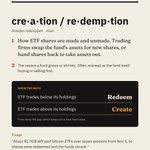
Dispatch Dictionary: creation and redemption.
An ETF’s share count moves daily. Trading firms create new shares by giving the fund assets, and redeem shares by handing them back for assets.
That’s the plumbing behind every “inflow” and “outflow” headline.
#DispatchDictionary

4
an ETF outflow means shares were redeemed and $BTC left the fund. $541M in one day is a lot of coins walking out the door

BlackRock just had the biggest bitcoin ETF outflow in its history.
$541 million out in one day
And $3.47 billion has left bitcoin ETFs this month alone.
2026 ETF flows are now officially negative for the year.
11
The S&P gets the headlines, but the bigger hit this week is sitting in international ETFs

International stocks are taking the selloff much worse than the S&P 500... $VEU now a 13% drawdown... lowest since the March 31 close

13


ETF Dispatch retweeted

NASDAQ 100 POSTS ONE OF ITS MOST EXTREME INTRADAY REVERSALS SINCE 2009
The Nasdaq 100 swung from a gain of more than 2% to a loss of over 2% on Thursday, a reversal seen only three other times since 2009, according to Bloomberg.
🔸 Nasdaq 100: Down more than 15% from its October peak.
🔸 Previous reversals: March 2020, July 2020 and November 2025.
🔸 Historical performance: Median gain of 4.2% over the following five sessions after roughly 30 comparable reversals since 1985.
The selloff reflects AI valuation concerns, hawkish Fed signals and investor deleveraging.
Historically, such extreme reversals have sometimes preceded market rebounds, though further downside remains possible.

Dispatch Dictionary: creation and redemption.
An ETF’s share count moves daily. Trading firms create new shares by giving the fund assets, and redeem shares by handing them back for assets.
That’s the plumbing behind every “inflow” and “outflow” headline.
#DispatchDictionary
Spot bitcoin:native ETFs finally took money in on Monday: $7.99M.
The seven sessions before that saw about $1.91B walk out.
Here’s what happens inside a fund when that much money leaves. 1/4

That’s when large trading firms step in. They buy the cheap shares, hand them back to the fund in big blocks and take bitcoin:native or cash in return.
The shares are cancelled. That’s the “outflow” in the headline. 3/4
1
5