

Official channel of the European Environment Agency (EEA), an agency of the European Union. We provide sound, independent information on Europe's environment.
Copenhagen, Denmark
Joined March 2009
- Tweets10.8K
- Following1.6K
- Followers94.5K
- Likes1.6K




Food is one of the biggest opportunities for change. Cutting food waste, choosing lower-impact foods, supporting sustainable food systems and consuming only what we need can significantly reduce Europe's environmental footprint.
Read more: eea.europa.eu/en/analysis/in…
Although the EU economy has grown strongly in recent years, Europe's consumption footprint remains too high and already exceeds several planetary boundaries, including those linked to climate change and pollution.
What we eat has a bigger environmental impact than any other area of consumption in the EU. In 2023, food accounted for 46% of the EU consumption footprint, far ahead of housing (20%), mobility (19%), household goods (9%) and appliances (6%).

“Building resilience requires not just an understanding of climate risks, but also the right tools to act on them,” says our Executive Director Leena Ylä-Mononen.
Read more: eea.europa.eu/en/newsroom/ne…
#ClimateAdaptation #ClimateResilience #ClimateRisk

📄 Publishing the methodology for the second European Climate Risk Assessment (EUCRA-2), which will be designed around users’ needs and developed together with stakeholders.
While preparing for the upcoming tasks, we are: 🧭 Launching the Navigator of Climate Resilience Tools, a catalogue of 100 interactive tools to assess climate risks, plan adaptation measures & monitor progress, each reviewed by EEA experts with the support of our Eionet network.
The EEA "shall act as a centre of excellence on climate resilience and climate adaptation" - the framework gives the Agency a substantially more explicit and operational role in EU climate-resilience governance.
Today, the European Commission launched the Climate Resilience Framework, and the EEA stands ready to support it with the knowledge, data and tools Europe needs. Climate change does not stop at national borders, and neither should our response. 🌍

Do not miss tomorrow's #COP17 discussion on restoring nature, from commitments to action.
📅 28 October 🕢 7:30–8:45 CET youtube.com/watch?v=N44kfafZ…

How do we turn nature restoration commitments into action?
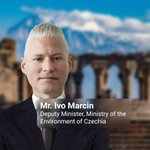
At #COP17, the European Environment Agency and IUCN will bring together policymakers and experts to discuss how countries can move from global restoration targets to effective implementation.

Please take part and share the survey with relevant contacts across your networks. Your voice can help make Europe’s schools and hospitals become resilient for the future. #ClimateAdaptation #ClimateHealth #ClimateResilience #Schools #Hospitals #EuropeanClimateHealthObservatory
The survey is available in all European languages and remain open until 13 November 2026. Findings will be published on the Observatory portal in 2027 in aggregated form, without identifying individual facilities.
We invite healthcare leaders, sustainability managers, facility managers and others in similar management roles to share their experiences: 👉 Take the healthcare survey: s2survey.net/resilience_of_h…
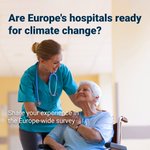
Are Europe's hospitals prepared for the ongoing climate change and its effects? The European Climate and Health Observatory has launched a Europe-wide survey to understand how educational and healthcare facilities are prepared for the impacts of extreme weather 🔥⛈️🌊

The report identifies energy-intensive industry as furthest behind the pace needed for deep transformation, particularly cement and iron & steel. While total emissions from the sectors have fallen, CO2 emissions per tonne of product have changed only marginally the last 15 years.
Are Europe’s schools ready for extreme weather? 🔥⛈️🌊
The European Climate and Health Observatory wants to hear from education and facility managers. Take the survey, available in all EU languages, by 13 November 👉s2survey.net/education-resil…

Some disadvantaged groups are also more likely to live in noisier areas.
The EEA analysis supports combining broad noise reduction measures with targeted actions to better protect vulnerable populations.
🔗 Read more: eea.europa.eu/en/newsroom/ne…

Older adults may be more affected by outcomes such as sleep disturbance, heart attacks and mortality. Children can experience impacts on reading ability, behaviour and weight.
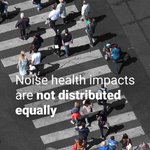
A new EEA briefing finds that noise impacts are not shared equally. Age, social inequalities and environmental disadvantages can increase both exposure and vulnerability to transport noise.
How does noise pollution affect us? 🚗🔊
Transport noise can impact everyone, but children, older adults and people with existing health conditions may face greater health risks.

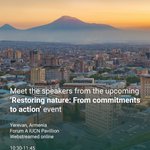
📷 28 October | 10:30–11:45
📷 IUCN Pavilion, Forum Room A
Watch it ONLINE: youtube.com/watch?v=N44kfafZ…
#COP17 #NatureRestoration #Biodiversity